The age of fossil fuels is ending, and the world is entering the era of solar power. What matters now is how fast we make the shift. (more…)
More by Rebekah White



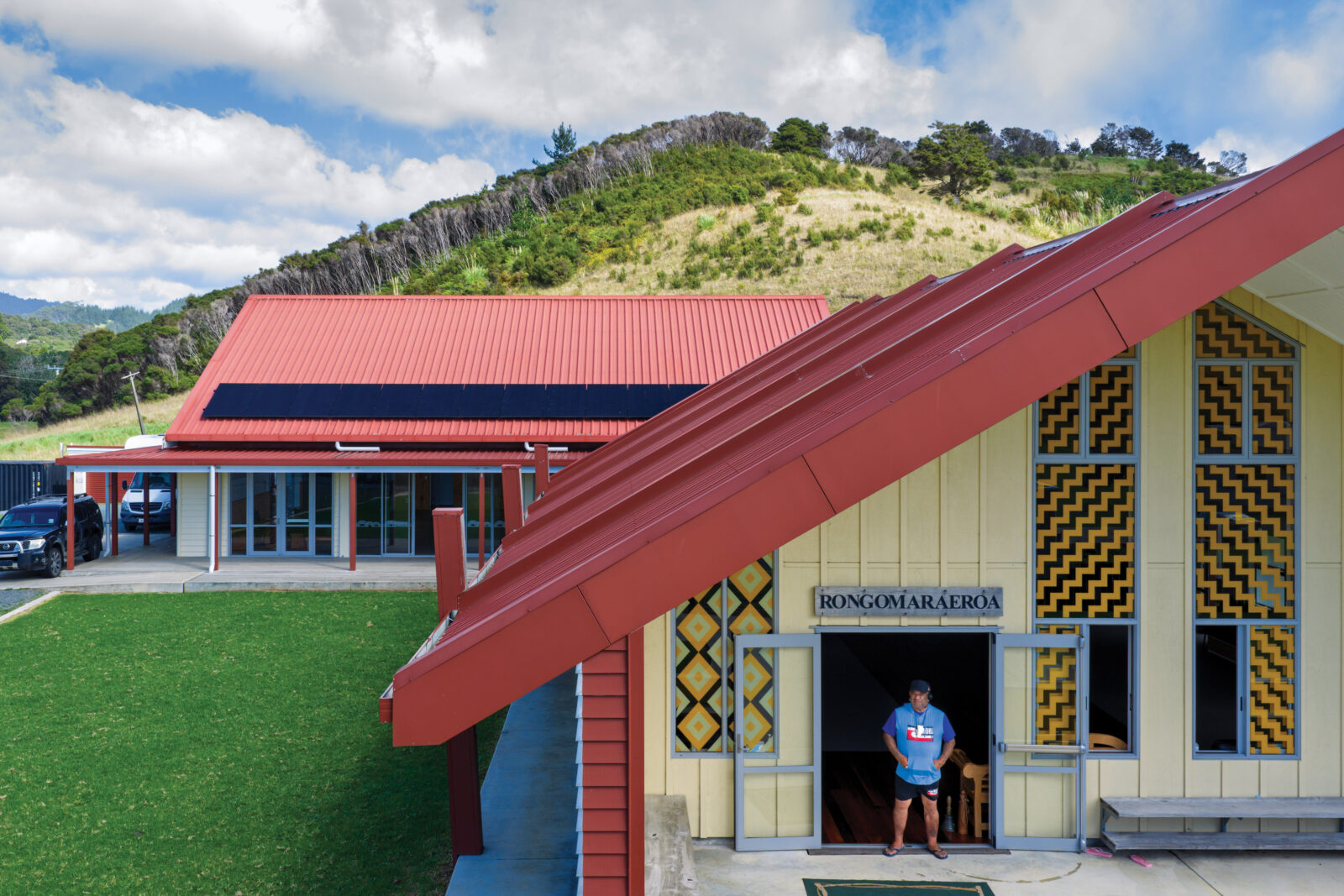
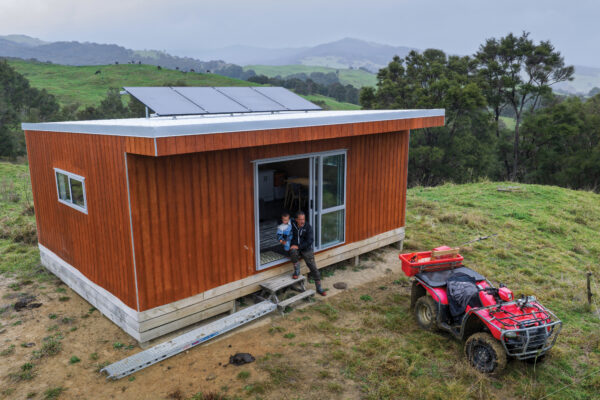
Aaron Ruka slept in on the day of the storm, because he’d been at work with the chip-sealing crew and he was zonked. He was woken up by his mum calling out to him. He glanced out the window and it seemed as though their house was floating on water, the creek had come up so high.
“It’s only a little creek, but during that storm, she was a raging river,” he says. “Like, that was full on.”
The house, where Ruka lives with his parents, is raised on piles, so it stayed above the flood, but the water completely submerged their solar array—32 panels Ruka had installed on the land.
The house isn’t connected to the grid, so for a few hours, it ran off batteries. But then the water went down, a little bit of sun began to break through the clouds, and Ruka went to check on the system. “We were making power again,” he says. “I was like, ‘Oh, sweet.’”
He and his parents spent 20 years in Melbourne before they came back to live in Northland, just south of Ōakura, across the road from his mum’s Ngāti Wai marae. This is where Ruka grew up, and back then the creek was narrow enough to jump across. Now erosion has made it wide and shallow.
The land didn’t have mains power, and they discovered it would cost more than $30,000 to get a grid connection to their house, so Ruka started looking at solar. Those quotes were tens of thousands higher. He thought, “‘Why don’t I just go direct to the manufacturer?’”
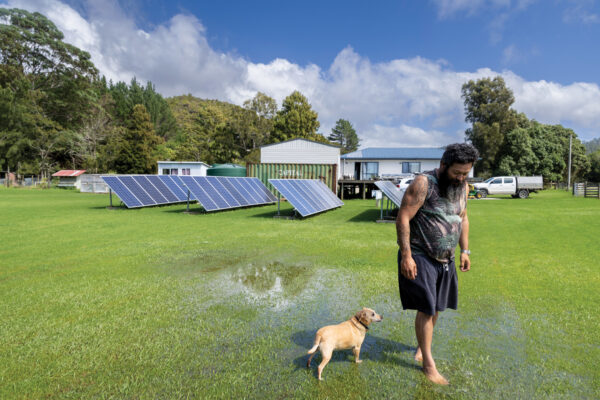
Ruka worked in civil construction, so it wasn’t entirely new: calculating what they’d need, figuring out where the trenching would go, getting a sparky in to wire it all up. It cost much the same as hooking into the grid. “So it was a no-brainer for us.”
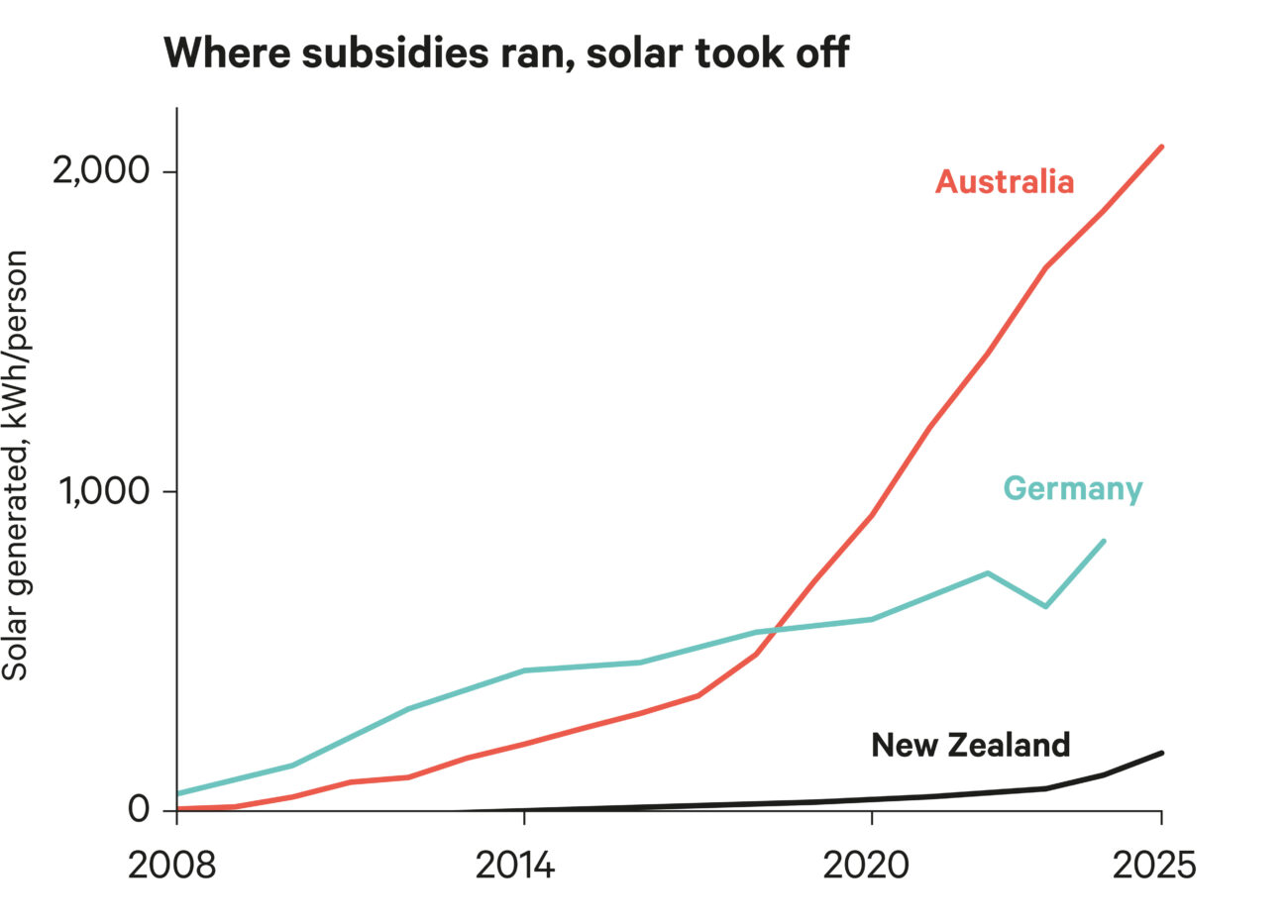
They hadn’t had solar power in Australia, but Ruka had watched it boom. Since 2010, a surge in solar installations spurred by NZ$13.9 billion in government subsidies means that Australia now generates the most solar per capita of any country in the world. “People are knocking on doors,” says Ruka, “saying, ‘This is all government subsidised, we can install it.’ It’s like, non-stop, like, they’re trying to get everyone onto it.”
(Uptake has been so rapid, and so many panels are pushing energy back into the grid, that over-installation is now the problem: in South Australia especially, the infrastructure is struggling to cope.)
For Ruka it was nerve-racking putting in the order, wondering if he’d got it right, but all went to plan. The system is more than enough, with a few sensible habits. They turn the lights off, avoid using the electric jug at night because it’s a big draw on energy, and make sure the freezers are full. “It’s just stuff that you’d want to do to save the power bill anyway.”
They’ve only run out a couple of times.
The marae across the road is now on solar, too, and Ruka is eager to get more whānau on board. “Why not, you know? Have a go. It’s been really cool. Like, whenever there’s been power cuts, everyone’s without power, but our lights are still on, we’re still watching TV.”
*
The pressure inside the sun is so great that hydrogen atoms smash together with enough force to turn them into helium—it’s like 90 billion hydrogen bombs exploding each second. The sun fuels most ecosystems on Earth; without it, there’d be no winds, ocean currents or clouds to transport water around the planet. It sends more energy to Earth in an hour than humans use in a year. That sunshine is increasingly seen not just as a way to cut power bills or keep the lights on through storms, but as a path that leads the whole country away from fossil fuels and the infrastructure built for them. If we get it right, solar could deliver energy sovereignty and genuine resilience—the kind that holds up through a changing climate and geopolitical turmoil.
“One solar system on a rooftop on a typical home in New Zealand will generate the same amount of energy in winter as one tonne of coal being burnt in Huntly,” says Mike Casey, the CEO of Rewiring Aotearoa, a non-profit tackling a transition to clean energy. Over the average panel’s 30-year lifetime, that’s something like 10 tons of coal, or five thousand litres of diesel, that stays in the ground.
Driven largely by China, the world’s solar-generation capacity increased more than tenfold in the past 10 years; last year, enough new solar panels went in globally to power New Zealand 57 times over.
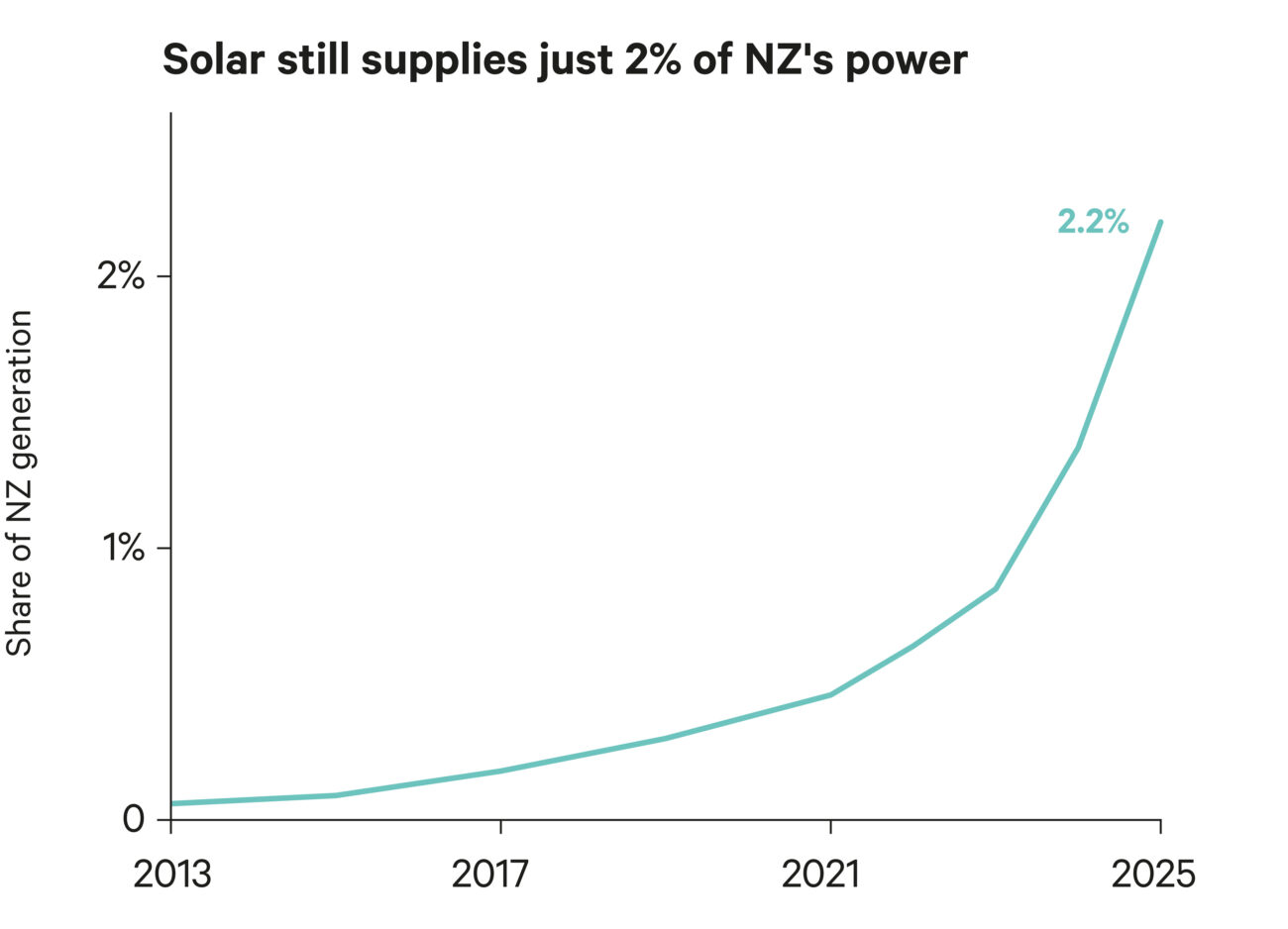
But the revolution is yet to take hold in Aotearoa. Here, a little more than two per cent of our electricity is generated from solar. Only one in every 25 New Zealand households is using any kind of solar set-up. In Australia, it’s one in three.
Right now, New Zealand is 87th in the world for solar generation per capita—well behind some of the planet’s least sunny countries, like Ireland, the United Kingdom, Belgium and Germany. One of the misconceptions holding us back is the idea that we don’t have enough sun—after all, this is the land of the long white cloud. “There’s just this perception that our solar resource isn’t very good,” says Alan Brent, professor of sustainable energy systems at Victoria University of Wellington.
[sidebar-2]
But solar efficiency is not as straightforward as outright sunniness. Wind cools panels, for example, and they work better when they’re cool—so Wellington ranks just behind Sydney, which has the best conditions of any city in the world for solar, and it beats Melbourne. “If you look at the solar resource of Invercargill,” Brent says, “it’s better than Freiburg in Germany. And I mention Freiburg because that’s the solar capital of Europe.”
Like Australia, Germany subsidised and incentivised household solar installation. New Zealanders do not have any financial support from government for solar in homes. (See sidebar above for 2026 election promises).
*
“Watch this space,” said Simon Watts, Minister of Climate Change, speaking about solar at a conference in February 2026. One week later, the US and Israel attacked Iran. The New Zealand public is now four months into a crash course on energy sovereignty—a lesson that’s reinforced every time they fill up a car or visit the supermarket. As this magazine goes to press, the US and Iran have confirmed a peace agreement, but the Strait of Hormuz remains closed and diesel is still more than $3 per litre.
Households still reliant on the grid—which is most of us—have been warned that power prices are set to rise again. (They’re already up 12.5 per cent in the year to March 2026.) But as things stand, no amount of price-hiking can buy certainty of supply at a national scale.
New Zealand makes about 85 per cent of its power from renewable sources, mostly the hydro dams at the bottom of the South Island. But that water is not guaranteed—energy experts recount the “dry year” of 2024, in which low rainfall and sporadic wind meant both the hydro dams and wind farms at times fell short.
On top of this uncertainty, there’s the problem of getting electricity from A to B. The power cranked out by the lakes and windfarms reaches your home via a vast, delicate web of cables, poles and pylons. These can cope with only so much loading, and as the population increases, they’re carrying more every year—especially during peak hours, when everyone gets home from work, starts cooking, and turns the heater on. Areas like Queenstown are now facing grid upgrades predicted to cost hundreds of millions. What’s more, notes Gary Holden, managing director of solar company Lodestone, as power travels through the lines, it leaks out. “New Zealand loses about a whole power station just in line losses.”
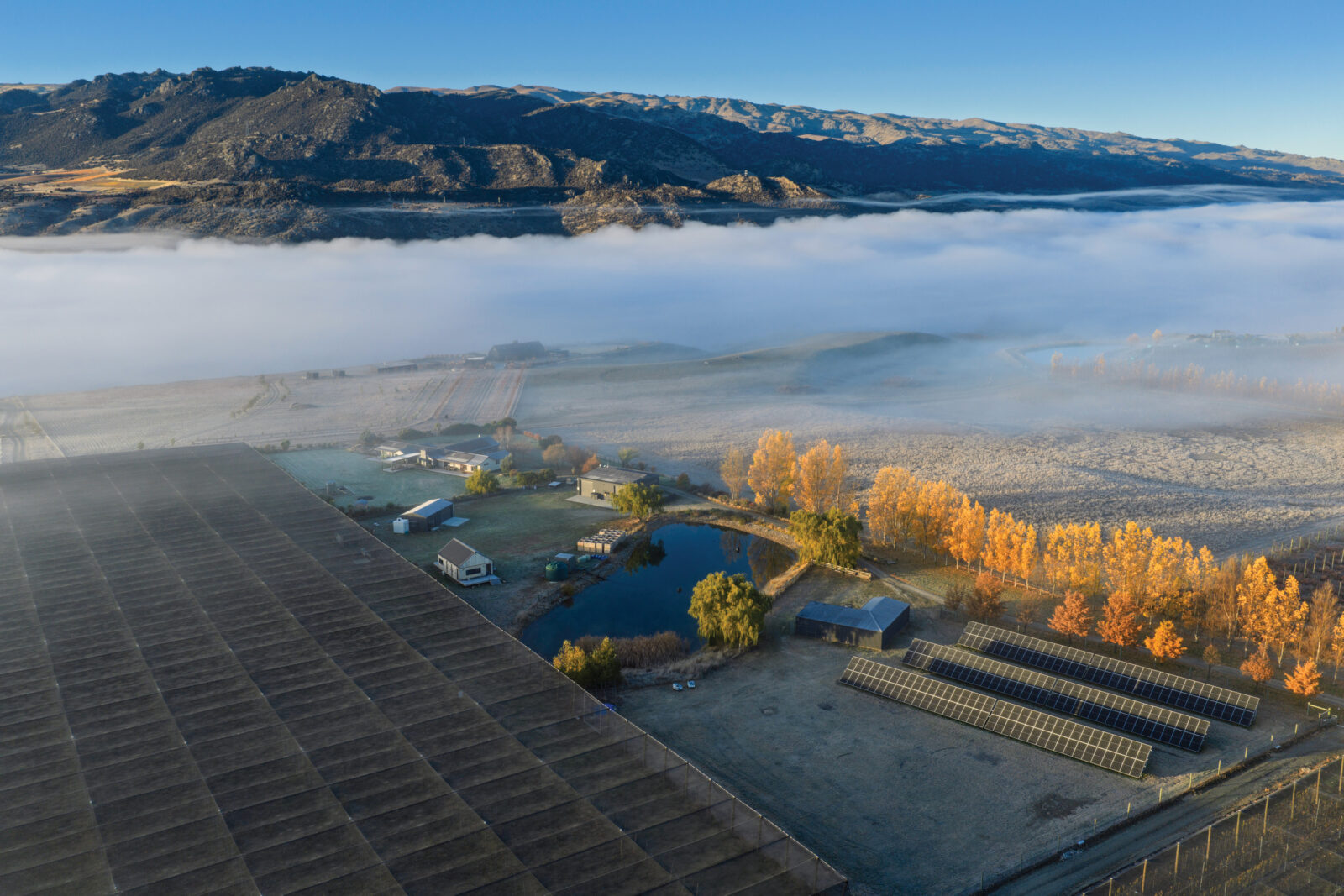
Solar power is created on the spot. On the roof of your house, or, as in the Rukas’ case, next to it. Unless you’re piling your sun-earned energy back into the grid, solar doesn’t add to the load—in fact, get enough households turning to the sun and we buy some breathing space for our ageing infrastructure.
*
For a couple of hours one morning last October, Invercargill was the windiest place on Earth. Hurricane-force gusts flattened entire windrows, destroyed up to 2000 hectares of forestry, and dismantled Southland’s electrical grid. “The winds were so strong that it was just breaking power poles off like matchsticks,” says Chris Stewart, who co-owns Fairbank Farms in Drummond.
The storm didn’t last long, but it had done its damage. Hundreds of kilometres of power lines were knocked out, and it took two weeks to reconnect some people to electricity. Farmers couldn’t milk their cows, which meant the cows developed mastitis, a painful udder infection—but not at Fairbank. Stewart and his equity partner Michael Farmer had installed solar a couple of months earlier, concerned about their vulnerability to power cuts.
“Dairy farms are very big energy users,” he says, “and we’re at real risk, too, if the grid goes down or the power goes out. You can’t do milking. There’s real safety issues with cows, and animal health and welfare. So it’s really important that you do milk through the season.”
Stewart and Farmer had two options for resilience: buy generators, or install solar. Solar stacked up both environmentally and financially. At first, Stewart thought it would take seven years to pay for itself, largely by cutting the farm’s electricity bill; now, he reckons they’ll be in the clear after five or six years.
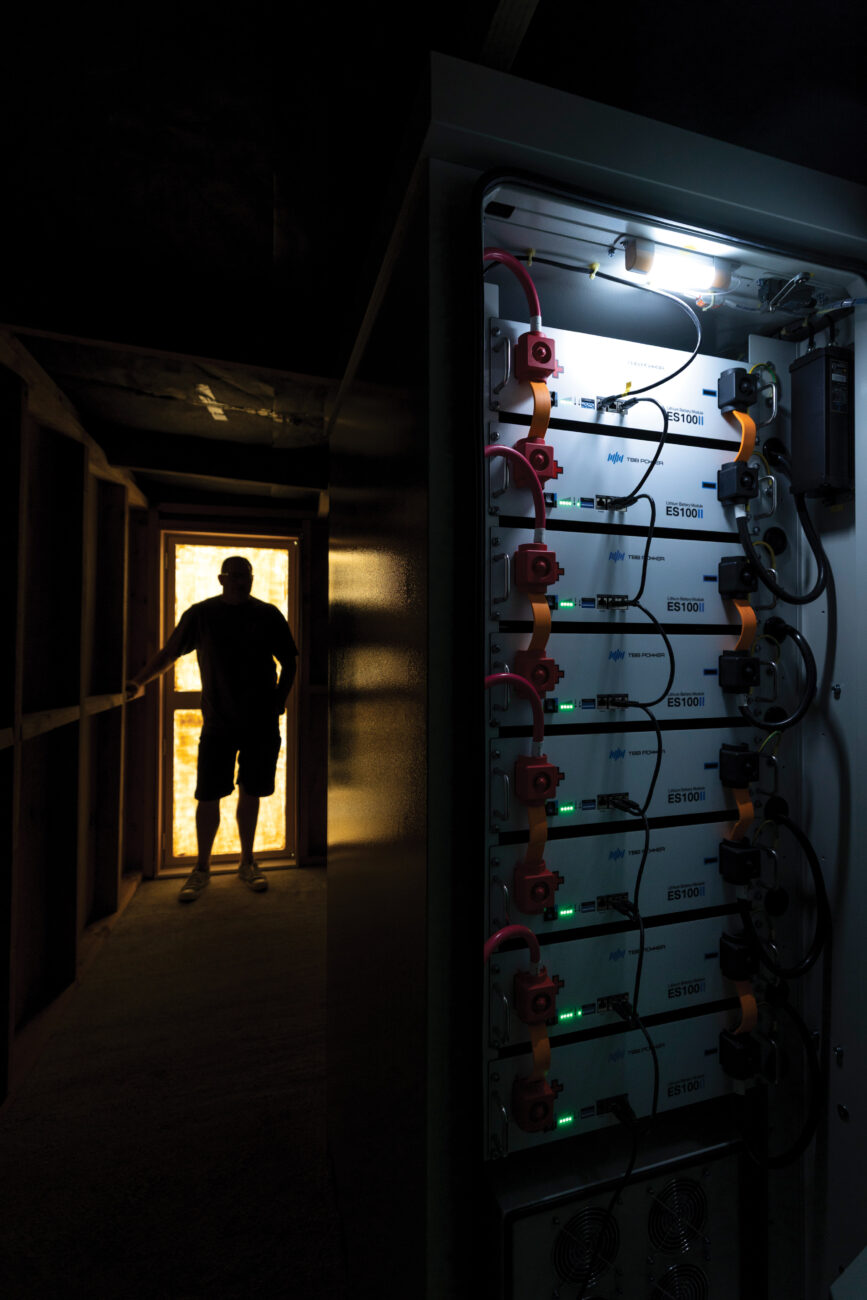
In August 2025, the off-season for their farm, they put in 136 panels, a 100-kilowatt battery and a 50-kilowatt inverter. “It allowed us to get through the storm, but only just,” Stewart says. “So we were not turning all the equipment on at once, and managing it very carefully. But in saying that, it did allow us to carry on. We didn’t miss milking, and all that milk was picked up.”
They’d never planned to go completely off-grid; their goal had simply been to generate enough electricity to milk once a day if they didn’t have grid power. But after the storm, they upgraded the battery capacity, and put in a more efficient chiller, too.
Now, when the power goes out, it doesn’t really register. “The shed just carries on as if nothing’s happened. The whole system just carries on doing what it’s doing.”
Stewart is confused by the industry’s hesitancy to adopt solar. “I just can’t understand why every dairy farmer isn’t looking seriously at it. It just makes so much sense.”
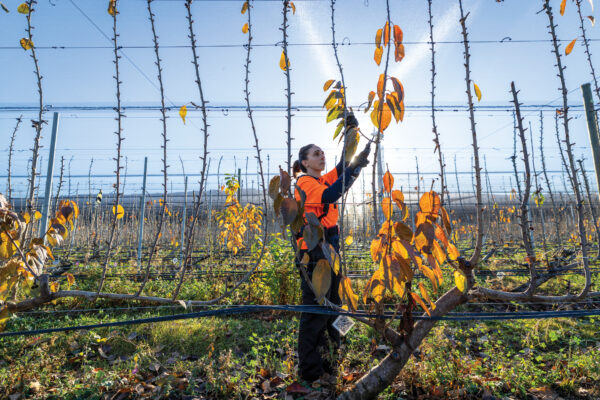
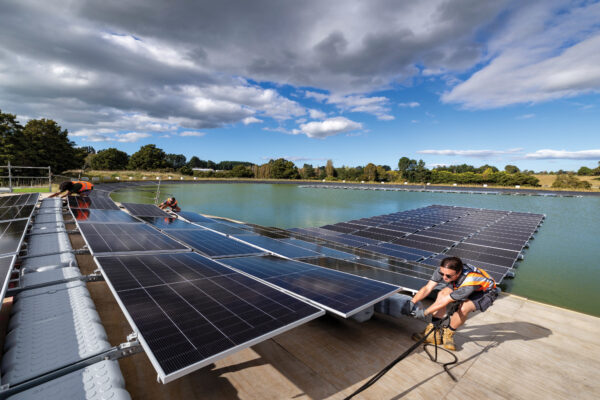
It made so much sense to Becks Smith, a veterinarian and farmer from Ranfurly, Central Otago, that about 18 months ago, she helped found Solayer, a company specialising in rural installations. She thinks the fact New Zealand has so far been slow on the uptake may be a question of identity at play: solar has had one particular image for so long that it challenges people’s sense of who they are and where their allegiances lie. “It’s kind of one of those things that, you know, the woke folk do,” she says. “Like, ‘We’re not the kind of people who would have solar panels, so we’re not going to consider it.’”
Still, Solayer has been installing roughly one system per month—and interest has skyrocketed since the fuel crisis, she says. “It’s just highlighting the cracks in the system and our reliance on single things. And I think, in life, there’s not many things that you can actually control, and this is a controllable thing.”
Politicians may be sensing that shift, too. In May, the government introduced a package of regulatory tweaks that it promises will make household solar systems much faster and easier to install. “It’s not woke if it works,” said ACT leader David Seymour in an Instagram post, announcing the stripping-back of a “red-tape nightmare”.
Press releases around the changes note that New Zealanders installing a small to medium home solar system can expect to shave around $1000 per year from their power bills. They also note that such a system costs between $8000 and $11,500. There is no mention of how households might manage that upfront cost.
*
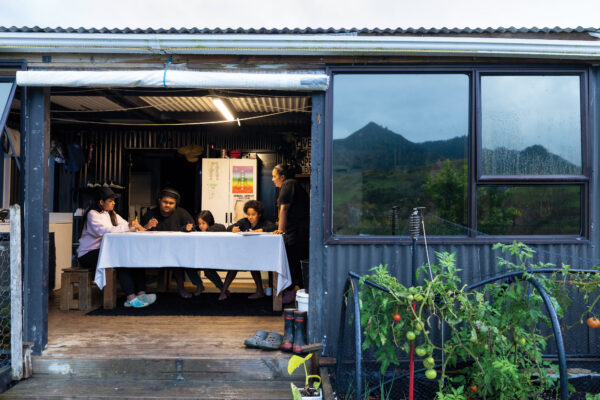
Solar makes the most difference to the people who don’t have the capital to install it, and this is where New Zealand is falling short, says Richard Jones, a director of solar installation company Tū Mai Rā Energy. “The problem with individual households is that there’s no real government funding or anything that they can tap into,” he says. Increasingly, says Jones, Tū Mai Rā is acting “as a social enterprise”, helping various groups to access grants in order to install solar. “It’s almost an instant benefit for people. Costs go down, you’ve got warmer homes, so theoretically you should have less sick people, and more productive people.”
The company, formed after the Treaty of Waitangi settlement of Jones’ iwi, Rangitāne, installs solar around the country, predominantly in rural spots—beginning in more remote areas which had suffered large power cuts after storms. In 2022, they installed solar on Potahi Marae way up north in Te Kao, plus 40 houses in the papakāinga next door. Now, they’re planning to install a microgrid, “a kind of mini power station” that will be handed to the marae to own and operate; it will see them through power cuts and price rises, and they’ll be able to sell energy back into the grid to help pay for repairs and maintenance.
Jones is frustrated to be watching Europe, the US and the UK move quickly on balcony panels: per kilowatt, these cost about $600-$1000, half the cost of a traditional installation. You can plug in a panel yourself and put it on the deck. You can take it with you when you move. No need for an electrician or council approval. “In Germany,” he says, “people buy the system, plug it in and away they go.”
Germany registered more than 400,000 of these panels in 2024 alone. There are some 4,000,000 set up across Europe. But in New Zealand it’s illegal to connect them.
Rewiring Aotearoa estimates such a panel could cover seven to 15 per cent of the average New Zealand home’s annual power use. “Not enough to power a whole home,” Jones wrote in March, in a briefing to various government agencies. “But enough to meaningfully offset daily energy use.”
Crucially, balcony panels are not grunty enough to keep even a small house warm, and they work only during sunshine hours. But they could be the only real solar option for the one-third of New Zealanders who rent their homes, or those in apartments.
The Ministry for Regulation is considering changes which would allow balcony panels to be used in New Zealand. Jones thinks about it every time he drives past whānau living in garages.
*
In the meantime, there’s a case to be made for subsidising solar systems on homes, says Kimberley O’Sullivan, a senior research fellow at the University of Otago. New Zealand already subsidises low-income families to access heating via the Winter Energy Payment; O’Sullivan points out that installing solar could permanently address the issue, and help to insulate households from rising energy costs. Close to a third of New Zealand households face energy hardship, meaning they can’t access or afford enough energy to meet their basic needs (which includes maintaining the indoor temperature at a healthy level). And this has a public cost: housing that’s too cold, damp and mouldy leads to around $38 million in hospitalisations each year.
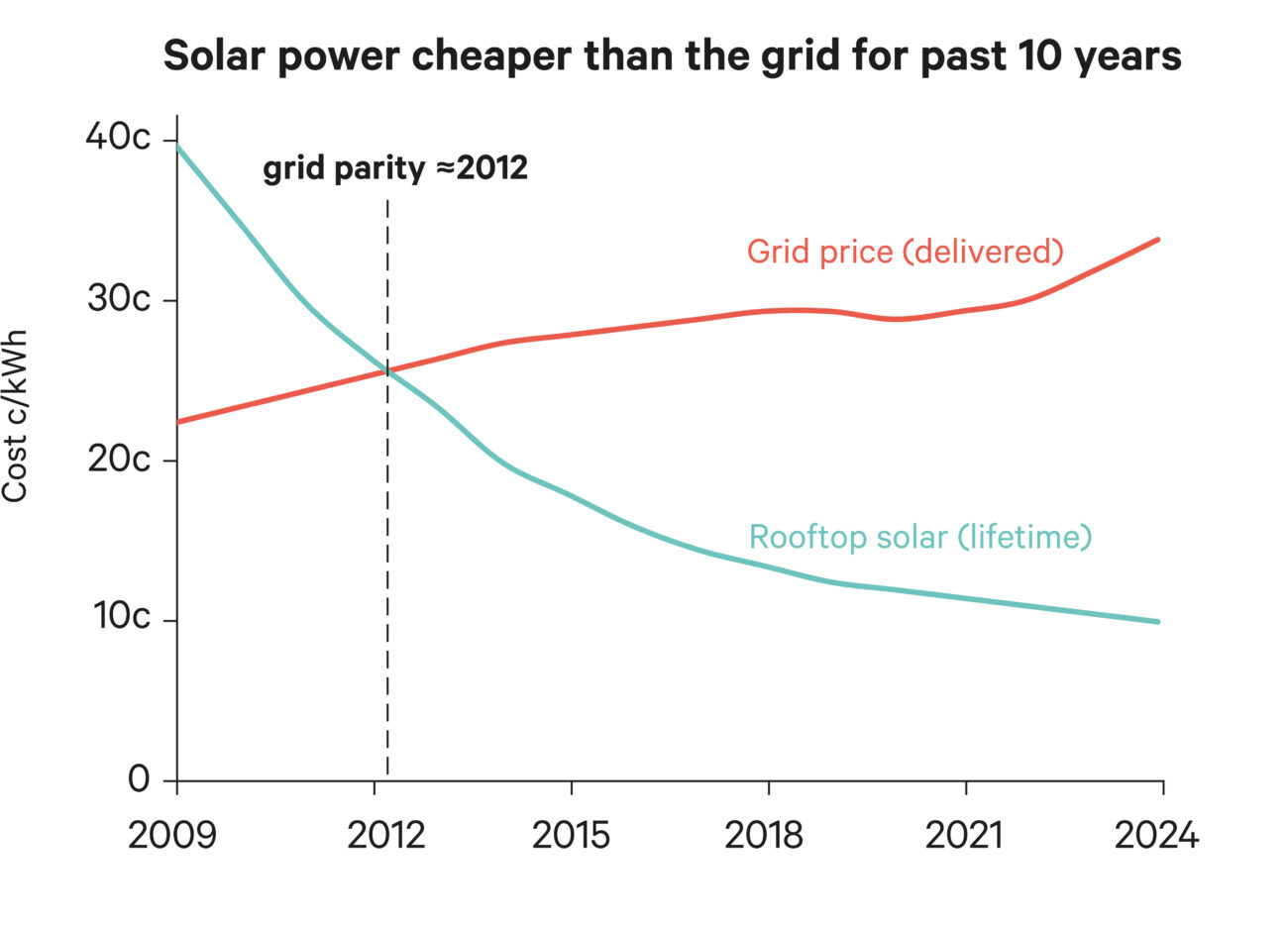
Meanwhile, analysis by Rewiring Aotearoa found that solar installations are predicted to save the average New Zealand household $65,000 over the total 35-year life of the system. O’Sullivan describes this as an “off-ramp” to the path of rising power bills.
“It used to be the climate narrative was all about sacrifice,” says Casey. “‘Have shorter showers and we’ll be slightly less f***ed’. But now it’s like, ‘Well, with a hot-water heat pump you can have really cheap showers for as long as you f***ing want, you know?”
*
What about the fossil fuels that power our cars, milk tankers, industrial boilers and so on? These account for most of the energy used in New Zealand. But now, it’s becoming possible to switch some machines over to using electricity instead—meaning they can be powered by a renewable source.
“We’re going to need twice as much electricity,” says Casey. “The previous government made the mistake of saying we need a 100 per cent renewable grid. It’s like, no, we don’t need a 100 per cent renewable grid, we need a 200 per cent renewable grid—so where is all that power going to come from?”
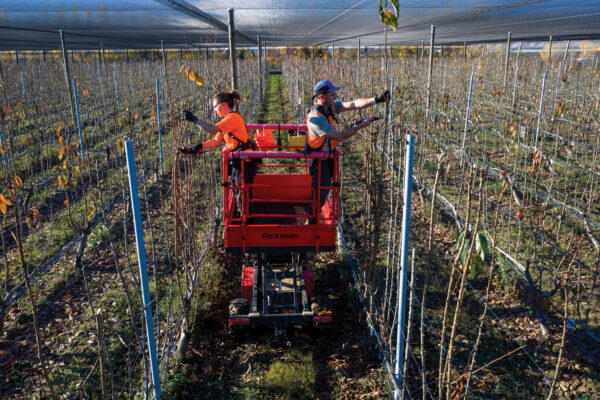
Casey, originally a software engineer from Wellington, bought a Central Otago farm with the windfall from selling a business he started in Australia. He wanted to create a carbon-positive business, but quickly calculated that his cherry orchard wasn’t going to make much of a difference to the climate. Then he thought: what if I just erased all my emissions?
Most farmers can’t go fully electric overnight, but his orchard, Electric Cherries, is a demonstration of what’s possible.
“If every farmer did what I did on my farm, that’s 60 per cent more electricity generation for New Zealand’s electricity system just from farmers putting solar on their shed roofs and on their land,” says Casey. “Farmers save a huge amount of money, and New Zealand gets the electricity that it needs to do the big jobs.”
New Zealand has a tendency to think big, he says—to look to large infrastructure solutions to problems. This time, maybe we could think small. Small but many. Getting enough homes, farms and businesses on solar would change how we think about our electrical grid, and it would prepare us for a warmer future in which demands on that grid might peak in summer, as we resort to air-conditioning. Households would become part of the country’s energy infrastructure.
*
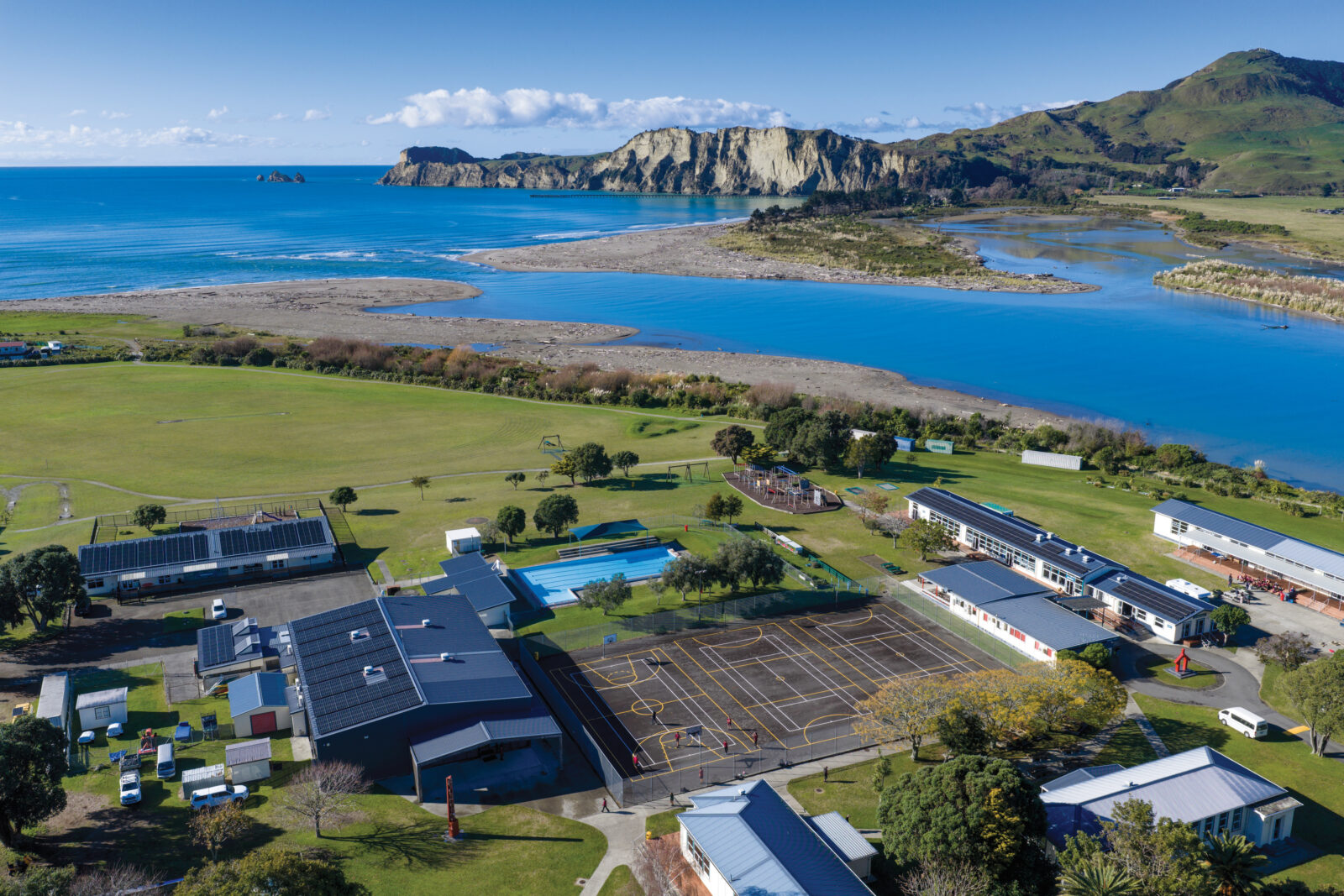
When Nori Parata heard about a plan to install solar panels on the roof of her school in order to heat up the swimming pool, she thought: Why stop at the pool? “It had to be wider than that,” says Parata, who is the principal of Tolaga Bay Area School, on the East Coast. “It had to look at how we might use solar energy to be able to keep the school open in all conditions, with a civil defence base.”
The organisation behind the project, Trust Tairāwhiti, had simply wanted to make unheated school pools in the area more usable by the community. After Parata made her case, those schools ended up with full solar generation instead.
Her school’s annual power bill used to be more than $50,000. In May, not quite halfway through the year, they had spent less than $5000.
Putting solar on schools is a slam-dunk: schools use most of their energy during the day, when solar energy is being generated, so they don’t necessarily require expensive battery installations. And solar keeps working in an emergency: it won’t blink when a tree falls on powerlines down the coast.
In June, the government announced a $30 million plan to fund solar installations on 500 of the country’s 2500 schools, prioritising those with the highest energy costs. The first panels are set to be installed during the next summer holidays.
But for the sun to revolutionise the country, the numbers are clear: we need to farm it.
*
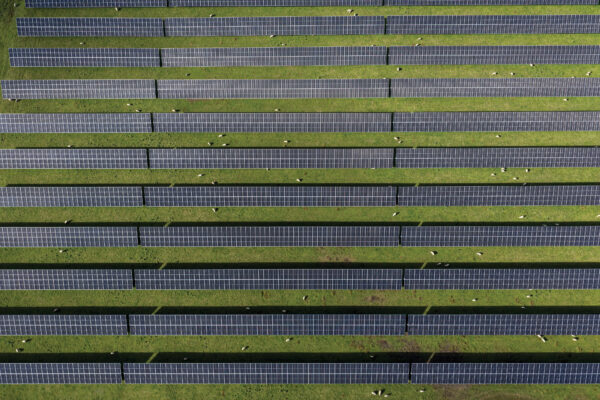
It’s like being in a mechanical orchard: rows of metal trunks that spread out above my head, shading the sheep browsing in the grass below. Every few minutes, there’s a low humming; it’s the actuators moving to tilt the panels a few degrees towards the Bay of Plenty sun.
The panels are dark blue, lined like graph paper, and at some angles they’re shiny, and at others they look flat black, as though nothing could happen there, like a dead screen.
(When photons from the sun strike a panel, they knock electrons loose from the silicon atoms. Because each panel is built from two layers of silicon with opposite electrical charge, the built-in field pushes those electrons in one direction, creating a flow of electricity.)
Grass grows even better under the panels, and the sheep enjoy the cool, says Rozelle Hughes, who oversaw the construction of this solar farm, in Edgecumbe. “They’re hanging in the shade all the time. Especially when they get a bit fat and woolly.”
Sometimes the sheep nibble a bit of the cabling, or scratch their backs on it, but they haven’t caused any major dramas so far. The main problem to keep on top of is bird poo—each splat subtly disrupts the way a panel runs, and can lead to overheated “hotspots”.
Around the country, protests have erupted over planned solar farms, with locals concerned they will be eyesores in the pastoral landscape. In one prominent court case, a dairy-farming litigant argued that the solar farm set to go in next door would displace farming on “productive land”. A nuclear power plant would be a better idea, he insisted. The sun won.
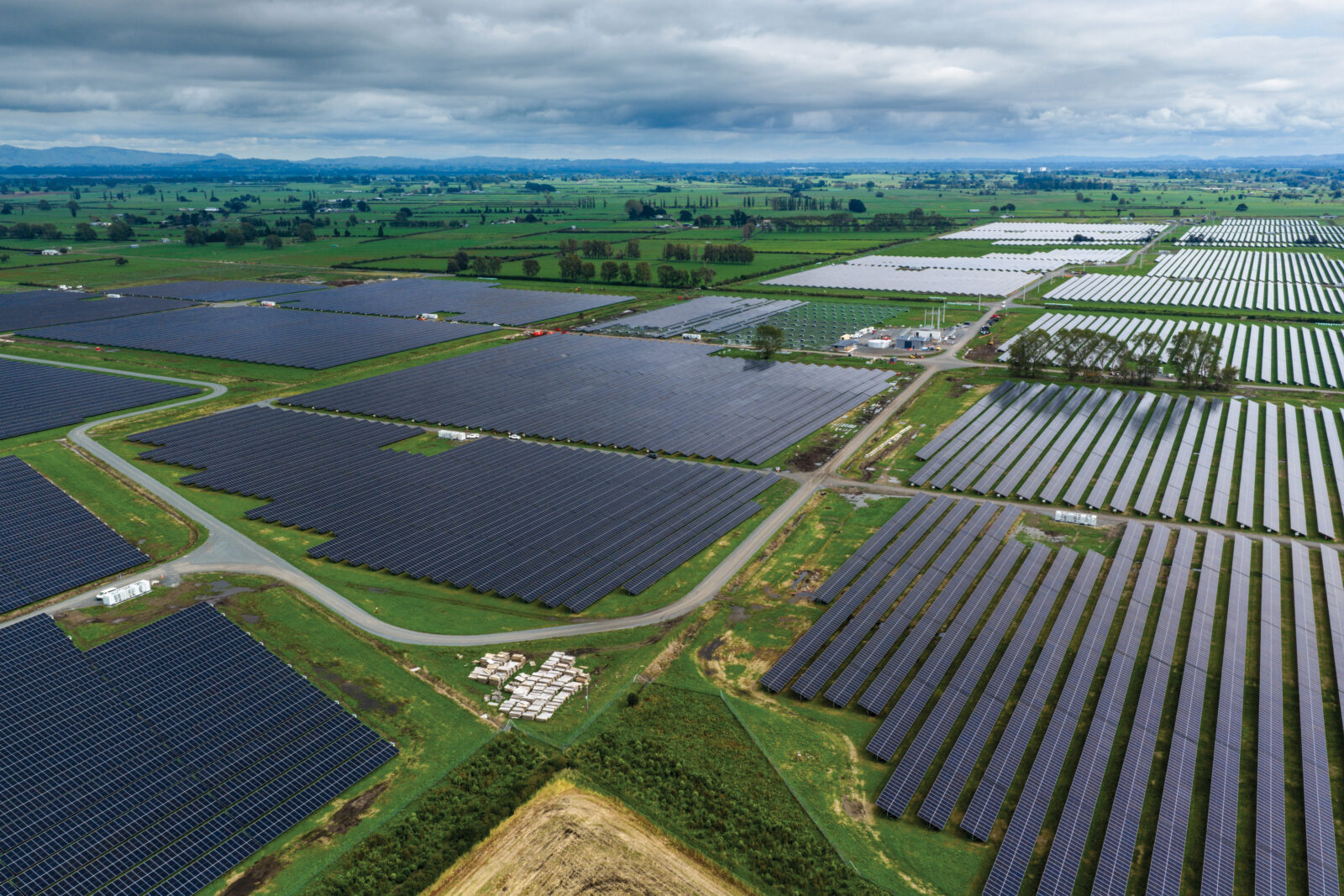
Lodestone has built five of the country’s eight operational solar farms, including the first, near Kaitaia, in 2023. It has another dozen or so in the works, hoping to bring one online every year for the next decade. “We’re essentially harvesting the sun,” says Holden.
Hundreds more solar farms are in the planning or consenting stages. In June, construction started on a 3000-panel set-up on Stewart Island/Rakiura; the island runs entirely on diesel generators, but solar is now expected to relegate those generators to a back-up option.
We could do the same with our hydro dams, experts say.
Various governments have considered implausibly expensive schemes for storing energy. There was the idea of turning Otago’s Lake Onslow into a giant battery, pumping water uphill into the lake in wet periods and running it back down through turbines when dry—a project estimated to cost $16 billion before it was scrapped in 2023. The government is, for now, backing the construction of a terminal in Taranaki to import liquefied natural gas; it’s widely expected to cost at least $1 billion.
With enough solar generation, these schemes become unnecessary, according to a report by research consultancy Sapere and Rewiring Aotearoa: if 80 per cent of New Zealand’s homes had solar installation, the country’s existing hydro dams would have an extra month’s worth of energy, ready to flow through turbines to generate electricity at peak times.
“If we make a kilowatt hour in the middle of the afternoon because of the sun, then there’s a kilowatt hour behind some hydro dam somewhere stored in the form of water that just stays there and waits,” says Holden. “The hydros are effectively one big, huge, massive battery. Other countries don’t have that luxury.”
Using the dams like this would entail overcoming a problem already playing out in Australia, China and California, says energy economist Geoff Bertram: there, solar is taking off but the incumbents are digging in their heels. “The coal-fired stations just refuse to ramp up and down,” he says. “They just chunter along at full capacity.”
This practice is called curtailment, and it means a lot of the power produced by solar and wind in those places goes to waste. “We need to reverse the order of scheduling merit,” Bertram says. “When solar is going like the clappers, the hydro should be backed right off. In the evening, when solar is down, hydro can ramp up.”
*
Any serious scaling-up of solar faces four enormous obstacles, says Bertram: Contact, Genesis, Mercury, and Meridian. Bertram specialises in energy and the forces that drive it. In 2025, he contributed a scathing chapter to a book called Sharing the Sun: Empowering small-scale renewable generation in New Zealand. Our big power companies, he writes, are “a cosy and highly profitable oligopoly”; together they are “a monster”, “dysfunctional”. To them, he writes, solar and other renewables that take power off-grid are a “spectre”. “They threaten the super-profits and sky-high asset valuations of the existing industry titans, while holding out the prospect (albeit still distant) of an end to energy poverty for residential consumers.”
The government is the majority shareholder in three of these companies. It’s in the “awkward position”, Bertram says, “that it’s effectively sold out to the big companies”. And so for decades our decision-makers have held solar policy settings in one hand, huge dividends from the gentailers in the other.
Successive governments have considered reform, then backed away. Bertram knows it’s a fraught position to be in. People have their life savings in electricity-company shares. “As the company values collapse, there’s going to be a whole lot of mum and dad investors who are going to be screaming… And, of course, the chorus is going to be organised and dominated by the big investors who have also taken solid positions in these shares and know how to lobby government to protect their corner.”
But the rise of solar means a confrontation looms, he says, “between the general public interest and the vested interests in the industry”.
Don’t have too much sympathy for the government, he says. “They have plenty of room to move if they develop some ideas and some spine.”
As Bertram sees it, until recently none of the energy policies from major political parties really grappled with the big issues of market structure. Now, with the election looming, it will be essential for them to loudly declare their support for rooftop solar. He sees positive progress in that direction. But he warns that the gentailers will still be working to stifle competition: paying well under retail rates for solar power fed back into the grid, and households that go solar being held to standard network rates, making up almost a third of a typical monthly bill. “Even though you’re actually taking pressure off the grid rather than putting pressure on,” Bertram says. “It’s totally cynical,” he adds. “But it’s very well organised.”
Bertram has done the solar maths on his own Wellington home multiple times. The last quote was $14,000. He and his wife are both in their 80s, and they don’t want to leave their kids dealing with a loan. But “as soon as I can raise the money to actually do it, I’m going to put panels on the roof. Just for fun. And to put a finger in the wind to the big gentailers.”
[sidebar-1]
Bertram does have faith in the market to solve the problem, in the end. Look at what happened with cell phones—Telecom held the line for 15 years, he says, until finally the new tech “just broke the market open”.
A model like the now-defunct SolarZero, which installed household panels for free and retained ownership of the systems, could absolutely clean up in New Zealand now, he thinks, given the right funding. “Fly into Melbourne and every roof is covered with solar panels. You look at Auckland, not a solar panel in sight. You can just feel the opportunity sitting there.”
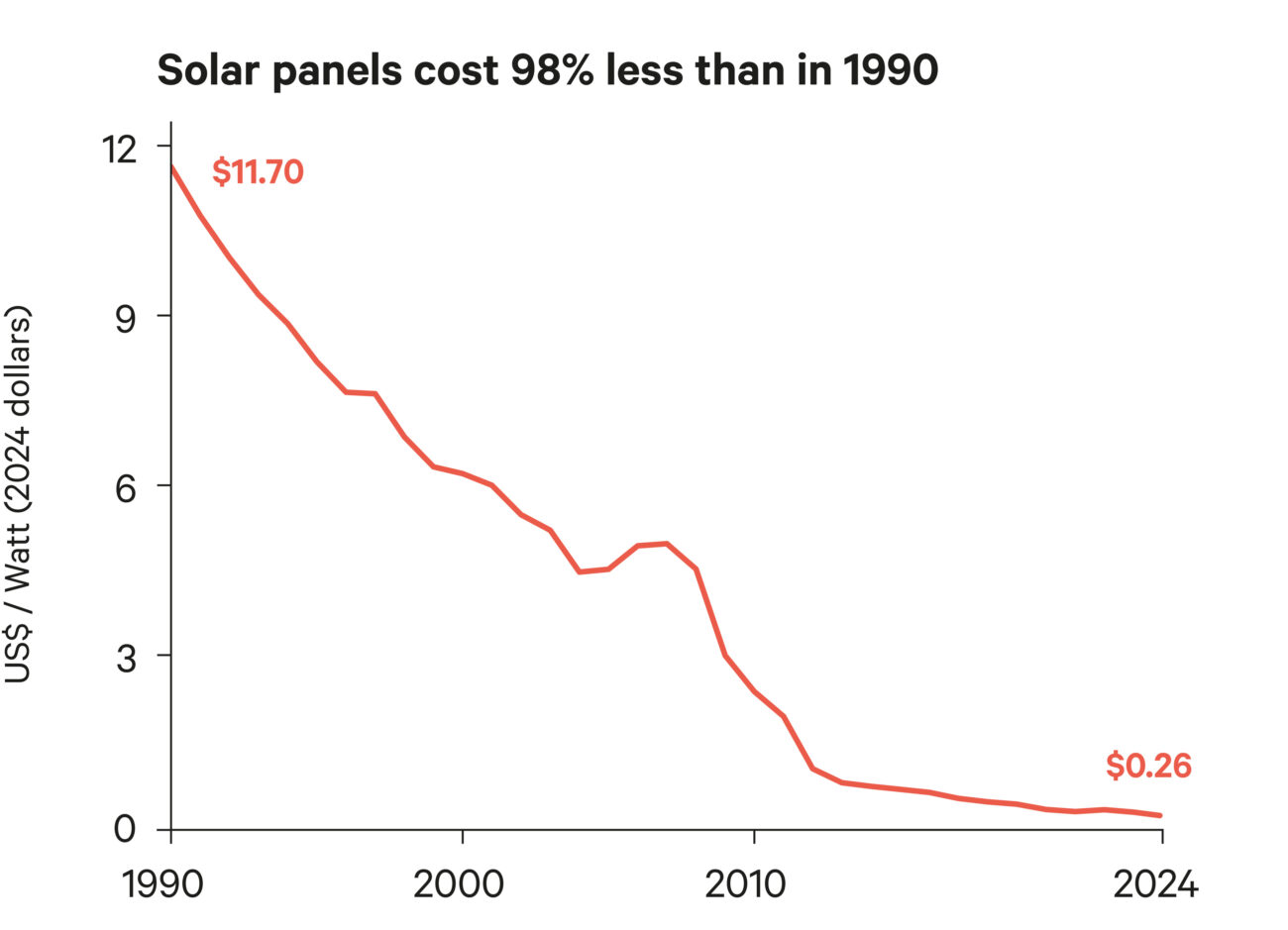
The technology is getting so cheap and so good, he says, that even without such a company, the public will find ways to opt in. Eventually, house after house will sport a set of shiny panels. “People can take the power into their own hands now.”
*
Making energy of any kind isn’t without some cost: it uses land, involves mining, creates pollutants, and produces waste that’s hard to recycle. But solar involves fewer costs than the energy sources humans have found so far. It doesn’t pollute to the same extent, or sicken people with its fumes. In terms of space efficiency, solar beats growing crops for biofuels: one study found that if we put panels on all the land now used for growing those crops, we’d produce roughly 22 times the energy—enough for the entire planet.
And while manufacturing solar panels requires rare-earth minerals, this involves less mining than coal; one report suggests that mining for these elements will tail off, because we’re using less cobalt, nickel and lithium per battery, and because we’re beginning to recycle batteries at the end of their lives.
Lodestone’s panels have a 35-year life-span, after which the plan is to replace them with new panels; the pilings will be replaced after 70 years. Holden expects demand will become so great that an industry will spring up to reuse the glass and silicon. At least it’s possible to recycle solar panels; you can’t do that with fossil fuels.
Holden sees the old obstacles between us and the sun falling away. “I used to stand up at conferences 20 years ago and talk about this, like, ‘There will be a day when…’ Now I get to say, ‘Yep, it’s here.’”
*
If you want a metaphor for reliability, for hope, for clarity, that’s the sun, one of the few dependable things in a world filled with uncertainty and change. Weather is unpredictable, fuel crises come and go, but the sun always comes up. As far as stars go, the sun is only halfway through its life: it hasn’t yet reached its five billionth birthday. Whatever happens, the sun will come up, and will most probably continue to do so until it runs out of hydrogen in another five billion years’ time.
“No one can ever embargo the sun,” said then-US president Jimmy Carter in 1979, during another fuel crisis, as he unveiled 32 solar panels installed on the roof of the White House. A year earlier, he had committed significant US research funding towards solar energy, with the reasoning: “No cartel controls the sun. Its energy will not run out. It will not pollute the air; it will not poison our waters.”
Solar power worked, he said. The only question left was how to cut the cost of it.
Part of what has hampered widescale adoption of solar, writes US environmental journalist Bill McKibben in his 2025 book Here Comes the Sun, is that it’s free. “Capitalism may be good at some things, but handling abundance may not be one of them; precisely because energy from the sun and wind is so plentiful and cheap, it can’t make as much profit for investors as oil and gas, which are scarce and dear.”
McKibben hopes that solar adoption will result in more global equality. “As long as you rely on a source of power that’s only available in a few places, the people who control those places will end up with inordinate wealth and power,” he told The Guardian in December.
We are at a “world-changing moment”, McKibben writes. Solar can cut us free of old, previously intractable binds.
Petrol stations become useless when you have an electric vehicle—and so does the enormous global apparatus that supplies them. Up to 40 per cent of global shipping is just taking fossil fuels around to the places they’re used.
“It really is people versus vested interests,” says Mike Casey. And yet. New Zealand had the world’s first fully electric home, he points out, more than a century ago, in Tauranga. “They heated their water with resistive electric heating and the home was full of electric heating because our electricity was way cheaper than whale oil and kerosene.” Otago had the world’s first electrically powered gold mine. In 1888, Reefton became the first town in the southern hemisphere to have a public electricity supply and electric street lights.
When Richard Jones started Tū Mai Rā, there was never any doubt about the company’s name. The phrase—it means “to stand before the sun”—had just always been around, in a Treaty settlement, as a waiata, more recently as a rap. Jones works, too, with an old trickster in mind. In the energy world, “Māui” is shorthand for the massive gas field off Taranaki, now running on empty. “It is ironic,” Jones says. Because it was not fossil fuels Māui set out to snare. It was always the sun.
More by Rebekah White
Subscribe to our free newsletter for news and prizes
3
$1 trial for two weeks, thereafter $8.50 every two months, cancel any time
Signed in as . Sign out