


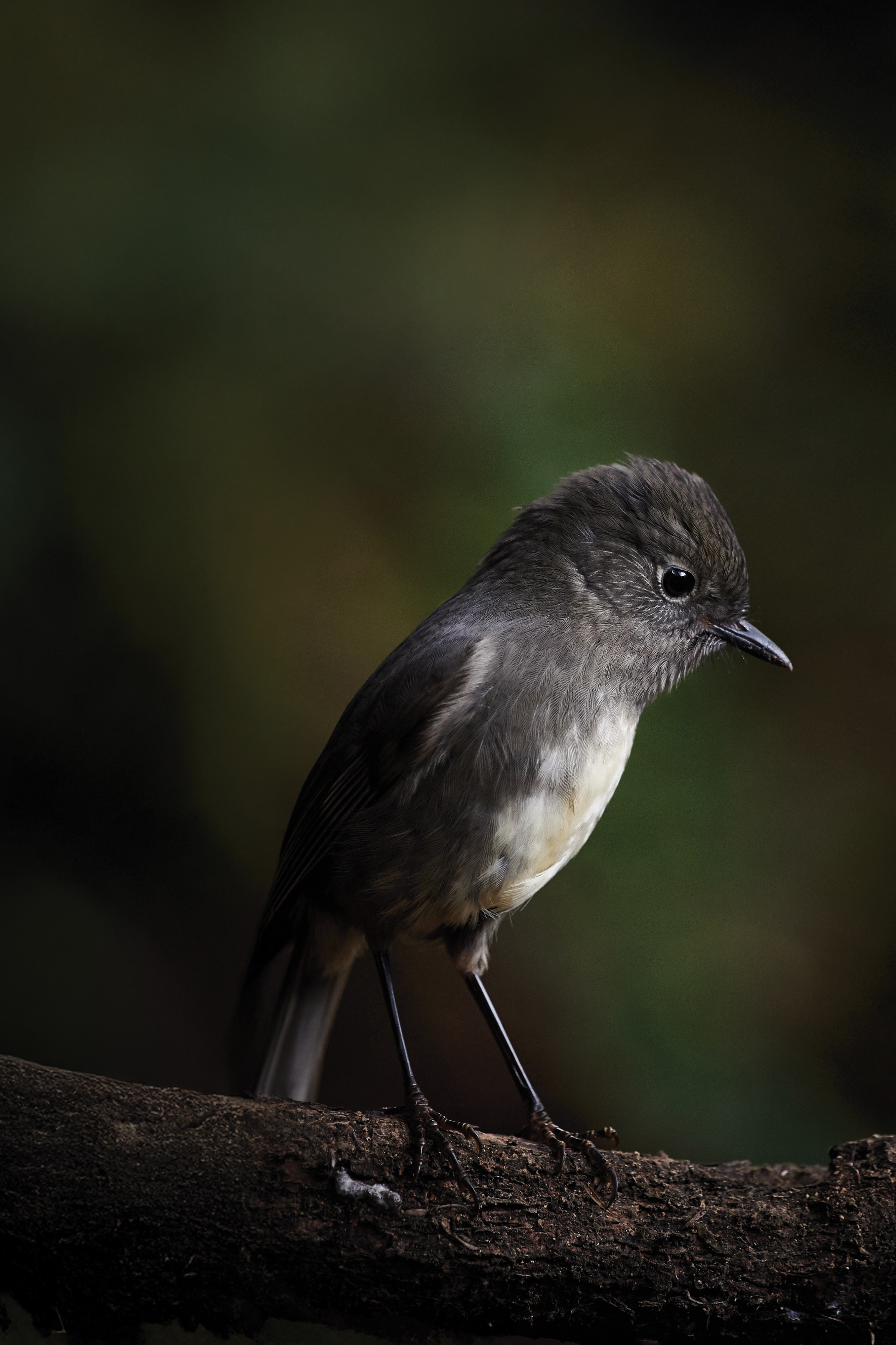
Fifteen years after kakaruwai were brought to Dunedin’s Orokonui Ecosanctuary, a new study shows the tiny robins are doing so well that they have booked up every bit of real estate and are now kicking juveniles into the surrounding bush. Researchers counted at least 23 of the friendly birds living up to 1.5 kilometres outside the sanctuary fence—a “halo” area protected by a network of traps to control possums and mustelids.
Ecologist Manaia Pearmain-Fenton (Ngāti Hokopū, Ngāti Awa, Te Whakatōhea) says the robins at Orokonui are the lucky ones. The first 45 pairs at the sanctuary came from Silver Stream, 10 kilometres away, where there is no routine predator control. The birds left behind were quickly picked off. Now, Pearmain-Fenton says, there are no female robins left in that population. “It’s functionally extinct.”
After that “awful” decline, watching so many Orokonui robins survive outside the fence is deeply encouraging, Pearmain-Fenton says. “One tiny little family of birds—if they get to raise babies, and those babies fly off somewhere else? That’s a win.”
More by Catherine Woulfe