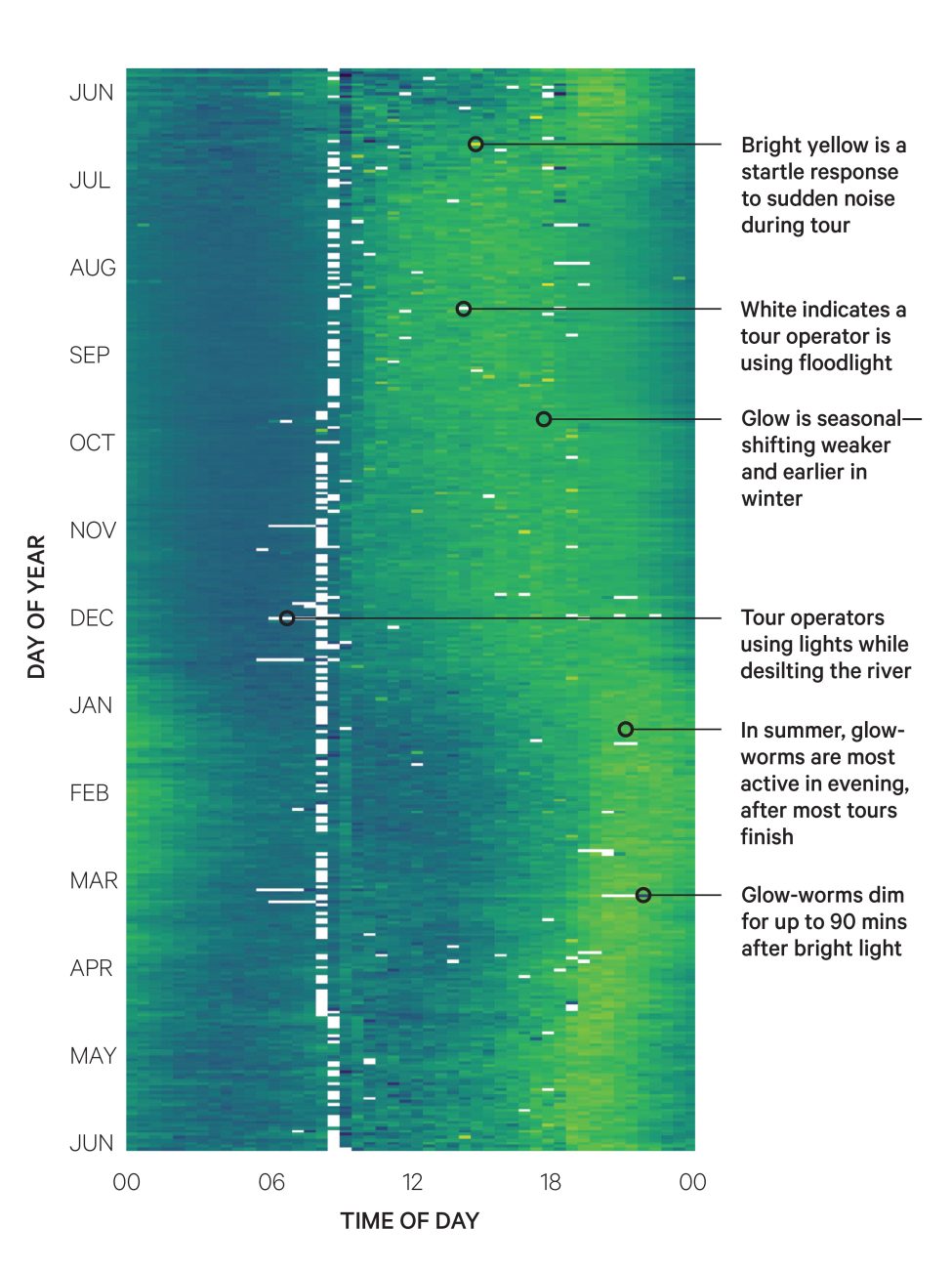
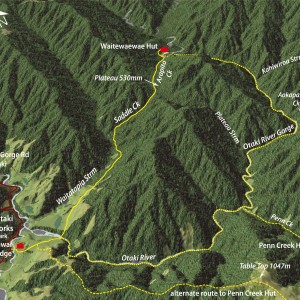
Timelapse photography shows the tiny superstars of the world’s most famous glow-worm cave system, Waitomo, flickering in response to us pesky humans. Noise makes the glow-worms dial up their bioluminescence, and artificial light prompts them to dim, or switch off for a while. This heat map tracks the intensity of the light show across the […]...
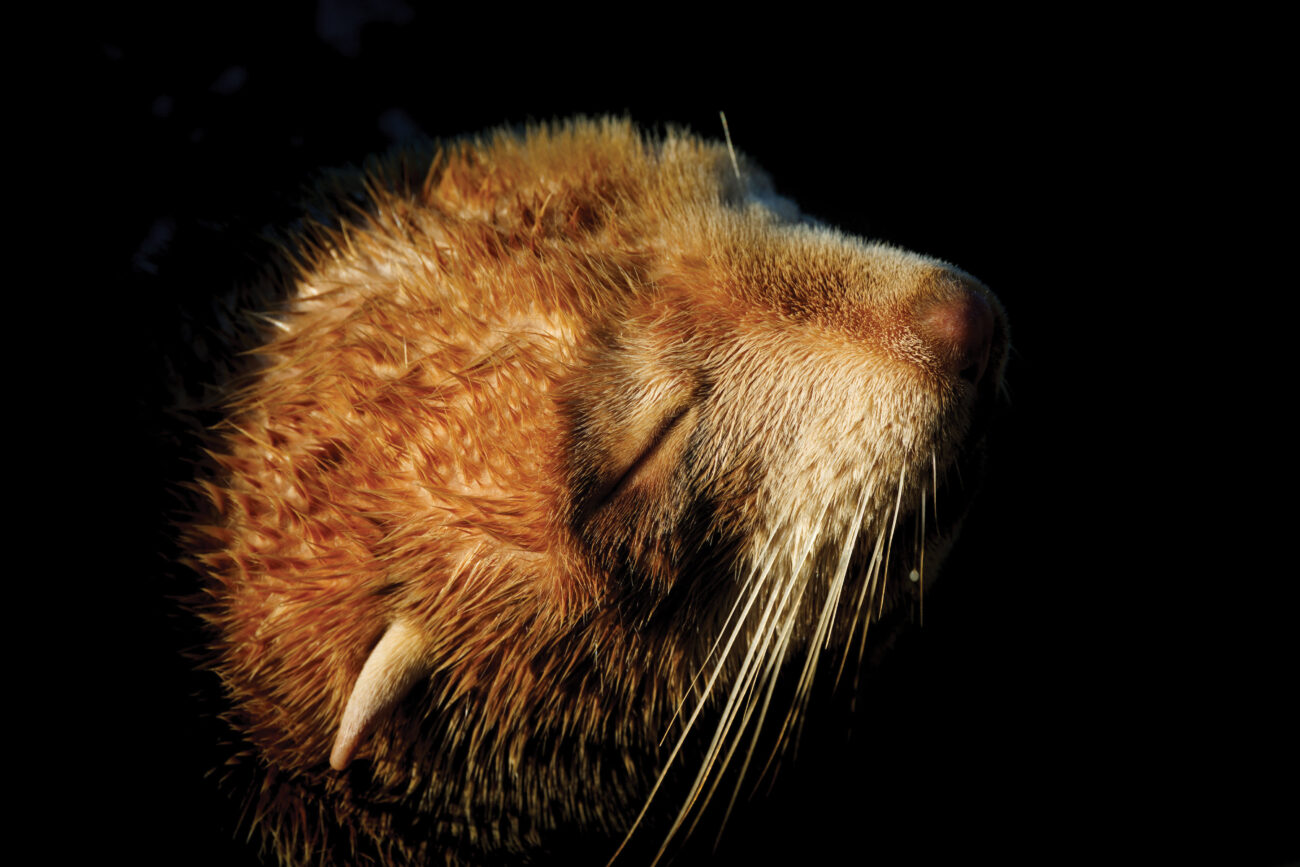
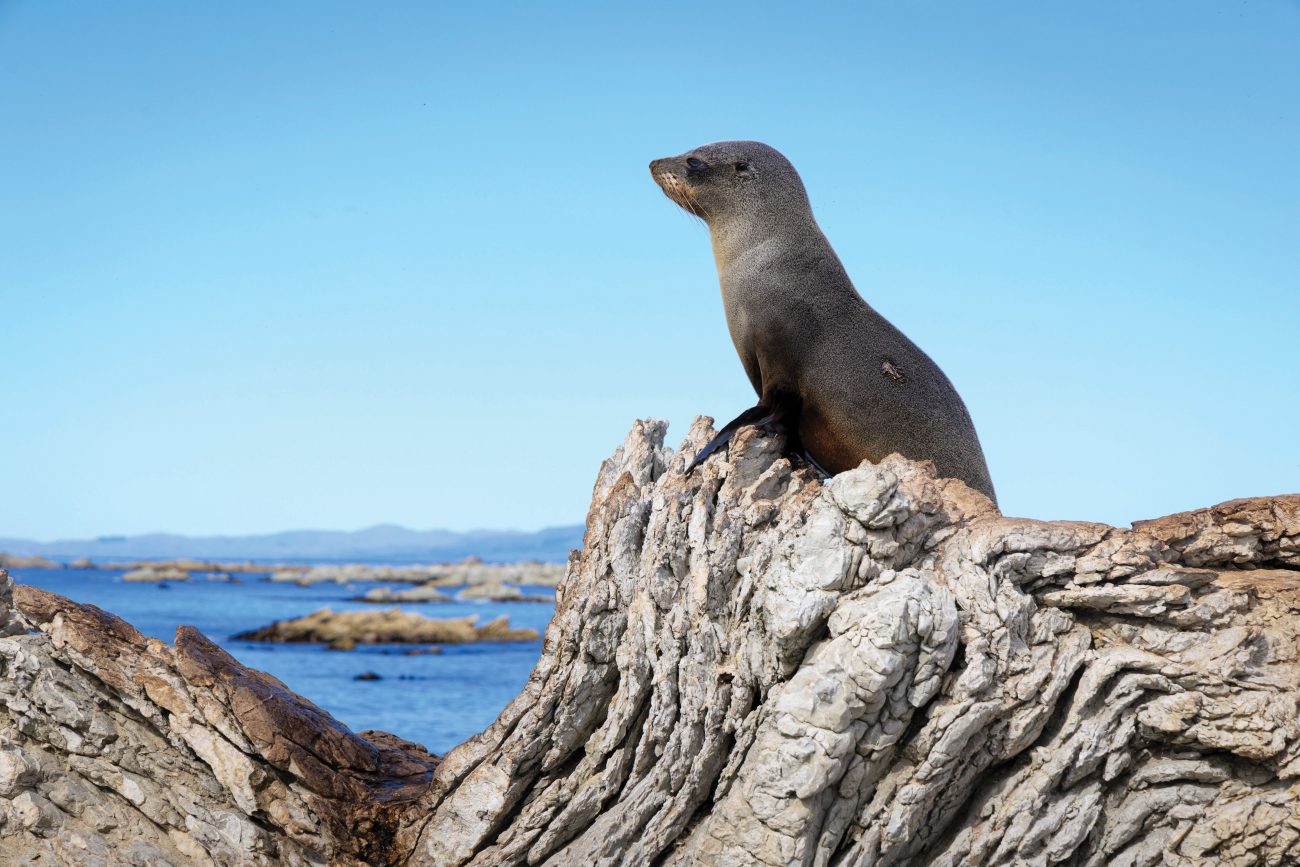
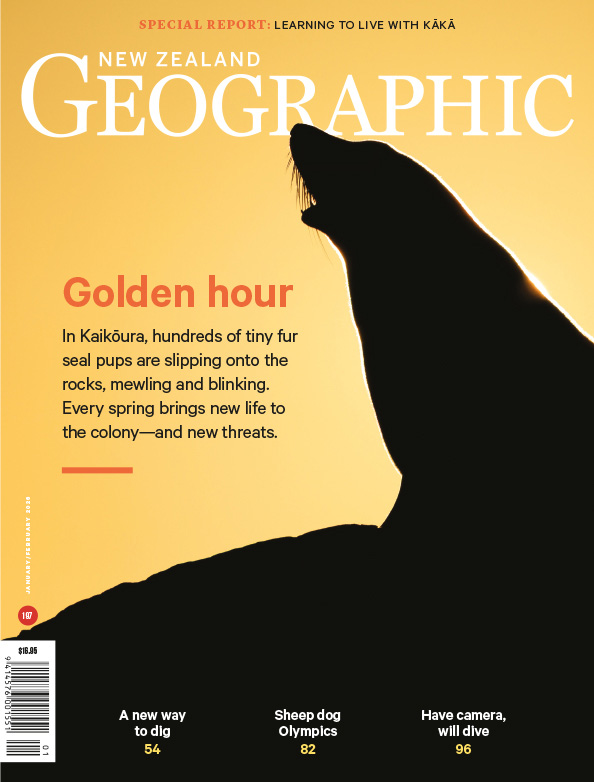
In our cover story last issue, we outlined the many threats facing our fur seal colonies. While most populations are stable or growing—for now—a new paper shows that all along the West Coast, birth rates are plummeting. At Wekakura Point, Cape Foulwind, and Taumaka Island, pup numbers have dropped by 83 per cent, 71 per […]...
Up to six trillion climate change-fighting microbes inhabit each square metre of tree bark, according to a new study by scientists at Australia’s Monash and Southern Cross universities. The paper, published in Science, samples eight species of Australian tree and finds that not only is the bark teeming with life, but those microbes are “air […]...
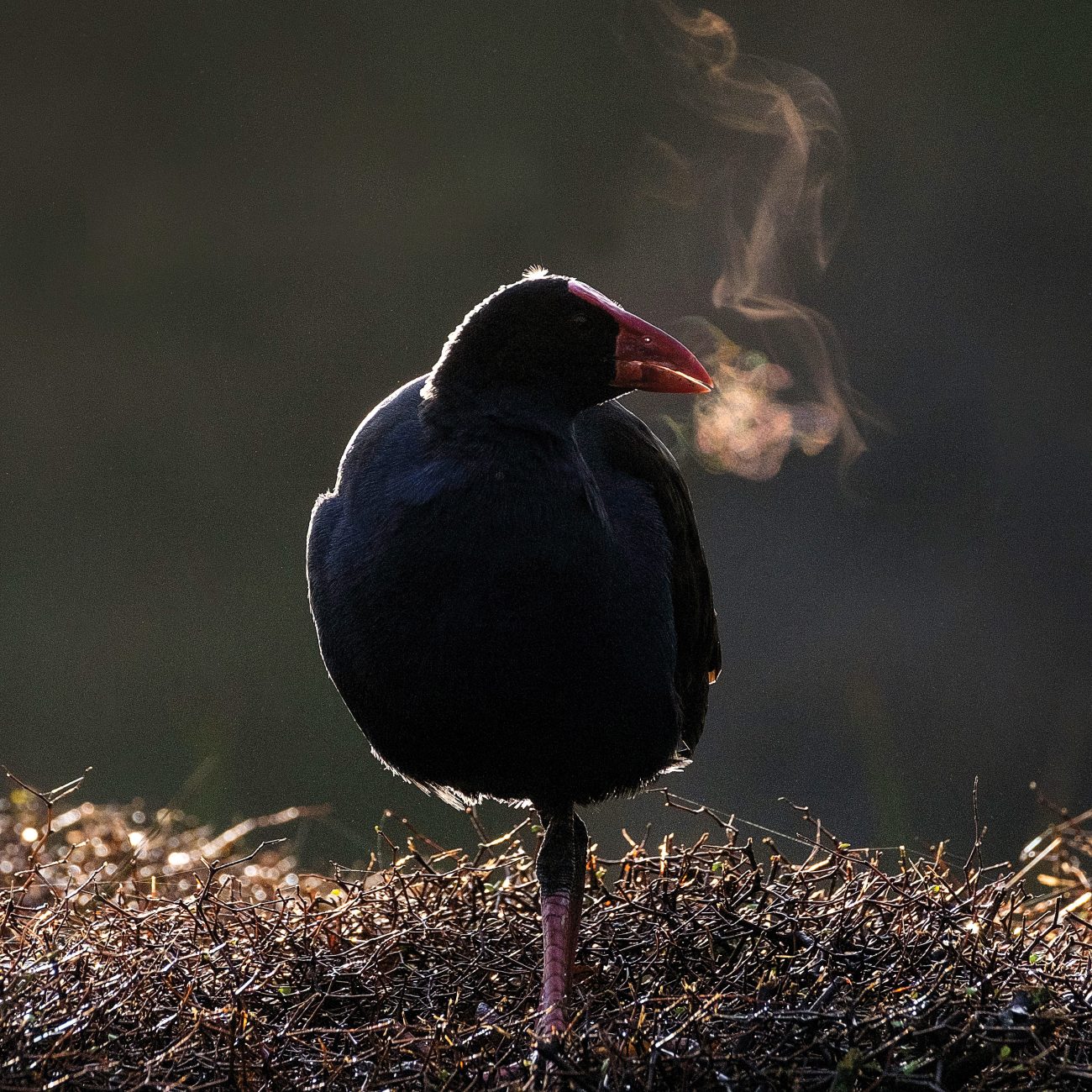
Anyone who’s camped in pūkeko country knows they make a heck of a lot of noise. Now, researchers led by a team from the University of Konstanz in Germany have discovered that the birds’ language also has a “sophisticated and structured” logic to it. The team analysed thousands of recordings of the birds’ raucous breeding […]...
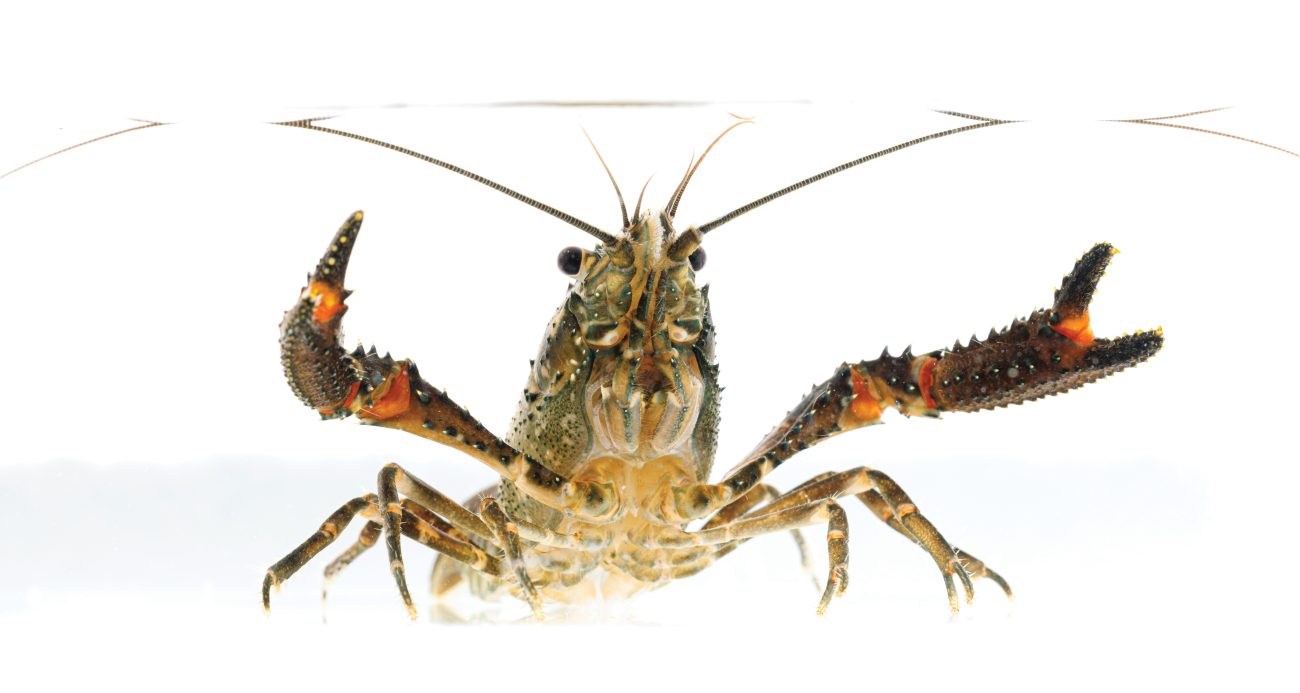
“A dead fish is a dead fish.” That’s the key finding of a recent study on the scavenging habits of our native crayfish, led by Calum MacNeil, a freshwater and invasion ecologist at Cawthron Institute. Kōura detect predators, such as eels, in the water through chemical cues. They can also tell when a predator is […]...
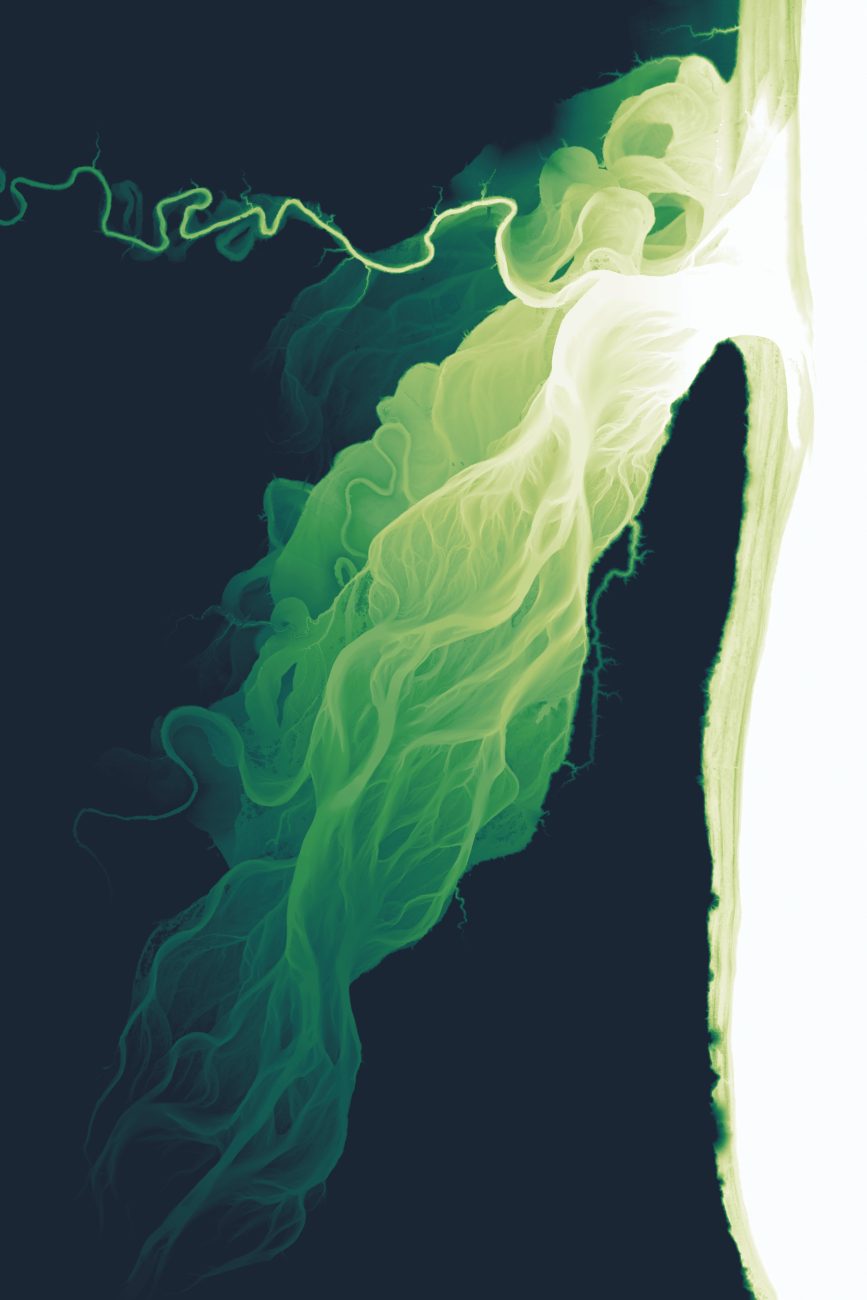
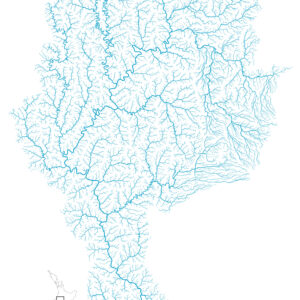
Waiapu River, a treasure of Ngāti Porou, is now known, too, for its volatility. After decades of forestry thrashing the land, every major storm pushes silt and pine slash downriver to the people and beaches of Tairāwhiti. This image, showing where the river meets the coast at Gisborne, is based on aerial LiDAR data collected […]...
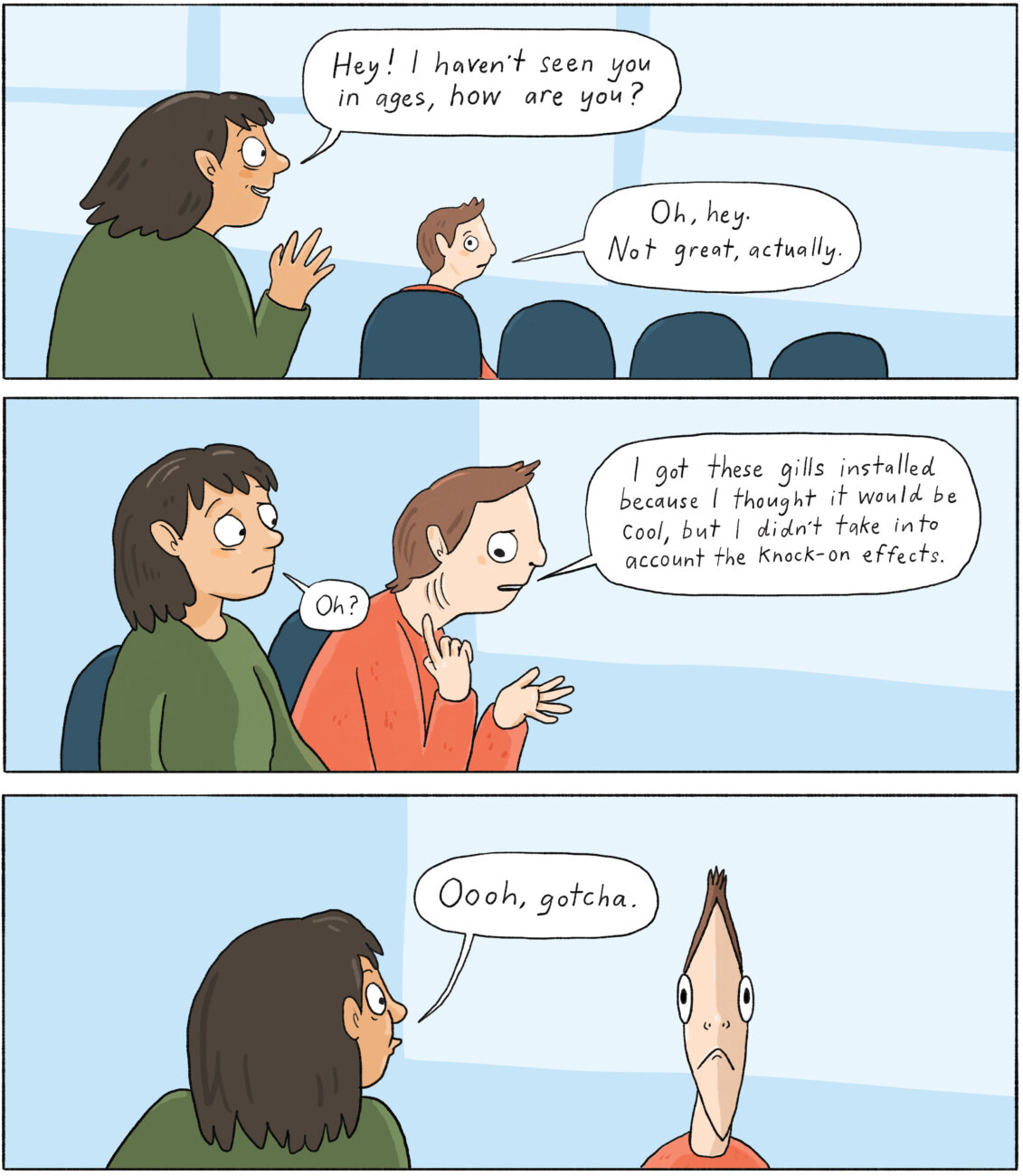
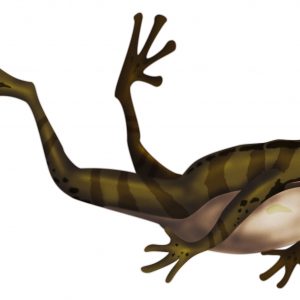
Oxygen shaped the world as we know it. It’s why we hiccup and why frogs croak. It’s so good that some turtles have learned to suck it in using not just their nose and mouth, but also… another orifice....
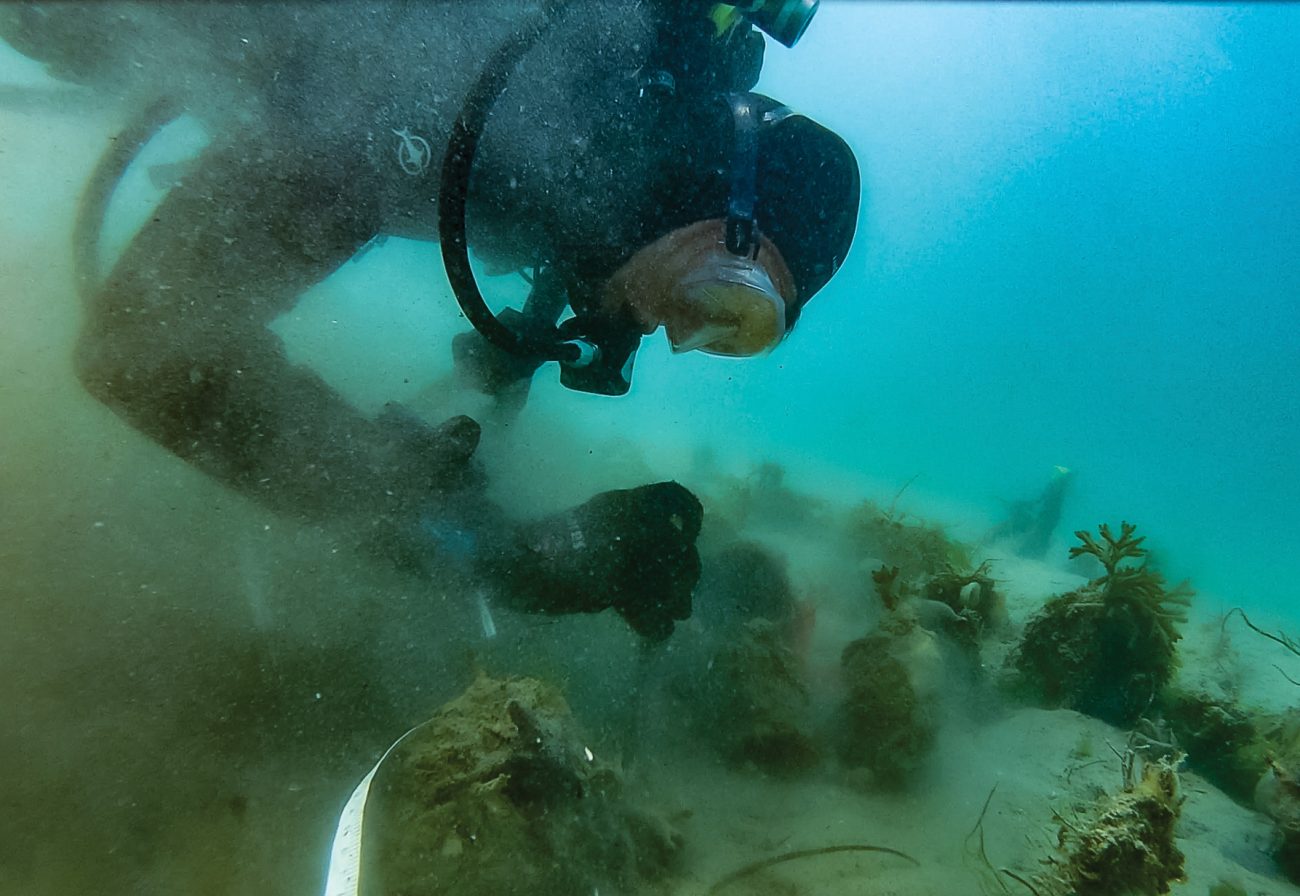
Horse mussels are massive. Given a chance, the shellfish can grow to almost half a metre long. University of Auckland marine scientist Jenny Hillman says that until the 1990s, these huge shellfish carpeted harbours and estuaries around New Zealand, cleaning the seawater as they filtered it. They were big builders, too: forming reefs that bound […]...
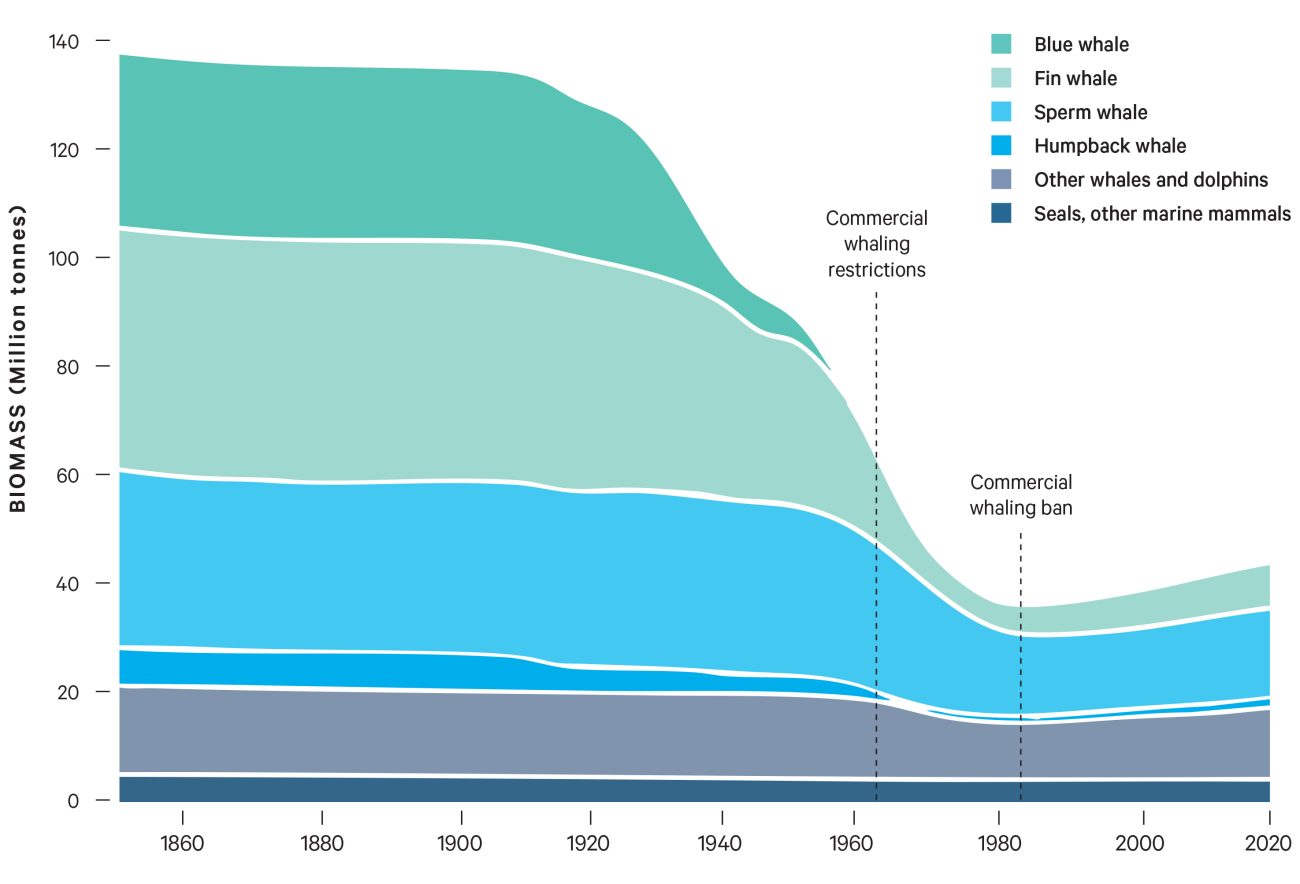
Since the 1850s, two per cent of marine mammal species have gone extinct. But if we look at the biomass—if we add up everything that makes up whales, dolphins, seals, sea lions, dugongs, manatees, and sea otters—then the amount of these wild animals has dropped by 70 per cent, according to a new study published […]...