



A new book showcases the dust and drama of mountain biking in New Zealand.
Mountain biking is speed—adrenaline, endorphins, the rush and the freedom. Photography is about stillness, the freezing of a moment in time.
But for Rotorua photographer Graeme Murray—who once raced downhill mountain bikes for New Zealand—shooting and cycling interweave. When he’s out riding the Whakarewarewa Forest trails he helped make in the 1990s, he untangles knotty work problems, such as how to light a complex commercial job. “You go in there, and you can breathe, you know? In five seconds, your mind just goes, ‘Whoosh… I’ve got it, done.’”
As he rides the pine-needled paths, ideas for mountain-biking images drop into his brain, too. “I’ll see the light coming through a certain spot, the shadows, and it triggers something… It’s kind of painful, actually, because it’s just never-ending.” Murray will skid to a stop and tap out a reminder on his phone. Back at his desk, he sketches out the shot he’s imagined.
Sometimes it’s just a matter of calling up a rider mate and picking a foggy morning. Other times, he waits months or even decades for all the elements to align. He’s been waiting 20 years for a certain ridgeline of pine to be logged, for example, so he can nail an actual “moon shot”—the full moon rising over a particular pile of rocks.
Usually no-one’s paying him for his bike pictures; he does them in his own time.
It’s this kind of dedication, passion, and “hardship and grit” that Wānaka filmmaker and producer Nick Stevenson aims to showcase in Eden: A Portrait of Mountain Biking in Aotearoa New Zealand, which features the work of 13 photographers, including Murray.
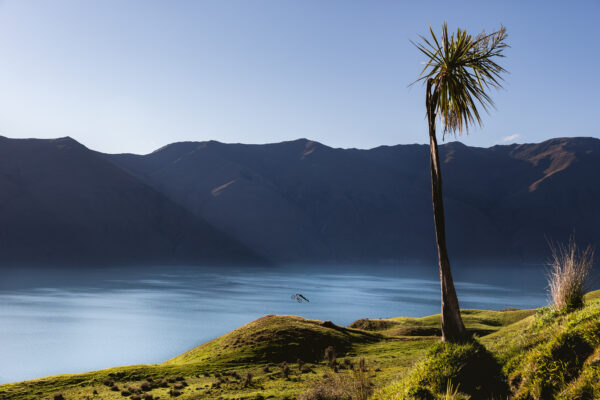
Capturing such images requires “unglamorous hours and often brutal conditions”, Stevenson writes in the book’s preface—“hiking in the pitch black with the heaviest of camera bags, frozen to the bone, exhausted, always starving… Many times, these endeavours fail.” When they do succeed, the hard-won images often appear only ephemerally on an Instagram timeline, viewed on the diminutive screen of a phone. Hence the book: full-page, full-noise photographs taken all over the country. The trails run through tussock and beneath tree ferns and among the uniform columns of plantation forests.
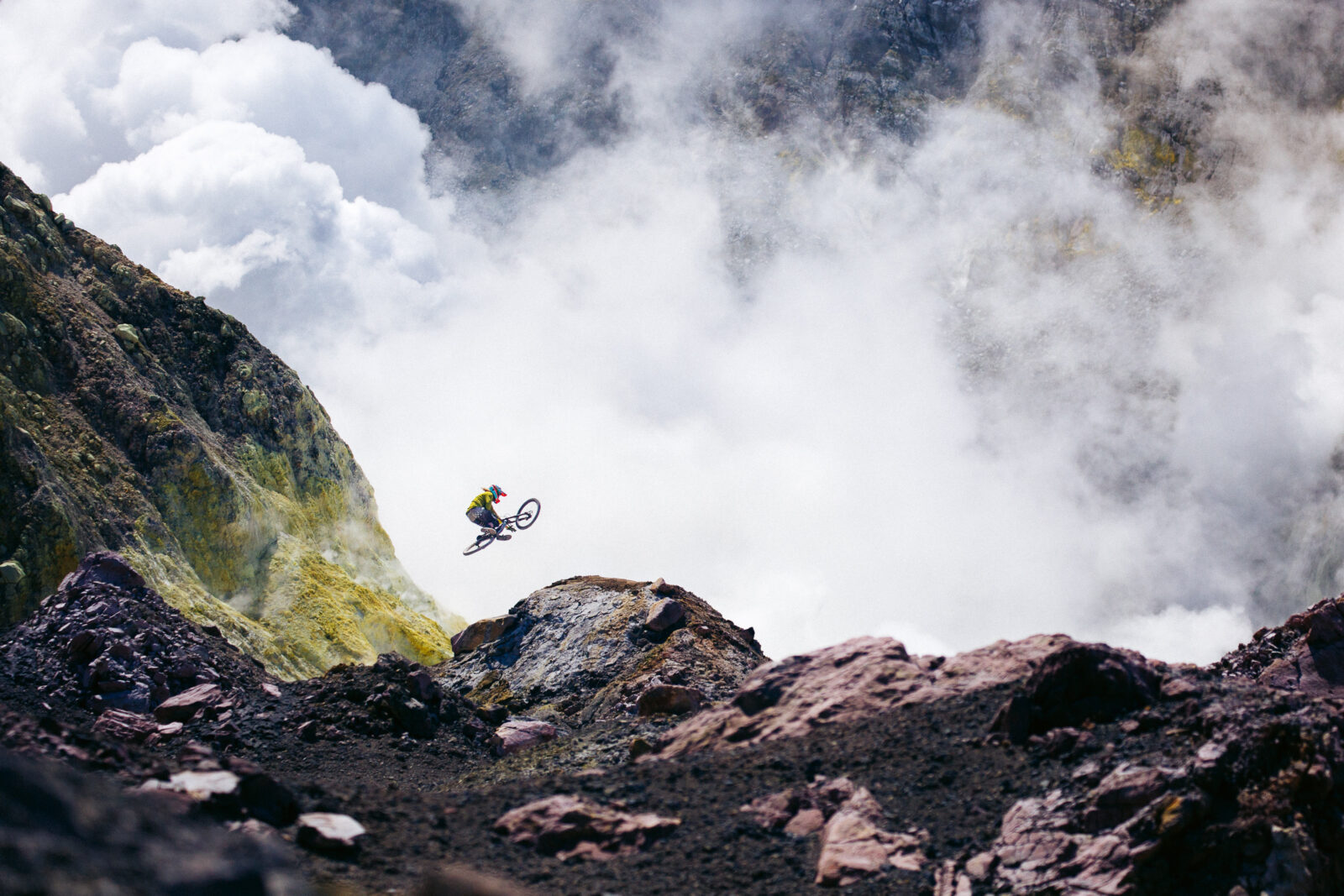
The riders tip off precipitous cliffs and skid between rocks, chase scree down mountainsides and leap metres into the air. The quiet moments are here, too: sunsets, slow bridge crossings, a stop for smoko.
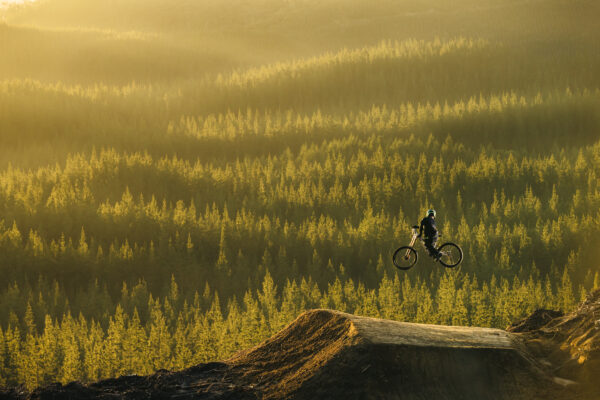
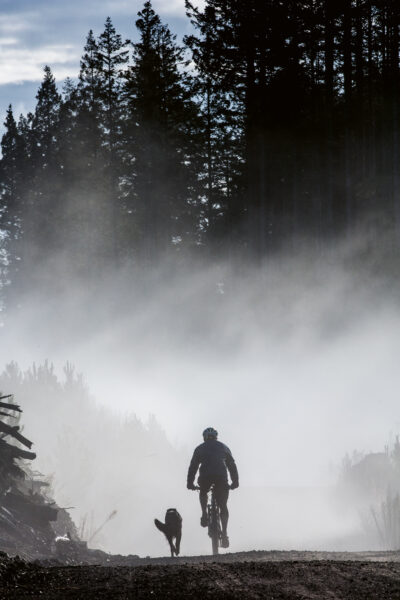
Murray’s images have a particular misty mystery to them; sometimes this is the natural result of the inversion layer common to Rotorua mornings in winter, as with the image of the man and dog on page 15, or the low light of the golden hour over the endless tops of the Whakarewarewa Forest on page 10, a view made possible only by the felling of the pines on this part of the trail.
More by Kate Evans
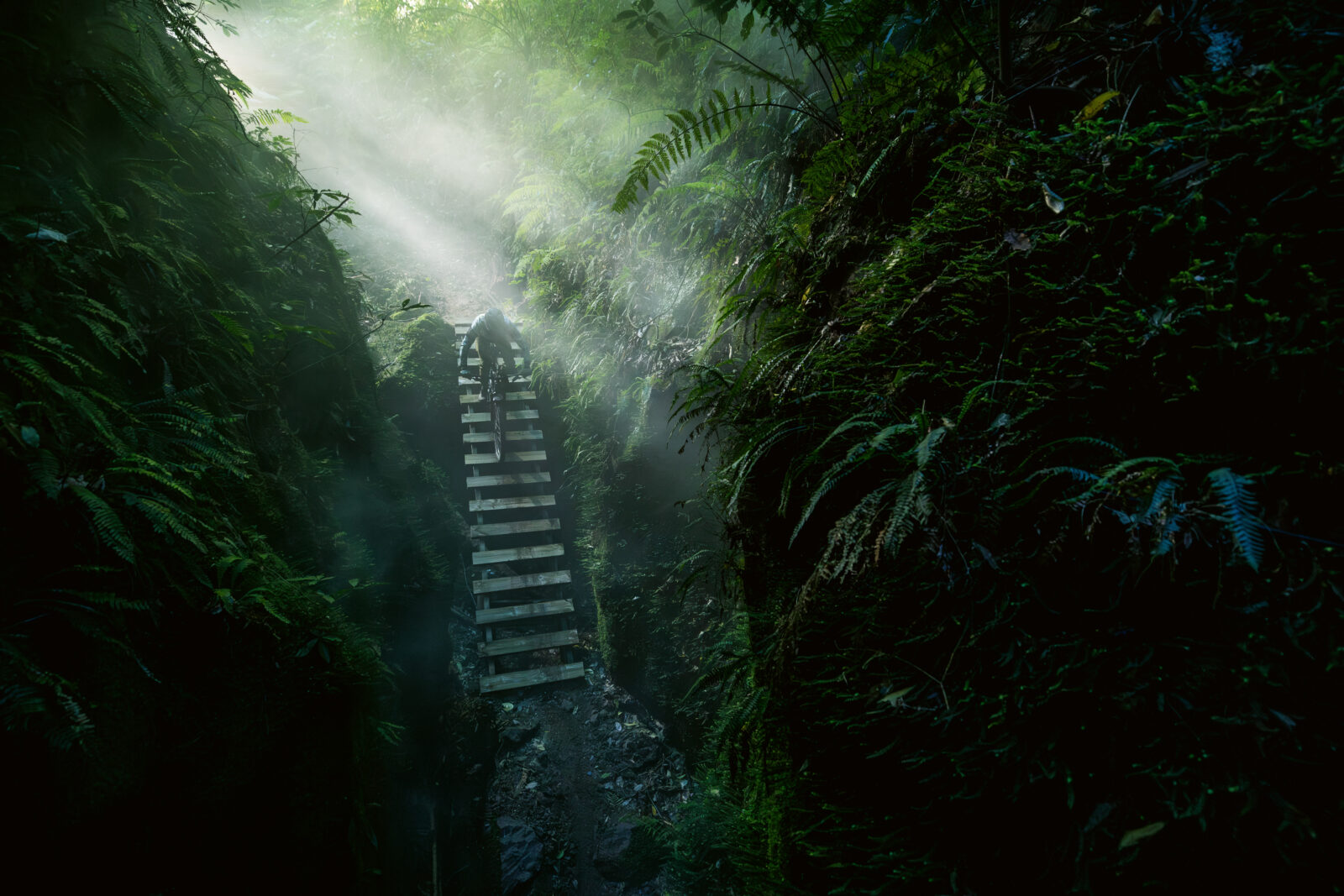
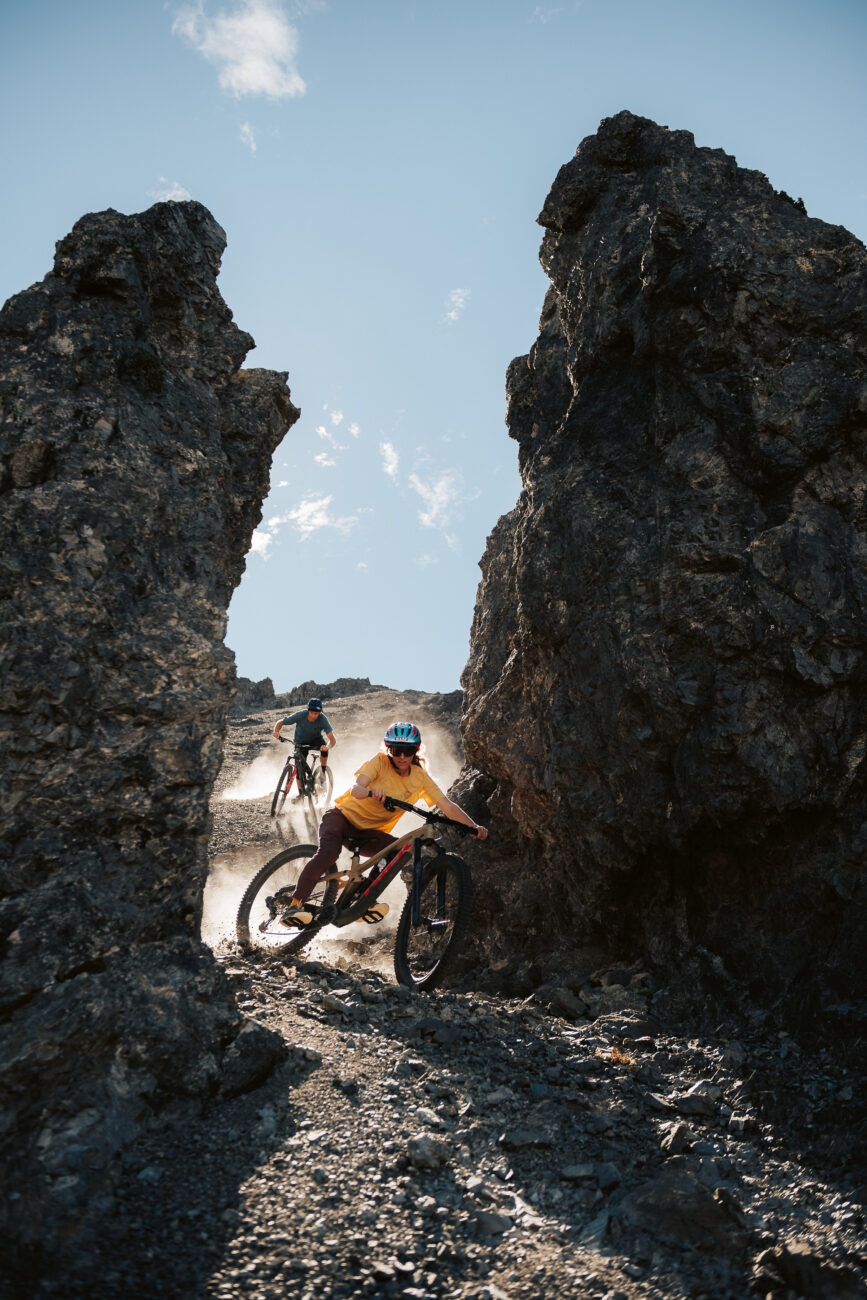
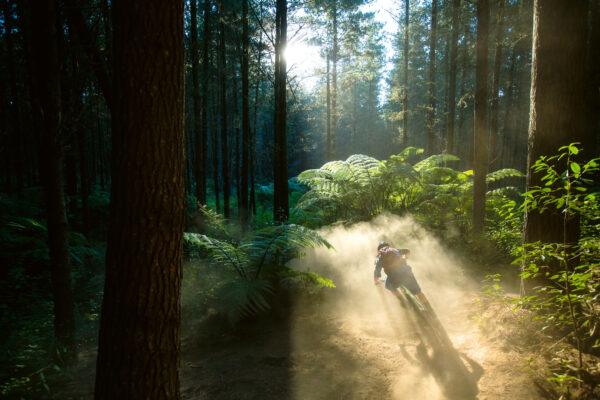
Other shots require more intervention. For instance, for the picture on page 14, to evoke the feeling of summer riding in the forest, where you’re often swallowing other bikers’ dust, Murray and rider-model Mike Hopkins kicked up some extra dust themselves. For the shot opposite, of Jeff Carter bumping down a ladder into a canyon, they brought in a smoke machine. The rays in this frame are not sunlight but a studio flash Murray lugged into the forest and the camera is stuck up into the canyon on a custom-made six-metre carbon-fibre pole. “I created that shot out of nothing, basically. It’s like a studio production—but I just did it for fun.”
Partly for fun, and partly to show off the beauty of his hometown—and his beloved forest. Outsiders often disparage Rotorua, Murray says. “They’re like, ‘That’s a hole.’ And I’m like, ‘What are you talking about? There’s all this stuff to do!’”
*
Casey Brown, pictured on page 12, is one of the few women featured in the book. She grew up in a remote hut a seven-hour tramp from the nearest road in South Westland—a formative experience that fuelled a lifelong need for adventure. She started riding bikes when she moved to Canada aged 11, and by her 20s had amassed a swag of race titles, including Canadian national downhill champion. She’s now turned professional and divides her time between North America and Central Otago.
She has been instrumental in persuading her peers to open up the top tiers of freeriding—this side of mountain-biking is about spectacular drop-ins and jumps, tricks and creative lines, and until recently was widely considered too tough for women.
“I’m proud to see so many local young girls shredding and coming up,” Brown writes, “making careers that never existed when I started.”
New Zealand is now a globally recognised mountain-bike destination. A recent report looking only at trails in our plantation forests found that 600,000 mountain bikers visited them in 2022, spending an estimated $291 million and supporting nearly 1500 jobs.
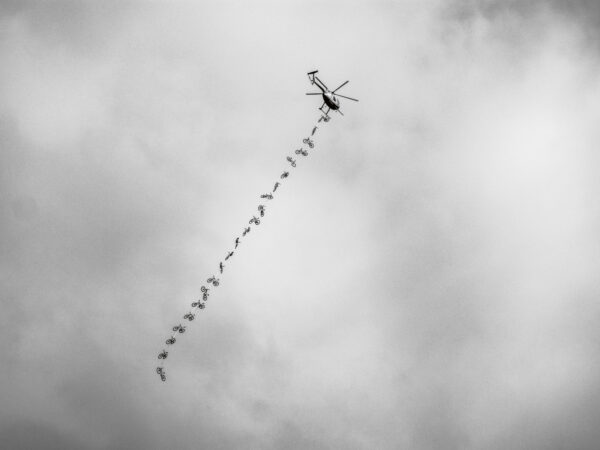
Sven Martin, who took the frame of the helicopter trailing bikes on page 11, travelled the world with his wife and their bikes, looking for the best place to settle. Nelson was it, the Americans decided in 2010. Partly for the trails—but also for the people. Martin writes that he liked the New Zealanders’ “distinct sense of stewardship” over their trails, the way everyone rode with tools and saws, just in case. And apparently, he liked getting smoked. “They were often riding older-model bikes with worn tires, no-logo T-shirts and flat pedals, yet had no problem dropping you on both the ups and downs.”