








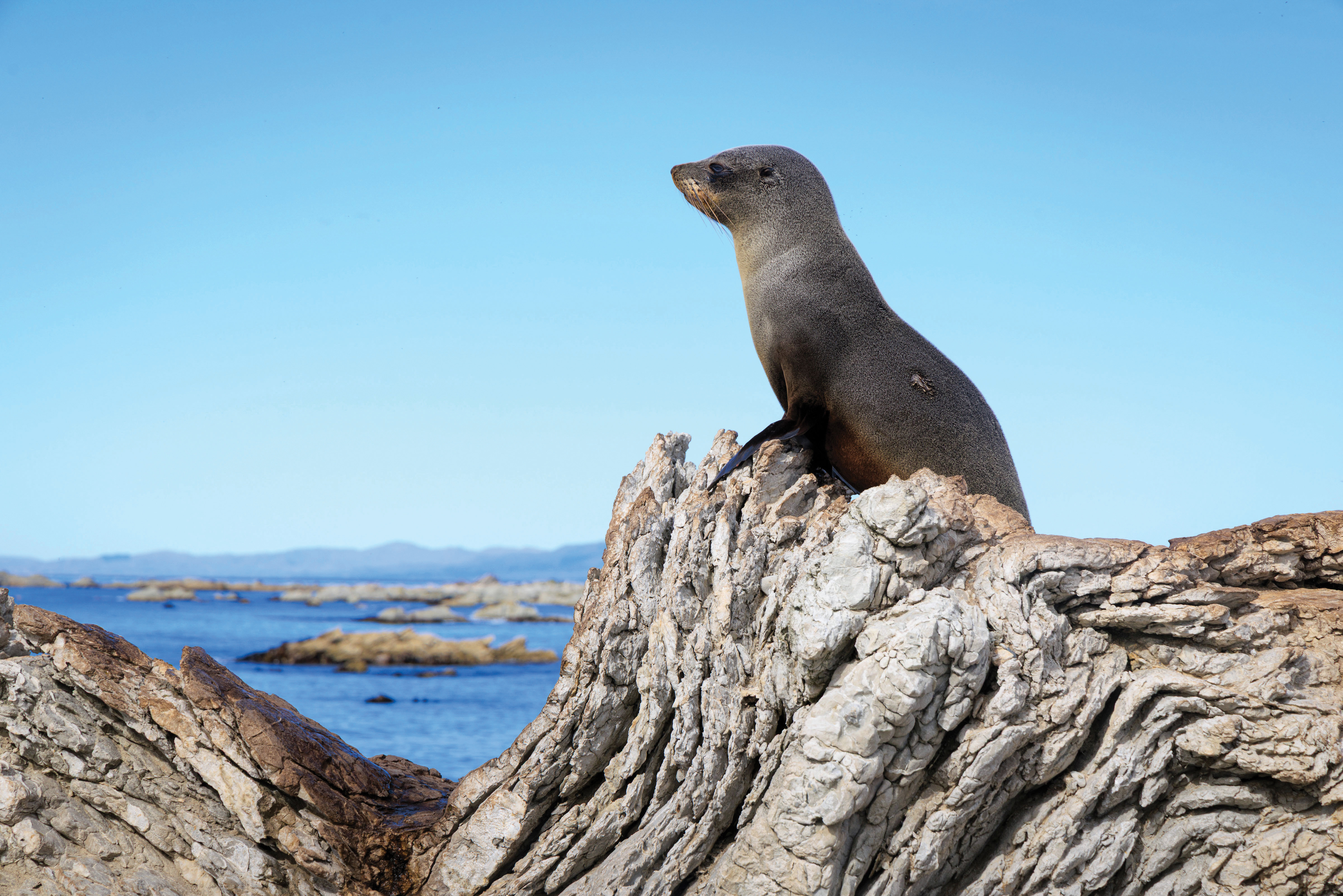
In our cover story last issue, we outlined the many threats facing our fur seal colonies. While most populations are stable or growing—for now—a new paper shows that all along the West Coast, birth rates are plummeting. At Wekakura Point, Cape Foulwind, and Taumaka Island, pup numbers have dropped by 83 per cent, 71 per cent, and 61 per cent respectively since the 1990s.
“There’s a widely held view that fur seals are doing okay,” says the Department of Conservation’s Don Neale. “But these results show quite the opposite, at least for the West Coast.”
We know this only because of 34 years of dedicated monitoring by DOC scientists and mana whenua: annual or biennial trips to these remote locations, often by helicopter, to mark and recount pups. “It’s the longest continuous monitoring of fur seal populations anywhere in the country.”
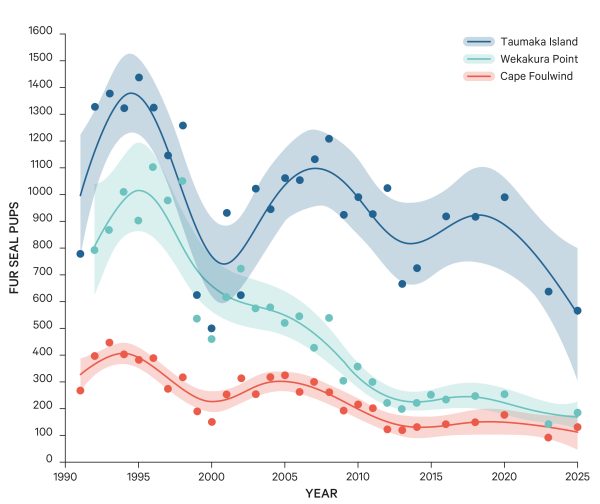
The study began in the 1990s because of concerns about high seal bycatch in the West Coast hoki fishery; that could still play a role in the decline, but so could climate change and disease. The past five years have seen record marine heatwaves in the Tasman Sea, and DOC staff are currently testing the Cape Foulwind colony for the presence of the new canine distemper virus recently identified in the Kaikōura seals. “It’s like a big jigsaw,” Neale says.
Whatever the cause, the trend line is a wake-up call, he says. “Fur seals are a high-level predator, and a dominant species on the West Coast. So they’re probably quite a good indicator of the marine environment and the health of it.”
More by Kate Evans