




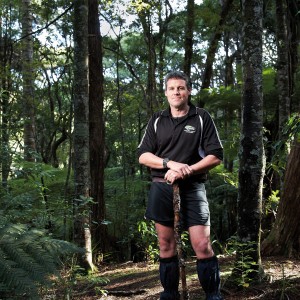


In the battle against this country’s rivers of poo, the dung beetle is a potentially powerful weapon and Shaun Forgie is a one-man army. But he’s been fighting for decades and he’s running out of both money and patience.
When I first visit Shaun Forgie at his dung beetle breeding facility in West Auckland, it’s late spring and he’s alternately despairing for the future of his business and wildly angry at the government.
He says he’s going to have to shut down the operation by the end of summer if he doesn’t get more funding. He rages against various departments and officials and drops f-bombs with great precision and intention. But he also brings an astonishing depth of knowledge and recall of facts. He tells me, for instance, that the beetles’ shredding and aeration of a cowpat can reduce parasite reinfection rates by 76 per cent. He tells me that after a 1-in-150-year rainfall event on an 11-degree slope, dung beetles can cut surface-flow contaminants by 81 per cent. And so on.
When asked for the name of New Zealand’s leading academic expert on dung beetles, he says: “Yeah, that’s me.”
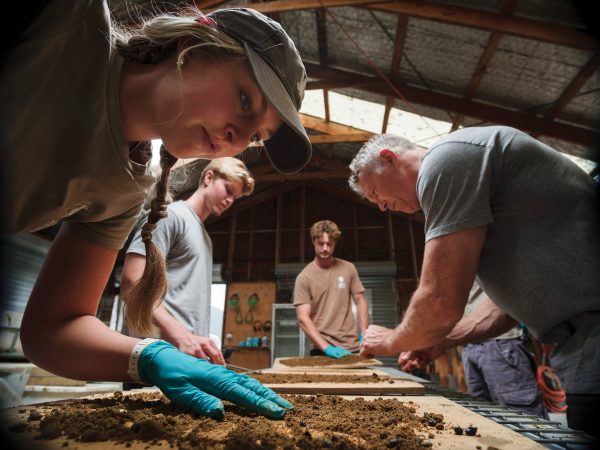
Behind him, under once-white nursery canopies, sit hundreds of 1000-litre containers filled with dirt and topped with poo he and his sons have collected from nearby farms. These are the breeding colonies for the beetles Forgie believes can change the face of the country. As we walk along the aisles, the smell is rich and earthy but not at all disgusting. He runs his fingers through the dirt.
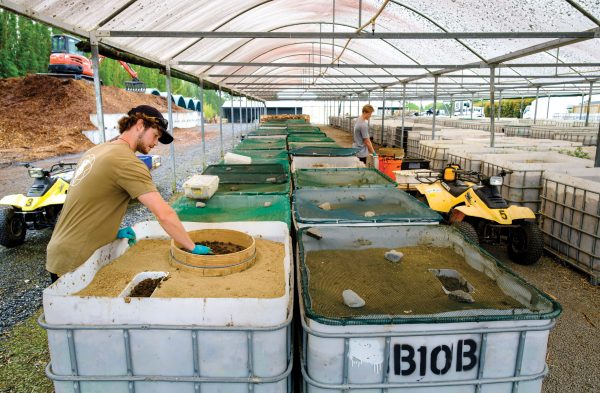
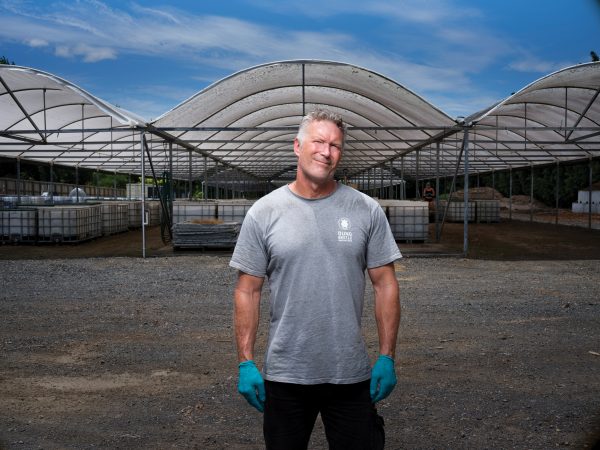
After a long fight to get these beetles into the country, and his 12 years in business, more than 1000 farms—roughly one in 47—have now introduced batches of Forgie’s brood. But while there has been progress, for Forgie, it has neither been enough nor fast enough. He is a man for whom dung beetles are life.
At one stage, he rolls up his sleeve and shows me a tattoo of a dung beetle on his impressively muscled upper arm. He tells me stories about the Egyptian god Khepri, who was half man, half dung beetle, and how dung beetles were buried with the pharaohs. He strikes me not just as a pitchman, but as a true believer, full of religious fervour and righteous anger. On his wall is a picture showing piles of dung fouling a paddock and another picture showing dung beetles making those piles disappear.
He’s furious at the Ministry for the Environment for investing millions of dollars each year into riparian planting to help stop dung washing into waterways while failing to provide similar funding for dung beetles. He uses the phrase, “really boils my bloody banana”.
He was never out to make money, Forgie writes in an email after we meet. “Sure we need to exist as a shareholder-backed business and make a profit, pay salaries for its employees dedicated to the mass production of these beetles in a commercial facility, but the main point was to fix this country’s floundering sustainability of livestock farming.”
Forgie is passionate, aggressive and committed—exactly the type of advocate you want in your corner if you’re in the shit. So why, more than a decade after his efforts first helped get them introduced here, haven’t dung beetles cleaned up?
*
Each year, cows and sheep in New Zealand produce around 100 million tonnes of dung, which would be enough to cover State Highway 1 five metres thick in poo from Cape Reinga/Te Rerenga Wairua to Bluff. All that poo is a breeding ground for parasites that compromise livestock growth, reproduction and milk production. It’s no good for grass, either: when a pat is left to stew on the surface, it smothers that bit of the paddock. And when it rains, the poo washes into waterways, leading to microbial contamination—most infamously E. coli—and fuelling algal blooms that can suck up all the oxygen and create “dead zones”. Dung beetles, given time to build up numbers, can help deal with this pile-up. Essentially, they pull the poo into the soil, meaning each cowpat becomes free fertiliser rather than a splodge of chemical spill. It’s a nifty, natural system: places that have always had cows and sheep tend also to have attendant armies of dung beetles. The problem, as Forgie put it when speaking to RNZ’s Nikki Mandow in 2020, is that “New Zealand brought livestock, minus the cleanup crew”.
It’s a clean and simple phrase. Forgie’s used it a lot. He says he’s been “plying” his story for years in the media and elsewhere. You can feel the weight of the years as you listen to him retelling it, again.
*
He was just like any other young man staring at a cowpat in a lab the day his life changed forever. He had been about to begin his master’s degree on wasps, but as he stood, staring at the cowpat, out from its top popped a small black beetle.
From such moments, lives are changed.
Forgie ditched wasps to focus on that beetle, Onthophagus granulatus, which had been accidentally introduced to New Zealand from Australia in the 1870s. In the course of his research, he discovered this particular species wasn’t doing much to diminish the country’s growing piles of shit—but, enticingly, it had plenty of relatives overseas that could do much better.
Knowing he’d have more clout with letters after his name, Forgie headed to dung-beetle central—South Africa—to complete a beetle doctorate at the University of Pretoria. Then he returned home, he says, “to fix this country”.
That has not gone as planned.
First, as anticipated, came a long stretch in limbo, while New Zealand’s research agencies checked, and checked again, that there was a solid case for allowing the import of more beetles. Forgie, and others, never stopped agitating. And in 2011, after nine years, a win: the Environmental Risk Management Authority approved the request to import 11 species. But now the beetles are in the country, Forgie feels abandoned.
He says: “The thing that pisses me off the most is that the country’s not listening. So I bring this to the country and bust my balls trying to get this going, only for the government to not listen.”
By “listening”, Forgie seems to mean “funding”. He estimates it would cost $60 million to fund a proper roll-out of dung beetles over the next decade. He doesn’t want the money to go directly to him, but rather to farmers struggling with the upfront cost—around $6000—of getting each population of beetles under way. He believes the benefits would be immense.
At various times, he says, there have been shoots of hope. The Ministry for Primary Industries co-funded the initial application to bring dung beetles to New Zealand and covered a subsequent project on potential risks. In 2019, when he was Minister for Agriculture, Biosecurity and Rural Communities, Damien O’Connor spent two hours touring the breeding facility. Nothing came of it.
Forgie says some in the government have told him there’s not enough science to justify funding, to which he replies that there are 3,500 publications on the ecosystem services provided by dung beetles.
He says he’s at the stage where he’s thinking about taking his beetles elsewhere. He says he could do it in Western Australia, South Korea, Chile. He says he’s already looking at building a facility in Colombia.
*
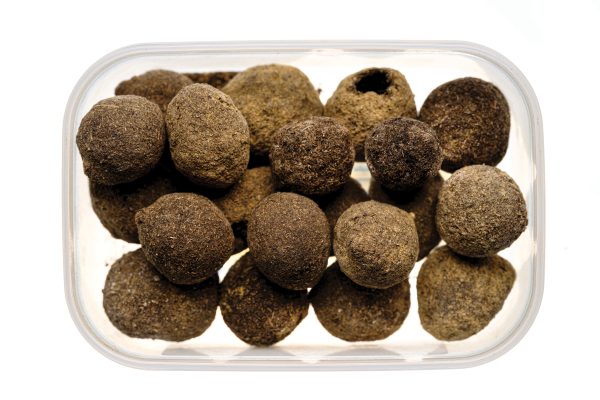
Forgie’s prefab office sits just metres from the beetle-breeding facility. As he enters, he sheds his mucky boots. The coffee machine chunters while Forgie picks ball after ball of dung from the numerous trays, jars and even decorative bowls of it scattered around his office, and speaks admiringly of its creators. The dung is dry and crusty. He picks up one chunk as big as a cricket ball, another not much bigger than a coffee bean. Next to his desk are three display cases showing beetles deep beneath the surface with their buried balls of poo. Some have dug a metre or more deep. Immediately next to them is the office microwave.
There are more species of dung beetles in the world than species of mammals. New Zealand has 15 native beetles, but they are predominantly forest dwellers and none of them show any interest in either livestock dung or moving from their natural habitat.
Prior to 2013, we had only two exotics: the accidental import from Australia and a Mexican beetle, Copris incertus, which had been introduced in the 1950s. Neither was up to much.
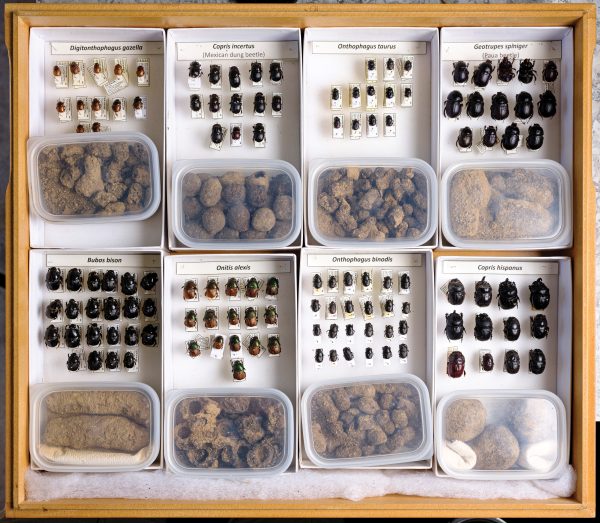
Dung beetles come in three main varieties: Dwellers, which live in the dung, rollers, which take the dung away from the pat to bury it, and tunnellers, which pull it directly beneath the pat. The 11 species approved for release here are all tunnellers.
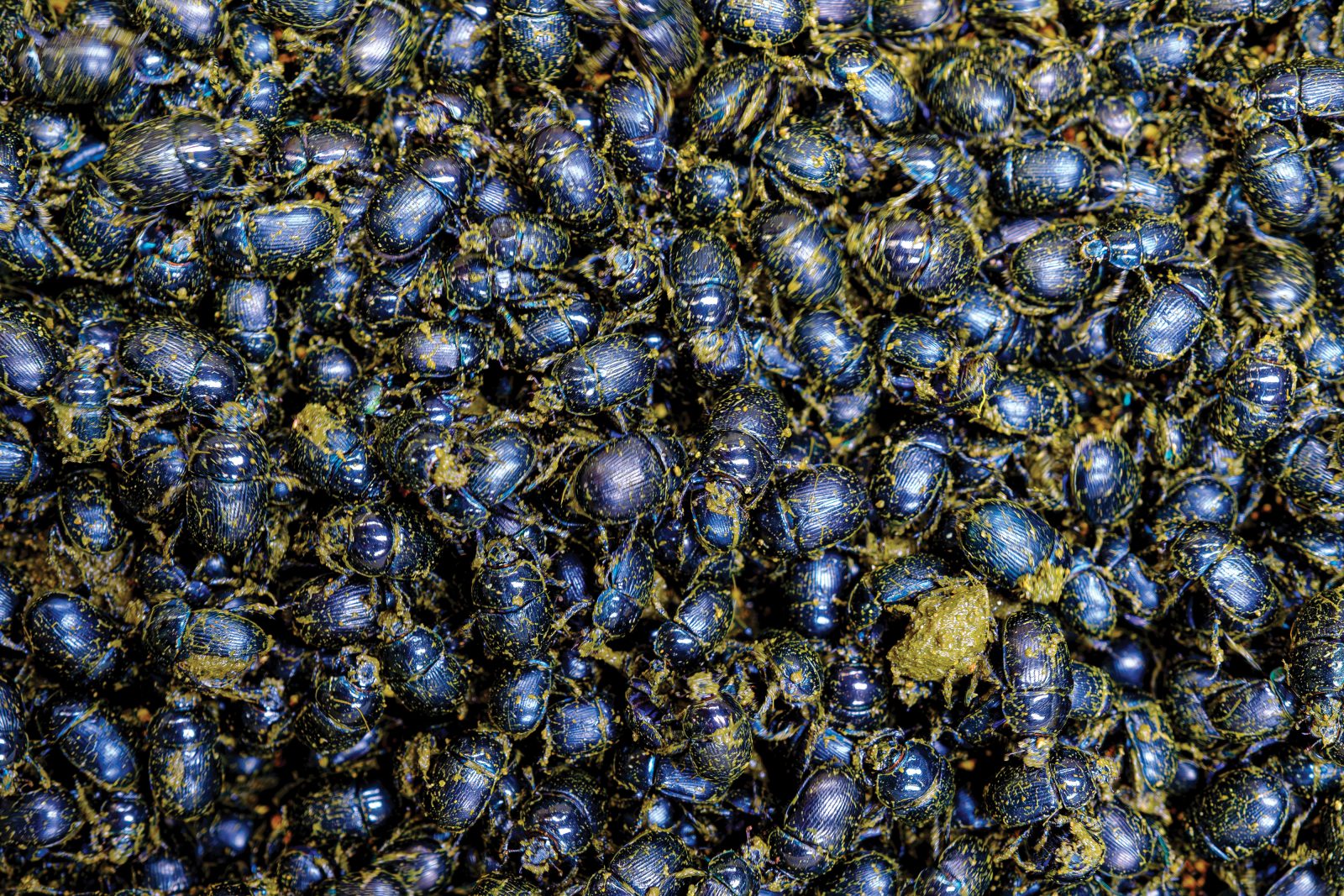
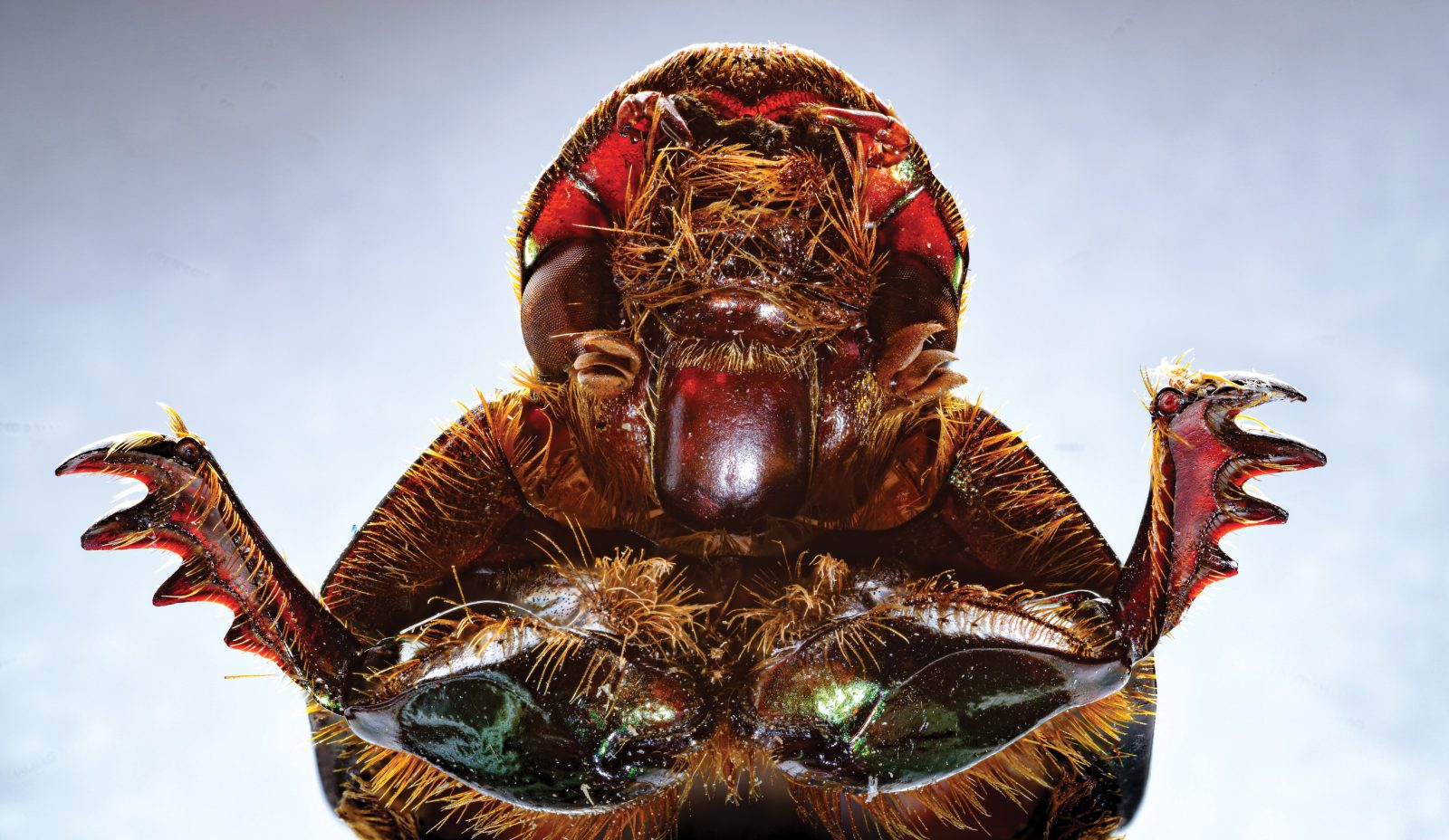
All have a vaguely warlike appearance, typically with serrated legs, shield-like heads and shovel-like fronts, which enable them to shift the comparatively enormous amounts of dung and soil that comprise their life’s work. Their backs are strong and hard. Many have confrontational spikes, horns and other adaptations that help them compete for both mates and resources.
One of the most impressive sets of horns belongs to Onthophagus taurus, curling up and along its back like bullhorns. This beetle is considered the world’s strongest animal, relatively speaking—it’s capable of pulling 1141 times its own body weight.
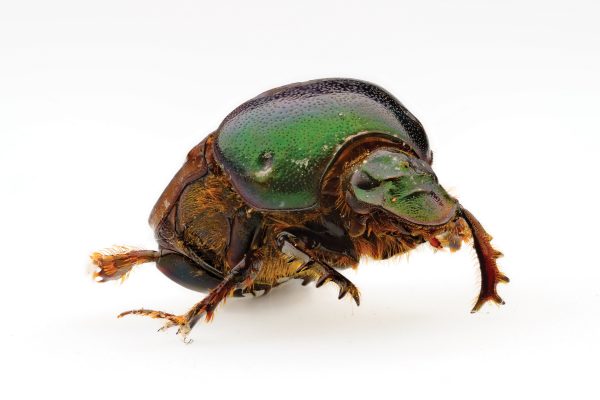
Most dung beetles are black, but some are much more fabulous. Onitis alexis look like they’re made of bronze and copper, while Geotrupes spiniger has a shiny metallic blue-and-green undercarriage. Forgie has christened it the “pāua beetle”.
Commensurate with its own large size (up to 2.5 centimetres), the pāua beetle likes big fresh cowpats, beneath which it burrows for up to 45 centimetres, before building galleries it fills with sausage-shaped pieces of dung, each of which will host one egg. Thanks to its pretty colour, size, and relatively early establishment here, together with Forgie’s clever marketing, it’s become a bit of a poster child for the dung beetle movement in New Zealand. Alongside Forgie himself, of course.
*
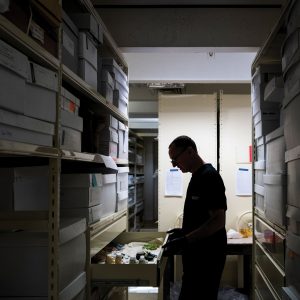
There are others, quietly working away. In 1993, an entomologist called Jenny Dymock wrote an article in the New Zealand Journal of Agricultural Research titled: ‘A case for the introduction of additional dung-burying beetles (Coleoptera: Scarabaeidae) into New Zealand’. It became a manifesto.
In it, Dymock clearly sets out the problem: “New Zealand has an impoverished dung-burying fauna which is unable to efficiently remove the large quantities of dung produced by introduced domestic livestock.”
Then she presents evidence showing the beetles offer economic and environmental improvements, including nutrient recycling, a reduction in the fly population, and reductions of between 80-90 per cent in parasites. She concludes that dung beetle imports should be “seriously considered for the benefit of both animal health and soil fertility in pastoral systems”.
(Forgie gets a mention in the acknowledgements; by this stage the two had been working together for several years. Dymock remembers him as a “very keen summer student” at the then Department of Scientific and Industrial Research. “He was so keen that he sat in the foyer at the Mt Albert research centre every day until we took him on.” The two travelled to Whangārei and turned over hundreds of cowpats, trying to figure out how the Mexican beetle was faring.)
The article, Dymock says now, was “flying a kite, trying to revive interest” in the idea, which had received sporadic support dating back decades. The response was amazing—the best she’s ever had to a scientific paper. She received requests for it from all over the world.
But the interest died down and that could easily have been it—just another in the long line of arguments for dung beetles tucked away in a filing cabinet. “It had been floated before,” she says, “but, I don’t know, maybe it just needed a Shaun to push it through.”
Dymock now lives on a small farm in Northland and has released several packages of dung beetles there, including 400 of the bronze species, Onitis alexis, the day before we speak. She says: “They were very happy to be diving into the choice cattle dung provided.”
She says her husband sometimes accuses her of being so obsessed with dung beetles it’s like she’s in a cult.
“He says, ‘Oh, not the dung beetle thing again. You’re irrational with your dung beetle thing.’ And I say, ‘Oh, no, I’m very scientific.’”
Meanwhile, at the University of Otago, doctoral student Emma Curtin is studying the ecology, behaviour, and environmental effects of the dung beetles brought to New Zealand. She says the beetles could have substantial benefits for our waterways, not just because they bury so much of the poo that currently pollutes them, but because they improve the carrying capacity of the soil.
She compares soil to a kitchen sponge. When it is packed down by heavy cattle and farm machinery, it can’t absorb water. On the farm, she says, this means the poo runs directly off the concrete-like soils and into waterways. By burrowing down into the soil, then burrowing back up, the beetles aerate it. “Basically,” she says, “they puff up the sponge, which allows it to absorb more stuff.”
New Zealanders, quite reasonably, tend to baulk at the idea of deliberately bringing in exotic animals.
Curtin worked for the Department of Conservation for a long time; she knows all about problematic introduced species. She doesn’t think dung beetles are one of them—largely because they’re not going to leave a paddock that’s full of cowpats.
“The eggs require dung and the larvae require dung and the adults require dung,” she says. “It’s very hard, if you’re tied to a food source at multiple points in your life cycle, to break away from that food source…They can’t survive without it.”
There are vanishingly small chances of dung beetles bringing in diseases, Curtin says, or negatively impacting the invertebrates already living in our soils. While we don’t yet know exactly what effects the beetles are going to have in New Zealand, she says all the evidence from overseas is “weighted heavily in their favour”.
She says: “They do seem to be one of those things that there isn’t really a downside to them.”
*
For 15 or so minutes each evening, just as darkness begins to fall, the paddock out the front of Ivan Howe’s farmhouse in Taranaki comes alive with a humming sound like thousands of tiny helicopters. It’s the pāua beetles on the wing, looking for fresh poo.
Howe has introduced five species onto his farm, starting in 2019. The first three are now, he says, “all over the place and in the neighbours’”.
There is a serious lag between tipping an expensive container of beetles onto a cowpat and those beetles multiplying to the point where they make a measurable difference at scale. It can take 10 years or more. Howe is yet to see any sign of the two species he brought in two years ago—but he says it was also about two years post-release before he saw any sign of the other species.
Howe has about 300 cows on his 120 hectares, mostly dairy heifers. They’re young stock, more susceptible to parasites. He’s hopeful that the dung beetles will help with that, as well as with nutrient runoff, carbon sequestration, soil fertility and grass production. He is prepared to wait.
Already, he says, he is noticing better grass growth in paddocks where the beetles are well established, and more worms around dung where the beetles have been active.
Councils, like farmers, are comfortable with long time scales.
In 2019, Greater Wellington Regional Council got on board, helping fund dung beetles for landowners it deemed most in need, particularly those with E. coli issues. A standard “four seasons” package of beetles costs $6600 and the council picks up $3300 of that. The scheme has got seven beetle species burrowing into more than 100 properties across the region. Two are already well established: Forgie’s pāua beauties, and the more unassuming, matt-black Onthophagus binodis.
Kolja Schaller, land management advisor for the council, describes the beetles as “another tool in the toolkit… It makes sense for us to be supporting it when we support landowners to fence off cattle and sheep from waterways.”
Schaller says turning dung into an asset rather than a liability also makes sense to farmers. “If they can keep all that dung and get it back into the soil quicker and get it moving through the system again, then they should be spending less on any inputs.”
*
For further inspiration—or, in Forgie’s case, a bolt of pure frustration—we might look over the ditch.
In 1950, after fleeing the brutal Soviet regime that had taken over his country, Hungarian zoologist George Bornemissza arrived in Australia. Within a year, he became aware that Australia had a poo problem—just like in New Zealand, the country’s native dung beetles were not interested in the enormous quantity of pats generated by the country’s non-native livestock.
It took Bornemissza 15 years to get approval and funding to import dung beetles. The Australian Dung Beetle Project he founded ran for 20 years and it is no exaggeration to say it changed the country.
It is credited with a 90 per cent reduction in the population of bush flies that then plagued Australia. A country in which it had been illegal to dine outdoors in some places soon became renowned for its cafe culture. The hanging-cork hats for which Aussie had become famous were soon relegated to television tropes and tourist traps.
Dung beetles, according to the country’s national science agency, are considered “one of the greatest stories of Australian science”.
Bornemissza himself was lionised: awarded the Britannica Australia Award gold medal for “application of ecology for human benefit”, and the Medal of the Order of Australia, among others.
Recently, Landcare Research was a partner in a spinoff project studying farms in South Australia. Where there are beetles, researchers found, grass is growing 13.5 per cent faster. Revenue from livestock products is up six per cent. The dung beetles are burying roughly half the dung on paddocks, making pastures more productive and allowing farmers to bump up stocking rates. The beetles are driving improvements in soil health and fertility, reducing flies, pests and parasites, slashing nutrient runoff, and sequestering carbon in the soil. A lack of dung beetles, the researchers reported, leads to “suboptimal ecosystem services provision in that area”.
They estimate dung beetles are now tucking away AU$620 million a year.
*
Forgie tells me he hasn’t had any recent dealings with anyone in government. In an email, he writes that the one with “the most skin in the game is Ministry for the Environment” and that MPI “should be all over it”. It’s all very well to have contestable funds that farmers can apply for, he says. But he argues it’s not going to achieve anything like the scale-up that Australia managed by drenching the sector in direct, dung-beetle cash.
Officials are keen to point out the money that’s already been spent on the beetles. Steve Penno, MPI’s director of investment programmes and operations, says it invested more than $800,000 in research and played a significant role in bringing the beetles to New Zealand. He points out that this MPI funding led directly to the establishment of Forgie’s business, Dung Beetle Innovations.
Penno says that a recent MPI-funded research project, ‘Dung Life’, had “mixed results”. (The study was carried out in Katikati about five years after batches of Forgie’s beetles were introduced. Overall, it seems encouraging; it’s “mixed” only in that the beetles were not yet well established, and that one species of shallow-tunnelling beetle did not reduce the loading of parasitic roundworms—the researchers suggest other beetle species, which dig deeper, could.)
On balance, Penno says, the evidence suggests dung beetles provide positive benefits to pasture, soil quality, and nutrient loss, but they don’t offer a quick fix for water quality, given the time they take to breed and start working at scale.
Penno points any farmers who want financial help introducing dung beetles to the Primary Sector Growth Fund, which is one of those contestable funds Forgie is fed up with.
The Jobs for Nature fund was another significant pot, but it received only “a small number of applications” involving dung beetles, a Ministry for the Environment spokesperson said. That fund is now defunct, and the ministry doesn’t have any others geared around “on-the-ground freshwater improvements”.
It has spent $1.85 million backing three projects that included dung beetles.
*
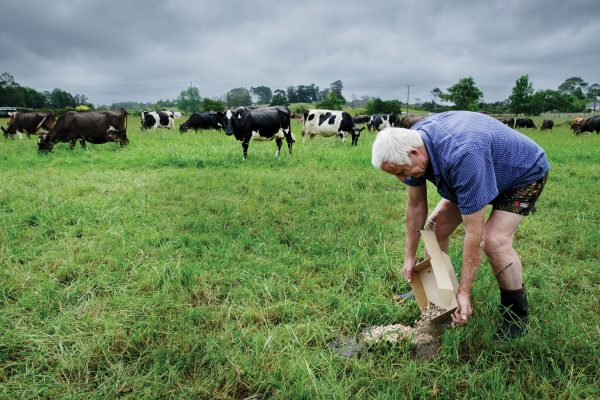
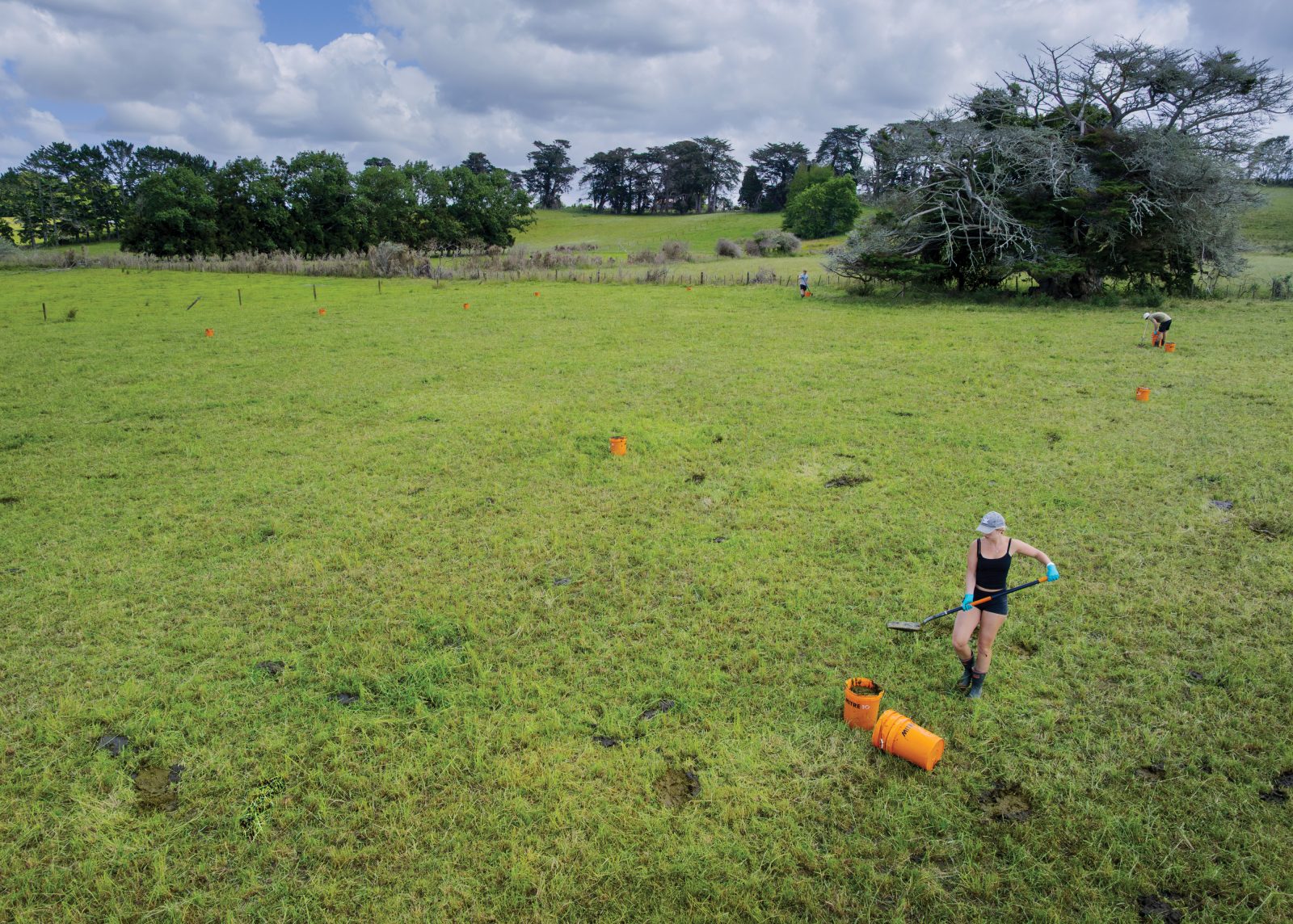
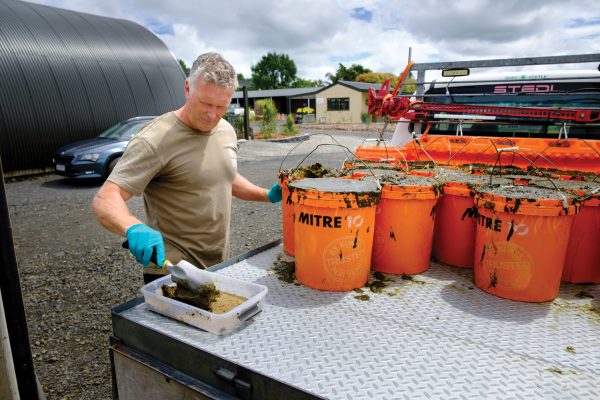
The second time I meet Shaun Forgie, it’s late morning on a hot summer’s day at a dairy farm in West Auckland. He, his two sons and a seasonal worker are on a paddock picking up cow shit and mashing it into buckets to bring back to their breeding facility to feed the beetles.
“We don’t go for anything that’s crusty,” Forgie says, kicking the top off a large pat in front of him to reveal a viscous greeny goo beneath. He doesn’t gag even slightly. “We go for really fresh stuff.”
He seems marginally more optimistic than the last time we met. With water quality top of mind, Auckland Council has just agreed to fund beetle releases in some catchments with a view to a regional-scale roll-out next year. It no longer looks like Forgie will need to close down at the end of summer.
The anger remains. In a subsequent email, he writes: “This country’s government and the one before it is full of dim-wits.” He says he is thinking about selling the company, or at least some parts of it. He says he would like to see it run as a community initiative backed by a regional council.
But for now, there is still work to do. The ute is in a state. After collections like this one, the poo tends to slop over the side as they drive, ending up all over the flatbed.
It can be a heck of a thing to clean. Normally they do it with a water blaster, but Forgie says the water blaster recently shat itself. It was supposed to be repaired days ago, but they’re still waiting to get the call to say it’s ready to be picked up.
“I shouldn’t be so niggly,” Forgie says. “But this is New Zealand, so nothing gets done quickly.”
More by Greg Bruce
More by Adrian Malloch