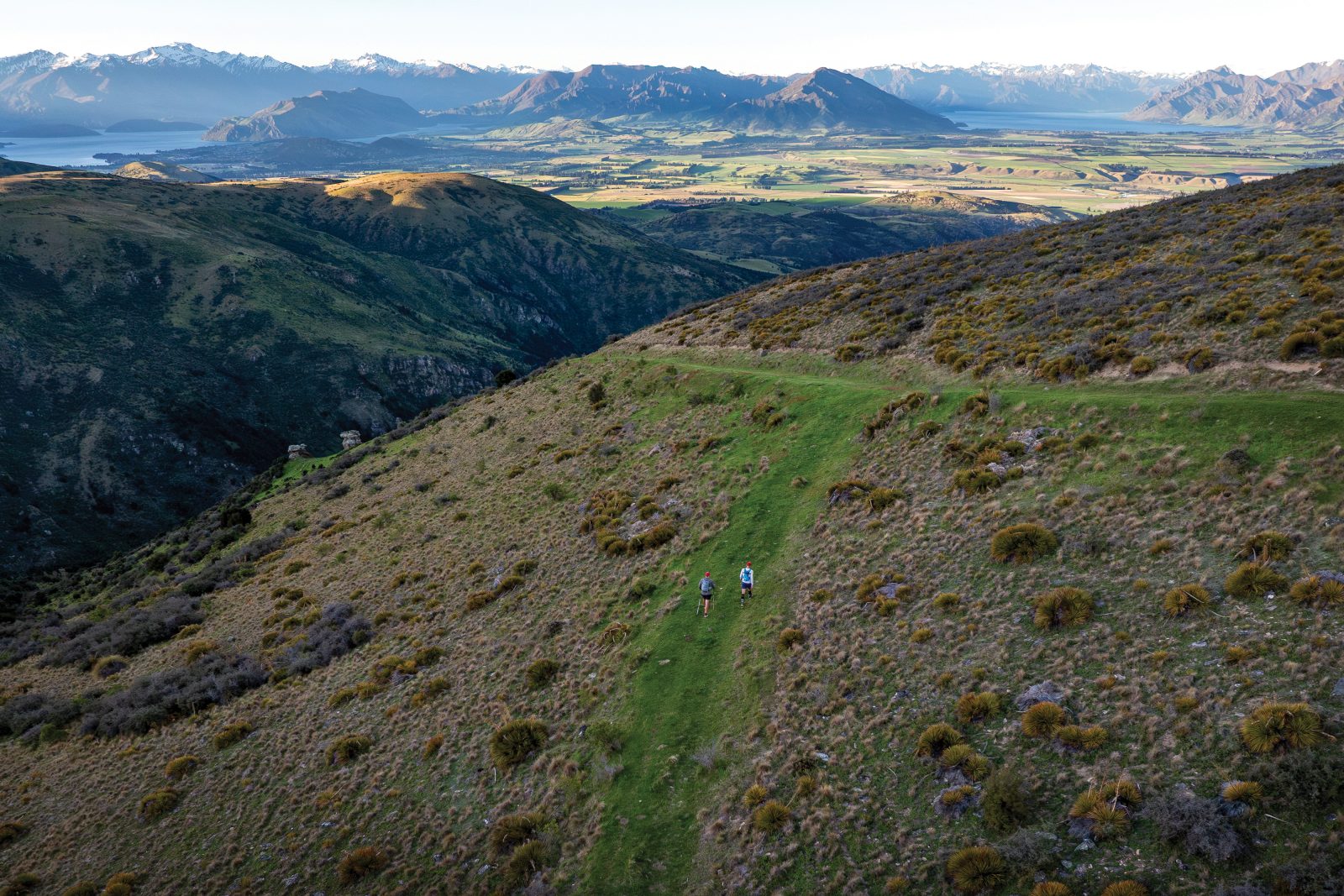



A diabolical gamemaker scatters 85 flags across the Pisa Range. He assigns each flag a certain number of points. Some are buried in brambles, others hidden in gorges. Some, fiendishly, will lead you away from fresh water. You have 24 hours, and a map. Go.
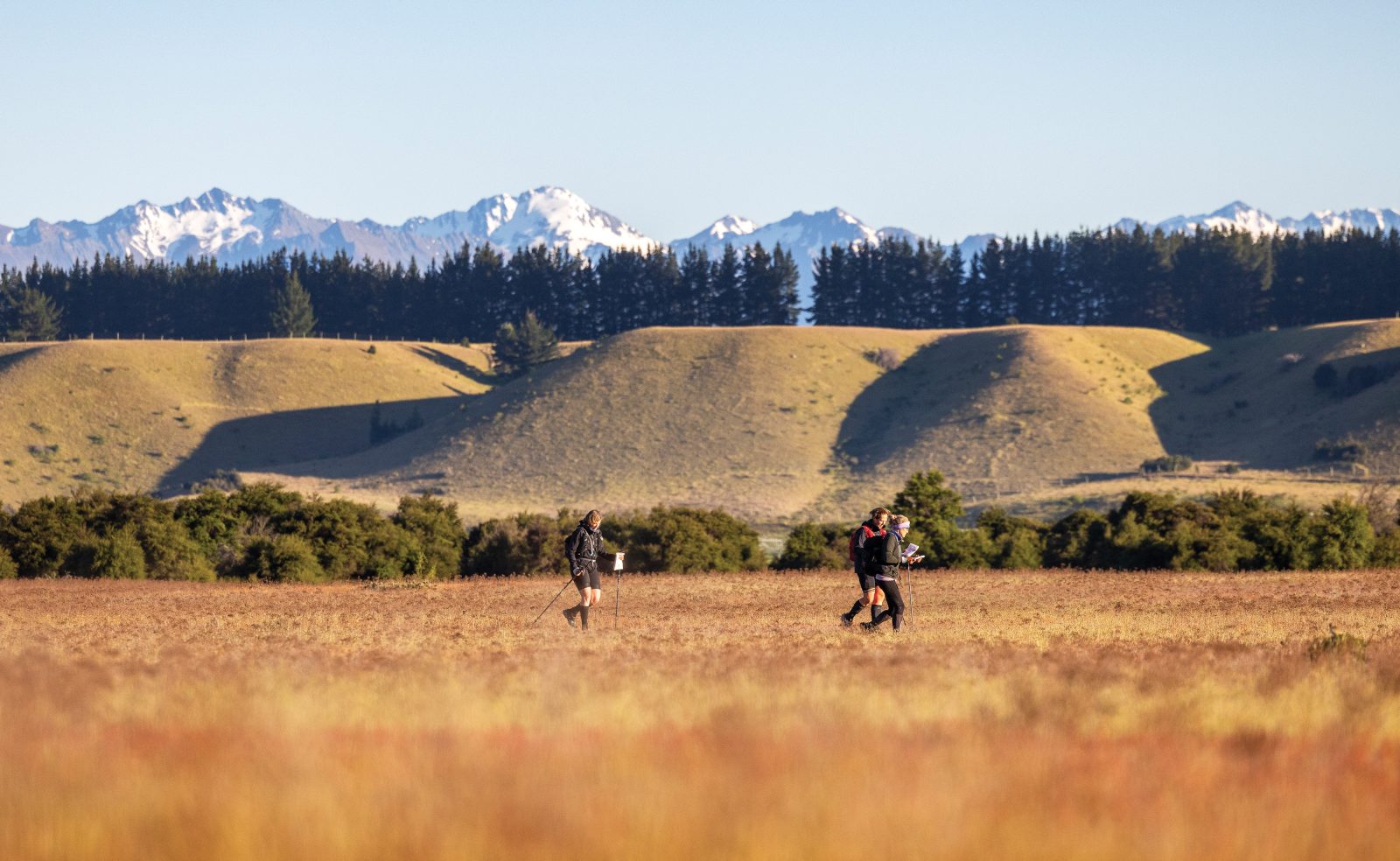
The last of the early morning cloud lies in skirts around the mountains as Rachel Lynskey and I pull up to a woolshed above Wānaka. Just for a moment, we don’t get out of the car. We watch fit-looking people in shorts, parkas and long socks saunter towards the woolshed. “They all look so capable,” I say. “It’s intimidating.”
“But maybe we look intimidating, too?” Rach says. We laugh, and climb out.
Rach is a good friend, and she’s done this before. She’s a doctor so she’s good at sleep deprivation, and she’s got multiple week-long adventure races under her belt. I’m a runner and a tramper, and I’ve done a handful of races like this before, but the longest was six hours. I’ve got three kids, so I know what it is to be knackered. But I don’t think I’ve ever missed a whole night’s sleep before. Now, I’m planning to spend 24 hours walking, running and slithering my way around the mountains without so much as a lie-down. As I tucked my PJs under my pillow this morning, it really hit me—it will be tomorrow before I can go to bed again.
At the registration table we sign that, yes, we’re aware of the hazards—slippery mud, small rocks to trip over, large rocks to fall off—and we seal our phones in courier bags to be stowed at the bottom of our packs. We’re not allowed anything with GPS capabilities to help us find our way. “If you think you’re going to die, pull it out and call,” we’re told. But once the seal on the bag is broken, you’re out of the race.
*
At 9am, event organiser Terry Davis steps up to the microphone and we draw close. It’s map handout time, and the A3 sheets in the box beside him hold the key to our fate. Muscular and energetic, Terry has been organising these races, called rogaines, for 20 years. “It won’t be a fast course,” he says. “Some of the controls are absolute bastards to get to, down in bushy gullies.” There’s nervous laughter. “Before the end of it, you’re going to be cursing my name.” I know he’s right.
I’ve been scared all week—about how my body will keep moving for 24 hours straight, and the pain that might involve. Blisters, chafing, old injuries resurfacing. But I’m curious, too, especially about how it will be trying to find our way in the night. On the occasions I’ve slept out under the stars, I’ve been dozily aware of the night world carrying on around me, the sound of rivers running, night birds calling. Tonight, I’ll be out amongst it good and proper. Or hopelessly lost in it.
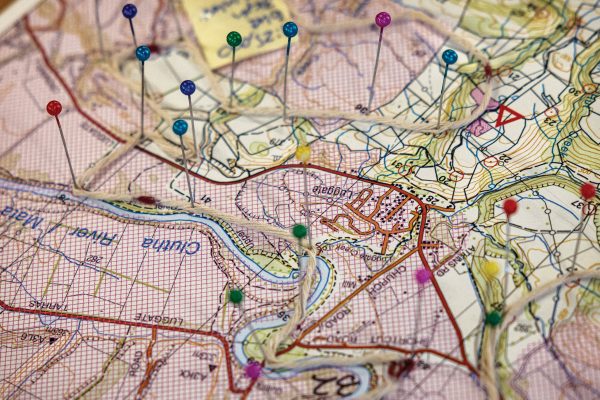
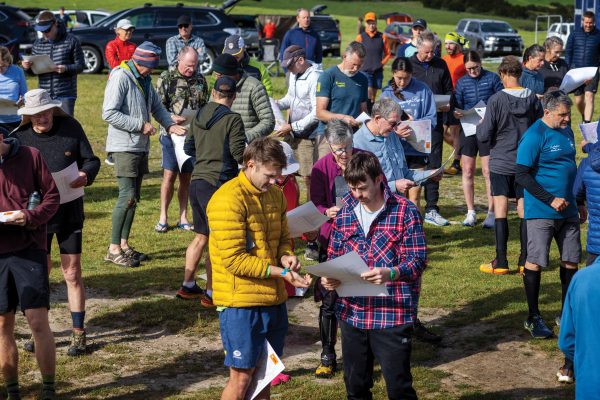
Rach and I plonk down on a rug behind the car. We have three hours to plan our route. Our topographic maps are dotted with checkpoints, each worth between 20 and 100 points. Which will we go for? In what order? Entirely over to us—but we have to be back within 24 hours.
This is what’s considered a “classic” rogaine, and there are about 100 of us signed up for it today, split into teams of between two and five people. Others are here for the shorter versions, which tend to act as gateway drugs—it was a six-hour rogaine that hooked me. (The sport evolved in Australia, and the origin of its weird name was kept secret for more than a decade. Was it First Nations? An acronym? Nothing so grand: the Aussie siblings who, in 1976, put on the first public rogaine, finally revealed it was a portmanteau of their names—Rod, Gail and Neil Phillips.)
Rach and I discuss how we might link checkpoints without climbing and descending more than we have to; where we can use fencelines, ridges or 4WD tracks to help us navigate; how long it might all take. Eventually, we settle on a zigzagging route starting up the eastern half of the map for the afternoon, planning to be in an area with more tracks and fences for the darkness hours. We mark our intended route in pink highlighter, along with some detours that will get us extra points if we have time to spare.
*
As start time looms, we poke things into our backpacks and chat to the guys parked beside us. Alex Watson has flown down from Whangārei to compete, and his friend Mason Gray is a student at the University of Otago. “He’s very keen,” says Mason, with a grin towards Alex, “and I’m very… coercible!” As Mason talks, Alex tips implausibly large amounts of pretzels and lolly snakes into snaplock bags. Mason shows me his pottle of microwaved potatoes. “It’s all about the cheapest carbs,” he says. My pack feels terribly heavy, but I’m still not sure I’ve packed enough food.
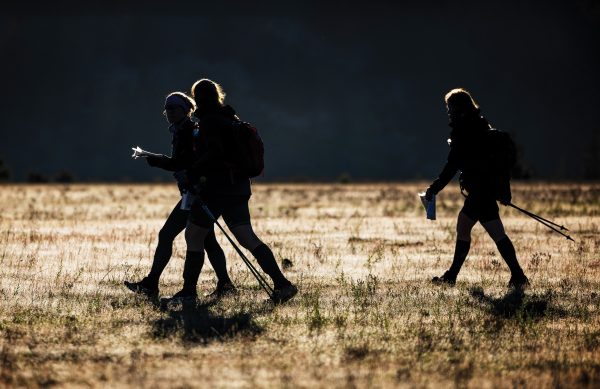
I’m retying my shoelace when the countdown comes—last-minute nerves. The ground is hard and lumpy and my legs feel terrible. It takes an hour before I settle, walking up a pale dirt road with the smell of hot kānuka trees reminding me of summer holidays. There’s a bush-clad valley below us, and the sound of a river. At a checkpoint beside a stream we meet a team of five lounging in the grass. “Good spot for a picnic lunch!” they say. By 2pm, we’ve found six checkpoints without too much trouble. I start to wonder if this isn’t going to be too bad.
*
Two hours later, we run out of water. We’d carried two litres each, planning to fill up from streams. But there are cows everywhere, even though we’re 900 metres above sea level. The blue lines of streams on the map turn out to be trickles the colour of strong tea, running over dark brown, hoof-trampled mud. “We could use the chlorine tablets,” I venture, but Rach wisely isn’t keen. Even if they worked, the water would still taste like shit.
Our zigzagging course means we’re taking hours to get up onto the Pisa Range proper, where the water will be clear. We start to doubt our plan. Maybe we should skip some checkpoints? But lots here have high point values. Terry told me he makes it as difficult as possible to choose the optimum route—“it’s good fun messing with people’s heads.” The day continues to heat up as we climb, the sky blue and cloudless, and soon we’re too thirsty to keep eating.
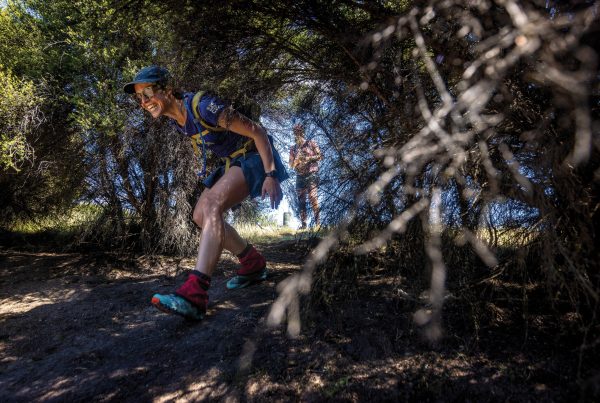
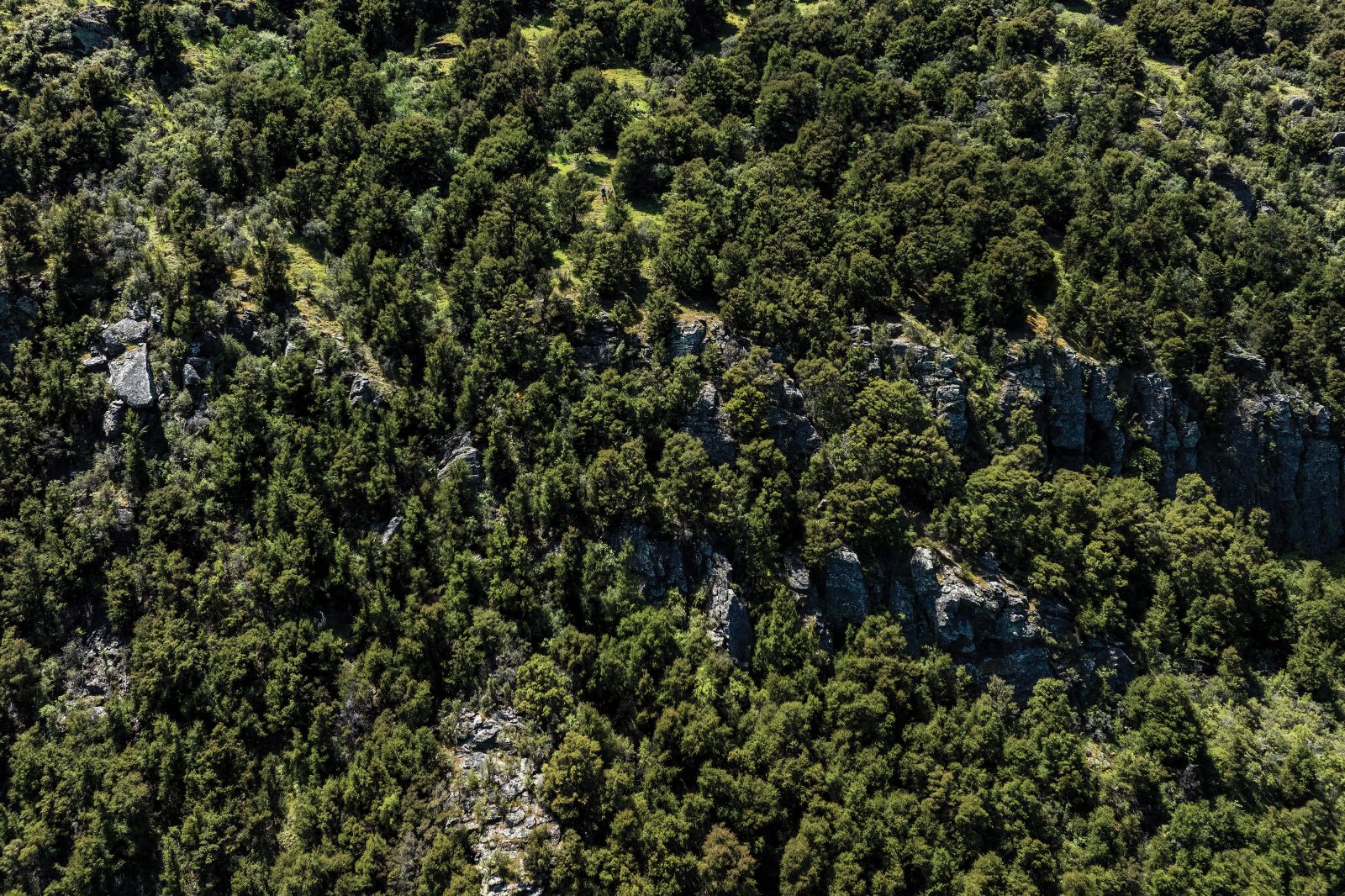
Checkpoint 98 would be a good one to miss, as we’d need to drop 200 vertical metres through horrendous scrub and then climb back out. But it’ll also take us to a clean-looking river, so we’re desperate enough to go for it. As expected, the descent is awful. Briar and matagouri rake long red scratches across our arms. When the worst thorns hook into my arm, I yelp. We lose sight of each other when we’re just metres apart, and call to stay in touch. Occasionally we find animal trails to follow, but they often become tunnels, forcing us into ever-lower crawls. Our hair and backpacks catch on the thorns.
With a whoop and a “finally!” we haul ourselves onto the steep-sided boulder poking up from the scrub, where 98 sits. I think of Terry. “I can’t get the smile off my face when people tell me how shitty this particular control was to get,” he’d told me. “I think: Good! Nobody grows from sitting in front of the TV eating pizza.”
Terry, who once carried a lawnmower around the 45-kilometre Tongariro Circuit to raise money for a kid with cancer, is passionate about the way outdoor challenges enrich people’s lives. He attributes it to saving him from being “a bit of a depressed teenager”. He thinks rogaining is one of the best prompts for character development. “You’ve got to be strategic, but you also have to persevere. Sometimes you can’t find the checkpoint, and it’s your fault, because you’re in the wrong place. Sometimes you can’t find the checkpoint because a cow’s eaten it. But whatever, you have to pick yourself up and keep going.” The parallels with life, he says, are many.
*
Our elation at finding 98 dissipates when we realise we’re not actually at the river as we’d expected. Half a millimetre on the map is in reality a 20-metre drop through a blockade of giant matagouri and mingimingi. Ten desperate minutes later, we throw ourselves through the final bush and scoop bottlefuls of water from the current. I gulp it down, then feel lightheaded. My tummy aches. I dip my cap in the water and jam it back on my head but soon my eyes are stinging—from the sunscreen or sweat on my forehead, I don’t know. At least we’ll be able to eat again.
The sun slants lower as we climb out of the valley, rock bluffs below us and a steep grass spur above. I’m puffing hard, but I’m surprised to find my legs feel quite good—although with 18 hours to go, I guess they should. I munch a Vegemite sandwich, then a cookie, and guzzle electrolytes from my drink bottle. My stomach protests. Rach and I don’t talk much—navigating takes most of our focus, our discussion limited to, “That’ll be the tributary marked on the map, do you reckon? So we just need to keep on this spur to the right.” As much as we can, we track our position with a thumb on the map. If you lose where you are, it’s hard to figure it out again.
Two people come loping down a ridge towards us, the first we’ve seen in several hours, and they look disconcertingly comfortable and fresh. They report on the western side of the course—“The top part’s lovely; the bottom’s awful, all matagouri.” Rach tells them it’s pretty similar on this side, and with a cheerful “Don’t tell us that!” they’re off into the distance. I feel better when Rach tells me she recognises them—adventure-racing guns.
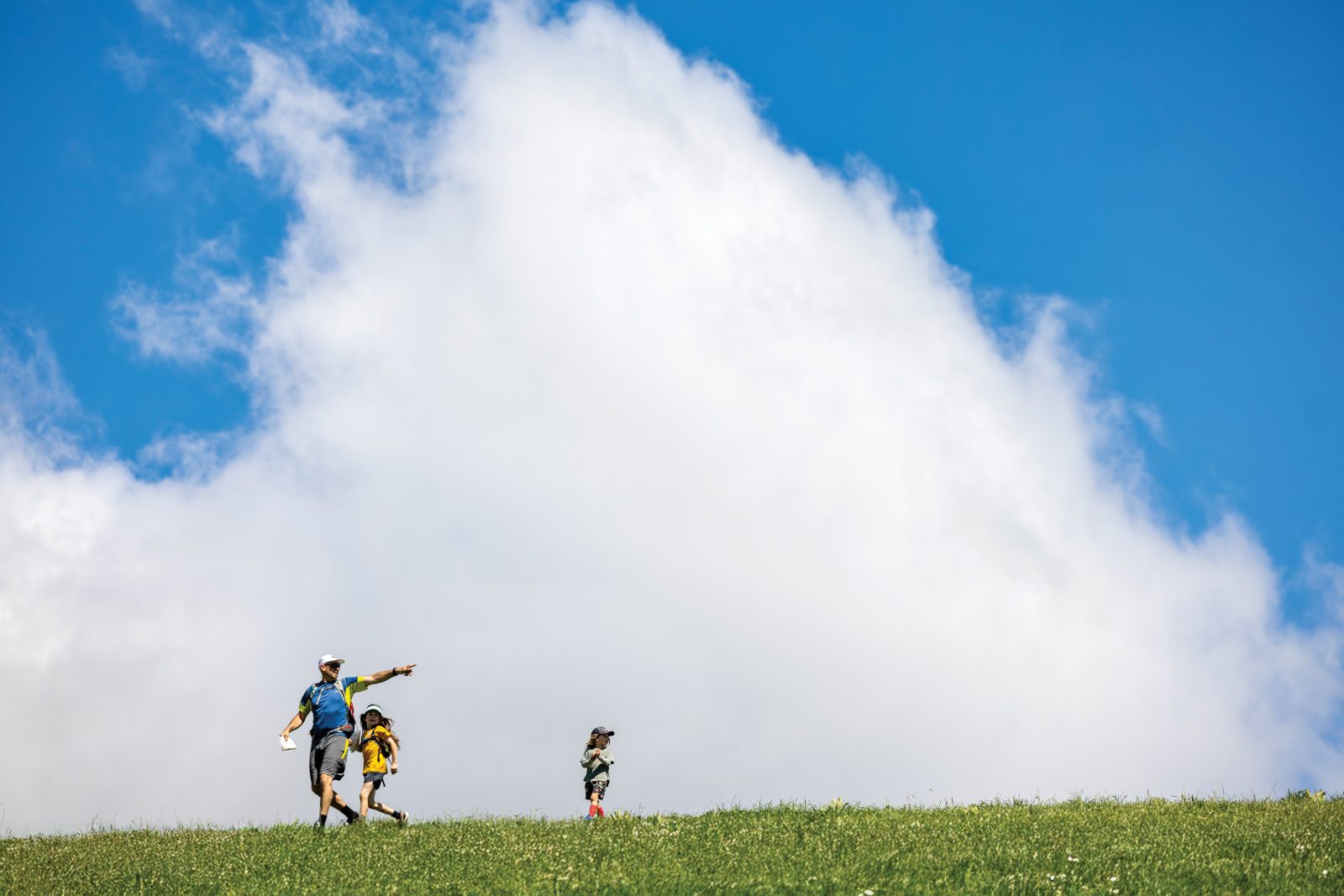
Rogaining uses your brain as much as your body. Everyone has a hare-and-tortoise story. “My first rogaine, we were running all over the course—‘Run, run, run, look how fit we are’—and we kept passing this team of old buggers who were just walking,” Terry told me. “It was Pete Squires and his team, and we only just beat them by a whisker.”
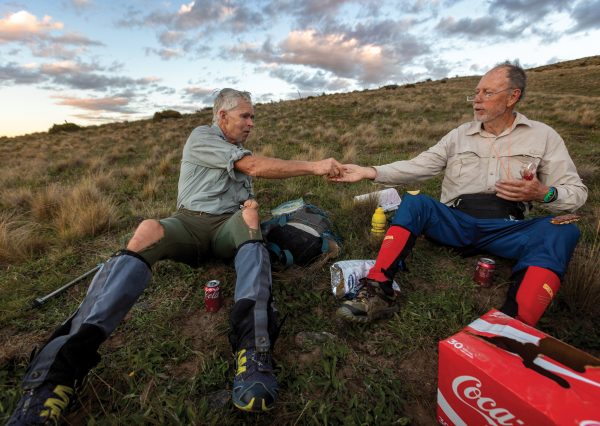
Pete, now in his 80s, has been president of the New Zealand Rogaine Association since it was established in the late 1990s, with just one brief and unsuccessful attempt to retire. He’s here helping this weekend. He and his team mates, Bill and Anne Kennedy, hold multiple veteran national and world rogaining titles. “I think our secret is not so much that we are fast, but that we plan very carefully,” Pete tells me. Pete and Bill were both lecturers in electrical engineering at the University of Canterbury, and Anne was a science teacher. “It’s one of the things that makes rogaining so interesting—you have to think about everything,” Pete says. What speed you’re likely to move, where you’ll adjust your course if necessary, where you want to be at nighttime. Also logistics—what gear and clothing; how much food and water?
Even with careful planning, awful experiences seem to go with the territory. Pete tells me about their first world championship, held in Canada, where the temperature hit a record 42 degrees.
“We decided right from the word go that it wouldn’t be a race, it would be a survival exercise,” he says, and they plotted the shortest distances between shade and water. In the same race the mosquitoes got so bad they couldn’t read the map through the whining cloud.
On another race in Western Australia, a cloudburst gave them soggy feet and brought stones to the surface of the desert. “Bill only had one blister on each foot, but it was the whole bottom of his foot.” He almost needed a wheelchair to get on the plane back home.
*
At 9pm, the sun hangs above huge dark hills. The air is still and absolutely silent, and on our wide spur the tussock glows orange. To the north stretches a long line of snowy mountains, the triangle of Mt Aspiring rising in the centre. In the moment before the sun drops, I feel a flash of dread. I think of my kids at home, sleep-tousled heads on pillows, and my throat tightens.
In fading light we descend a gully to the river, where I slip in a muddy chute and snap a walking pole. I’m annoyed with myself. If we start getting injuries, we’ll need that pole. We stop to put on head torches and change our socks. They’re wet from rivers, bogs and mud, and they’ve got grit and sticks in them. Rach’s experience means we’ve brought two spare pairs each, as well as a tube of goo that we’ll smear all over our feet to ease the rubbing. It’s the first time we’ve sat down since we started. We feel like we’re doing pretty well, and—because we’re both that kind of person—we know we’re going to push ourselves as hard as we can. We move food into the waistbands and side pockets of our packs, where we can grab snacks while we walk.
Navigating during the day takes focus. The night takes twice as much. Rach takes a bearing from a fence junction, laying her compass on the map and aligning it to magnetic north. There’s nothing to aim for in the blackness, just the curves of the land to try to read as best we can with our roving torch-beams. With a last glance at her compass Rach strides off and I follow—I was able to help with the daytime navigation, but at night I just watch in awe.
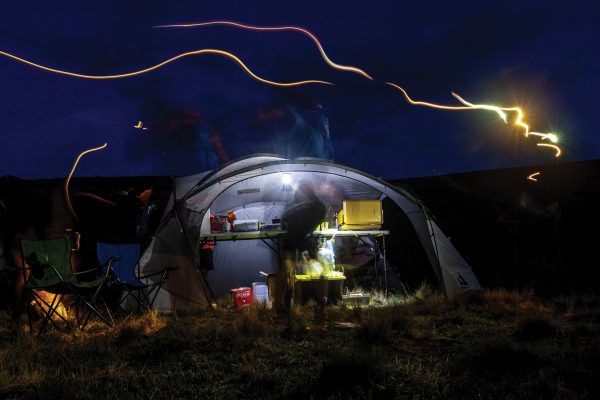
We’re trying to stay on top of a wide ridge and pass two subtle gullies, before dropping into the third vague dip to find checkpoint 85 at—our list of clues tells us—a matagouri near head of gully. We’re slow and deliberate; we stop and check and discuss. We’re determined to not lose track of where we are in the blackness. “It should be here somewhere,” Rach says, but there are no bushes. Then she almost stumbles on one—a tiny matagouri, the flag hidden behind it. “Yes!” Each checkpoint is a mini-victory, a hit of endorphins.
We sidle into a steep valley, aware of the eerie drop below us, the need not to trip on the small, stumpy tussocks in their loose soil. Checkpoint 102 is at the base of a waterfall, the spray glowing white in the darkness. We climb back out of the valley through a slot canyon, where a single star ahead shows us there’s a way through. I’m loving the darkness, loving moving through the huge mountain night. Our footsteps clatter on the loose rocks. We catch glimpses of other torches on the hills around us.
Just after midnight, we reach the hash house—a rogaining term for a base with food and hot drinks where competitors can restock, rest and find company. In this case it’s a gazebo pitched behind a ute, and as we duck into the lantern-lit dome, two volunteers offer us a Cup-a-Soup. We perch in deck chairs and scoff what we can while we make tweaks to our route plan from here. My back stiffens up within seconds.
As we leave, the night feels lonelier than ever. I can see Orion and the Southern Cross, and far below us to the north the lights of Wānaka. We’re climbing through the tussock, breathing hard.
“This is a much steeper hill,” I say between pants, “than anyone ought to be climbing at 2 in the morning.” Rach doesn’t answer. A minute later, she pauses. “I’m a bit disorientated, sorry.”
It’s the first time she’s said that. But the direction seems right to me and we press on, and soon our torches pick out what we’ve been hoping for. “Fence!” I cry. “And road!” We’re still on track.
The tiredness starts to sit heavier and heavier. I’m feeling dazed, lightheaded again, my tummy crook. The six-hour rogaines I’ve done have been fun, but this has moved into something else. We talk even less. At 4am, Rach pulls on her hood and feels a stinging pain on her ear—a spider the size of a walnut. It must have climbed in when we were crawling through scrub.
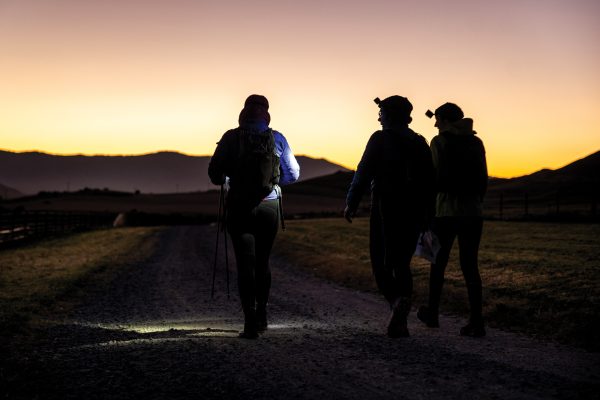
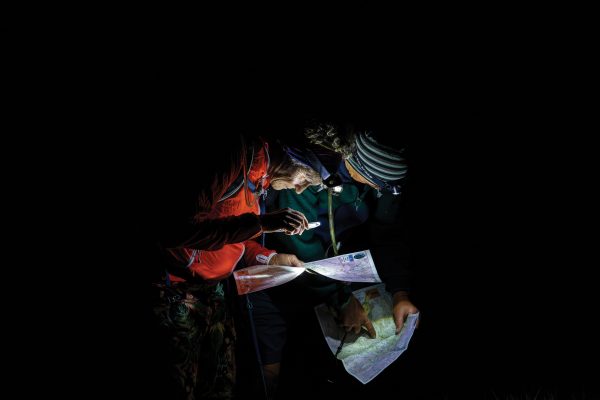
Sometime before dawn, we search unsuccessfully for 99 on a jumble of rock slabs and kānuka. “I can’t see if that’s the top of the gully or what,” I grumble, shining the hazy beam of my torch over rocks and into the blackness. I stumble and circle through the scratchy branches, cursing. I hate not finding checkpoints. It might be behind the next rock, or it might be 100 metres below us on the ridge. Or it could be above us. When do you give up? “Let’s look for another ten minutes,” I suggest, but Rach glances at her watch. We don’t have time. We leave without it.
To prove you’ve reached a checkpoint, there’s an electronic “punch” attached to the flag, which you press onto your wristband and it records the checkpoint number and time. It was Pete Squires who invented the system, called Navlight. Before that, rogainers carried a piece of cardboard, and at each checkpoint there was a hole punch that left a unique pattern of pinpricks on your card. “It was a problem if you fell in a puddle and the holes in your card filled up with mud,” says Pete. Now Navlight is used throughout New Zealand and Australia, and in his workshop behind his Akaroa home, Pete puts together every single punch and wrist-tag himself. Aware of his advancing age—“I’m 82, so I’m statistically dead next year”—he is building up extra sets.
*
In the apricot dawn we jog down, down, down out of the hills. The increase in pace perks up my mood. I’ve done it! I’ve gone through the night. Birds are chatting in the scrub, and soon the sun lifts above the hills. But my knees are burning and my tummy groans and gurgles, sick of the constant food and movement. Rach lends me her walking pole so that I’ve got two, and I lean heavily on them, trying to keep up some sort of jog. We cross paths with the loping adventure racers we’d seen yesterday. They look tired and pale. We must look worse.
By 8am, we’re feeling the pressure of whether we’ll finish the loop we’ve planned before the noon cutoff. Every minute late will lose us 10 of our hard-won points. Now we’re back on farmland again, and the place is thick with fences. Some are electric, so we awkwardly climb the wooden posts, or throw our packs over and squeeze between the lower wires. To have enforced gymnastics at this stage of the race seems the final insult.
The teams are converging in these last few hours. Each exchange is a shot of fun in what’s become a painful exercise of endurance. “You’re looking energetic!” “Oh, that’s only on the outside!” Some people offer hints for the next checkpoint.
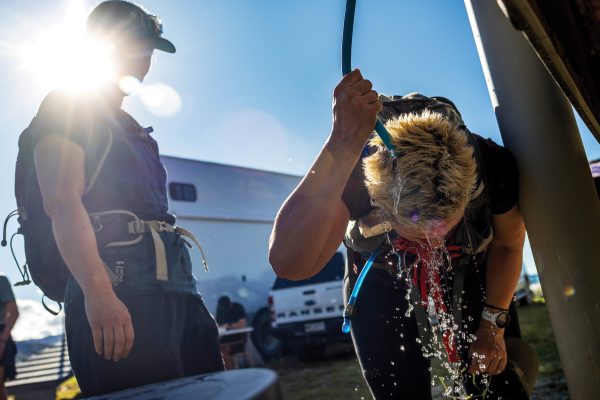
Then we’re down by the Mata-au/Clutha River, its turquoise bends lined with willows and bright California poppies. It’s easier navigation, and it’s flat, but the hard trails set off a burning pain on the soles of my feet. We see Mason and Alex, and they feel like old friends. “How are you doing?” “Good!” says Mason, his customary cheerfulness at odds with his stiff-legged gait. “Happy I’ll be done soon!” We climb a hill and we can see the woolshed across the valley. “Oh, Rach,” I say, “I’m imagining taking my shoes off and stretching my legs out on the grass.” “Don’t!” she says. “That’s dangerous!” We’ve got only 45 minutes to go, and three checkpoints to find on the final hill climb. One is down a steep slope below a bend in the road. The next is behind a small pine. Finally, we find number 22, tucked cosily into a briar bush.
Five minutes before midday, we cross the final field to the woolshed and the finish flag. We wrap each other in a sweaty hug and I can feel the size of the grin on my face. I’m surprised how proud of myself I am.
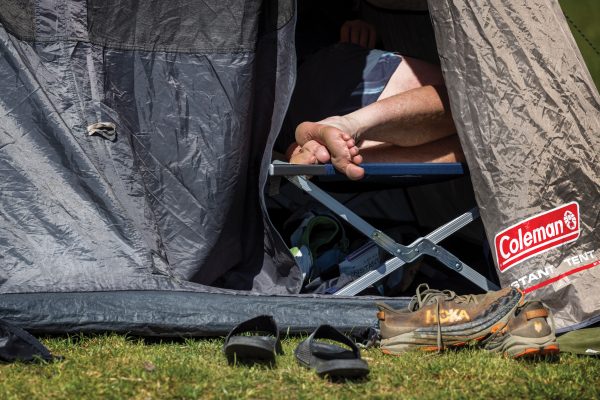
We drop onto the ground with the others, and when I peel off my shoes and socks, it feels every bit as wonderful as I’d imagined. Our feet all look the same—the soles white, swollen, impossibly wrinkled from dampness and constant impact.
Someone hands out cold Cokes. There is no sense of competition. Dirty, sweaty, elated to be done—we all just want to talk about the horror, the effort. “Ninety-nine! We didn’t find that either. We spent an hour looking!” “Ninety-eight, what a mongrel.” “We got lost at 3am, and it took us three hours to find where we were again.” Nobody made it to all the flags.
I tuck the mud-smeared, wrinkled map into a dry pocket in my pack. At home I put it on my bedside table next to my ibuprofen and mammoth cup of tea.
The morning after the race, I find a piece of string and wind it across the map, measuring our course. Each 25 millimetres of string equals a kilometre of slog. The route, as I trace it, looks hectic, nonsensical, more like a scribble than a race. When I stretch the string out, it’s longer than the span of my arm.
More by Anna Yeoman
More by Mike Scott