




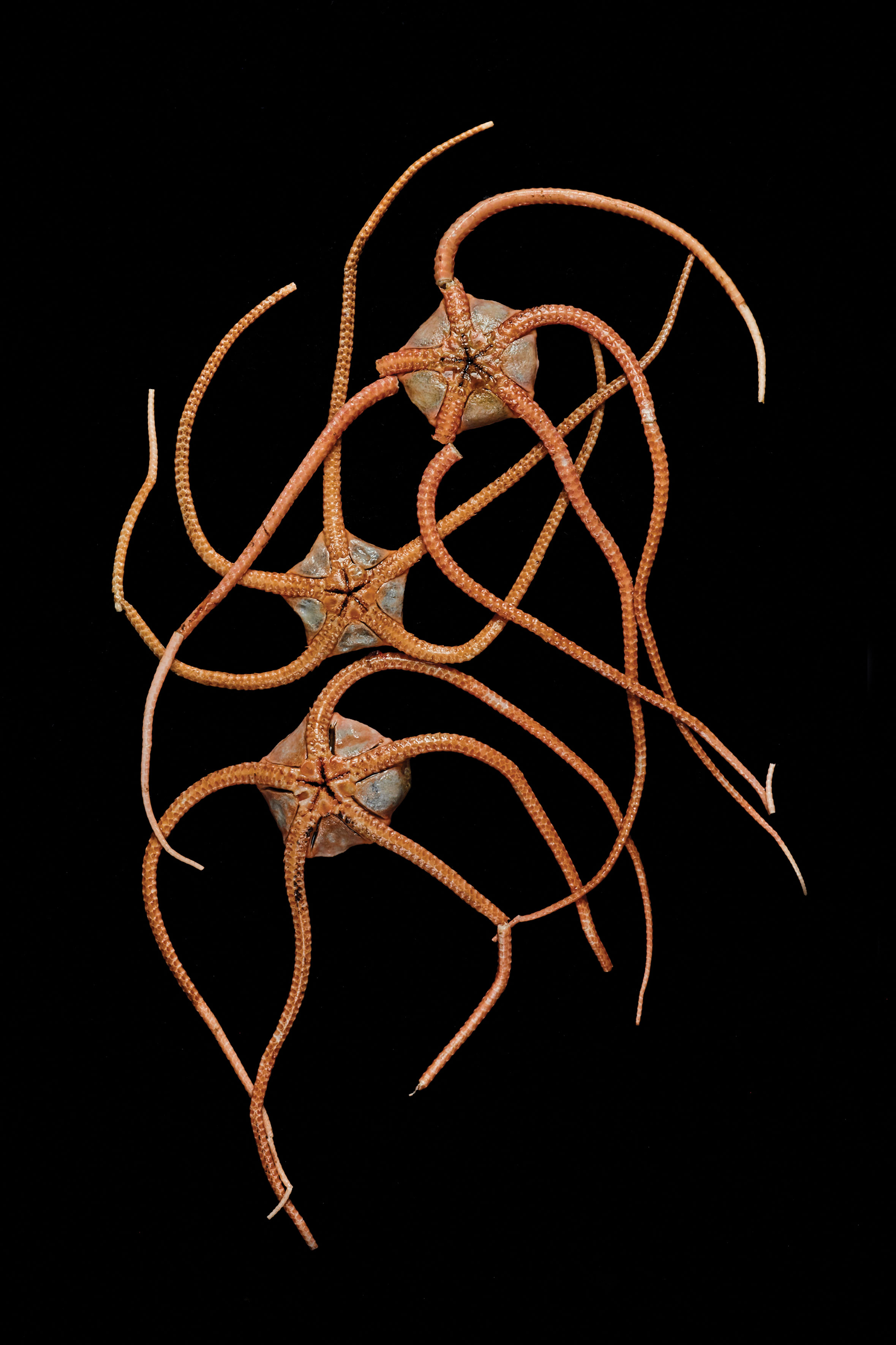
For decades, scientists have been collecting brittle stars, or Ophiuroidea, a relative of the starfish, and storing them in museums and universities. Now, DNA analysis from thousands of these ancient, prickly crawlers shows that family ties hold fast across vast oceans—meaning the global depths are much more interconnected than we thought. Brittle stars from New Zealand waters, for example, are related to those found as far away as the Indian Ocean and the North Atlantic.
“You might think of the deep sea as remote and isolated,” said Tim O’Hara, senior curator of marine invertebrates at Museums Victoria Research Institute. “But for many animals on the seafloor, it’s actually a connected superhighway.”
O’Hara, lead author on the Nature paper tracing this work, hopes the world-first findings are used to inform policy decisions about deep-sea mining and the climate crisis. “The deep sea is highly connected, but also incredibly fragile.”
More by Catherine Woulfe