





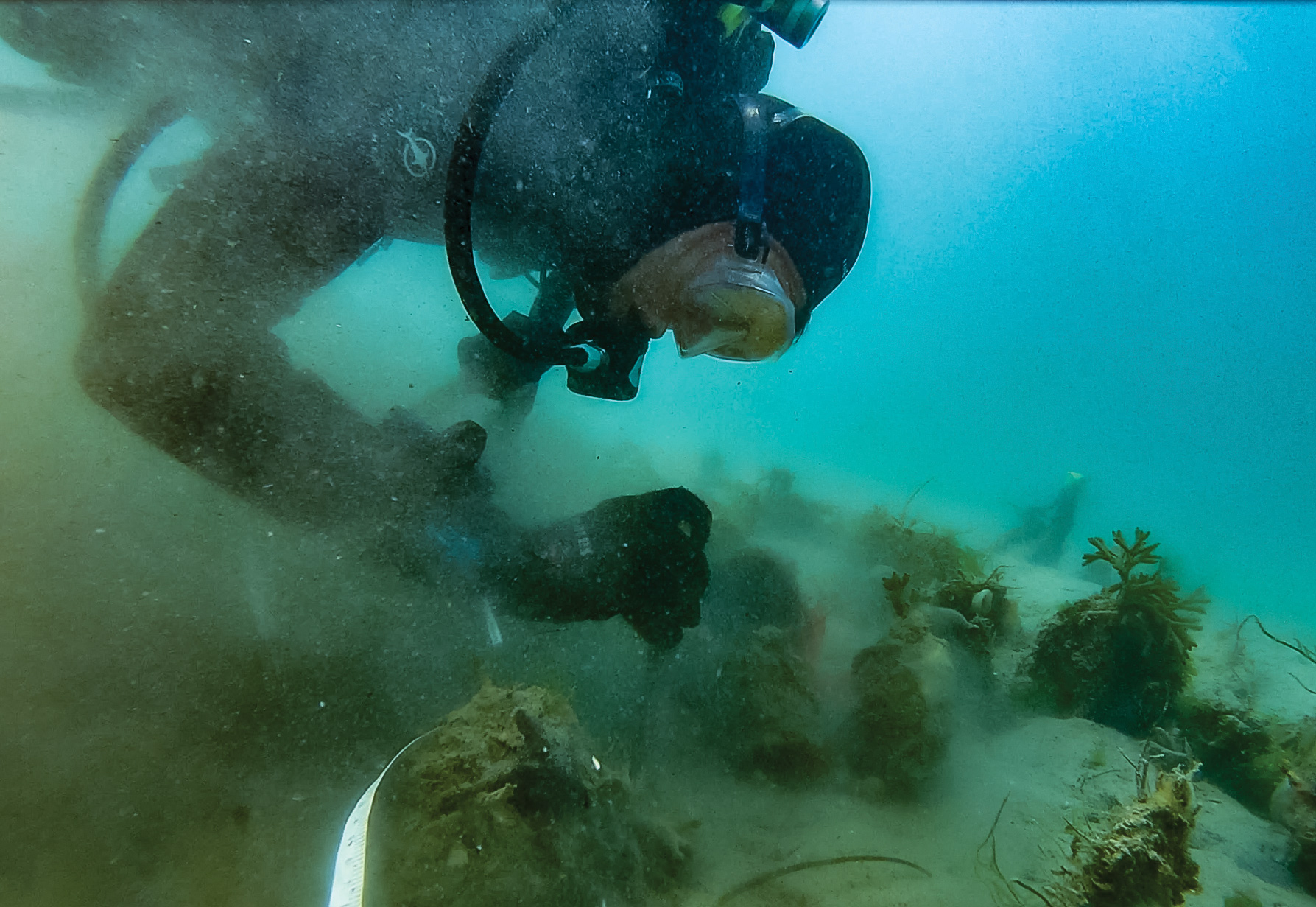
Horse mussels are massive. Given a chance, the shellfish can grow to almost half a metre long.
University of Auckland marine scientist Jenny Hillman says that until the 1990s, these huge shellfish carpeted harbours and estuaries around New Zealand, cleaning the seawater as they filtered it. They were big builders, too: forming reefs that bound sediment, captured nutrients, and provided habitat for many smaller creatures.
However, Hillman says, these areas are now largely stripped of life and horse mussels are functionally extinct. Commercial dredging, which destroys seafloor habitat, has been the main culprit, while sediment pouring off the land has smothered the beds.
Hillman’s team recently received government funding to begin filling the ecological gap left by the enormous mussels. “We’ve decided to make fake ones,” she says.
The plan is to use shell waste from green-lipped-mussel farms to create a concrete which can then be shaped to mimic horse-mussel shells—a way to recycle some of the 35,000 tons of green-lipped-mussel shells sent to landfill each year.
Out of water, these mimics look a bit like chalky lollipops or garden trowels. But the hope is that they will rebuild the lost seafloor habitat. The first residents are likely to be young fish, such as snapper, and shellfish, such as scallops. The researchers hope that, eventually, the fake mussels will play nursery to real horse mussels—juveniles, grown in captivity and released in their forebears’ old haunts.
Scientists are already working on better understanding horse mussel reproduction with a view to breeding them, Hillman says. And in the meantime, getting on with restoring the seabed is urgent. “The sooner we get onto it, the better. We cannot look away any more.”
More by Bill Morris