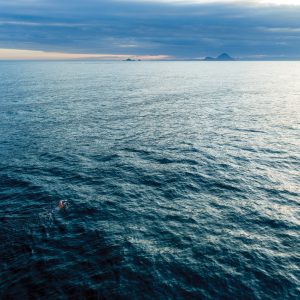



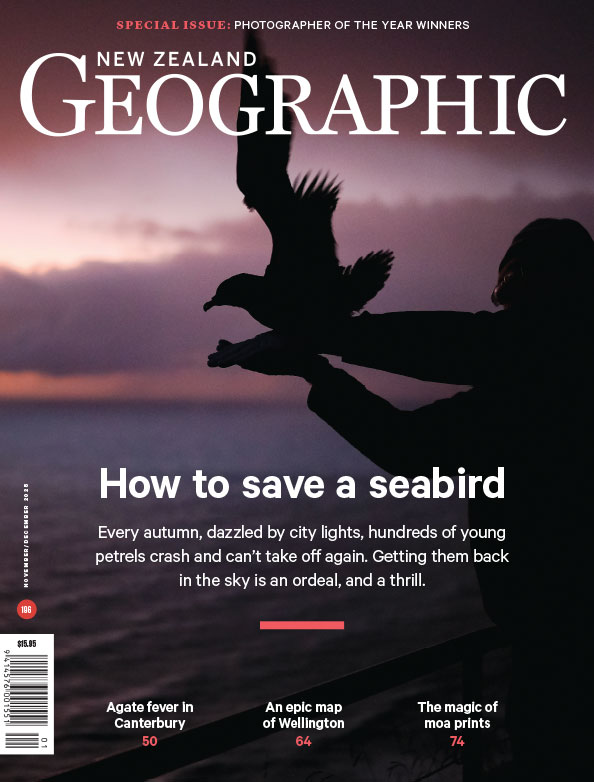



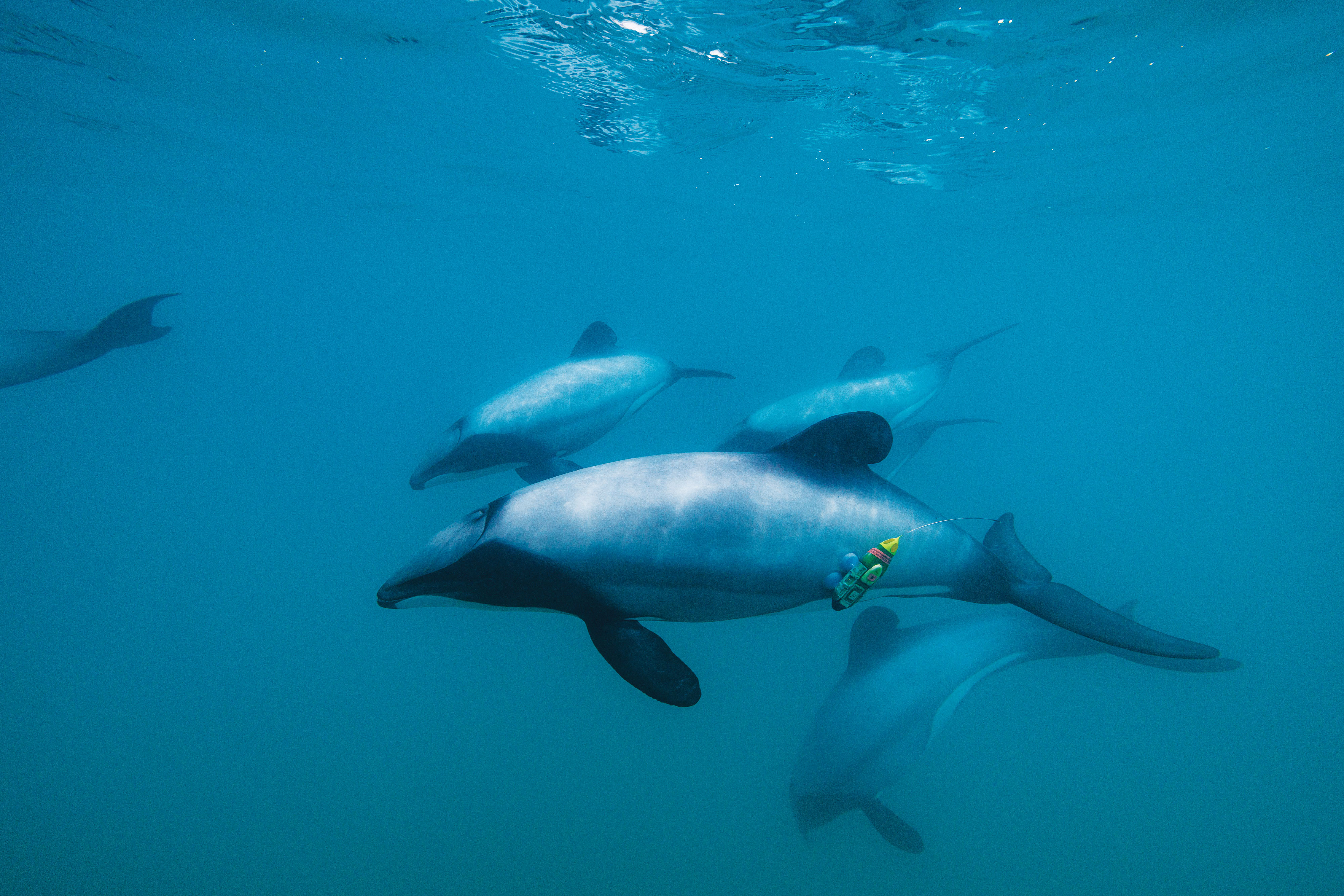
What do our smallest dolphins get up to underwater? Until now, researchers have been limited to watching from boats, or listening to recordings of the dolphins’ echolocation clicks and buzzes. In February 2023, as part of a cover story on the species, New Zealand Geographic documented scientists attaching innovative suction tags to Hector’s dolphins in Te Koko-o-Kupe/Cloudy Bay. The team tagged 11 dolphins and most of the tags stayed on for about four hours, logging pressure, acceleration, GPS locations and audio recordings.
The data from those tags is “incredible”, says Rochelle Constantine, a University of Auckland professor who specialises in marine mammals. Six of the chubby little dolphins were recorded hooning around outside of the protected areas, with one heading 15 kilometres offshore. They were all very busy: together, across 83 hours of data, the dolphins dived almost 2000 times and executed “crazy” barrel-rolls along the sea floor. Most thrilling, she says, was watching the two dolphins whose tags kept functioning at night. These two sped down past the 100-metre mark and spent long stretches swimming purposefully, upside-down, about a metre above the bottom. Constantine suspects this let the dolphins aim their echolocation “beam” down, rather than up, startling bottom-dwelling fish. One caught six fish in just 70 seconds using this strategy; when it surfaced, says Constantine, you could hear it breathing, “but it’s not super puffed”.
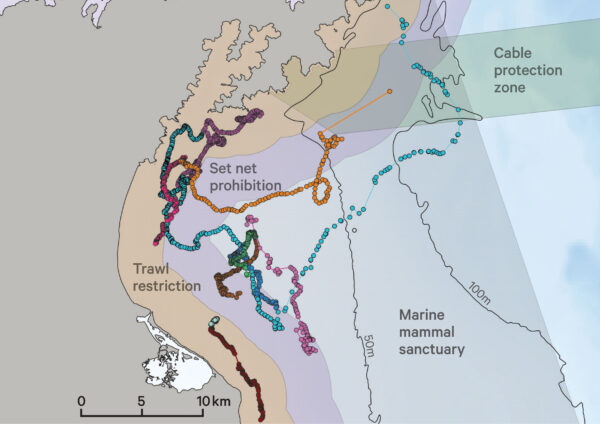
Given the endangered dolphins were so quick to swim out of the areas where bottom-trawling and set netting are banned, Constantine says the obvious reaction would be to push to expand those zones. “I would argue strongly against that,” she says—she’s hoping instead to secure funding to build on this pilot project, to help inform nuanced, mature fisheries regulations.
More by Catherine Woulfe