





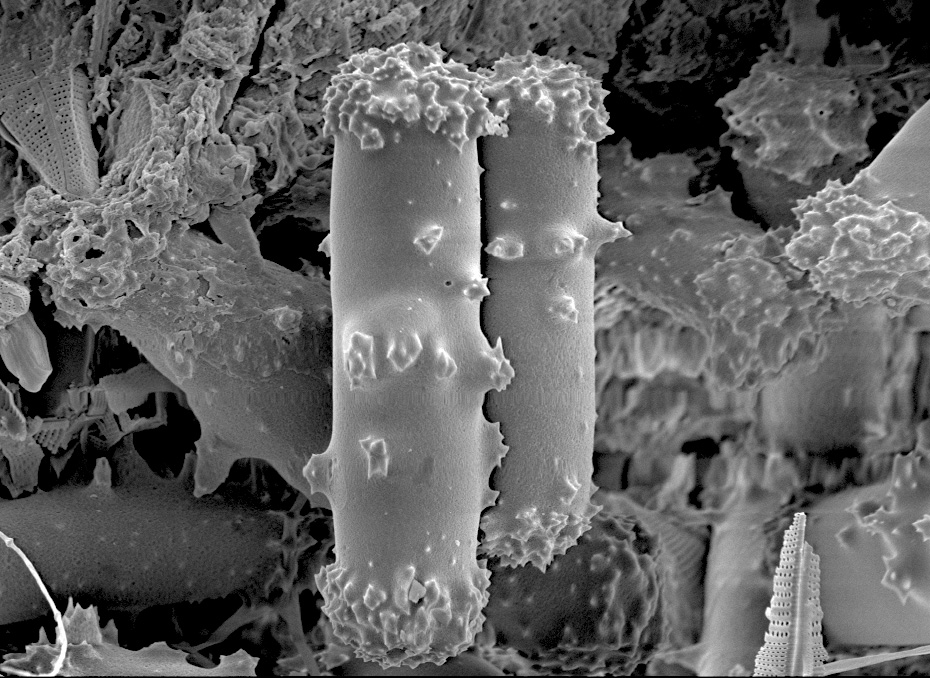
Almost all sponges live in the sea, “and they’re the kind that people know about”, as University of Otago palaeontologist Daphne Lee says. But a team led by her German collaborator Uwe Kaulfuss has just discovered something very special in sediment from Otago’s Foulden Maar: an exquisitely preserved, fossilised freshwater sponge, the first to be described in New Zealand or Australia. The soft material is gone—it has been 23 million years, after all—and what remains are the tiny, needle-like “spicules” of silica that function as a sponge’s skeleton. “I think they are beautiful,” Lee says. “It’s really quite something.”
More by Catherine Woulfe