



Oxygen shaped the world as we know it. It’s why we hiccup and why frogs croak. It’s so good that some turtles have learned to suck it in using not just their nose and mouth, but also… another orifice.
Every day, a human takes about 20,000 breaths. A hummingbird takes 350,000, and an Etruscan shrew more than a million. A cicada opens the vents along its sides to pull in air, while in the ocean, a great white shark swims with its mouth open to force oxygenated water through its gills. If it stops, even for a few minutes, it will suffocate.
With two known exceptions—a tiny parasite that infects the muscles of fish, and a microscopic anemone-looking creature that lives in the Mediterranean Sea—animals need oxygen to live, and they have devised myriad ways to get it.
It was not always so.
For the first half of our planet’s 4.5-billion-year history, there was barely any oxygen in the atmosphere. Life-forms were simple and minuscule. But when the single-celled ancestors of plants figured out how to photosynthesise, generating energy from sunlight and water, they pumped out oxygen—and changed the world.
As atmospheric oxygen levels rose, microorganisms that had evolved without it suffered and died, making way for the evolution of creatures that could turn oxygen into energy. Oxygen turned out to be a highly efficient fuel, so early creatures could grow larger and develop specialised cells, tissues, and organs.
These first animals got their oxygen from water. They had gills or membranes, not lungs. But around 400 million years ago came another gamechanger: a type of armoured fish that lived in ponds with wildly varying oxygen levels. These fish repurposed part of their digestive system into a proto-lung, enabling them to breathe air when the oxygen in the water ran low. These fish and their many, many descendants—including all mammals, reptiles, and birds—went on to colonise the land.
“The evolution of breathing is one of those big transitions that occurred in the history of life on Earth,” says Australian respiratory biologist Jonathan Codd, a professor at the University of Manchester in the United Kingdom. “The world would not look anything like it does today without it.”
And because breathing is so ancient and so essential, it fundamentally shapes an animal’s form. “If you look at a cheetah or an elephant or a fish, you tend to think that it looks the way it does because of the way it moves or the kind of life it leads. But actually, most animals look the way they do because of the way they breathe.”
*
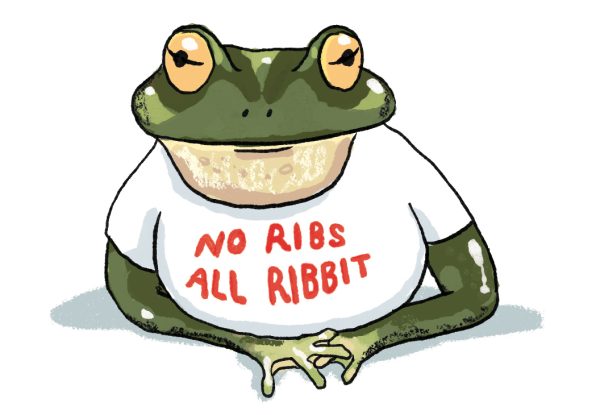
Take frogs. They have no ribs, probably because for an animal that bounces about as enthusiastically as a frog “ribs are a really bad idea”, Codd says—one bad landing and you’ve snapped them. But for most vertebrates, a ribcage is an essential part of breathing. It works like a bellows, pulling air into and out of the chest cavity.
Frogs, being ribless, can’t do this. And while other amphibians—certain slow-moving salamanders—absorb oxygen almost entirely through their damp skin, frogs need to power a lot of hopping. So they opt for “buccal pumping”. They gulp air into a stretchy cavity on the floor of their mouth, forcing it into their lungs—a move that explains that wide, smiling mouth and ballooning throat. In some species, male frogs have also co-opted this stretchy sac for croaking, to make their loud, distinctive mating calls.
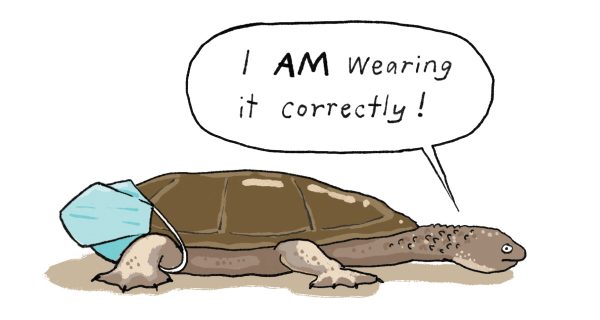
Turtles turned their ribcage into a shell. To pull air in and out of their lungs, most turtles squeeze and release muscles in their shoulders, pelvis and abdomen. But a handful of Australian turtles do something even weirder. They breathe with their butt.
The Fitzroy River turtle, for instance, lives in cool, fast-flowing tributaries where there’s plenty of dissolved oxygen and lots of small invertebrates to eat. Because it’s a bottom-feeder, it’s built to sink, not float, so surfacing is hard work.
The turtle can breathe air, but most of the time, to save energy, elude land predators, and avoid disrupting its munching, it instead pumps water into its intricately folded cloacal bursae—“basically like gills inside its butt”, says Natalie Clark, who did her doctoral research comparing Australia’s five known butt-breathing turtle species. The Fitzroy River turtle is the champion. It can stay underwater for weeks at a time.
*
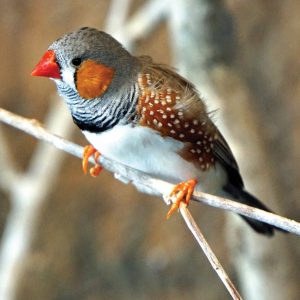
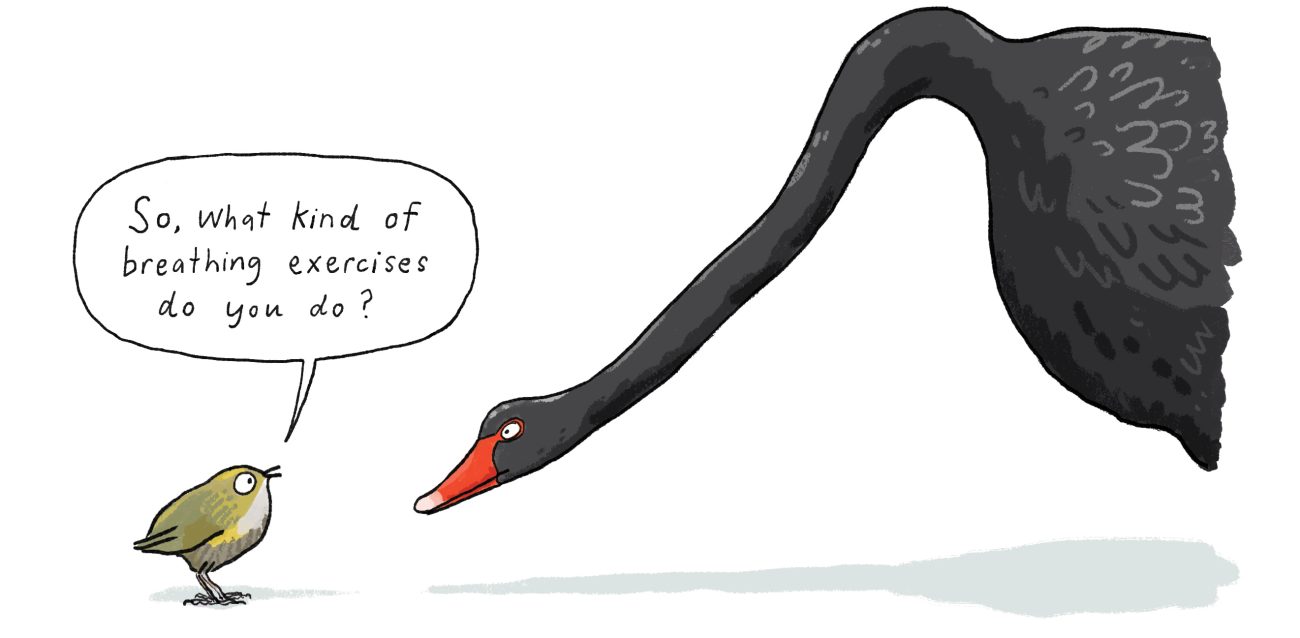
Of all animals, birds are the most efficient breathers. They send each huff of air through an elaborate one-way system, involving not just the lungs but also networks of air sacs at the front and back of their body. (These hollow sacs even protrude into the birds’ bones, making them lighter.) It’s a respiratory racecourse that keeps fresh air moving through the lungs on exhales as well as inhales. The steady, rich oxygen supply gives birds the energetic power to, say, migrate from Alaska to the Firth of Thames in a little over a week (godwits), spend years at sea without touching down on land (albatrosses), or have a ridiculously long neck (swans).
For a long time, scientists assumed birds developed this hyper-efficient breathing system in order to fly. But the fossil record suggests fast-running dinosaurs got there first, says Codd. He would like due credit, as well, to go to those other masters of the air: bats.
Codd has dissected plenty of bats in his time, investigating surfactants in the mammals’ lungs that change slightly with the temperature, allowing the bat to deal with extreme conditions. That work found a home in neonatal wards—scientists mimicked the surfactants to help premature babies to breathe.
“What you find if you look at a bat lung is that it’s a Ferrari of a lung—the whole chest cage of the bat is just lung,” says Codd.
“They’ve essentially maximised every single parameter they could to get a lung that facilitates flying within the constraints of having a mammalian lung,” he says. “It goes to show that in biology, if ever you think something’s not possible, someone will always find an animal that can do it.”
*
At St Andrews University in Scotland, biologist Chris McKnight is trying to understand another mammalian overachiever: “an animal that at its very core is the exact same as us—it has to breathe air—but it spends 90 per cent of its life just not doing it”.
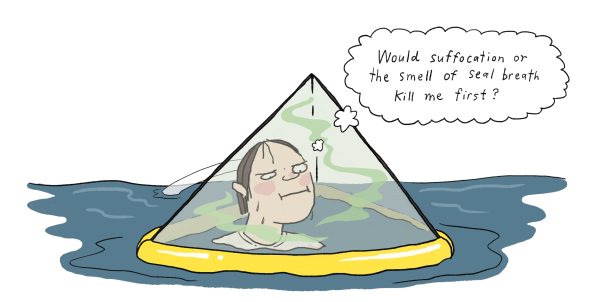
His team capture grey and harbour seals from the wild and give them a temporary home at the university’s animal facility, just metres from the North Sea. The seals are cooperative subjects. In a matter of days they’ll happily take all their breaths inside a small pyramid floating on the surface of the water. “Seals really hate the rain and they hate the wind, and there’s a lot of it in Scotland,” says McKnight. “So we think they just like being in there.”
By tweaking the proportions of gases in that pyramid, scientists are learning how seals sense oxygen levels and cope with carbon dioxide.
Land mammals, including most humans, are extremely sensitive to CO2. We aren’t consciously aware when our blood or air supply gets low on oxygen, but when our bodies detect high CO2—for instance, when we hold our breath for a long time—it’s like an alarm going off. We find it very unpleasant and uncomfortable, and after just a few minutes, automation takes over and our lungs inflate to pull more air in.
As McKnight says: “If you make that mistake once, even two metres under the water, it’s a death sentence. You’re out of the gene pool.” Hold your breath too long, on the other hand, and you’ll lose your ability to think straight, and then pass out—and drown anyway. The anxiety induced by high CO2 encourages us land-lubbers to surface before that happens.
Humans and seals share a common land-based ancestor. To return to the oceans, ancient seals had to solve the CO2 problem.
“What had to be changed so you’re not constantly in f*cking stress, anxiety, physical pain, and your body trying to kill you by pulling water in?” says McKnight. He has also studied human freedivers who work on overriding this urge. “In seals, that really basic life support system has to be different. So I’m interested in, well, what’s different?”
*
Inside the seals’ floating breathing chamber, McKnight increased carbon dioxide levels 200 times, from the 0.04 per cent in normal air to 8 per cent. “Let’s take the piss and really ramp it way up,” he thought.
Humans (and most other mammals, like dogs and rats) start hyperventilating with high CO2. “That’s like a basic mammalian response.” The seals, however, kept breathing normally. “They just were yomping away, 30 to 33 breaths per minute. They breathe like a metronome.”
McKnight, worried something was wrong with the expensive equipment, hopped in the pool and surfaced inside the pyramid to check. He lasted three breaths. Within seconds, his chest was tight, and he felt paralysed with anxiety. “Just deep, primal stress.”
Further experiments suggested that, unlike us, seals can perceive their blood oxygen levels directly—allowing them to regulate the length of their dives safely, without the need for the blaring carbon dioxide alarm.
“It shows their relationship with those gases is fundamentally different,” McKnight says.
The next step is to figure out what’s going on in the seals’ brain as they gauge oxygen and CO2— and that means persuading a seal to breathe from a mask inside an MRI machine. McKnight’s team is hoping to recruit a few of the facility’s most inquisitive and amenable seals, with fish as a reward. “Two of our animals, Viola and Uda, they’re definitely the two candidates. They’ve picked up things really quick, and they’re very forward,” says McKnight. (The females are always most likely to volunteer for such experiments, he says.)
*
At a research meeting a year ago, McKnight happened to chat about his seal studies with Xavier Vrijdag, a researcher in diving medicine at the University of Auckland. “We’ve found something similar in humans,” Vrijdag replied.
In the autumn of 2024, his team had carried out a diving safety study in a group of 40 New Zealand divers, testing to see if they could be trained to recognise high carbon dioxide earlier. To their surprise, the researchers discovered that six of the divers only weakly responded to CO2, and one couldn’t detect it at all. Like the seals, these people didn’t start hyperventilating or feeling awful—they kept breathing normally.
McKnight told Vrijdag he had identified a specific gene variation in the seal’s genome that’s linked to the lack of a carbon dioxide response. Vrijdag wondered whether something similar might be going on with the divers—Asian ethnicities were highly represented among those who couldn’t detect CO2, suggesting a genetic basis for the trait.
Vrijdag has just posted blood samples from five of those divers to Scotland for McKnight to analyse. “We don’t have the results yet, but it’s very, very exciting to see what he finds.”
Those results could have implications for both dive safety and anaesthesiology—during surgeries, anaesthetists assume patients have an automatic breathing response to high carbon dioxide. “If there is a certain patient population that might be more susceptible, you could then do an easy blood test to check if they’re at risk,” Vrijdag says.
“Part of doing animal research is to understand the animal world better. But it’s even more exciting when there’s cross-fertilisation of knowledge into the human physiology domain as well.”
*
Our own breath is both unique and universal. In a 2025 study, Israeli scientists showed that each of us has an individual breath signature. Fitting a tracking device to 100 young adults for 24 hours, they found that each person could be reliably identified by their breathing patterns—with accuracy comparable to voice recognition tools. The “breath fingerprints” also contained clues about a person’s mental and physical health, with certain patterns correlating to depression, anxiety, and body mass index.
It all sounds very sophisticated. But our respiratory systems still feature quirks that date back to those ancient ancestors who first crawled onto the land.
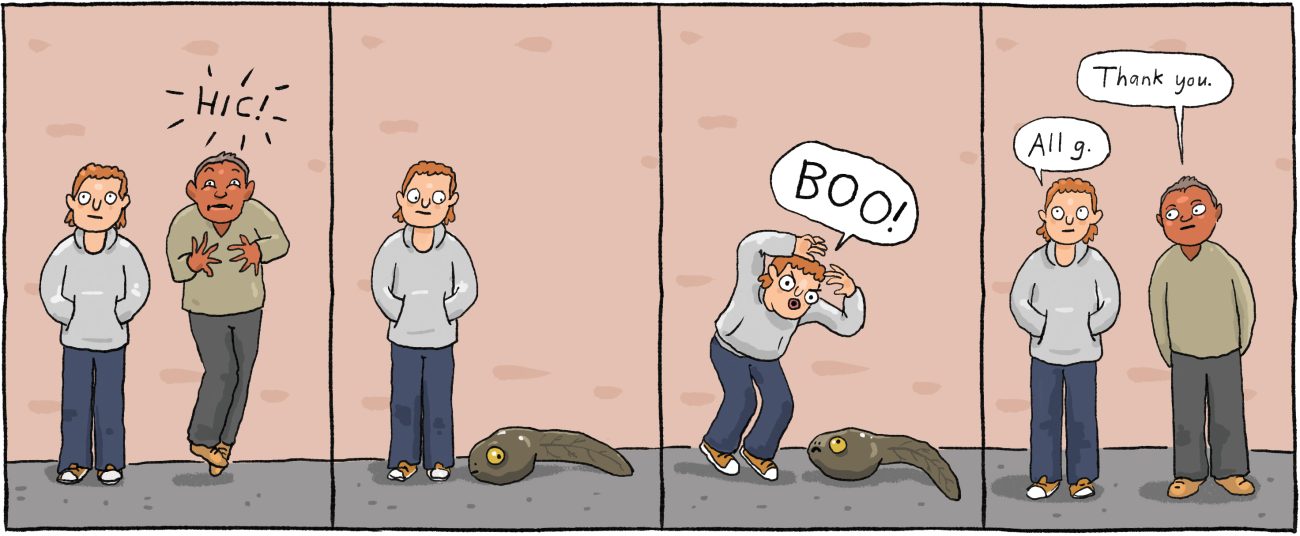
Ever wondered why you hiccup? That uncomfortable spasm of the throat and chest muscles is a 400-million-year hangover. We inherited the major nerves we use in breathing from our fish ancestors, but the design worked better with gills. In humans, the nerves elongated, threading all the way from the throat to the diaphragm. They are easily irritated or disrupted, and when that happens: hiccup!
As well as fish, we can blame tadpoles. The amphibians—our ancestors—have both lungs and gills, and they use hiccups to gulp water and force it across their gills. The neural and muscular pathways involved stuck around, and are present in humans, and our hiccups, today.
Traditional remedies for hiccups are typically distractions, Codd says.
“Someone pinches you on the arm, you drink water from the other side of the glass, or someone scares you. What that does is it resets your brain, and so you stop trying to breathe like your ancient amphibian ancestor. Your brain just goes, ‘Oh, yeah. That was silly.’”
Humans tend to feel that we’re far removed from animals, Codd points out. It tickles him that glitches like hiccups tie us back to some of the first creatures ever to breathe air.
“You can’t escape your evolutionary history.”
More by Kate Evans
More by Giselle Clarkson