



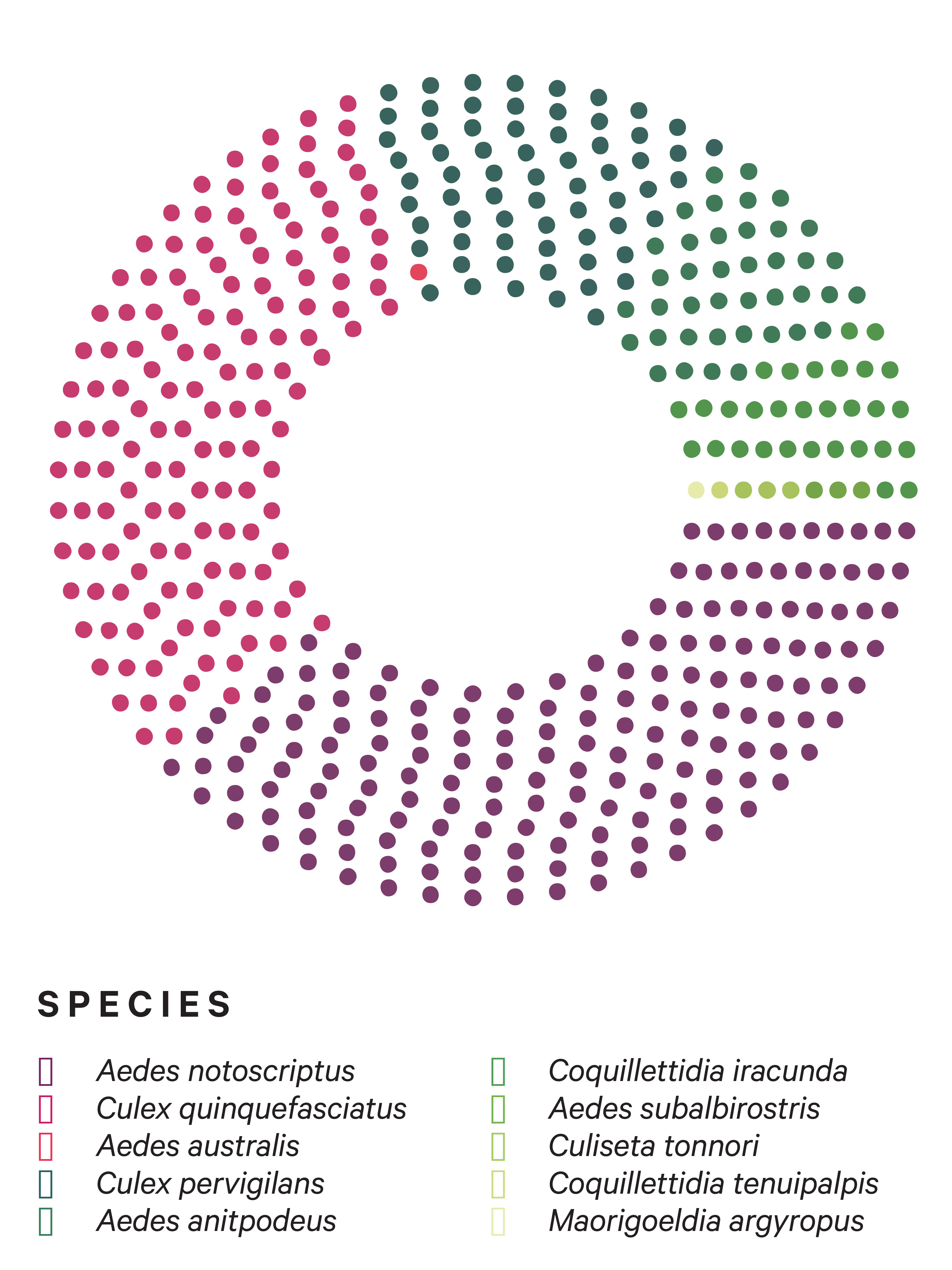
In 2019, scientists asked the public to catch and freeze mosquitoes, then post them to Te Papa. Over three years almost 900 tiny packages turned up. About a third of the insects weren’t mosquitoes at all, or they were too damaged (squashed?) to identify. Of the rest, two exotic species dominate. Julia Kasper, lead curator of invertebrates at Te Papa, says both are invasive and favour urban areas—and bite people—while our 13 native species, shown here in green, mostly prefer birds and deep bush. Two others, which she calls “the coolest mosquitoes in the world”, ducked the census entirely: Opifex fuscus breeds in rockpools, targets mammals and has a vicious bite. And Culex rotoruae breeds in hot, poisonous thermal pools—the only mosquito known to do so.
More by Catherine Woulfe