

Butterflies and moths are active in the middle of the day, and mostly through spring and summer. So that’s when Chrissie Ward, 77, goes for her transect walks.
Once a week, right through every warm season since the spring of 2009, she has walked the same 4.5 kilometres around the outskirts of Nelson, following and crossing the Maitai River, passing a sportsground, trotting through suburbs. “It takes an hour and a quarter for me to walk it,” she says. “I like it very much. It’s good exercise, for one thing. And also, it gives the walk a purpose.”
She carries a clipboard, tallies any moth or butterfly she sees, and uploads that count to the Moths and Butterflies of New Zealand Trust. The first five years were fruitful: each walk, she often saw more than a hundred monarchs, cabbage white butterflies, and others (mostly yellow or red admirals, little blues, and magpie moths). But from 2012, those numbers swoop down, and while the counts flutter each year, they have not come close to their former heights. Last season was the worst on record. She puts the decline down to paper wasps, which eat caterpillars and eggs, and took off in the region shortly before all the trend lines started to drop.
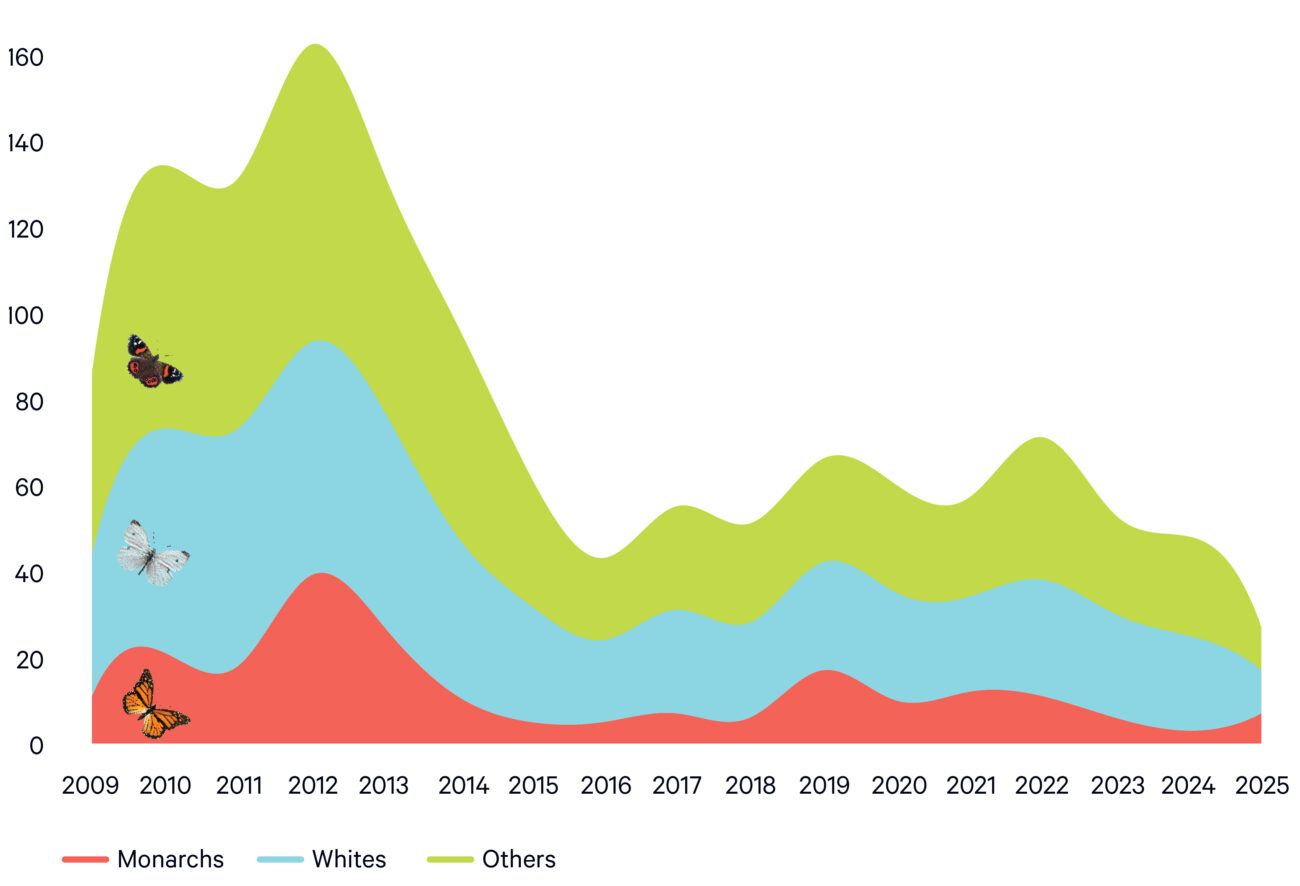
Most noticeable to Ward has been the fall of the white butterflies, an invasive species considered a pest—by veggie gardeners, anyway. “There were just so many of them,” she says. “Their numbers have plummeted quite drastically. I know people don’t like them because they lay their eggs on cabbages or whatever, but, like all butterflies and moths, they are pollinators. And they’re valuable.”
More by James Frankham