



More than you can chew

Written by

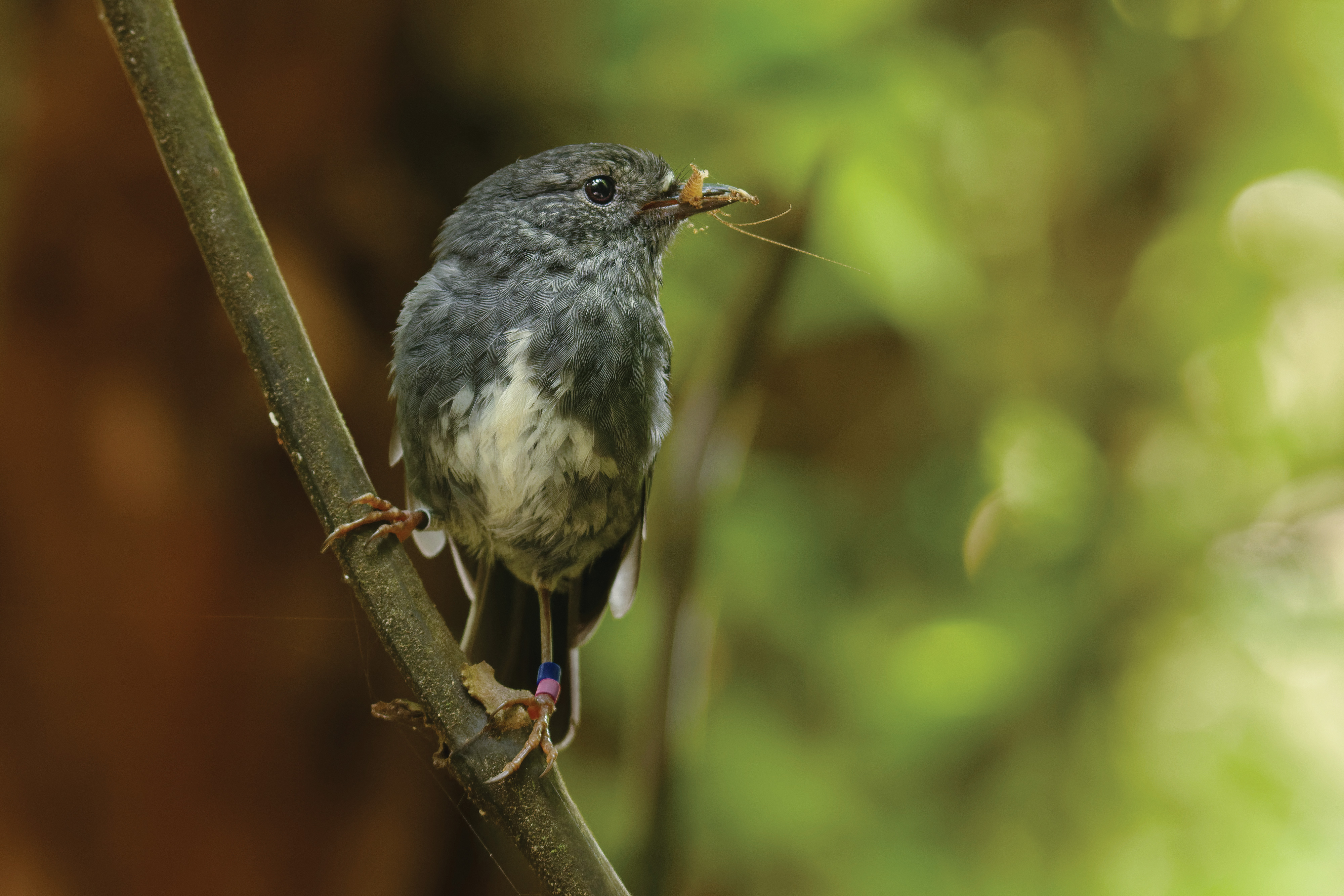
The toutouwai (North Island robin, Petroica longipes) has eyes bigger than its stomach. Weighing about the same as a lightbulb, toutouwai regularly take down large invertebrates including wētā, stick insects and even 30-centimetre-long earthworms.

But there’s only so much the tiny toutouwai can devour of these meals. Rather than let that protein go to waste, toutouwai are adept at storing leftovers—a caching behaviour similar to a squirrel hiding nuts for winter.

To remember where all these tidbits are stored, toutouwai need a good memory map. Researchers gave 63 wild birds a puzzle with a mealworm treat hidden in one of eight compartments. The puzzle was placed in the toutouwai’s territory several times per day, with the treat always hidden in the same compartment. Toutouwai learned the location of the snack, opening fewer compartments to find the mealworm over time.

Following these individuals over the next breeding season, researchers found that males with better memory raised more chicks and fed their offspring larger prey items. But for females, food memory was not linked to reproductive fitness, leading the researchers to speculate that females may have other traits under selection pressure—perhaps related to nest-building.

More by

The toutouwai (North Island robin, Petroica longipes) has eyes bigger than its stomach. Weighing about the same as a lightbulb, toutouwai regularly take down large invertebrates including wētā, stick insects and even 30-centimetre-long earthworms.

But there’s only so much the tiny toutouwai can devour of these meals. Rather than let that protein go to waste, toutouwai are adept at storing leftovers—a caching behaviour similar to a squirrel hiding nuts for winter.

To remember where all these tidbits are stored, toutouwai need a good memory map. Researchers gave 63 wild birds a puzzle with a mealworm treat hidden in one of eight compartments. The puzzle was placed in the toutouwai’s territory several times per day, with the treat always hidden in the same compartment. Toutouwai learned the location of the snack, opening fewer compartments to find the mealworm over time.

Following these individuals over the next breeding season, researchers found that males with better memory raised more chicks and fed their offspring larger prey items. But for females, food memory was not linked to reproductive fitness, leading the researchers to speculate that females may have other traits under selection pressure—perhaps related to nest-building.

More by

Issue 161

Jan - Feb 2020

Making birds
Tomb raiders
Castaways
Let there be night

Issue 161 Jan - Feb 2020

More by

×

Subscribe to our free newsletter for news and prizes

3 FREE ARTICLES LEFT

Subscribe for $1  | 

3 FREE ARTICLES LEFT THIS MONTH


Keep reading for just $1

$1 trial for two weeks, thereafter $8.50 every two months, cancel any time

Signed in as . Sign out