



Reef doctors

Written by

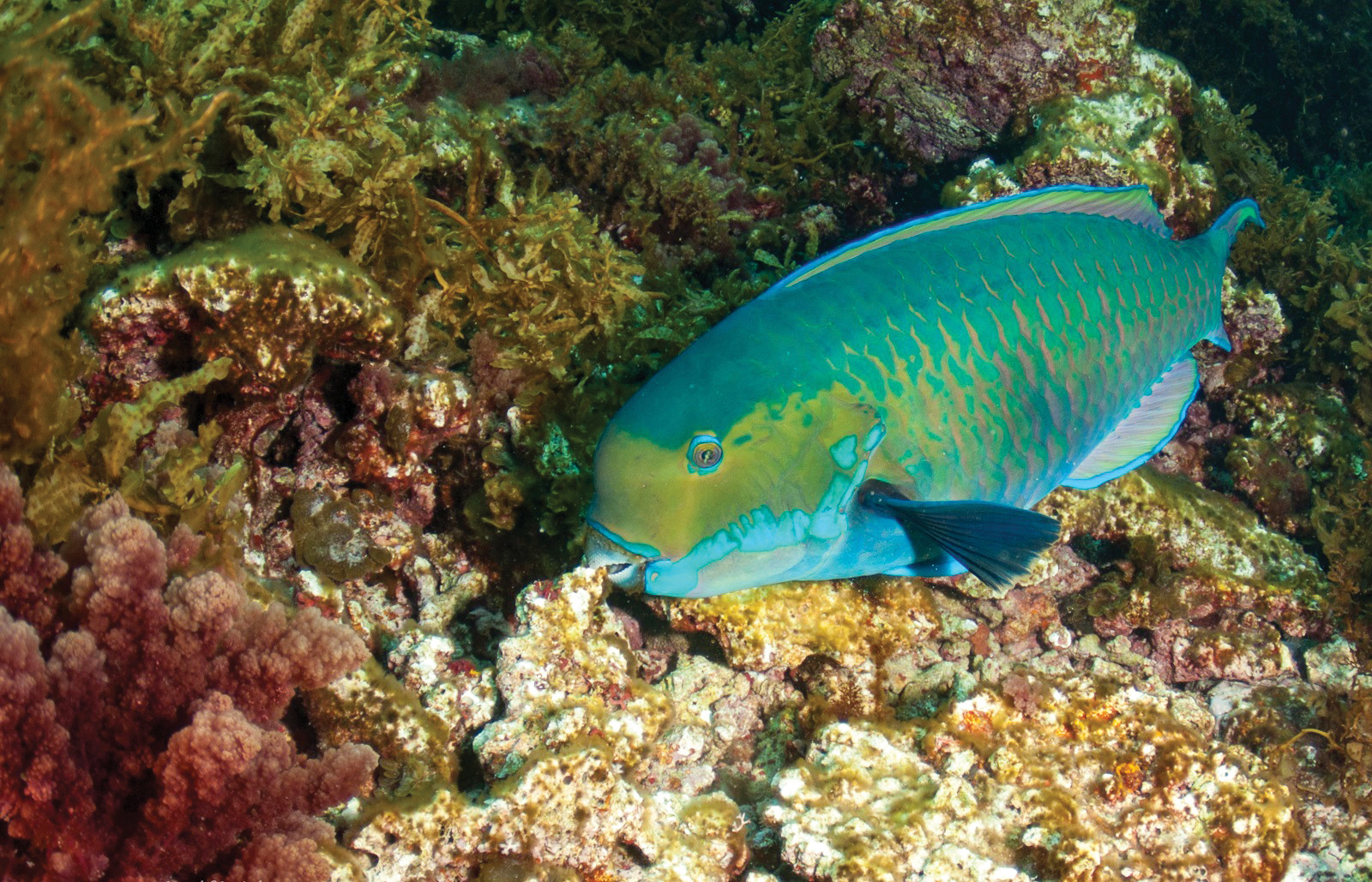
After severe coral bleaching—the stress response of coral to higher sea surface temperatures—parrotfish thrive, a new study by the Australian Institute of Marine Science (AIMS) has found. Researchers looked at fish populations on two bleached reef areas—the Great Barrier Reef and the Chagos Archipelago in the Indian Ocean, 8000 kilometres away.

Parrotfish populations in damaged reef areas were two to eight times as high as normal, and individual fish about 20 per cent larger. The fish use their beak-like teeth to scrape microorganisms off coral.

Study co-author Brett Taylor believes the parrotfish’s presence helps the coral repair process, as their feeding creates large areas of newly barren surfaces. He thinks coral and parrotfish might create a positive feedback loop: the fish nibble away microalgae and cyanobacteria ‘scunge’ from the coral, giving it a better chance to recover.

“Parrotfish are a vital link in the reef ecosystem,” says co-author Mark Meekan. “As herbivores, their grazing shapes the structure of reefs through effects on coral growth and suppression of algae that would otherwise proliferate. Because of these important ecological roles, they have been described as ‘ecosystem engineers’ of reef systems.”

More by

After severe coral bleaching—the stress response of coral to higher sea surface temperatures—parrotfish thrive, a new study by the Australian Institute of Marine Science (AIMS) has found. Researchers looked at fish populations on two bleached reef areas—the Great Barrier Reef and the Chagos Archipelago in the Indian Ocean, 8000 kilometres away.

Parrotfish populations in damaged reef areas were two to eight times as high as normal, and individual fish about 20 per cent larger. The fish use their beak-like teeth to scrape microorganisms off coral.

Study co-author Brett Taylor believes the parrotfish’s presence helps the coral repair process, as their feeding creates large areas of newly barren surfaces. He thinks coral and parrotfish might create a positive feedback loop: the fish nibble away microalgae and cyanobacteria ‘scunge’ from the coral, giving it a better chance to recover.

“Parrotfish are a vital link in the reef ecosystem,” says co-author Mark Meekan. “As herbivores, their grazing shapes the structure of reefs through effects on coral growth and suppression of algae that would otherwise proliferate. Because of these important ecological roles, they have been described as ‘ecosystem engineers’ of reef systems.”

More by

Issue 161

Jan - Feb 2020

Making birds
Tomb raiders
Castaways
Let there be night

Issue 161 Jan - Feb 2020

More by

×

Subscribe to our free newsletter for news and prizes

3 FREE ARTICLES LEFT

Subscribe for $1  | 

3 FREE ARTICLES LEFT THIS MONTH


Keep reading for just $1

$1 trial for two weeks, thereafter $8.50 every two months, cancel any time

Signed in as . Sign out