




Life, deeper than we ever imagined

Chinese Academy of Sciences

In the northwest Pacific, a crushing 10 kilometres below the surface, a community of shellfish, worms and anemones is quietly thriving. Fuelled by methane and hydrogen sulphide seeping from the Earth’s crust, the creatures sprawl across thousands of kilometres in oceanic trenches—together, they are by far the deepest known complex ecosystem in the world.

A team of Chinese scientists discovered the community last winter during a dive in a submersible. They spent five weeks exploring, making dozens of dives to take samples and photographs; their work has just been published in Nature.

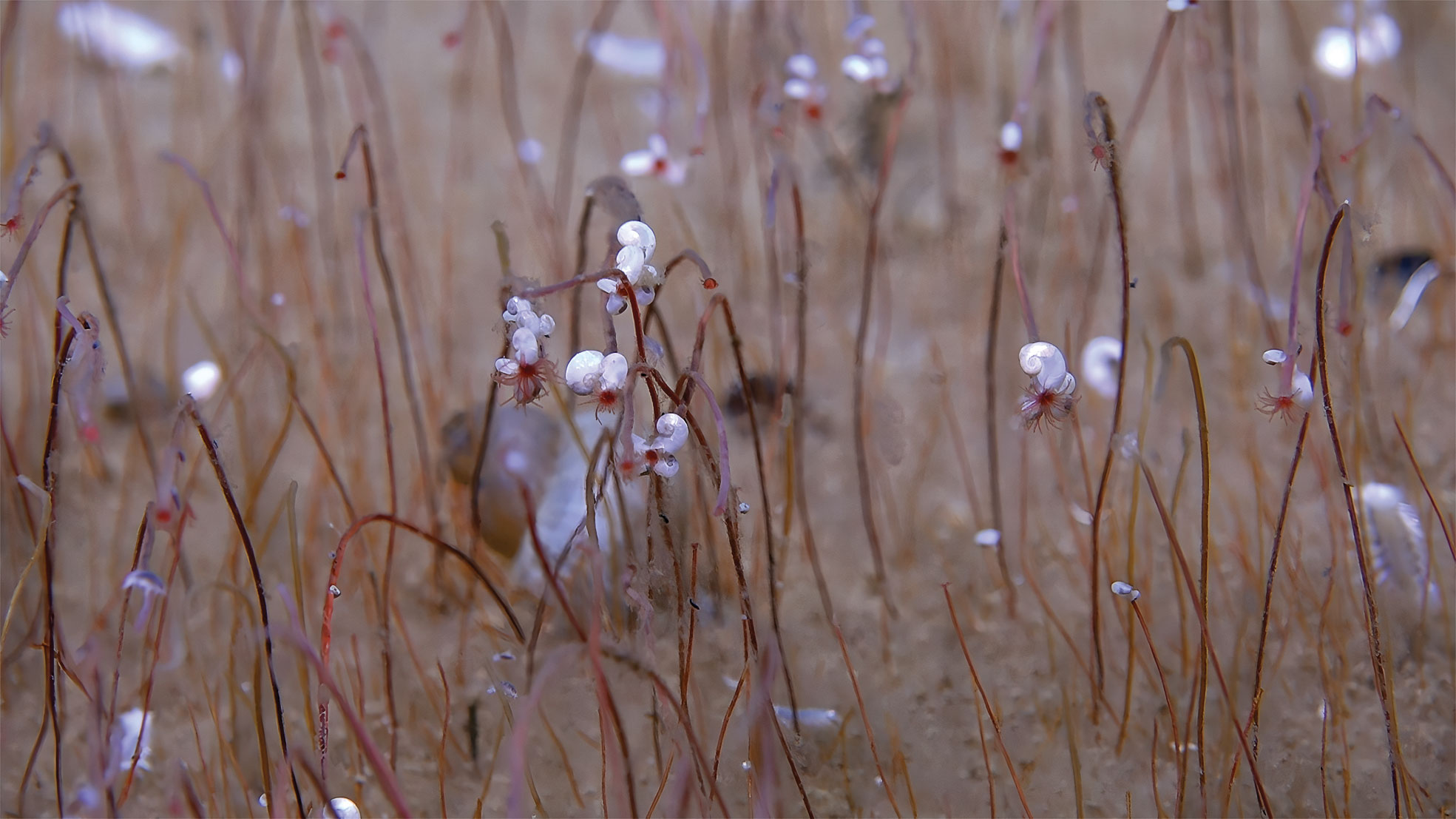
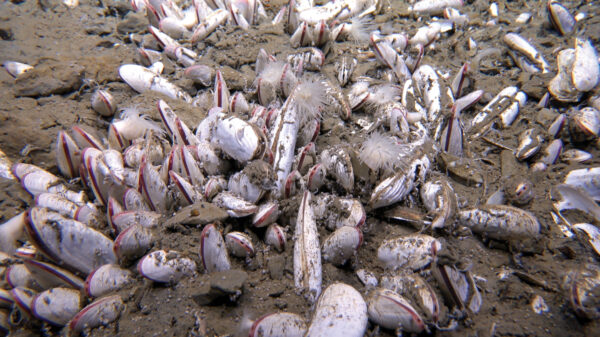
The team documented huge microbial mats; waving fields of foot-long tubeworms; clusters of chonky clams sprinkled with sea anemones; and herds of bone-white bristleworms the size of a baby’s hand. Pictured at top is a swathe of seabed dubbed “Wintersweet Valley”—rather than branches of fragrant flowers, these are tubeworms, extending haemoglobin-tipped tentacles into the current. The white “petals” are tiny snails.
Chinese Academy of Sciences

In the northwest Pacific, a crushing 10 kilometres below the surface, a community of shellfish, worms and anemones is quietly thriving. Fuelled by methane and hydrogen sulphide seeping from the Earth’s crust, the creatures sprawl across thousands of kilometres in oceanic trenches—together, they are by far the deepest known complex ecosystem in the world.

A team of Chinese scientists discovered the community last winter during a dive in a submersible. They spent five weeks exploring, making dozens of dives to take samples and photographs; their work has just been published in Nature.

The team documented huge microbial mats; waving fields of foot-long tubeworms; clusters of chonky clams sprinkled with sea anemones; and herds of bone-white bristleworms the size of a baby’s hand. Pictured at top is a swathe of seabed dubbed “Wintersweet Valley”—rather than branches of fragrant flowers, these are tubeworms, extending haemoglobin-tipped tentacles into the current. The white “petals” are tiny snails.

×

Subscribe to our free newsletter for news and prizes

3 FREE ARTICLES LEFT

Subscribe for $1  | 

3 FREE ARTICLES LEFT THIS MONTH


Keep reading for just $1

$1 trial for two weeks, thereafter $8.50 every two months, cancel any time

Signed in as . Sign out