






In 1889, Thomas Ward proposed something unique for the capital city: a really, really, really good map.
In the late 1800s, Wellington employed an Inspector of Nuisances in order to investigate the many difficulties of the rapidly growing city. Police officer James Doyle took up the role in 1890, and would remain in it for three decades.
Doyle was, in his spare time, a strongman, boxer, and captain of the Irish competitive tug-of-war team, and his new role demanded an iron constitution alongside an element of diplomacy. He was called on to investigate whether buried bodies were polluting waterways, whether drains were excessively disgusting, whether henhouses were well kept, whether the smoke from the Mount Cook brickworks was too noxious, whether the night-soil men visited frequently enough, and whether the complaints of the Anti-Chinese League had any foundation in reality. As he traversed the city, he would have often passed a gentleman in a tweed three-piece suit peering into a device on top of a tripod. It was a theodolite, which measures angles: Thomas Ward, a surveyor, was committing Wellington to paper.
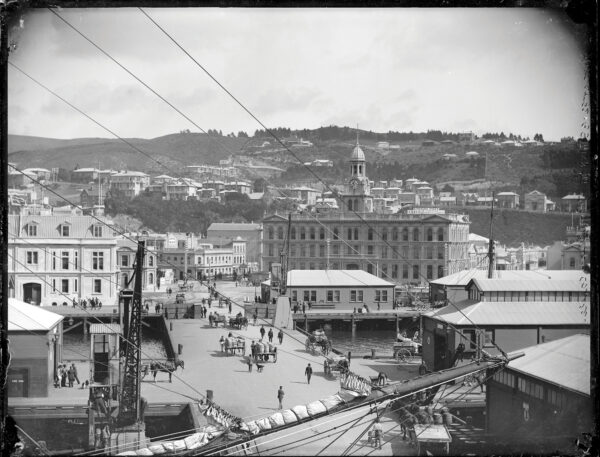
When Doyle took up his role, there was no accurate map of Wellington. But Ward had already pointed this out to Wellington City Council and secured the contract that was to define his life. Over two and a half years, Ward walked every street in the city. He drew the outline of every single building, including garden sheds and outhouses (but spared himself the effort of documenting henhouses). Historian Elizabeth Cox thinks that Ward may have knocked on all the doors of all Wellington’s houses, too, because he recorded the number of rooms in each dwelling, the number of storeys, and the building materials used. The resulting map is huge, spanning 88 sheets of paper, each the size of a poster.
Ward’s efforts meant that he arguably knew the city better than anyone else did. He certainly covered more territory than the butcher’s boys delivering parcels of meat or the suffragists door-knocking for signatures. He probably saw more of the city, good or ill, than the Inspector of Nuisances himself.
*
Ward was born in Oxford, in the United Kingdom, and came out to New Zealand in his early 20s, where he worked as an engineer before retraining as a surveyor in his 30s. It’s unclear what made him passionate about describing Wellington’s geometry so exactly, but he was dedicated to the task. After the completion of the map in 1891, he continued updating it over the following decade, pasting amendments onto each sheet, erasing demolished slums and adding new developments.
Cox first came across Ward’s map when she was a student at Victoria University, and at the time, it felt like she’d discovered something secret. A portal through time. Soon, she realised that the map was actually in constant use. Archaeologists turn to it to identify historical buildings; planners look up a site’s previous occupants.
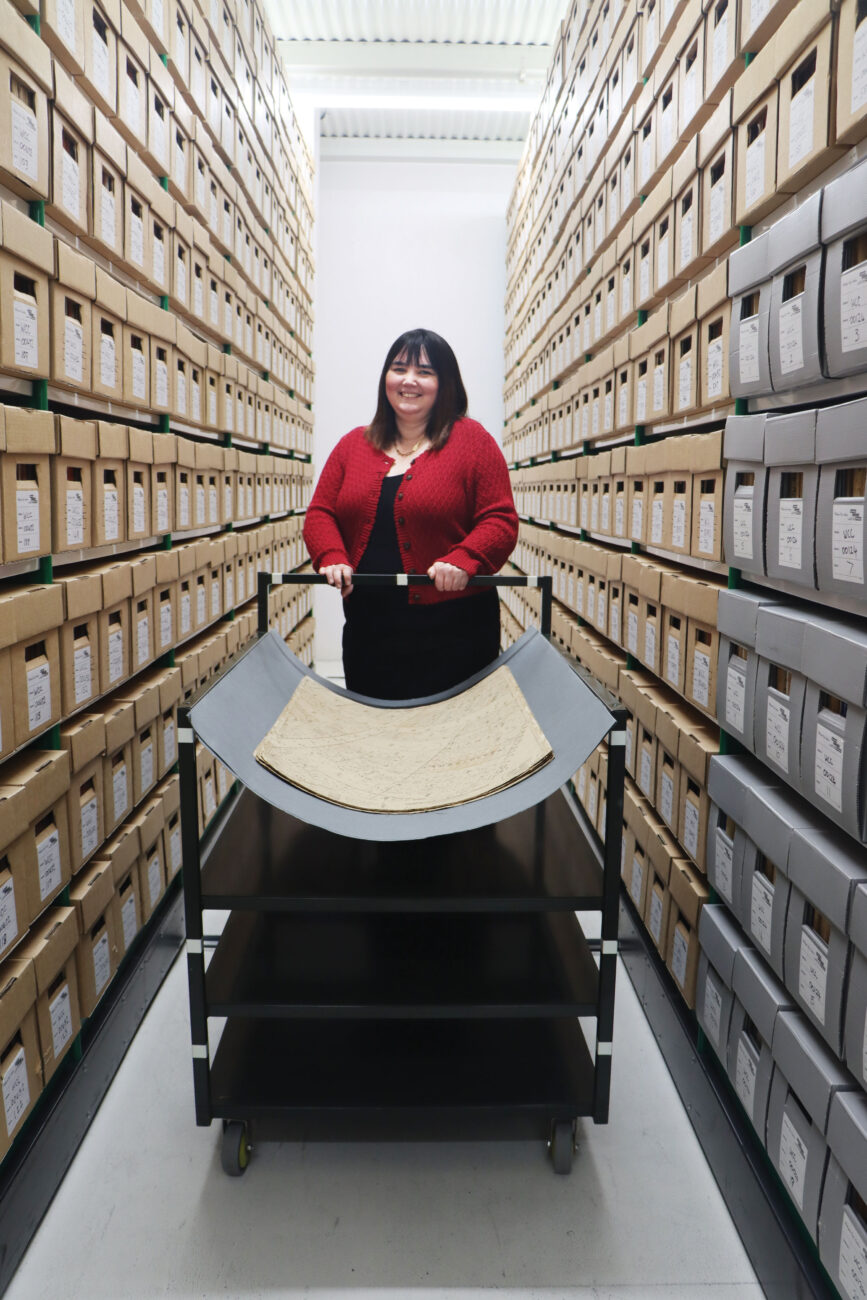
After Ward stopped updating the map himself, others took on the task—much less perfectly, notes Cox—leaving behind ink spills, coffee-cup rings, drips of tea, and scribbled mathematical equations. It was the city’s primary map for more than 80 years, only superseded in the 1970s.
Today, a copy of Ward’s original, plus many of its subsequent versions, lives in a set of wide, shallow drawers in the Wellington City Archives—and online, as an overlay in mapping software for anyone to use.
Two decades after she first encountered it, Cox was still thinking about the map, and the stories held within Ward’s straight lines. So she set about her own epic project. Taking each of the 88 sheets as a starting point, Cox’s book, Mr Ward’s Map, recounts the rich and surprising life of the city: what took place in its streets, alleys, factories, hotels and homes during an era when Wellington was struggling under its own weight.
*
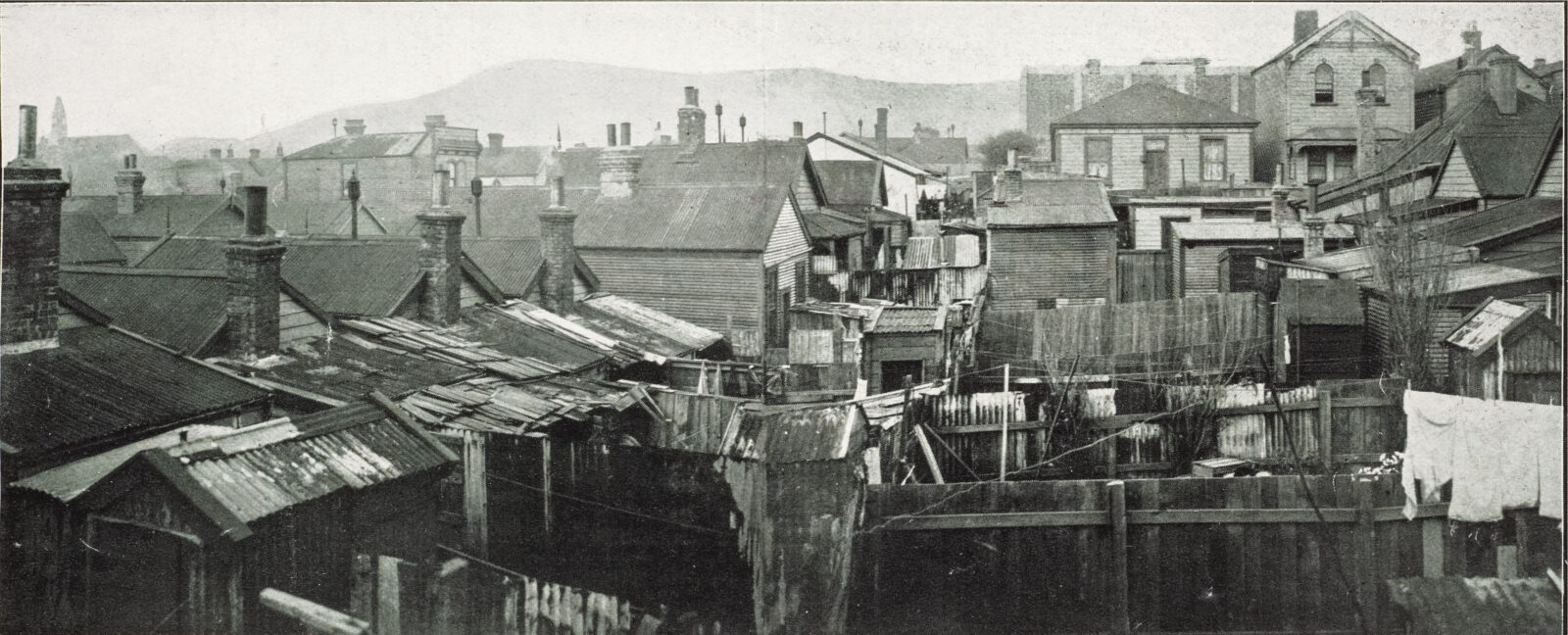
When Ward began working on the map, the population of Wellington was around 30,000, but by 1901 it had grown to 43,638. People were crammed into a small land area, with many living in extremely close quarters. The streets were busy with people and animals, and they were venues for socialisation and showing off—not just transport.
“You could walk down the middle of the street,” says Cox. “And there were a lot of people ‘doing the block’—so they’d just walk round and round and round, and they’d walk to be seen.”
Transport was either by bicycle or horse-drawn trams and buggies, and that was part of the reason the city was so crowded. Developing new suburbs was impractical, as people weren’t able to travel great distances to work, and anyway, the edges of the city were constrained by a ring of parkland: the Town Belt. There was significant pressure to “gobble up” this green strip for housing, writes Cox. As the colonial project unfolded, there was little thought, of course, about the fact that the Belt had previously been used by Māori for gathering food.
The New Zealand Company laid out the city in 1840—on land it had “bought” in a deceptive process from people who didn’t live there—weeks before the first boatloads of settlers were due to arrive. Ten per cent of the new city was set aside for Māori, but much of this land was in random, out-of-the-way spots with no history of Māori habitation or cultivation, and ownership wasn’t assigned to particular iwi or hapū. As a result, for the next 40 years, Māori were almost never consulted on the management of these reserves and didn’t receive rents from their use; Governor George Grey simply took the scattered scraps of land for other Wellington building projects.
*
There is much a modern time-traveller would find strange, or tragic, or very funny, about 1890s Wellington. Perhaps the Chinese groceries would look familiar, but perhaps not the coal dealers, horse bazaars, servants’ agencies or “feather furriers”—a husband-and-wife taxidermy team who created headdresses, muffs and other accessories from New Zealand birds.
If you followed the sounds of a raucous sporting match emanating from the Theatre Royal, for instance, you’d discover a crowd cheering on two teams of costumed men pulling as hard as possible on opposite ends of a rope—plus a full-scale band preparing to play the anthem of the next team.
Wellington experienced a brief mania for tug-of-war competitions in 1892. The city’s immigrant groups formed national teams, Olympics-style, allowing Cox to identify the various communities calling Wellington home.
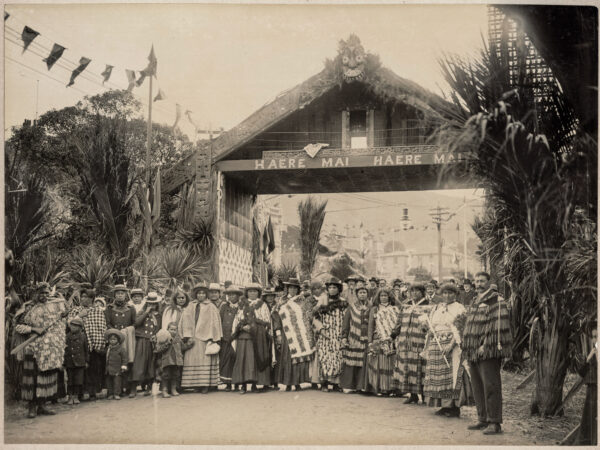
Doyle, the Inspector of Nuisances, led the Irish team to victory against the Scots, only to be defeated by the Scandinavians—albeit at the end of an hour-long battle, judged one of the best matches of the tournament. The Chinese team, who wore yellow, lost to the Welsh; a Māori team, thought to have been mostly Ngāti Kahungunu, arrived without costumes due to a train delay, but beat an English team anyway. Pākehā born in New Zealand competed as the Colonial team, dressed in white with dark blue rosettes.
In researching photographs and stories from the era, Cox was surprised at how often she came across images of children roaming without a caregiver in sight: buying groceries, catching rats, foraging for mushrooms in the Town Belt, scavenging coal, playing with friends, or returning from the Saturday-morning pilgrimage to the Wellington Biscuit and Confectionery Company with a bulging pillowslip over one shoulder, full of broken biscuits sold for pennies.
*
There were nuisances to inspect on every square of Ward’s map, and for the overworked Doyle, the biggest nuisance by far was sanitation. The New Zealand Company had not built a sewerage system when it developed the city, and the council preferred to ignore the looming problem. After typhoid cases shot up in 1891 and 1892, a local doctor took matters into his own hands.
More by Rebekah White
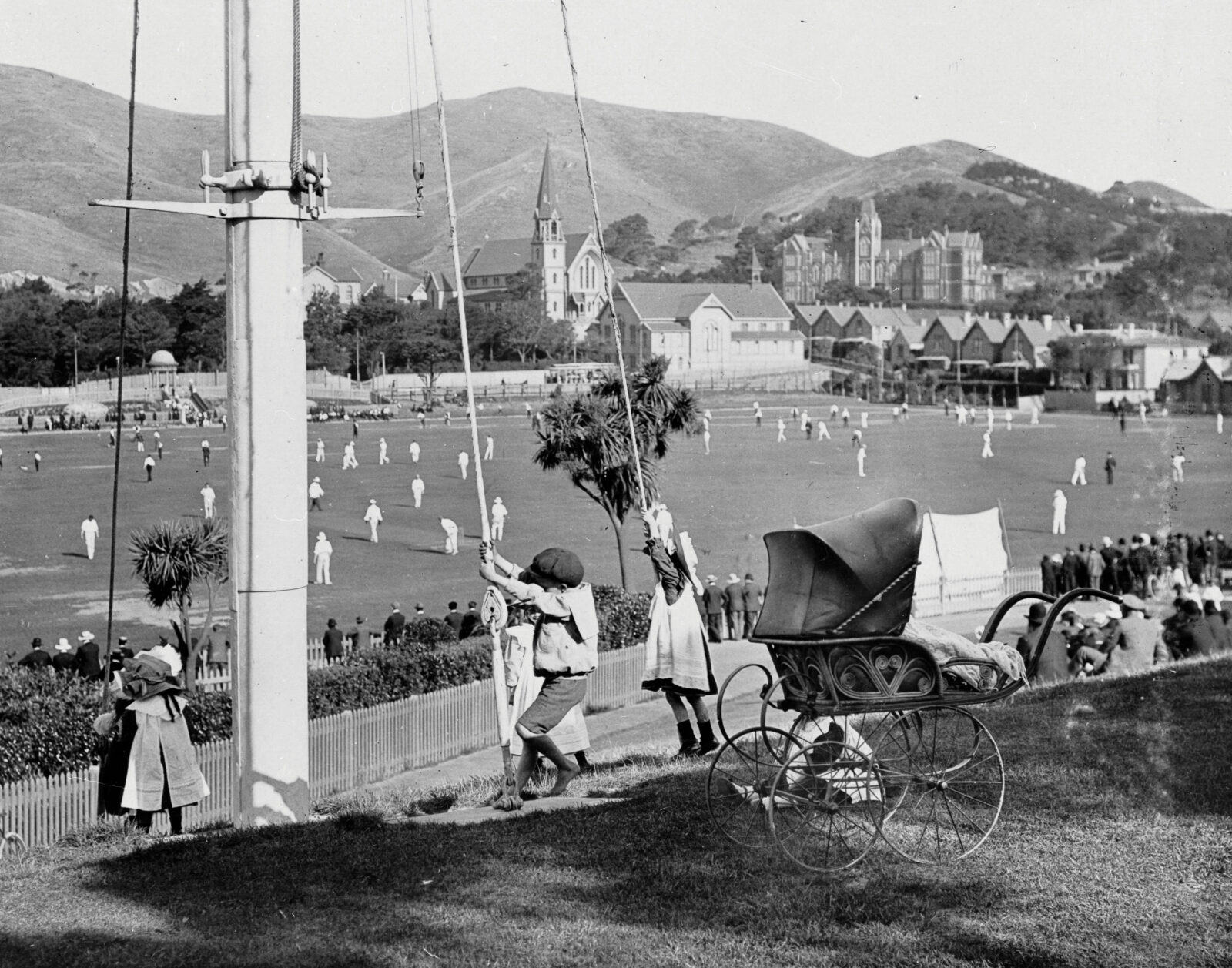
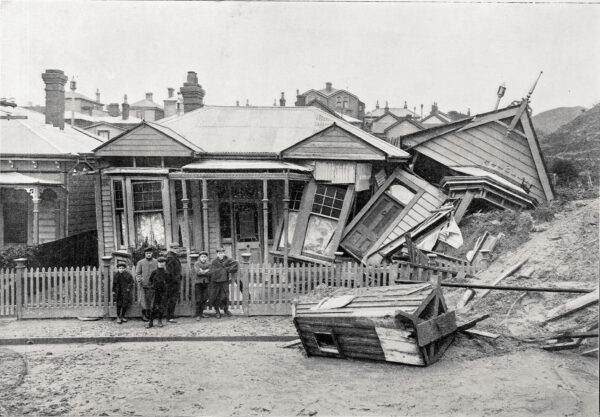
William Chapple charted typhoid cases in an area that included a series of notoriously squalid semi-detached houses on Cambridge Road. He discovered sewage piled up in backyards and plumbing that went nowhere—or worse, that ventilated through people’s kitchens. The nearest hospital knew to expect typhoid cases every time it rained heavily. Chapple’s investigation embarrassed the council into finally installing a city-wide sewerage system.
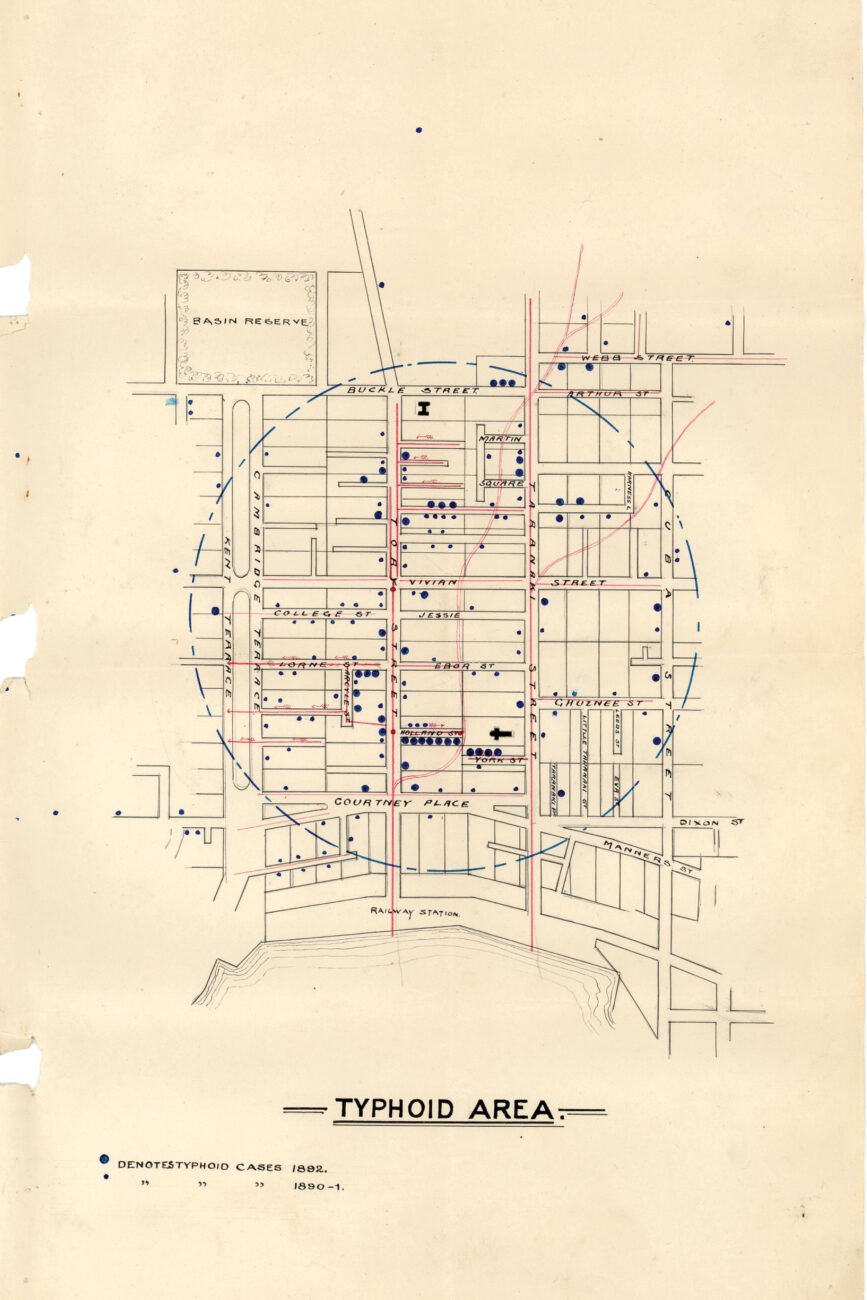
Cambridge Road, it turned out, had been illegally created. Landlords, asked to connect the dwellings to the new sewerage system, insisted their impoverished tenants pay. After an impasse, the council demolished 32 buildings. Descriptions of the homes in medical reports are stomach-turning, says Cox.
Walls and floors were rotting. The backyards were so full of detritus and waste that investigators decided the top layer of soil should be removed to a depth of two feet, just to be safe.
Cambridge Road was redeveloped and renamed in an attempt to improve its image: it’s now Tennyson Street. In due course, Ward glued a piece of paper over the vanished buildings and drew in the new ones. “Two of those buildings that he drew are still there,” says Cox, “in amongst the car yards and the apartment buildings on that street.”
*
Cox is a historian of women’s lives, but still found herself surprised by the accounts of women business owners in this period. “You kind of get this idea that the only women who tried to be businesswomen were because they were desperate, but actually these women were doing it because it was fun, and because they wanted a career outside the home.”
One local character, Matilda Meech, ran the Te Aro Baths, the only bathing facility available to hundreds of small houses on nearby Te Aro Flat, most of which did not have space for people to wash at home. Meech ran up a red flag during men’s hours at the baths and a blue flag for women. Not only did she organise lessons in “both plain and fancy swimming”, she also chased and hit a man who sexually assaulted her children’s nanny, fought off an attempt by local authorities to repossess the baths, and sued the city council for allowing pollution into the harbour (as it washed into the baths). Eventually, the council caved to Meech’s demands, at which point she sued it for lost income
Not all businesses went well. In 1898, failed hotelier Annie McWilliam shot another woman in the tearoom of department store Kirkaldie & Stains. Ellen Dick had previously managed McWilliam’s hotel in Reefton, which went out of business, but McWilliam was foiled in her attempt at revenge. The bullet bounced off the whalebone in Dick’s corset, and McWilliam was sentenced to seven years’ hard labour for the murder attempt.
“I think we have a very constrained view of what women were up to,” says Cox. “Actually, they had much more interesting lives.”
*
Mr Ward’s Map is a massive book—the size of an atlas, a solid 2.5 kilograms—and the dustcover folds out to the exact size of one of the map sheets, to show how large and intricate they are. The book is so crammed with detail that, like an atlas, it’s most rewarding to open at random and read about skating palaces, horseless vehicles, sham fights in anticipation of a Russian invasion, the city’s vast number of friendly societies, disputes between London girls and New Zealand girls at the match factory, or exhaustive lists of who wore what to the governor’s ball. (“I feel sorry for those journalists who had to write the style of every single dress down,” says Cox.)
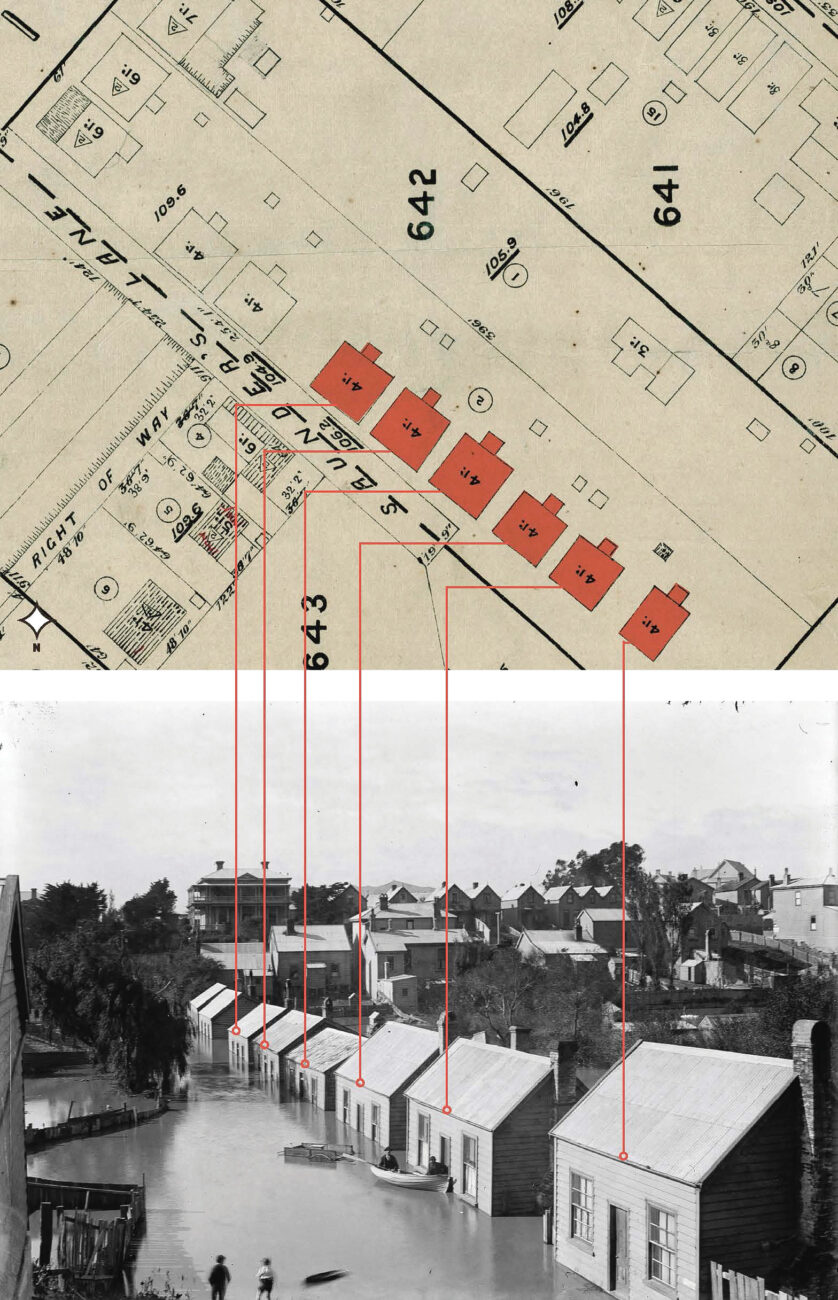
Cox strictly kept to photographs and accounts from the era spanned by Ward’s survey work, from the 1890s to the early 1900s, “because otherwise you get a muddled view of what the city was really like”.
Now, when she travels around Wellington, she has flashes of the old city superimposed on the present-day one. “I can see a whole separate city—in black and white, of course. I wouldn’t have had that experience if I hadn’t spent all that time just studying that one decade of photographs.”
*
At some point in the late 1890s, Thomas Ward commissioned an architect to design him and his family a new house. It was completed in 1899, with five bedrooms, a tower, servant’s quarters, and separate dining rooms for breakfast and dinner. Still, Ward’s map of Wellington wouldn’t have fitted into any room of his grand home.
Despite becoming a wealthy man, he never retired. Cox recounts an episode when, later in life, one of his surveying assistants offered to carry his heavy theodolite home at the end of the day. Ward spurned him, telling him, “When the day comes that I can’t carry my own instrument, it’ll be time for me to pull out.”
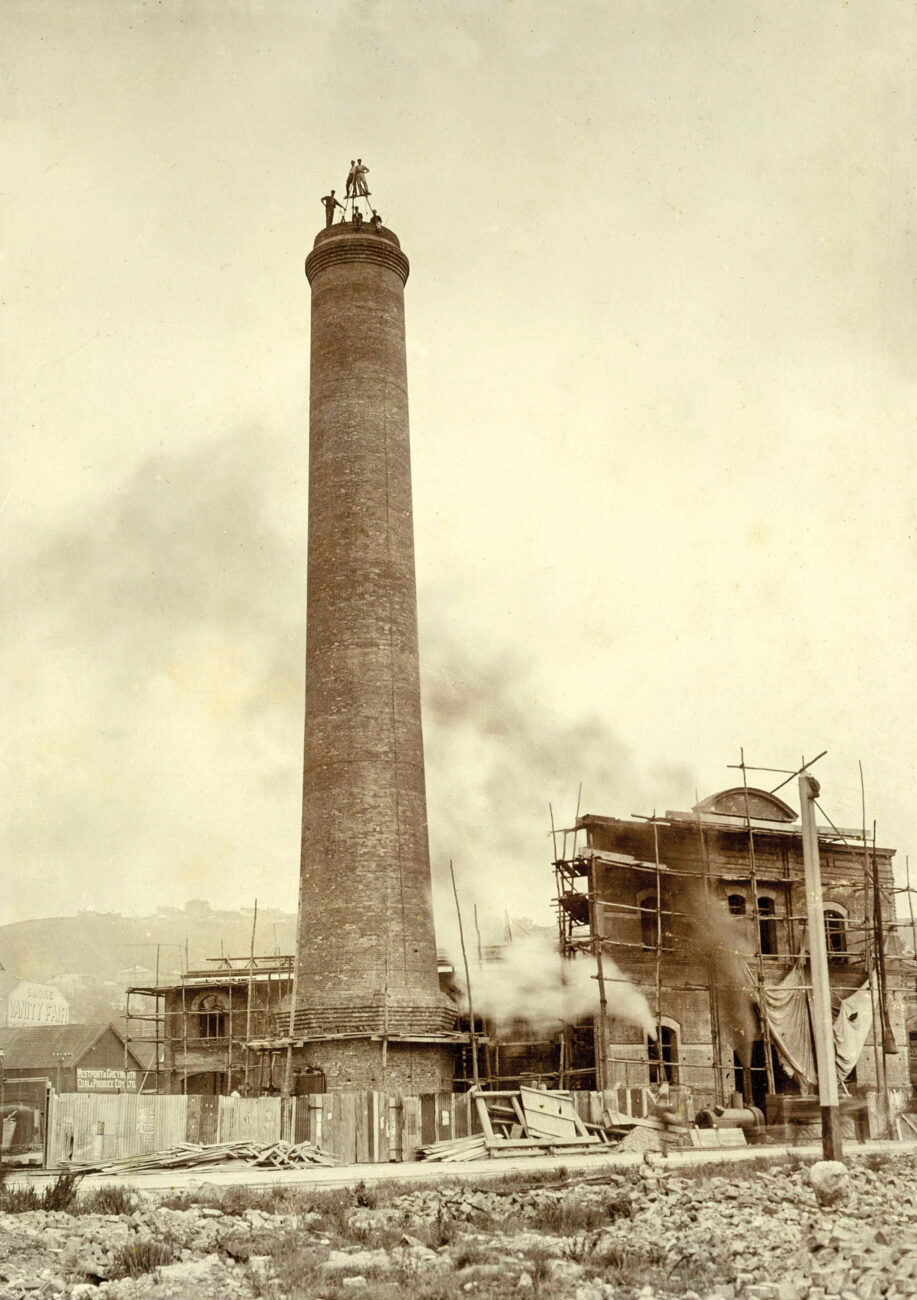
Ward became a successful property developer; in 1919, he donated three acres of land from one of his subdivisons to the city council, suggesting a swimming pool, or perhaps tennis courts. It’s now Appleton Park.
Ward’s house still stands—it’s on Salamanca Road in Te Aro—and its outline appears on sheet 28. Cox likes to imagine that Ward relished the final step in its construction: the moment he finally drew its exact floorplan onto his map of Wellington.