Derek Morrison photographs Dunedin’s most celebrated citizens: the dozens of sea lions making themselves at home in gardens, golf courses, and fish and chip shops.
More by Bill Morris



“The first time I came across them, they scared the shit out of me.”
Derek Morrison, a Dunedin-based photographer, writer and surfer, is talking about the endangered New Zealand sea lions that frequent the city’s coastline. Morrison grew up on a bull farm in the Waikato and was drawn south two decades ago by world-class surf breaks. He soon found himself sharing the water with sea lions—fearless marine predators that can weigh nearly half a tonne. “They rush up to you and get right in your face,” he says. “They’ve got big teeth, and they like to show you them.”
Morrison wanted to surf the Otago coast for the rest of his life. He quickly realised sea lions were going to be a big part of that. Growing up on a farm gave him a keen eye for animal behaviour; he treated the sea lions like stroppy bovines. For the most part, he says, “they’re just big puppy dogs. They just want to play and cause mischief.”
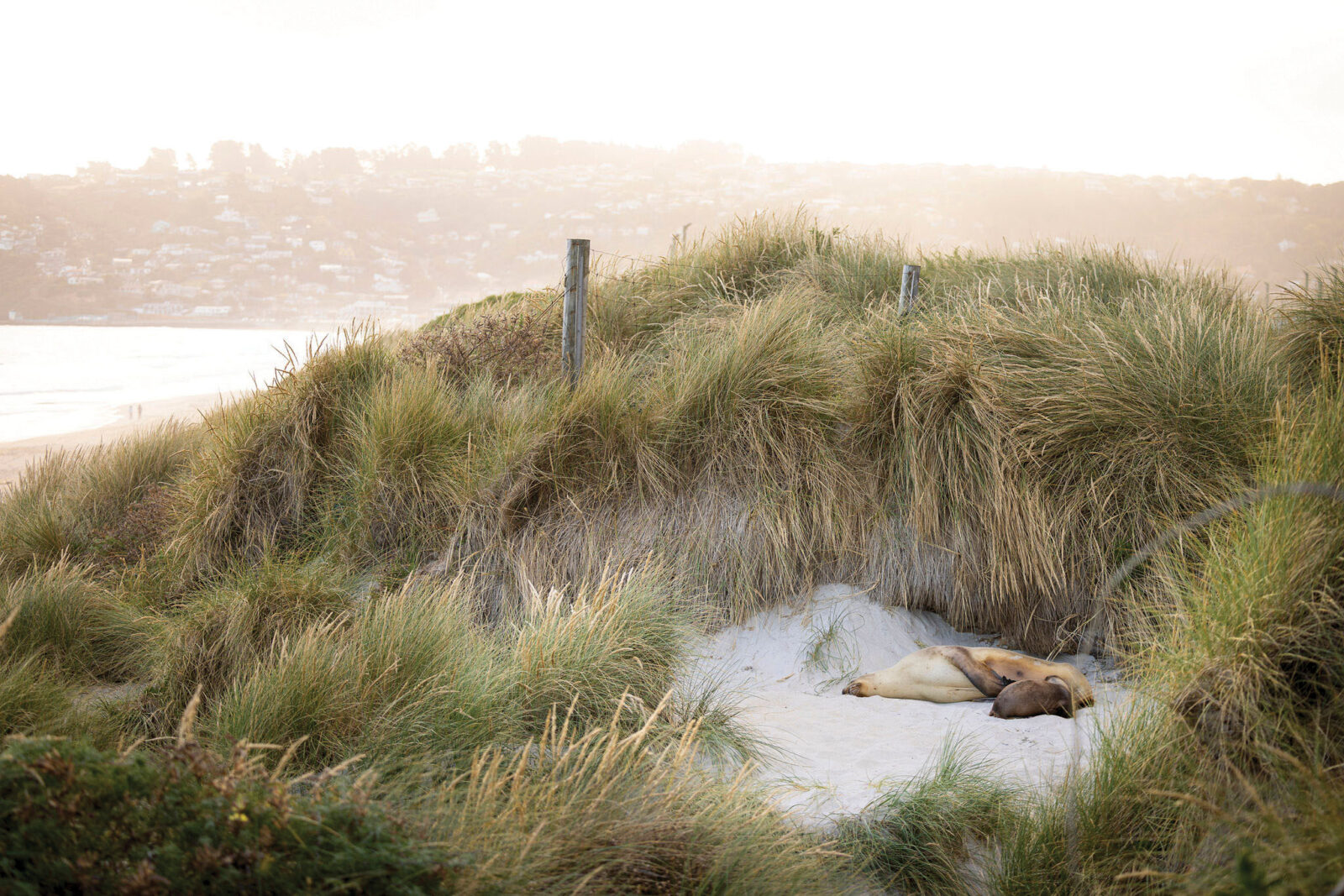
His attention shifted to trying to photograph the animals. He started hanging out on the beaches, watching the sea lions as they came ashore to have their pups and socialise. “They’re such endearing animals,” he says. “The more time I spent with them, the more time I wanted to spend with them.”
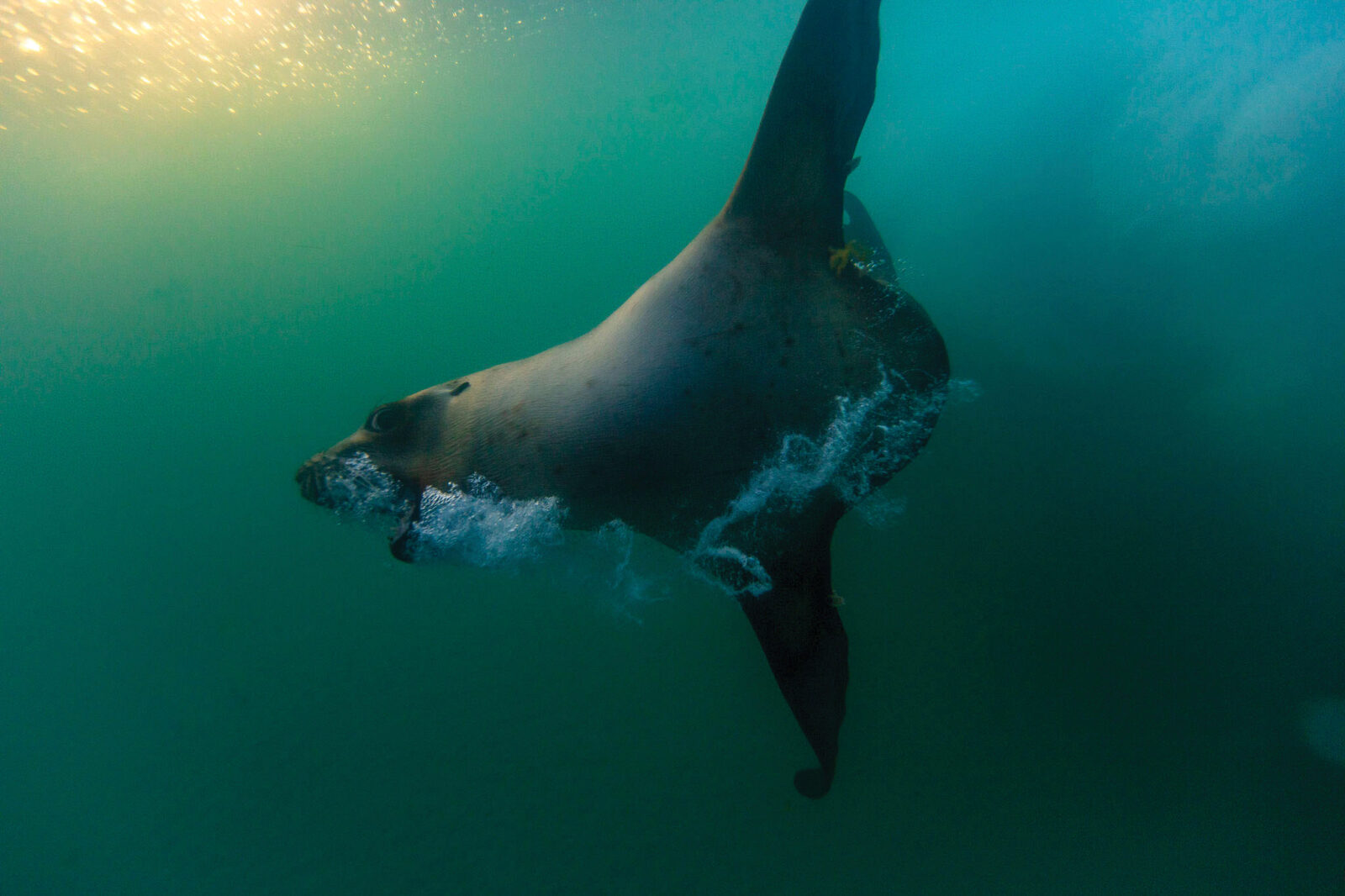
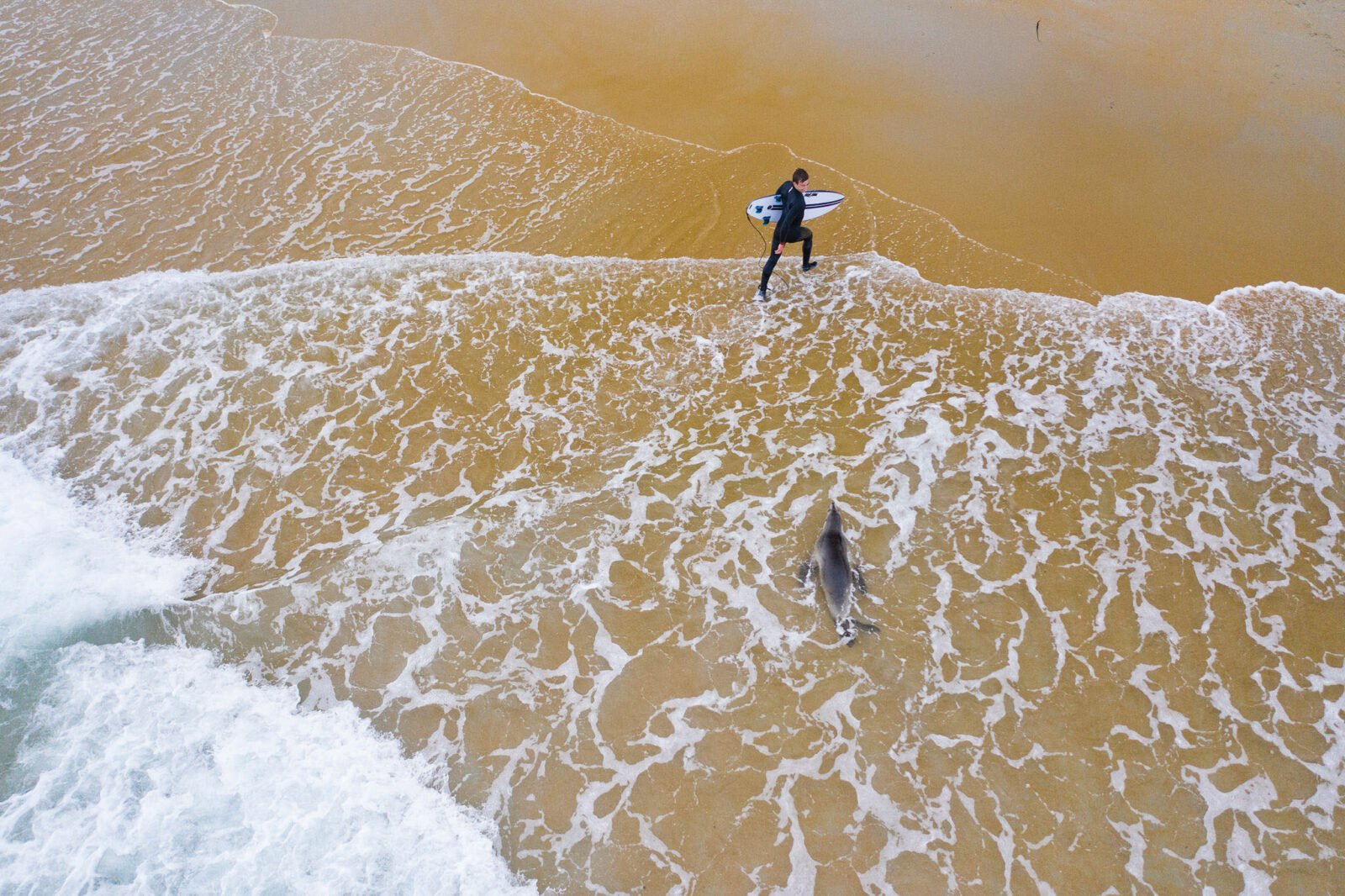
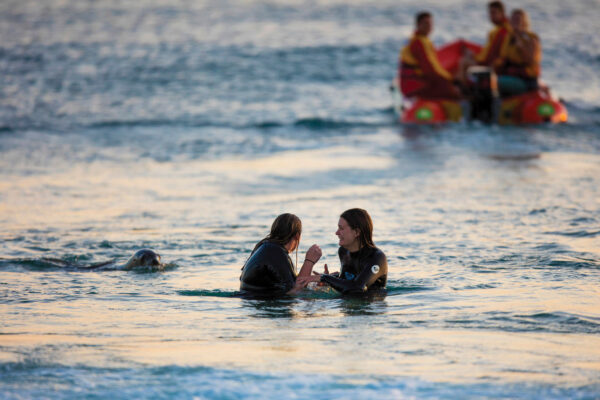
Morrison photographs sea lions on land and, when the opportunity presents itself, in the waves. “When I’m shooting in the water,” he says, “I’m not really going out there to shoot sea lions. I’m going out there to photograph surfing, and a sea lion will come along. So it’s on their terms.”
Like most photographers, he has a dream shot he’s chasing: “inside the wave with the sea lion inside the wave as well, dropping down while the wave’s barrelling. I’ve seen it many, many times when I’ve been surfing, but I’ve never caught it.”
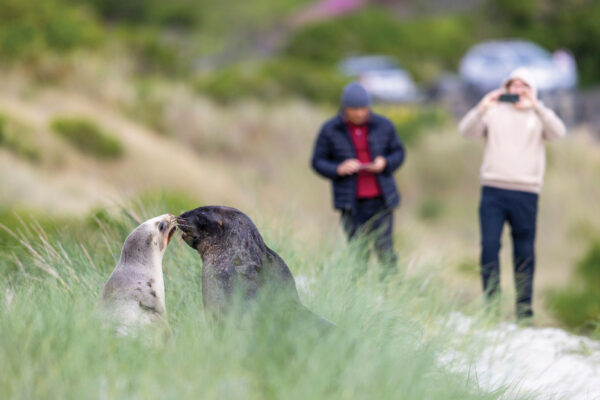
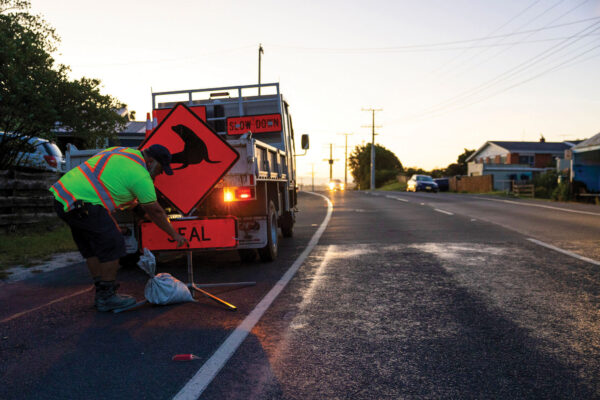
Sea lions surf throughout Morrison’s photography blog, Box of Light, and many of his stories for newspapers and magazines, including New Zealand Geographic. His work is not just about showing people the beauty of these animals—he also aims to educate the public on how to behave around them. Stay at least 20 metres away from active sea lions, is the official line. If you’re approached by one, don’t bolt, but instead slowly back away, not making eye contact, until the animal loses interest.
Over the past two decades, the population of sea lions along the Dunedin coast has steadily increased. Thirty-eight pups were born here last summer, which means the city is now on the brink of having an official wild sea lion colony in its midst.
But encounters along this coast are often troubled, and sometimes deadly. Three sea lions were shot dead at the Waitaki River mouth in 2025, and a female and pup on the Catlins coast were shot and killed in 2024. Another sea lion was stabbed that year and had to be euthanised. The killers of these animals have not been identified.
Sea lions are also occasionally hit by cars. Pups, which hone their swimming skills in the shallows, often near roads, are most at risk. As this magazine was being produced, another pup was found run over in the Catlins.
Despite Morrison’s best efforts to educate his fellow surfers about how to react to sea lions in the water, many, he says, are still fearful of the animals—some have even called for a cull. “I haven’t been able to change everybody’s opinion,” he says. “That, to me, is quite disheartening.”
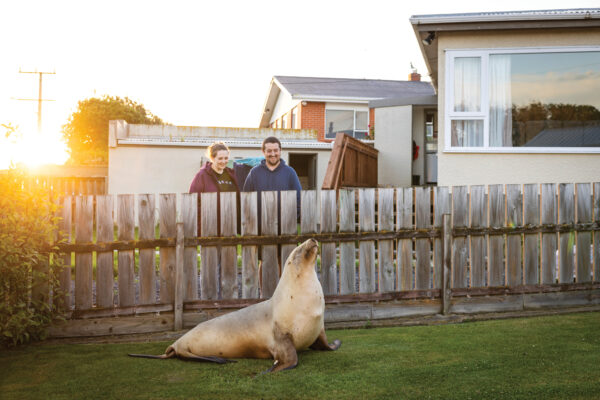
But as sea lions encroach more and more on the city’s bustle, Morrison has seen a gradual but dramatic shift in understanding. Sea lions and people are running into each other on a daily basis in Dunedin, especially during the summer, when breeding females head inland to escape the attention of pursuing males. Sea lions turn up on golf courses and campgrounds, interrupt football games and even wander into cafes. Last summer, a female called Mika (all the sea lions that breed here have names) hauled ashore on Dunedin’s busiest beach, waddled through the dunes, crossed two blocks of traffic and took up residence in a suburban garden in St Kilda.
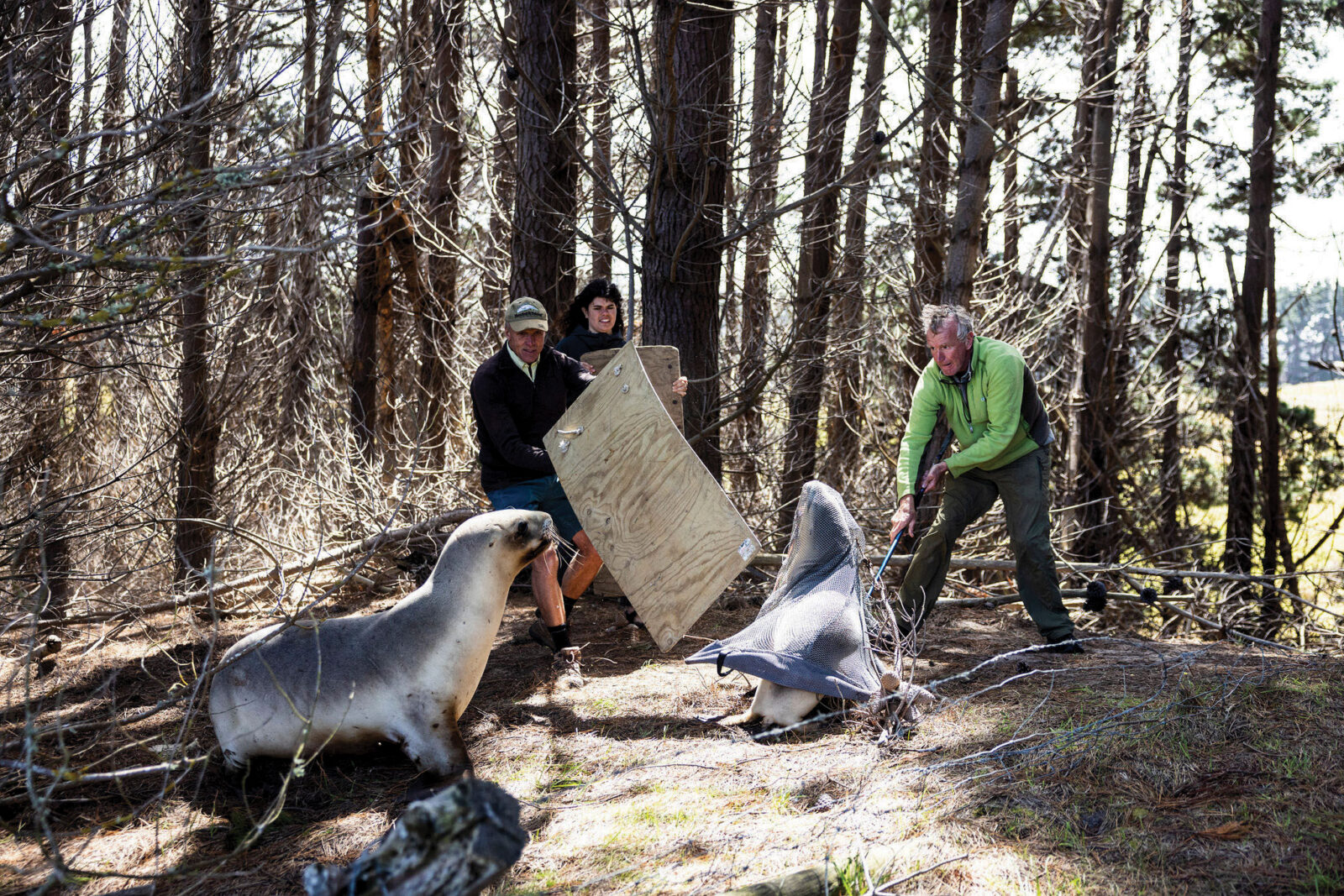
She gave birth to a pup there. For the next month, the Department of Conservation and volunteers, including Morrison, watched nervously as Mika raised her pup to swimming age in full public gaze.
Mika came and went from the garden, heading out to sea to feed while the locals kept a close eye on her pup. At one point, she even went into a nearby fish and chip shop.
“There had been one human customer in the takeaway at the time,” reported the Otago Daily Times, “but they quickly left.”
Mika’s stay in St Kilda, says Morrison, was a huge learning curve for everyone. “Most of the people on the street had never really encountered sea lions before.”
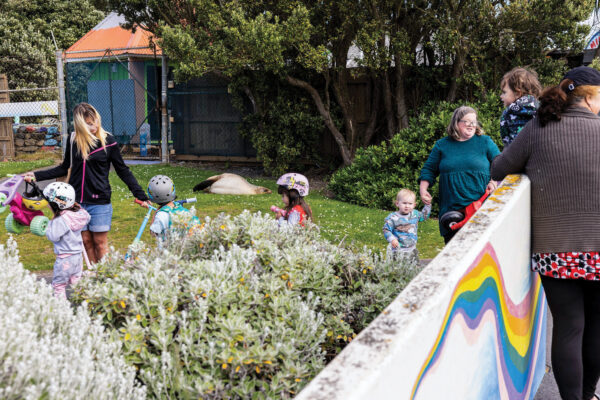
An 11-year-old, Kaitlin Beyer, took it upon herself to be Mika’s guardian, and Morrison says her vigilance was a huge help to the team. Beyer tells me she spent the whole day with Mika when she first arrived, and many days after that, learning as much as she could from DOC staff, and “just watching, making sure no one touched her. I remember once we stayed up until one o’clock in the morning.”
For most of a month Beyer was steadfast and devoted: keeping an eye on mother and pup, and educating curious onlookers. “It felt really good,” Beyer says. “I don’t know why, but it just felt really good.”
More by Bill Morris
Subscribe to our free newsletter for news and prizes
3
$1 trial for two weeks, thereafter $8.50 every two months, cancel any time
Signed in as . Sign out