Keep reading for just $1
$1 trial for two weeks, thereafter $8.50 every two months, cancel any time
Signed in as . Sign out

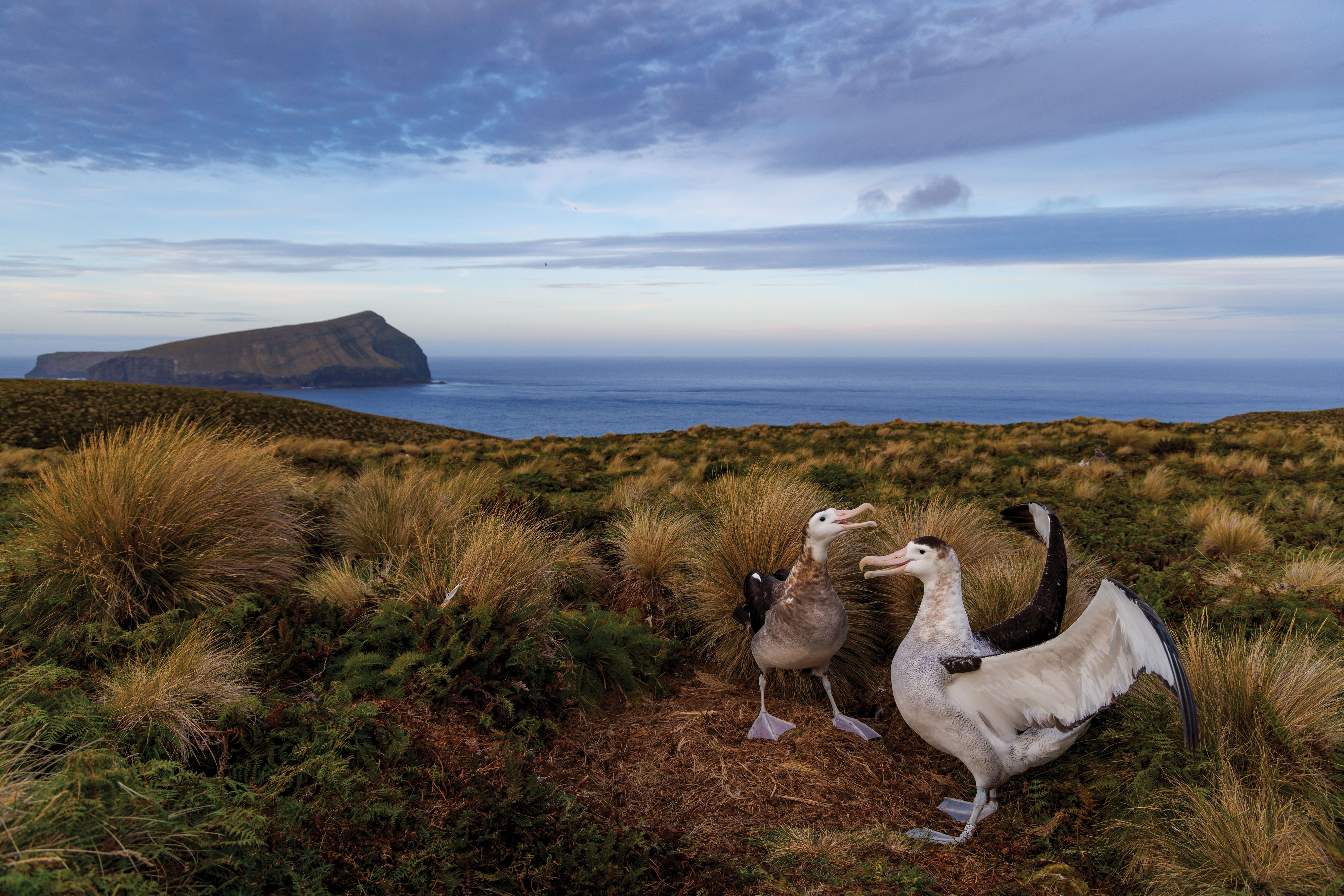
Gibson’s and Antipodean albatrosses are citizens of no one nation. They are ocean birds, living on the wind and waves, travelling massive distances, passing back and forth over the high seas and the imaginary boundary lines we draw on maps.
But when they land to chat, to flirt, to lay an egg and raise a chick, they come to two of New Zealand’s subantarctic islands.
And when they return some of them with meet with two familiar human faces.
Across the last 34 years, Department of Conservation researchers Kath Walker and Graeme Elliott have been visiting these islands to count the birds, and to study them.
At first everything seemed fine. In the early 1990s numbers were low but increasing. Things were positive. Then came the summer of 2006/2007. There was a population crash, reason still unknown, and on both islands, albatross numbers plummeted.
These albatrosses don’t breed until they at least eight years old, only breed every two years, and tend to mate for life. Since the crash, Gibson’s albatross numbers have come back slightly, but Antipodean albatross numbers continue to decline.
And adult birds, especially females, are still going missing.
Tuna fishing boats use a method called surface longlining to catch their prey. The lines can be up to 100 kilometres long, with thousands of hooks.
Squid is used as bait, a tasty morsel for tuna. Unfortunately, albatrosses agree.
Using satellite tags Graeme and Kath have watched missing albatrosses’ paths overlap with those of boats, and in one case, in which leg bands and the satellite tag were returned to them, follow the path of the boat.
Listen as science journalist Rebekah White explores the albatross bycatch problem, and what we could do about it.
Voice of Tangaroa is a joint production between RNZ’s Our Changing World and New Zealand Geographic.
Reporting for this series is Public Interest Journalism funded through NZ On Air. You can learn more and read the articles for free at nzgeo.120.138.19.230.sth.nz/seas. Live Ocean Foundation supported some of the travel costs for this story.

Subscribe to our free newsletter for news and prizes
3
$1 trial for two weeks, thereafter $8.50 every two months, cancel any time
Signed in as . Sign out