Ever since his best friend died from cancer, Rex Innis of Hikutaia has let the Cancer Society pick daffodils from his plot to sell for its annual appeal each spring. Sooner or later, cancer invades most of our lives-unbidden, unwelcome and heavy with menace, the body in mutiny against itself, Regardless of whether the disease strikes us or someone we love, life will never be the same.
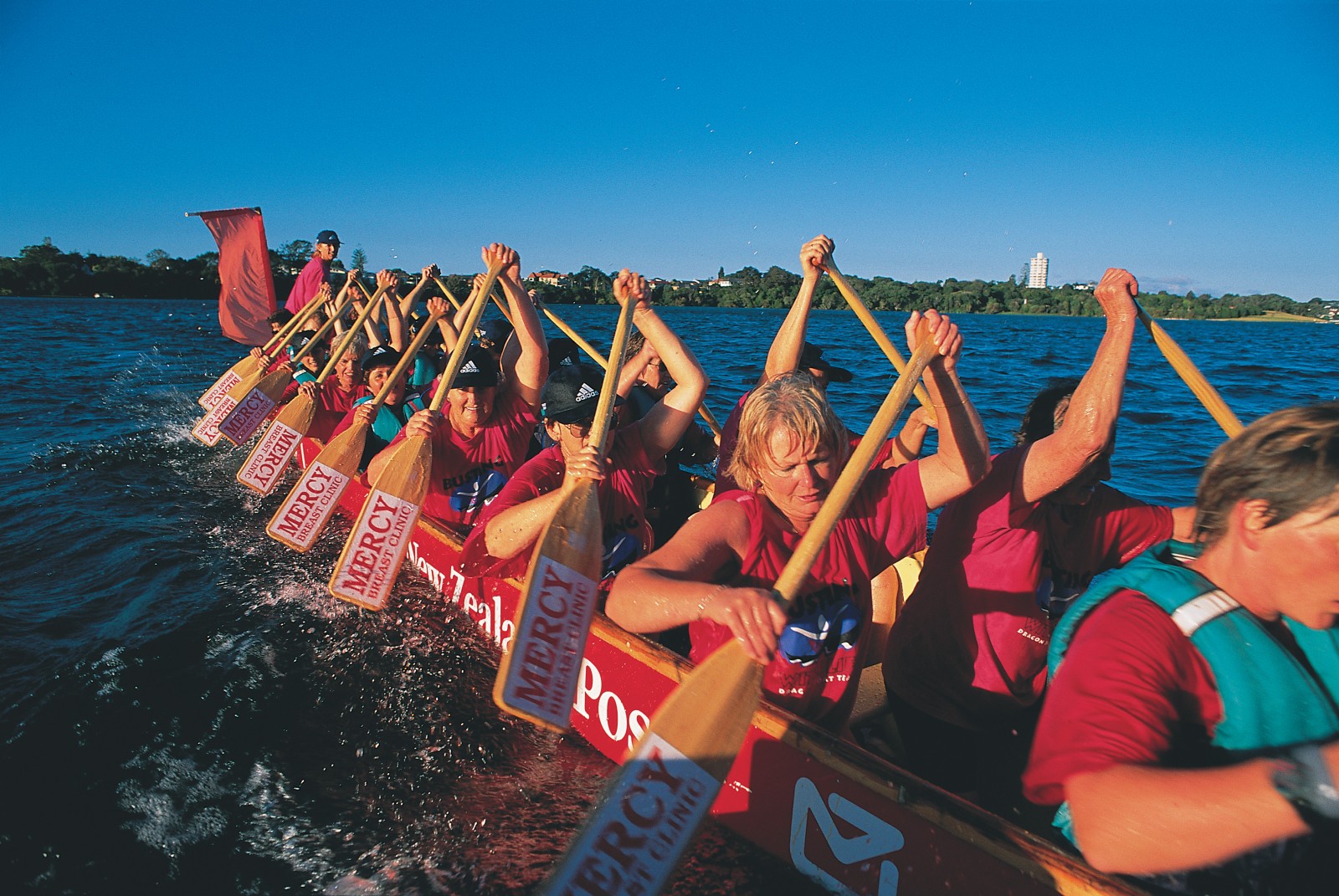
Busting with life! Digging deep for a great cause—their own well-being, and to prove that there’s life aplenty in cancer sufferers—46 women and on man, all of whom have been treated for breast cancer, formed a dragonboat racing team in Auckland last summer. Although not always on the winner’s podium, they could at least say they were “first in their lane.”
Soon after my grandparents moved to Tauranga at the end of the 1950s, my grandfather developed a lump just in front of his right ear. He was never one for running to doctors, and when, after a year or two, he was persuaded to have it examined, the lump was large. It was diagnosed as cancer, and he was soon travelling to Hamilton, Auckland and Palmerston North for high-voltage radiation treatment.
Then he had surgery—or maybe the surgery came first—and a major nerve which controlled that side of his face was severed. His face became permanently twisted. I could no longer understand what he said, and he could no longer chew or swallow properly. All his food had to be puréed. He dribbled a lot, and sometimes food spilled from his mouth. It was cruel and humiliating for the gentle old man. I felt deeply for him, but awkward, too. When we visited, I tended to avoid him. Gradually he deteriorated, but it was years before he finally died.
I was 10 or 11 when he was diagnosed, and the whole sad episode left me pretty nervous of cancer. Many of us have had a similarly unpleasant experience. I suspect that it is the disease we dread the most, the diagnosis we least want to hear. Most of us hope for a sudden death, preferably while sleeping. Cancer represents the antithesis of this “easy” exit. Too often, as with my grandfather, it produces a slow withering of dignity, a descent into pain and emaciation. Death comes as a welcome deliverance.
Once we have had personal contact with the misery of cancer, its shadowy spectre is never far away. Who hasn’t secretly worried about the appearance of an unusual mole, or wondered whether a persistent back pain isn’t caused by a slowly inflating tumour?
Such worries are not without foundation. In the past few years cancer has overtaken heart disease as New Zealand’s leading cause of death, and according to Brian Cox, an epidemiologist at Otago University, by 2005 the incidence of cancer will be 40 per cent higher than it was in 1990, and 27 per cent more people will be dying from the disease. At present, cancer claims the lives of 7000 New Zealanders each year, and 12,500 people develop the disease.
Of course, cancer is not really a single disease. It is a complex of several hundred diseases that all share one accursed characteristic: they start with a single cell dividing uncontrollably, and passing on this trait to its progeny. And although we distinguish skin cancer from pancreatic cancer from prostate cancer, most organs contain several different cell types, and any of them can become cancerous. Which type of cell a cancer arises in may considerably affect a person’s prognosis. For example, melanoma—cancer of a pigment cell in the skin—is potentially a much more serious condition than basal cell carcinoma, a common and usually treatable skin cancer.
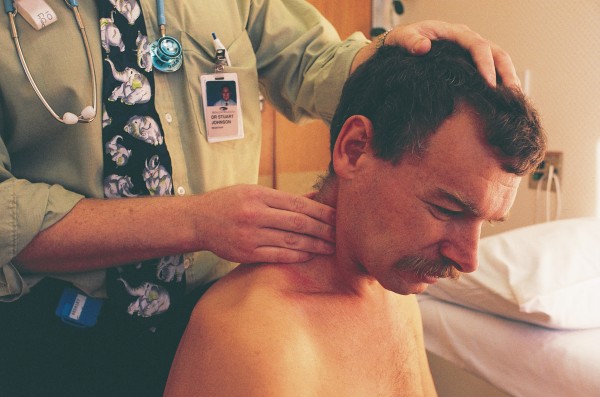
In the beginning. A patient’s journey with cancer often starts here: a doctor feeling for malignant nodules—in Steven Mott’s case, in the lymph nodes of the neck. Steven was diagnosed with cancer of the oesophagus in 1998, and underwent both chemotheraphy and radiotheraphy prior to surgery. Cancer cells often spread through the lymphatic system, a network of thin-walled vessels which collect lymph, or blood fluid, that has leaked from high-pressure blood vessels.
Detailed cancer statistics—New Zealand’s cancer registry is the third longest running in the world—show that some organs and tissues are much more cancer-prone than others. A thousand New Zealand men will get lung cancer this year, but only 130 will contract brain cancer. Sixteen hundred women will be diagnosed with breast cancer, but only 70 with oesophageal cancer.
I have to confess that I find cancer statistics endlessly fascinating. On first appearance, they seem to have so much to tell us about the disease(s), yet the conclusions always hover just beyond our grasp. Why should women have only half the incidence of rectal cancer as men, and why only a fraction as much laryngeal cancer? Indeed, why should the incidence of almost every sort of cancer be lower in women? (Breast cancer is an exception—only a dozen men get that each year.)
Once you get into international comparisons, the stats are even more tantalising. There are often huge differences in the incidence of the same cancer from country to country. By and large, the reasons for these differences are thought to be cultural: when people emigrate, within a generation or two they usually take up the cancer characteristics of their new country. For instance, stomach cancer is a major problem in Japan, but Japanese Americans get stomach cancer at the US rate (about a sixth of the Japanese rate). What factors cause stomach cancer in Japan which are not present in the USA?
New Zealanders have a moderate rate of stomach cancer (higher than the US, but a quarter that of Japan) but a very high rate of colon cancer. Are we eating something that doesn’t affect the stomach much, but is bad for the intestine?
Gender differences just increase the puzzlement. In Japan the female stomach cancer rate is high, but less than half the male rate, but New Zealand’s female colon cancer rate is only a little lower than the male rate. All these statistics are giving us clues as to what causes cancer—if we could only decipher them!
*
What causes cancer? Such a simple question, but one with no straightforward and universal answer, despite the billions of dollars that have been spent on it. Some of the villains are known, of course. Smoking, for example, accounts for about a third of all cancer deaths. Most of these cases involve lung cancers, but the 50 or so carcinogens (cancer-causing agents) in cigarette smoke and tar also induce bladder and laryngeal cancers and probably contribute to others. Part of the projected increase in our cancer rate will come from the hordes of young women who have taken to smoking in recent years.
Worldwide, the war against smoking is being lost. For every cigarette not smoked in the developed world over the last 20 years, three have been smoked in China, and throughout Asia and the former Soviet Union smoking is booming.
That there are large fortunes to be made is the simple explanation for the epidemic, and governments must shoulder much of the blame. Tax revenues on tobacco are vast, and most smokers die as the main productive phase of their lives is ending. The majority of lung-cancer patients die relatively quickly, and the cost of looking after them is much lower than the cost of supporting and nursing longer-lived workers through retirement and the protracted debility of old age. It is not in the economic interests of governments to ban or even discourage smoking. In our own country, total government health expenditure is eight billion dollars, and the government raises $670 million from tax on tobacco.
Ultraviolet rays in sunlight damage skin cells and produce skin cancers. We pay for those tans eventually. Asbestos fibres cause mesothelioma, an otherwise rare cancer of the lung. Some strains of papilloma virus (responsible for warts) probably cause cervical cancer. There are a few other solid connections, but then we drop down into weaker correlations: high meat/fat diets with colon cancer, heavy alcohol consumption with mouth and oesophageal cancer. When we come to breast cancer, prostate cancer, brain cancers, lymphomas (immune-system tumours based in lymph nodes) and the rest, there is no certainty about causes.
Danger at Every Turn
Arlene Summers has a tumour of the pituitary gland, a condition in which too much growth hormone is produced, which can lead to severe heart problems. Treatment with drugs is very expensive and only partially effective, so in September 1998 Arlene underwent stereotactic radiosurgery. In this procedure, a single high does of radiation is directed at the tumour—sufficient to kill the offending tissue in a single hit.
A special metal frame is screwed to the head on the day of treatment, and this enable localisation of a tumour and positioning of the radiation dose to an accuracy of half a millimetre, which means that surrounding brain tissue is spared radiation.
The radiation dose is given from different directions, all intersecting at the tumour—again to reduce dosage to surrounding healthy brain cells.Dunedin is the only site in New Zealand at which the equipment is available.
Arlene’ situation was fraught with difficulty.
A previous attempt at surgically removing the tumour had failed, but a nearby artery had been damaged during the operation. A a result, the artery had been reinforced with a metal coil. Arlene’s tumour was ring-shaped and very near the optic nerve, which is highly sensitive to radiation. Hit it, and blindness would be the result. Normally magnetic resonance imaging (MRI) is used to determine positions of everything in the brain, but the presence of the mental coil meant that this technique could not be used here. A CAT scan—much less accurate—was still possible.
Arlene (in her early 30s) had to decide whether to risk the radiosurgery or face the possibility of fatal heart attacks. After listening to Dr Shaun Costello, the consultant radiotherapist, go through the pros and cons of the procedure on last time, Arlene elected to go ahead with the radiotheraphy.
For the CAT scan, a second frame was attached to the first by radiation therapist Chris Shilling. A computer image of Arlene’s head was generated from the CAT scans, showing the frames, the “target” (the tumour, coloured white), optic nerves (grey), the optic chiasma (green), the brain steam (yellow) and proposed radiation beam angles (purple triangles). The brown sphere indicates where most of the radiation would be concentrated.
Aligning Arlene’s head with the linear accelerator took Chris Shilling and physics technician Roy Otway two hours, and magnifying glasses were used to improve accuracy. (The green laser beams are part of the alignment system.) The treatment—invisible and painless—took less than an hour. After nine months, Arlene has suffered no adverse effects. Indeed, there are signs the radiation may have worked, although results will not be final for a few more months. It looks as if arlene may be out of the danger zone.
For nonsmokers in the United States, it has been stated that the risk of dying from cancer is approximately proportional to the extent you are overweight. Mice that are allowed unlimited access to food become overweight and develop an increased number of spontaneous cancers. Slightly underfed animals live longer and have fewer cancers. Maybe this is true for humans, too. Increased cell division gives cancer a beachhead, and maybe those unnecessary calories drive unnecessary cell division.
What about the byproducts of industrialisation: manmade chemicals, pollution, electromagnetic radiation and so on? A comparison of the incidence of cancer in highly industrialised countries, such as the US and Germany, with affluent but non-industrialised nations, such as the New Zealand of a few decades ago, Iceland and Norway, indicates pretty similar cancer rates, suggesting that environmental agents have only minor effects on cancer incidence. Dr Lynn Ferguson, of the Auckland Cancer Society Research Centre, comments that “pesticides and pollution probably account for one or two per cent of cancers. Epidemiological research just doesn’t support a higher figure. For example, there is no evidence that organically grown produce is any healthier than that produced with the help of sprays and fertilisers.”
Microwave transmitters, power lines and the like do not emit sufficient energy to damage biological molecules through ionisation. In fact, the gap between the energy produced in and around these objects and the amount required to ionise molecules is huge—a millionfold. If they cannot cause this sort of damage, it is difficult to understand how these agents might cause cancer. On the other hand, X-rays and gamma rays, produced in nuclear explosions and in certain types of medical equipment, have plenty of energy to damage cells. (The effect is exploited every day in the radiation therapy given to treat cancers.)
Few New Zealanders have been exposed to sufficient radiation to possibly cause cancer. One who has been is Ken Stutter who, as World War II ended, was transferred from Italy to Hiroshima to join the New Zealand Occupation Force. “We were camped for several months very close to where the A bomb went off,” he was later to recall. His unit was involved in cleaning up operations; defusing Japanese bombs and decommissioning midget submarines and other weapons.
Searching for carcinogens forms part of the work of the Auckland Cancer Society Research Centre, which runs a regular testing programme to monitor levels of toxins in a range of foods and environments. Lynn Ferguson (left), Tristan Gregory and Amira Pearson (right) collect oysters from the Onehunga foreshore as part of the programme. Despite public concern about the safety of products grown with the assistance of sprays and man-made fertilisers, there is little evidence that environmental residues and pollutants contribute significantly to cancer.
When he returned to New Zealand he built a successful customs clearing and freighting business, and was also on the Whitbread Round-the-World Race committee. But from the late 1980s all these activities were curtailed as Ken was diagnosed with an unusual succession of cancers: carcinoma of the right breast (and later the left), a carcinoma beside the spine, cancer of the oesophagus and prostate. During surgery to attack the oesophageal cancer, the oesophagus was shortened by 100 mm, the size of the stomach was halved, a couple of ribs were broken and the left lung was collapsed to make room for the stomach up in Ken’s chest. His stomach is still stapled to his ribs.
“Oncologists told me that nobody had survived this operation for more that two years, so after eight years I’m well past my use-by date,” he told me with a characteristic grin. Since the surgery, Ken has had to purée all his food and eat four to six small meals a day—”a small price to pay for still being alive.”
Since radiation was the probable cause of his cancers, it is ironic that treatment for the prostate cancer entailed seven and a half weeks of daily radiation treatment following surgery. Several of his cancers have relapsed and required further treatment.
Not all of Ken’s battles have been medical. After a long struggle, he was eventually given a pension from the War Pensions Board, on the grounds that the radiation he had been exposed to in Japan was the likely source of his ill health. He was the first in New Zealand to win such a concession.
*
Although cancer has been around for a long time_5000-year-old Egyptian mummies have been found to contain tumours—it has been a major health problem only in the past century or so. In earlier epochs, infectious diseases—plague, cholera, typhoid, smallpox—regularly exterminated most of the population, keeping life expectancies relatively short. Only since public health measures, and later medicine, turned the tables on infectious diseases have most of us lived long enough for diseases of degeneration, including cancer, to become the main causes of death in Western societies. (Animals also contract cancer, but usually it is seen only in coddled pets and zoo animals. Few wild animals live long enough to die from cancer.)
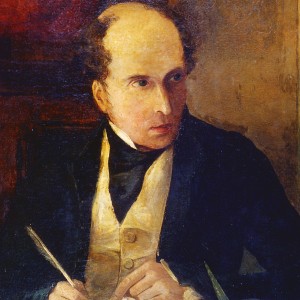
The first person to determine a cause for a cancer was a London physician, Sir Percivall Pott. In 1775, he suggested that the frequent incidence of scrotal cancer in former chimneysweeps might be caused by soot ingrained in skin folds. The disease was most prevalent in newly industrialised Britain, where bathing was not a common practice. In Europe, where sweeps washed regularly, the incidence was much lower. A little later, nasal cancers were linked to the use of snuff.
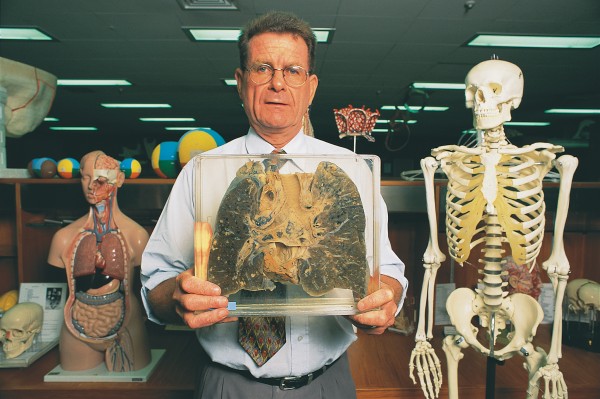
Tobacco smoke is the world’s most serious carcinogen. If nobody smoked, cancer rates would drop by a third. Professor Robert Beaglehole of the University of Auckland’s Department of Community Health holds a cancerous lung removed from a cigarette smoker. The tumour is in the centre of the specimen. While tars derived from cigarette smoke account for much of the blackening in this lung, the lungs of all urban dwellers suffer from varying degrees of discoloration.
The Industrial Revolution exposed many people, including children labouring in factories, to new toxic substances. By the late 1800s, those heavily exposed to oils and tars were developing cancers. Then, in 1895, X-rays were discovered, and within a decade 100 radiologists died from cancers resulting from lethal doses of radiation. X-rays were also found to induce tumours in animals, and by the time of World War I, some viruses had also been found to cause cancers in animals.
Wartime research into chemical weapons such as mustard gas showed that these compounds produced mutations—such as changing the eye colour of fruit flies—and some of the carcinogens in coal tar were also found to be mutagens.
Then DNA was discovered and now it is absolutely clear that carcinogenic chemicals act by causing mutations in DNA. They may alter only one in every few hundred thousand of the billions of bases that make up our DNA, but this is sufficient to cause crucial changes in some of the proteins made according to our genetic blueprints.
*
The past two decades have witnessed an exciting leap forward in our understanding of what has gone awry in cancer cells. This information, coupled with advances in gene therapy, may soon make it possible to insert the correct copy of a gene into a defective organism, even if we don’t know what caused the defect in the first place. (We may not always know why some component in a car engine fails, but we can fix the car by replacing the component. A similar approach to the mutated genes that lie behind cancer does not seem far-fetched today.)
This new knowledge also gives us a vital handle on how a cancer cell differs from a normal cell. Present cancer treatments are not as effective as they might be—to say nothing of their unpleasant side-effects—chiefly because they don’t discriminate well between cancerous and normal cells. Most simply kill quickly dividing cells, destroying many rapidly proliferating normal cells, while letting more indolent cancer cells off the hook. Knowing how cancer cells differ from normal cells should lead to the introduction of more selective and effective therapies.
And new tests springing from this knowledge should enable doctors to make earlier, more certain diagnoses than are possible today. The central problem with cancer, from a medical point of view, is that by the time it is diagnosed, the original tumour has seeded secondary tumours at many sites in the body. It is the quiet, unobtrusive way in which the disease gains ground within us that makes cancer so insidious—and so frightening.
The real menace in cancer is secondary tumours growing at sites distant from where the cancer first arose. Chemotheraphy drugs ferried about the body in the blood, are the only effective treatment, and combinations of drugs with different modes of action are often administered. Unfortunately, side-effects include hair loss and depletion of immune system cells. Nausea is reduced by sedatives, which allow this patient to sleep while his drugs flow in.
For as the aberrations that push a cell towards the brink of malignancy accumulate over decades, we ourselves will be blissfully unknowing. They cause no stab of pain, no headache, no nausea to alarm us. For the most part, we become aware of cancer only when the evil of malignant transformation is long completed, and a tumour has reached such a size that it obtrudes upon our sensibilities—pressing on a nerve, partially blocking a duct. By this time it will be a centimetre or two in size and contain several billion cells. We visit our GP, who sends us for tests. Within a week or two, our anxiety will be confirmed; we have cancer, and life will never be taken for granted again.
Usually treatment comes pretty quickly. Surgery followed by chemotherapy or radiotherapy is common for solid tumours—breast, bowel, brain and the like—but surgery cannot be used for immune system tumours, which are disseminated in bone marrow (leukaemias) and lymph nodes (lymphomas). The hope—often vain, alas—is that the primary tumour will not have metastasised, and surgery will “get it all.” But you can never be sure that a tumour hasn’t metastasised, so radiotherapy, which can zap a small area, may be used for local insurance, and chemotherapy, in which drugs are circulated throughout the body by the blood, provides long-range cover. Within weeks you have gone from a state of ignorant health to being an insecure cancer patient. The transition—not to mention the side-effects of treatment—can be traumatic.
When cells turn bad
When American researcher Francis Peyton Rous uncovered a virus that could cause cancer in chickens back in 1911, he could never have imagined that his virus would make a crucial contribution to cancer research 60 years later.
In 1911 almost nothing was known about viruses, except that they were small enough to pass through the finest filter and could transmit infections. But cancer? Many scientists refused to accept Rous’ findings, and recognition of the true importance of his work did not come until half a century later, when, in 1966, he was awarded a Nobel Prize.
By then others had learned that the amount of genetic information (usually DNA) in a virus is about a millionth as much as in a human cell—sufficient for only a handful of genes compared with the 50,000 or more in a human. If such a simple organism could make a cell cancerous, shouldn’t we be able to figure out how it does it? One group of viruses, the retroviruses (to which HIV belongs), has proven particularly valuable to us in this quest. Almost all organisms carry their genetic instructions in the form of DNA, which is then transcribed into a related molecule, RNA, and on that template proteins are assembled. But in retroviruses the genetic material is RNA. The virus injects its RNA into a cell, where it is copied into DNA. The viral DNA then inserts itself into the cell’s DNA at random points. Imagine the host cell’s DNA as being a volume of blueprints, each page the gene coding for one of the cell’s 50,000 to 100,000 proteins. The viral DNA is just a few pages of alien blueprints that the cell’s mindless machinery can read and work from in the normal way. It contains a strong promoter—a special piece of DNA code—which ensures that a lot of viral RNA is produced from that stretch of viral DNA. Some of this RNA acts as the blueprint for proteins needed to manufacture new viruses, and the rest is packaged as the genetic material inside those new viruses—which leave the cell to start infection in other cells.
Rous’ 1911 virus, now known as Rous sarcoma virus (RSV), is one of these retroviruses, and is capable of causing cancer in several animals. A range of similar viruses was later discovered that never gave rise to cancer, and these were all found to lack one virus gene, now known as src (pronounced “sark”), so this gene was identified as the cancer-causing gene. Other cancer-causing retroviruses were soon found to have genes equivalent to sic, and these genes are now collectively called oncogenes (from the Greek ogkos, meaning tumour). Among the dozens of oncogenes since discovered, only two others need concern us: ras, which causes sarcomas (soft-tissue tumours) in rats, and myc, which causes a type of leukaemia in mice.
Once a gene has been isolated, it is easy to search for its close relatives in other cells, and it was not long before homologues of sic, ras and myc were found in the DNA of most, if not all, animal cells, including human cells. Initially, biologists could explain the widespread presence of these genes only by suggesting that it was evidence for infection by retroviruses. Gradually, however, they realised that the truth lay elsewhere.
When retroviruses shuffle their RNA and DNA through host cells, they occasionally pick up a piece of the host’s genetic material. This gene is thereafter effectively part of the virus’ own genes, passed from cell to cell as virus RNA, and also made into protein. A lot more of this protein occurs in virus-infected cells than in normal cells, because the virus promoter is busily orchestrating large-scale copying of its genetic material. But it may be altered or mutated because the process of copying RNA into DNA is not as accurate as other genetic copying processes inside cells.
In the new scenario, Rous’ virus was seen as abnormal. By chance, it had kidnapped a normal cellular gene (sic) which had become an oncogene because of virally caused overproduction or alteration in the protein produced by the gene. (This hijacking had probably happened only months before Rous discovered the virus.) The non-cancercausing viruses, rather than having lost src, were the normal guys RSV had arisen from.
A similar process was found to be happening in other oncogenic viruses. The retroviruses, because of their habit of capturing host cell genes, had drawn a group of those genes to scientific attention—a very special group which had the potential to cause cancer.
The next piece in the cancer jigsaw appeared from a quite different direction: from a technique called cell transformation. It is relatively easy to extract DNA from a few million cells and fragment it in a blender. Add this DNA soup to a cell culture in a flask and the cultured cells will take up the foreign DNA fragments. A few cells will incorporate some of it into their own DNA and use it to direct the manufacture of foreign proteins—a process with some similarities to virus infection.
In 1982, this technique was tried with cultures of normal mouse cells receiving DNA from human bladder cancer cells, and a smattering of the normal cells became cancerous. Analyses of DNA extracted from these cancerous cells revealed that they had acquired the human version of OS, but a ras that contained a single mutation compared with the normal human gene. This change—equivalent to altering one letter in one word on a page—say “head” to “dead”—switched a single amino acid in the Ras protein, and that apparently had made the cell cancerous.
More was discovered in 1982. It had long been known that chromosome abnormalities accompany some cancers. Chromosomes are protein scaffolds around which the DNA is wrapped. They become visible in cells just before they divide. When the cell is not dividing, the DNA is in a more dispersed form and cannot be seen with a microscope. In Burkitt’s lymphoma—a cancer of the immune system relatively common in African children—the end of one of the two copies of chromosome 8 is commonly exchanged with the end of chromosome 2,14, or 22. In 1982, the human myc gene was found to reside next to the breakpoint of chromosome 8, and the three exchanges associated with Burkitt’s lymphoma brought it under the control of strong promoters which in normal cells have the important task of controlling antibody synthesis. In the new position, myc is overexpressed—far more of it is produced than in a normal cell.
With this discovery, a second gene associated with cancer in retrovirusesmye—had been implicated in human cancers in the absence of retroviruses.
The final discovery of 1982 concerned the interaction of oncogenes. The mouse cells that had been transformed by mutant human ras from cancerous bladder cells had been in tissue culture for some time and, it emerged, were not as normal as first thought. When fresh mouse cells were used, the transformation didn’t work. However, if the fresh cells were given a myc gene that was overexpressed, as well as the mutant ras gene, they did become cancerous—for a while. In fact, a further alteration was required before they became fully immortal. (In tissue culture, one of the hallmarks of cancer cells is that they divide indefinitely, whereas normal cells have a very limited ability to divide.)
What these experiments showed was that several steps were required for a cell to become fully malignant—a result that was quite consistent with earlier observations that human tumours usually take a long time to develop. In the uterine lining, for instance, patches of abnormal cells are common, but only a small percentage progress to full-blown cancer, and the progression takes many years. Most abnormalities spontaneously regress. The time between exposure to a carcinogen and development of a tumour is normally decades.
For some years during the 1980s, scientists thought that abnormalities in several oncogenes within the one cell were all that was required to make a cell cancerous. But again they were ambushed by unexpected results, this time from cell fusion experiments.
If the membranes that surround cells are destabilised, two cells may fuse. (This happens naturally in fertilisation.) The hybrid cells so formed will show some of the characteristics of either parent cell, just as children express their parents’ genes. When normal and cancerous cells were fused, researchers expected the resulting hybrids to be cancer cells. After all, weren’t tumour cells fast-growing and aggressive? To everyone’s astonishment, hybrid cells invariably behaved just like normal cells. The results were interpreted to mean that normal cells possess tumour suppressor genes which have somehow become inactivated in cancer cells. In the fusion experiments, the suppressor genes from normal cells overrode the effects of abnormal oncogenes to prevent the cells from becoming malignant. Two of the suppressor genes are named p53and Rb (retinoblastoma).
Think of the oncogenes as accelerators, and the tumour suppressor genes as brakes. For a normal cell to become transformed into a cancer cell, we now know that it must have several accelerators and no brakes. Although the chance of accumulating all these changes in a single cell is extremely remote, our bodies contain billions of cells, and by the time we reach our senior years, the chances of everything going wrong in one or two cells mount up. It’s a numbers game.
Oncogenes clearly do not exist in our cells to cause cancer. For the most part they relay growth messages from receptors on the surface of the cell to the machinery that controls cell division. In an adult organism, most cells are resting, dividing only occasionally—perhaps only a few times a year—in response to external signals. Such signals are often growth factors produced by other cells. When a receptor binds its growth factor, a relay of proteins (including potential oncogenes) passes the message “Divide!” to the cell’s control centre in its nucleus. In a cancer cell, mutated oncogenes scream “Divide!” incessantly, whether the receptor is occupied or not, resulting in the manic cell division that characterises cancer.
Our bodies are far from defenceless against such rogue cells. Indeed to become malignant, or transformed—a term favoured by biologists—a cell needs to surmount considerable obstacles.
As we have seen, mutations power the drift towards cancer. Contrary to popular opinion, the most common mutagens are not synthetic chemical “nasties” but naturally occurring products. Some are present in foodstuffs—coffee, celery and bean sprouts—and others arise from enzyme activity during digestion and normal metabolism, processes which also release free radicals and oxidants—still more molecules that can damage DNA.
The very features that enable mice to colonise our pantries—small size and rapid breeding—make them an indispensable partner in the war on cancer. Once a compound shows potential as an anticancer drug in testing on tissue culture cells. its effectiveness must be proven against real tumours in the entirely different environment of a living organism. before being tried in humans. The mouse shown here comes from a special breed which lacks both hair and a thymus gland. the latter deficiency producing a dysfunctional immune system. Such mice cannot reject a transplanted human tumour (dark lump). so are an invaluable link in the development of drugs to attack human cancer.
Frightening though it may appear, we cannot escape the agents of our own demise. But the human body has been coping with such assaults for eons, and has well-honed defences against them. Some protective compounds we ingest, such as the antioxidants vitamins C and E, while others, such as glutathione, which reacts with radicals to render them harmless, are synthesised within our cells. However, mounting these defences involves the action of genes, and when mutations in these guardian genes occur, malignancy gains a foothold.
Matters become even worse when mutations occur in the genes that detect and repair errors in DNA—perhaps the most important defence system of all. The largest source of mutations in DNA is mistakes a cell makes in copying its own DNA prior to cell division. Newly synthesised DNA contains something like one error in every thousand bases, but after the repair corps of enzymes has completed its activities, this rate drops a thousandfold. Mutations in repair enzyme genes allow for the much more rapid development of cancer.
Remember that the more division cycles a cell goes through, the greater its risk of becoming cancerous. Ovarian cancer is a case in point. The more periods a woman has, the greater her chance of developing this cancer. As each egg erupts, it causes minor damage to the ovary, which is repaired by dividing cells each month. Before the development of contraception, women spent most of their reproductive lives pregnant, and hence had very few periods. Nowadays, by the age of 17 a girl may have had as many periods as her great-great-grandmother experienced in her entire life! Oral contraceptives, which prevent ovulation, reduce the incidence of ovarian cancer.
Another cellular defence against cancer has to do with the wearing out of chromosomes—or at least their ends. DNA at the tips of chromosomes—the telomeres—is not replicated at all accurately. To allow for this infidelity, the end of each chromosome consists of a long stretch of meaningless DNA. Each time a cell divides, a fragment is discarded from the end of each telomere. After 40 or 50 bouts of division, the cell runs out of this expendable DNA, and most normal cells cease to divide.
The few cell types in the body that need to divide indefinitely (such as some reproductive cells) use an enzyme called telomerase, which adds back telomeric sequences to the ends of chromosomes. All cells in the body, of course, contain the gene for this enzyme, but it is normally switched off. Cancer cells somehow manage to switch on the telomerase gene and so escape mortality.
But there is a glimmer of hope here. Because most normal cells lack telomerase, it may be possible to develop an inhibitor of the enzyme for use as an anticancer drug—one which would affect few non-target cells.
The immune system itself provides protection against virally induced cancers. Burkitt’s lymphoma, for example, is caused by Epstein-Barr Virus (EBV). This virus infects almost all of us early in life, causing little harm, although if infection is delayed glandular fever results. In Western countries, Burkitt’s is seen almost exclusively in immunodeficient individuals, usually transplant recipients or those with AIDS. In Africa, the constant challenge to young immune systems by malaria compromises the system’s ability to fight, allowing the virus to establish itself. Virtually every reader of this story will have EBV-transformed cells in their blood—a cancer effectively being kept in check by our immune systems!
Perhaps the body’s ultimate defence is cell suicide. All normal cells contain a suicide pathway—indeed, current thinking suggests that our cells need constant messages to prevent self-destruction. Many cells perish during normal development in the womb. For instance, without cell suicide, or apoptosis, as it is termed, our fingers would remain webbed. Virus-infected cells routinely sacrifice themselves in an attempt to limit infection—better dead than alien. For their own part, viruses often block their host cell’s apoptotic mechanism so that they can complete their life cycle.
Cells with damaged DNA, even those that are not badly damaged, frequently commit suicide by apoptosis. Presumably, this serves as a defence against cancer-causing mutations being passed to a cell’s descendants.
Although apoptosis kills most cells in which mutations arise, cancer cells evade it. The protein produced from one of the tumour suppressor genes, p53, seems to monitor the state of health of a cell’s DNA. In the presence of damage to DNA, levels of p53protein rise within minutes, braking the cell’s growth cycle before damaged DNA is copied for a daughter cell. Once DNA replication is halted, repair enzymes may swing into action. Only when the damage is repaired will p53 levels fall and allow cell division to resume. If the damage is substantial, p53waves the red card that brings on self-destruction, and apoptosis is initiated.
However, should p53 itself be inactivated, mutated genes can be passed on much more easily to daughter cells, so subverting p53 is an important step on a cell’s path to malignancy. In the absence of p53, cells will often accumulate extra copies of growth-promoting oncogenes such as myc, which usually means they come to make sufficient Myc protein to render them malignant. p53also detects the shortened telomeres that cause a normal cell to stop dividing—it sees them as damaged DNA. Once p53 is inactivated, a cell will continue to divide until it dies—unless it is able to resurrect telomerase and become immortal.
Chemotherapy drugs have long been thought to kill cancer cells by lethally damaging their DNA. Recently it has been discovered that the damage inflicted on the cells by drugs is modest, but p53 detects that damage and initiates apoptosis. If p53 has been knocked out in a cancer cell, it is much more difficult to kill, and chemotherapy is less effective.
Even when a cell has surmounted the many obstacles that lie in its path to malignancy and is dividing to form a tumour, it is still not necessarily a menace to health. Once it gets to a millimetre in size, it must establish a blood supply if it is to continue to grow. What percentage of cancers succeeds in accomplishing this essential task is not known. If the tumour crosses this hurdle, and grows to a centimetre in diameter—containing something like a billion cells—it is still not a threat. Minor surgery could easily remove it.
Metastases—distant colonies of cancer cells that have been seeded from the parent tumour—are the real menace in cancer. Again, breaking away from the parent mass, getting into a blood vessel or lymph duct, and from there into another tissue, are all demanding activities that few cells manage to accomplish.
Those that do run the gauntlet of the body’s defences achieve cellular immortality. From the body’s point of view, however, they are angels of death.
Into this breach steps the Cancer Society of New Zealand. It provides an impressive range of free services for the cancer patient, although the options may differ from area to area, since the society exists as six autonomous divisions, which make their own decisions about services. Providing education, information and support for patients are some key aspects of the society’s work.
Evelyn Fickling, who until recently oversaw support activities for the Auckland division, told me more. “People with cancer are often ostracised,” she said. We were watching a group of women learn how to use wigs, scarves, and cosmetics to disguise hair loss and other marks of cancer treatment in a course called “Look good, feel better,” run by the cosmetics industry in the society’s premises. “Some have pressure put on them to quit work, or are sacked once they are diagnosed. Quite a few end up under great financial pressure—having to live off credit cards while waiting to get a community services card. But you can’t pay for things like childcare with a credit card. We are often able to provide relief. Last year we gave out 4300 meals, not just for patients but for their families. Cancer can put families under great stress. Often marriages split up.”
As well as organising general support groups for cancer patients, some branches also run specialised groups, such as the Lymphoedema Group (removal of lymph nodes can lead to swelling, pain, and loss of movement in limbs), the Kiwi Lost Chord Club, and the Breast Cancer Support Service. In the Auckland Division, 46 women and one man (Ken Stutter) who have had breast cancer took up dragonboat racing in 1998. “Busting with life” read the slogan on their T-shirts.
*
The Thursday morning support group in St Barnabas’ Church lounge, Mt Eden, has just begun. Twenty people have straggled in, mostly middle-aged or older, three-quarters of them women. There is a bit of jocularity before things settle down. Each member describes how they are getting on with treatment or medication, and with life.
Helen, an elderly woman with flowing grey hair, has developed a hernia near the site of her colostomy, and she is nonplussed at having to wait eight weeks before it can be operated on. Two others, also with colon cancer, have similar hernias. Allan, an ebullient ex-detective, tells her that he has been operated on twice to repair the hernias, and neither attempt has been successful. “You might just have to live with it.”
He cocks an eye in my direction. “Forty-six members of this group have died in the past three years. There is no room here for anything less than total honesty. You comfortable with that?”
There’s nothing comfortable about listening to cancer stories, but I nod my head.
Laurie, small and wiry and wearing Jandals, was diagnosed with lung cancer five years ago. Two-thirds of a lung was removed, and he was sent home with an intractable abscess in the remaining part. “A Chinese herbalist friend of ours treated him with a special concoction of herbs for a year,” his wife, Helen, says. “You should have smelt it cooking on the stove—it really stank. Laurie had to drink the liquid.”
Laurie agrees: “You had to knock it back pretty quickly. Not a brew to linger over.” Still, apparently it had done the trick—though Laurie points out that it was the abscess that was treated, rather than the cancer. “The herbalist was very specific about being able to treat some things, but not others.” To everyone’s amazement, Laurie still smokes.
Hospital staff who handle chemotherapy drugs-such as Waikato Hospital pharmacy technician Kylie Virtue-wear full protective garb and mix the drugs only inside special cabinets designed to protect the handler as well as preserve the sterility of solutions. One of the ironies of cancer is that many of the drugs used to treat it act by damaging DNA, and hence are also mutagens capable of causing cancer themselves.
Shirley Gifkins had a tumour in her large bowel, and had to have most of the bowel removed. But subsequent radiation treatment so burnt her small intestine that almost all of that had to be taken out also. “I’ve got almost no intestine left. Food often goes straight through me, and I have accidents. It can be very embarrassing to go out,” she confides. No intestine means food cannot be absorbed, so Shirley is one of five people in Auckland on total parenteral nutrition (TPN). All her nutritional requirements are made up in a sterile liquid, which she hooks directly into a vein through a catheter in her chest. “Each evening it takes me up to half an hour to hook up, and the two litres of liquid take 12 hours to drain into the vein.”
“TPN costs $2100 a week,” she tells me. “I feel quite guilty about that.” She doesn’t look to have any surfeit of cash. “But I still crave food. Food used to be one of my consolations. Now I can eat very little, and certainly nothing with fat or fibre. But at times I just can’t help myself and I eat something bad. Then I get such bad diarrhoea I vow never to do it again, but I do. I also have trouble with infections in the line, and if my temperature rises I get whisked to hospital by ambulance urgently. Each week I have to go to hospital for a check-up anyhow. I’m not enjoying living like this at all, and it’s going to be like this for the rest of my life.” In the nine months that Shirley has been on TPN, the line has had to be replaced five times (each time in a slightly different site) because of infection. She is a little concerned that she might run out of insertion sites. Most of the group consider that Shirley has a tougher time than most.
It’s difficult to tell how old Elizabeth is—her face has been so altered by surgery and skin grafts. At age 10 she was found to have a rare inherited cancer, Gorlin’s syndrome, and now, she tells the group, she has lived with it for 40 years. Associated with a mutation in a tumour suppressor gene, Gorlin’s has many possible manifestations, a greatly increased susceptibility to basal cell carcinomas being just one. Elizabeth has had a lifetime of cancers erupting on her skin, and just as regularly has them cut out. Internal tumours can also arise. Today she has a plaster on her upper lip: “I think a stitch tore out when I laughed at the jazz club last night.” Not long ago she had ingrown eyelashes removed and a new eyelid reconstructed from skin off her hairline.
A shadow Passes
Forty-year-old Simon Greenwood was living in Brazil in 1995 when things started to go wrong with his health. He’d swing at a gold ball and miss, his speech began to deteriorate and his handwriting changed so much that the bank started querying his signature.
An analysis in Sao Paulo suggested a problem in his cerebellum, so he retuned to the UK for further tests. Scans indicated the presence of a very small abnormality in his brain, but it was decided just to monitor his condition for another six months.
After a long business trip in 1996, he came to New Zealand (his family had recently emigrated here) and his wife, Anna, remarked on how much he had changed in his general demeanour.
Simon had another scan. This time, a large abnormal mass was clearly visible on the film. He returned to Britain for exploratory surgery, which revealed an unusual tumour (a medullablastoma), which was inoperable, so he underwent intensive radiotheraphy early in 1997, followed by chemotheraphy in New Zealand.
Although the tumour regressed, a magnetic resonance imaging (MRI) scan in the mid-1998 indicated that there was another abnormality at the tumour site, and Simon underwent surgery at Auckland Hospital late in August. The plan was to follow the surgery with a very precise form of radiation therapy in Dunedin a week later.
Although his only health problems at the time were minor shaking and headaches, uncertainty as to what the surgeon’s scalpel might uncover lent a certain poignancy to the days before the operation. A shadow had once again been cast over the Greenwood family.
In theatre, Simon’s head and upper body were held by supports to give optimal access to the back of his skull. Neurosurgical registrar Dr Adrian Nowitzke swabbed the operation site with anitiseptic prior to surgery, during which Mr Edward Mee, the neurosurgeon, worked with the aid of a surgical microscope. It took four hours of delicate surgery to expose the site of the tumour, deep within the brain, and dissect out the abnormal tissue.
To everyone’s relief, analysis of the offending nodule showed that it consisted of scar tissue from the previous operation. The planned radiotheraphy would not be necessary.
Nine months later, Simon is considered to be free from cancer and is able to get out and relax with Anna and the family dog, Missy once more.
But two brian operations at the same site make for a slow recovery, and Simon continues to experience fatigue and poor balance.
Living with cancer for 40 years is no mean achievement, and Elizabeth is not the only one. Later I meet Mavis, 79, very regal and well-dressed, diagnosed with colon cancer when she was 39. She has since had other brushes, in the most recent (seven years ago), losing a breast.
Ken Congdon is another survivor in the group. Diagnosed with multiple myeloma six years ago, he was given a couple of years to live. Despite having 10 days on chemotherapy every six weeks, he still appears completely healthy.
Some stay in touch outside the Thursday gatherings, and during the meeting several give reports on those who are absent. At another meeting, the group is told of the death of a member, and we all bow in a minute of silence.
*
I’m starting to get to know these people, and arrange to meet some of them in their homes. Shirley Aspden, an attractive woman in her late 40s, has gone several rounds with cancer already. She had a melanoma removed from below her left collarbone in the early ’80s. “It was taken off under local anaesthetic at Middlemore,” she tells me. “One of the women in the theatre wore glasses in which I could see a reflection of all that was being done to me. The mole seemed to have deep roots and I saw them scraping the bone. It was horrible.” She was left with an unsightly scar, but plastic surgery a few years later improved its appearance.
Late in 1995, Shirley woke one morning to find that she was bleeding slightly from the rectum. “I thought it was just haemorrhoids—everybody gets them sooner or later—but my husband felt that I should see a doctor. I had colon samples removed during colonoscopy, and was initially told that it wasn’t cancer. Then they called me during our dinner celebrating it not being cancer and wanted a second sample. This time the doctors decided it was cancer, and I had surgery. The surgeon was elated, said they had got all of it, and when I enquired about the possibility of a relapse, he told me that I had no more chance of getting cancer again than anyone else. Reckoned I didn’t need radiation treatment or chemotherapy. I’d given up my job, but after a couple of weeks I felt so good that I got another position.”
In mid-1996 the unthinkable happened. The cancer returned lower down the colon. “This time the doctors said that they couldn’t operate, and I was given weeks of radiation treatment. The side-effects were pretty severe and unpleasant.” But the cancer retreated. Now, however, it has returned again, untreatable. “I was offered chemotherapy, but it would take months and would probably only extend my life briefly. So I’ve decided not to have any further treatment, and instead enjoy a better quality of life. The doctors and oncologists are very good about pain relief. I take 18 pills a day—morphine, muscle relaxants, sleeping pills, the works. There is no reason why anyone with cancer should suffer pain. If I need more relief, it’s just a phone call away.”
While Shirley herself has come to terms with the likelihood that her life will end prematurely, and maybe soon, she says her husband is taking it harder. “We were working towards retiring in the not too distant future, and, with our children all independent, planned to travel and enjoy life together. Now none of that looks likely. I don’t want to travel at present. Staying here close to my family is enough.”
In reviewing her experience with cancer, Shirley has one regret. “I wish that I’d been given radiotherapy after my initial surgery when everyone was so confident. That might have saved me from getting where I am now. Later I asked an oncologist why I hadn’t been given it initially. He told me that they simply didn’t have the facilities to give it to everyone, so only those in greatest need got it.”
Allan Helleur, whom I met at the first session, will be 69 this year, and left the police in 1975 after a dozen years as a detective, then worked as a taxi driver for 15 years. After a family function at Port Waikato in 1992, he experienced a severe pain in his side, and drove straight to hospital, where he was admitted. The pain came from a ruptured gall bladder. Surgery was followed by infection, more surgery, gangrene, more surgery, the discovery of colon cancer and . . . more and more surgery. Then came 14 months of chemotherapy, and regular patronisation of the country’s medical facilities has continued.
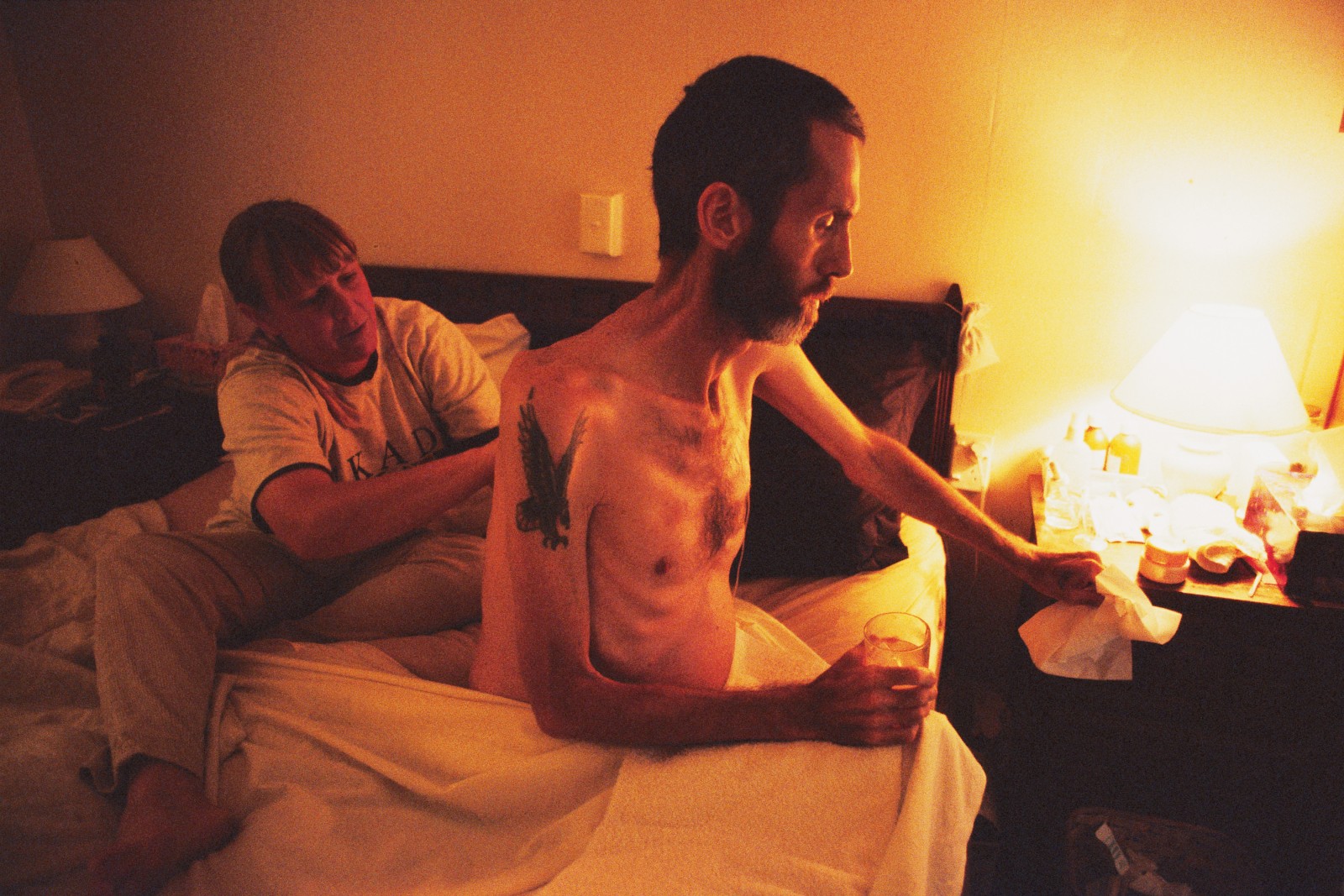
Joanne and Mark Langford had been married for only six months when Mark was diagnosed with carcinoma of the left kidney, and had a five-kilogram tumour removed. Although given another 10 years to live, his condition deteriorated over the next six months. For Joanne, this meant providing round-the-clock care for her ailing husband. Palliative care—the term for nursing of terminally ill patients—places enormous strains on patients’ families. Hospices and the Cancer Society exist to lighten these burdens, but lack the resources to offer full services throughout the country. Mark died in March 1998, shortly after this picture was taken.
Although from the outside Allan seems to sport a well-rounded puku, appearances can be deceptive: his stomach bulge consists of a hernia or two and a sort of bolster. He used to have a colostomy bag as well, but the colostomy was reversed. Formally, his cancer is in remission, but he still experiences considerable pain from the ructions that his insides have undergone, and needs regular medication to relieve it. He speaks highly of the pain clinic at Auckland Hospital.
Other legacies of treatment also remain. “My immune system has never recovered from chemotherapy,” he tells me. “A couple of years ago I had a flu shot and got flu for weeks, and this year the same thing has happened.”
He’s a regular at the Thursday meetings. “Humour is really important—with it you can survive. Depression, misery and worry kill you. I go along to the group and tell them, ‘I’m just so pleased that I’m not as crook as some of you bastards.’ It raises a smile.”
Underneath, he’s more vulnerable. “We keep a record book and photos of everyone at the group. Eventually they get so tired they can no longer make the effort to come. Some prefer to die at home, others in a hospice. Now another woman is in St Joseph’s Hospice, and she’s only going to live for another day or two. I saw her yesterday and gave her a back massage. She wanted a human touch. If she’s still alive tomorrow, I’ll go again. Seeing that there are only about 25 people who loosely belong to the support group at any one time, it’s a devastating turnover. You don’t get too close to people. A bit of you dies with each of them. If too many go, there’s not much left of you, if you see what I mean.”
Allan reckons that euthanasia should be allowed. “I’ve seen a lot of people want to die, not for their own sakes, but for the sake of their relatives. It’s tough and uncertain for relations dealing with a slow death. Sometimes people linger for weeks, and the patient knows that they are not going to recover. It’s preferable that they should go to a better place and that the relatives shed their tears and get on with their lives.
“Support group members often go out together for meals or to the casino or somewhere, partly for their own sakes, but partly to give whoever is looking after them a break. Caregivers spend all their time looking after someone—and that someone may not be particularly easy to live with or grateful for their efforts. Where’s their life?
“I’m still alive because I don’t want to die. When you go into hospital, they try and put really sick people in the bed nearest the door—the death bed. It’s called that because you can get a bed out from there without disturbing the rest of the ward. They are always trying to put me in that bed, but I say, ‘No way!”‘
*
Not all cancer patients are old. While it is true that 100 older people get cancer for every child who contracts the disease, childhood cancer seems a particular travesty. Cancer is actually the leading cause of death from disease among those under 15 years of age—even though cure rates in this group are about 70 per cent. Several organisations try to brighten life for the 120 New Zealand children and teenagers diagnosed with cancer each year.
The Child Cancer Foundation was started in 1978 by parents of children with cancer. It runs support groups, provides financial help to remedy the educational disruption cancer causes, has a couple of special holiday homes, finances research, runs training courses in paediatric cancer nursing and oversees CanTeen, an organisation for teenagers with cancer, run largely by the teens themselves.
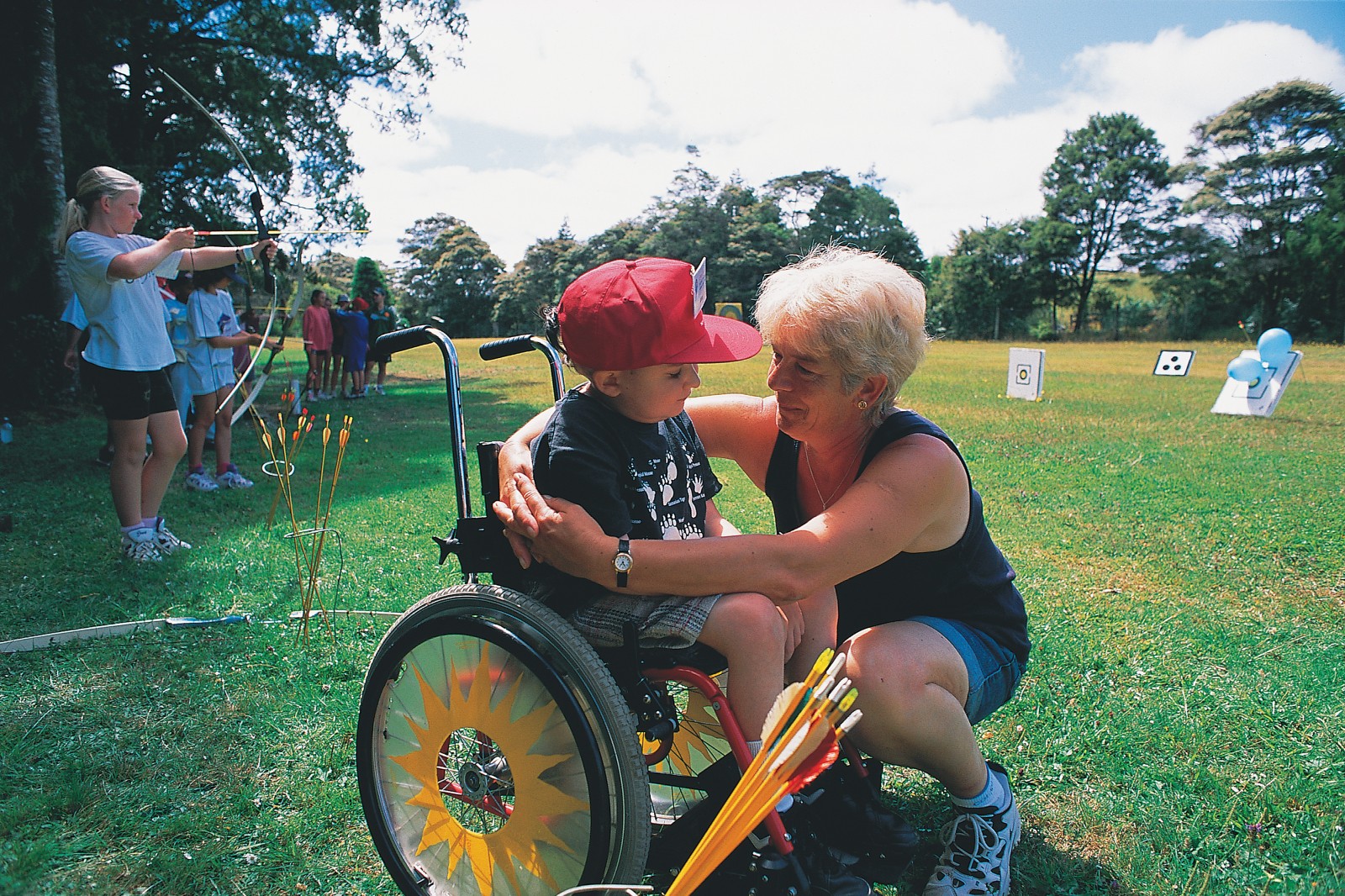
Camp Quality is a separate organisation which holds camps for kids with cancer. In January I visited Carey Park, in the foothills of the Waitakere Ranges, where the main Auckland camp was staged this year. There were 70-odd kids, ranging in age from 5 to 16, each accompanied by a buddy or companion. Thirty helpers ran the camp.
Kids with cancer seem to lose their childhood in a round of hospitals, treatment, tension and pain, with the shadow of untimely death never too distant. Camp Quality, which has been running in Auckland for 14 years and elsewhere for shorter periods, aims to redress the balance. There is no talk of illness or treatment, just positive, wall-to-wall fun. Buses take campers to Rainbow’s End, the zoo, Parakai Aquatic Park, Whenuapai airbase for helicopter rides and police dog demonstrations—nonstop action. “We never tell the kids in advance where we are going. They just get on the bus and the destination is a surprise,” an organiser tells me. On this day archery, abseiling, climbing, kayaking, a glorious flying fox, handcrafts, horse rides and more are running.
I watch a lively 12-year-old wearing a T-shirt that says “Fear tortures the weak” scale the 10-metre-high abseiling tower. Roped up and helmeted, some kids, brimful of confidence, bound down in just a couple of seconds. Others inch their way down, taking a minute or more, with an expert descending alongside murmuring encouragement. They receive loud cheers for completing the descent.
Lexie Candy has assisted 25 terminal cancer patients, including Ken Stutter, record the high points of their lives in biographies. Ken has been treated for several tumours, possibly acquired from exposure to radiation while stationed in Hiroshima. He was expected to succumb to cancer years ago, but refuses to accept that he is a dying man, and is determined to live each day to the full. As a keen yachtie, he is looking forward to the America’s Cup races, to be sailed later this year in the waters just beyond Lexie’s window.
Many of today’s helpers are from the Thames and Mercury Bay Lions Clubs, and Lions also provide much of the funding for the camps. Parents are not allowed to attend. Many families crack under the strain of having a child with cancer. A break does everyone good. Companions (18 and over), carefully screened as to their suitability, become stand-in parents and friends for a week. They are matched to their campers as closely as possible, but it’s a struggle getting sufficient males. Companions are on 24-hour duty, and by the end of the camp they are exhausted.
Nick, 19, a companion at the January camp, was once a camper himself. He developed a large lump in his groin when he was eight years old. “Nobody was able to tell us what it was until it was removed. Then I was told I had non-Hodgkins lymphoma, which meant nothing to me. I said something like, ‘OK, can I go to KFC now?”
But he soon learnt that it wasn’t OK. His chemotherapy lasted for six months and involved a succession of spells in hospital and interminable pills and injections. “I really hated taking the pills. I wanted to know what they were, but they said, ‘Just swallow them.'” So bad was his aversion to taking pills that a psychologist was called in. Eventually, he found a way he could get them down: drop them into a glass of milk and gulp the lot in one go. Having bone marrow samples removed from the back of his pelvis was no fun, either.
What effect did it all have on him? “I lost a year of school, and was worried about that. But when I eventually went back to school, I found that I hadn’t missed anything important. I had actually gained a lot of maturity. Spending so much time with adults, such as doctors and nurses, was probably responsible. While other kids were playing tiggy, I was playing cards.”
This is Nick’s second year as a companion. He still fondly recalls the mischief he got up to as a campersupergluing the tops on girls’ shampoo bottles, shoes to ceilings, etc—and is happy to give something back to an organisation that has given much to him.
*
I am the only male at the regular Friday morning multidisciplinary meeting of the Hibiscus Coast Hospice, a mere listener while seven women (mostly nurses plus a counsellor or two) briskly but sympathetically discuss the 28 patients on the hospice’s books, plus two new referrals. For my benefit, they succinctly outline what is wrong with all the patients before considering their current status and how they can best be helped. These people, all terminally ill, are, for the moment, being managed in their homes. Most are elderly, but not all. One is a mother in her early 30s, separated, and with two young children. A couple of others are in their 40s.
“We are seeing more patients who are younger,” Andrea Zwart, the senior nurse, tells me. “It’s a disconcerting trend.”
The Hibiscus Coast Hospice operates out of a house overlooking the Orewa Estuary. The building has a lounge—used for meetings such as the one I’m attending, and the briefing of volunteer drivers to follow—but has no facilities for accommodating patients. Those requiring “hospicealisation” go to a centre on the North Shore.
“Having a terminally ill patient at home can be very demanding,” coordinator Adrianne Dowman explains. “If one of an elderly couple becomes seriously ill, often their partner just can’t cope with looking after them. We can provide trained volunteers to support people in their homes, we can organise household help and care for them from Waitemata Health, arrange drivers to get them to their appointments, or admit patients to rest homes or the North Shore Hospice for a few days’ respite or to get symptoms under control.” Some of these services are similar to those offered by the Cancer Society, with whom they cooperate. The Cancer Society tends to be more involved with newly diagnosed cancer sufferers; hospices are only concerned with the terminally ill.
Slip, slap, slop. Prevention is a thousand times better than cure when it comes to cancer, but only in the past decade or so has serious interest been shown in this approach. Attention—and research dollars—have always tended to focus on cures. It has been estimated that had the United States spent as much on prevention as it has on attempting to find cures in the past 40 years, 10 times as many lives could have been saved as were actually saved by successful treatments.
Two hospice nurses are on duty every day, and one is on call 24 hours a day to visit and assist patients and their families. Andrea Zwart allows me to join her on her rounds for a couple of hours. The first visit is to a 47-year-old man with lung cancer.
“I was given six weeks to live two years ago,” he whispers. “Only two per cent of patients with my sort of cancer live this long.” His voice is husky and quiet, his skin extraordinarily pale, but his eyes are bright.
“I’ve had a woman from Work and Income to visit me,” he continues. “She was nice, but says that they can’t do anything much for me. Although my income has dropped hugely, apparently I still earn too much. My wife [a teacher] has used up all her leave and can’t get any more time off to look after me.”
He is staying with his elderly parents, but planning to move to his own place shortly. Andrea sympathises, and says that she can get some home help for him, plus 28 days a year in a rest home or hospice free, but it’s not what he wants. He wants his wife at home.
*
We move on, to an old man in his home unit in Orewa. He is wrapped in rugs in a lounge chair, the heater going, adult children gathered round. Two sons have come over from Australia. He has just spent some days in the North Shore Hospice, but insisted that his daughter stay in attendance while he was in there. She looks drained, but used the time to assemble an album of his life, mainly very old photographs, but a pot-pourri of other meaningful items—such as his car registration documents—as well.
“Dad never throws anything out. He’s been a great hoarder,” she says, and the sons laugh gently in agreement. They are big, hulking fellows. How could this fragile wraith, comatose in his chair, be their father? Although he had grasped my hand when I entered, and roused himself sufficiently to mutter a comment about the pretty nurse, he had quickly lapsed back into sleep or some other place apart, just sitting there, head to one side, eyes closed. His wife has gone down to the shops.
Andrea has delivered a sizeable bag of pills for him from the pharmacy, and talks to the daughter, who seems to be bearing much of the burden of looking after her father. Late the previous night, when he came back from the hospice, they had found themselves without a particular pill, essential if the old man was to pass a peaceful night. They had managed a successful improvisation, but the right medication is vital. Andrea and the daughter mention his driver, and it didn’t seem that they were alluding to transportation. After we leave, I ask about it. “It’s a special motorised syringe that you set up which delivers medication slowly and continuously under the skin. The patient can carry it around in a pouch and the needle connects to the syringe via a plastic tube. He’s got one, but I’d say now he’s over-sedated.” It’s a delicate balancing act, relieving distress and pain, but preserving sentient consciousness, so that what remains of life can be appreciated. Getting the balance right seems to be a major part of hospice nurses’ work.
Well manicured gardens surround the North Shore Hospice, which is just a few hundred metres from both North Shore Hospital and Lake Pupuke. The low brick building is four years old and has beds for nine, plus several lounges.
Pills make the difference between agony and a tolerable life for cancer patients. Colleen Barker, with terminal breast cancer, holds the pills she takes each morning. Rations for later in the day are ready alongside. To simplify often-complex drug regimes, a week’s supply is frequently organised with the help of a hospice worker, and patients also keep notebooks in which they record what they are taking and any episodes of severe pain, vomiting, headaches and other symptoms as a guide to whether their medication is adequate.
During my guided tour, a specialist bath shaped like a half cheese, curved edge down, attracts my attention. It rotates into a vertical position and is entered via a side door. The bather sits upright on a shallow seat, and the bath can then be rotated to a more horizontal position for filling and washing. Thinking that one of these would be just the ticket for my own rather frail parents, I ask clinical services manager Tricia Clarkson how much they cost. “Oh, about $20,000,” she replies nonchalantly. It looks as if it will be scorched almonds again for Mother’s Day.
“We specialise in palliative care,” Tricia informs me after we have returned to her office. Anticipating my ignorance, she passes me a leaflet. “Palliative care is defined as care of patients with active progressive far-advanced disease and limited prognosis, for whom the focus of care is quality of life,” it states.
Tricia fills in the details. “Last year we saw 386 terminal cancer patients. An average GP sees four similar cases a year. We are really a specialist nursing service, providing much more intensive care than public or private hospitals can. What we do is low-technology, but high-care.
“In the popular mind, a hospice is a place where people go to die. That isn’t true any more. Sixty per cent of the inpatients we have here go home again, and more than half of our patients die at home. We are becoming involved much earlier in people’s illnesses. Patients are referred to us by doctors, and increasingly by the hospitals themselves. We are also running a growing number of bereavement support groups: one for parents who have lost children, others for teens and kids who have had a parent or grandparent die, and groups for those who have been widowed.”
The hospice has a full-time medical director and three part-time GPs, 24 nurses including 11 part-time community nurses, a few organisers and counsellors and about 630 volunteers. “We are absolutely dependent on volunteers for our existence,” Tricia tells me. “They drive, look after gardens, make morning and afternoon teas here for patients and day groups, visit patients, clean the building, maintain hospice cars, do laundry, everything you can think of. And they fundraise tirelessly. We make no charge for any of our services. The Health Funding Authority pays us $500,000, and we have to raise an additional $1.2 million per year from the community.”
I’m taken aback. Over a million dollars a year is a heck of a lot to raise.
“Yes, it’s over $3000 every day of the year,” Tricia informs me. “We have lots of amazing fundraisers. House and kitchen tours, fashion parades, golf and tennis tournaments, garage sales, preparing and selling epicurean preserves. We have a fabric shop in the basement that sells offcuts from manufacturers at very reasonable prices. I made this outfit I’m wearing from material I got there. A woman whose son we looked after a few years ago runs raffles at Housie evenings and has raised $15,000 for us. Lions, RSA, bowling clubs, CWI, The Warehouse, the Navy, Rotary—they all help us.”
Anne Martin at the national office of Hospice New Zealand tells me there 37 member hospices nationwide, not all of which are able to offer services as comprehensive as those on the North Shore, or even the Hibiscus Coast.
“We are trying to negotiate a better deal for hospices with the Health Funding Authority,” she says. “If the money doesn’t come through, quite a few hospices will have to dramatically reduce the services they offer, because they just can’t keep up the fundraising. At the moment, there is clearly a discriminatory lack of treatment against the old and terminally ill. Maternity services are fully funded, acute infectious diseases are well catered for, accident victims are looked after, but the government isn’t too interested if you are old and dying.”
A cynic might say that the terminally ill contribute little to the economy or the ballot box.
*
Tricia McMahon from the St Barnabas support group has invited me to accompany her to a training course for volunteers at St Joseph’s Mercy Hospice in Auckland’s Mercy Hospital. St Joseph’s community care programme has been running for 20 years. One of the nurses describes the work to the 20 or 30 trainee volunteers who have come, and indicates how they might fit in. A chaplain speaks about the pastoral care team, and an experienced volunteer gives a moving account of what community care has meant to her.
The highlight for me is a talk by Lexie Candy about her biographic service. Lexie, slender, middle-aged, softly spoken, lost her husband six years ago. They had been married only a short time. Following his death, she realised there was much she did not know about him, and resolved to record her own mother’s story before she died. Her mother (now in her 90s) spoke her recollections into a dictaphone, and Lexie used a word processor and some editorial nous to produce an account of her life.
In the past two years, she has compiled a further 25 biographies for dying cancer patients. Spiral-bound, 5 to 40 pages in length, with a few photos, they are the sort of item that can easily be photocopied for interested relatives, and some of the subjects have been happy for their accounts to be made available in hospices.
“When people no longer feel they are useful members of society, recounting memories that others might like to hear gives their lives meaning,” Lexie says. “One lady, paralysed from the neck down, told me a really wonderful story. Her unborn grandchildren will be able to read it and get some idea of what their grandma was like.
“To start with, grumpy old Ray told me that he had driven a truck all his life, and had nothing to say. But I went back and he opened up. Most people are quite keen to do it once they have considered the idea, and working on their life story often gives an opportunity for healing the heart.
“I think that people are often more whole when they are dying than at any other point in their lives. All illusions are stripped away, and this gives a chance for real reconciliation and spiritual growth. It’s almost as if their physical weakness frees up a different kind of energy. The enormity of the illness puts life in perspective. People become focused on what is really important to them. Some of them make the most of every moment. One lady even wrote that her last month was the best of her life, that her cancer had been a blessing. The dying can indeed teach us how to live.”
Ken Stutter is one of those who have written their story with Lexie’s help. It contains an outline of his life, with an emphasis on the high points. I read an account of his freight-forwarding business, which often took on jobs others shied away from, such as transporting the 25-metre 90-tonne Taupo Cat catamaran from Cairns to Taupo in 1987. Everyone said it couldn’t be done. Ken thought otherwise, and spent nine months preparing. Taupo Cat was sailed to Napier, disassembled into two sections and trucked to Taupo. En route, 142 power and telephone lines had to be severed and rejoined to allow passage of the huge loads, yet nobody was deprived of power for more than 11 minutes. A job to be proud of.
Life-threatening diseases require drastic remedies. Limb perfusion is one option for treating melanoma that has not metastasised beyond the limb. A tourniquet cuts off circulation, and the major blood vessels in the groin that supply the limb are then exposed and connected to a reservoir and pump. Much higher doses of chemotherapy than can be tolerated by the body as a whole are then recirculated through the limb for an hour. Despite the graphic appearance of the treatment, the patient is spared the usual side-effects of chemotherapy.
Tricia mentions to me that Ken is upstairs, staying in St Joseph’s for a few days. His handshake is hard, but he looks drawn. I know that he takes few painkillers, and suffers considerably. “I’ve been overdoing it a bit,” he admits, “taking someone to the hospital every day. I can never get parking nearby, and have to walk miles from the far side of the Domain. Some of my neighbours started to get worried about me. I’m back under control now, and I’ll be home in another couple of days.”
Unless home was pretty sumptuous, I’d be in no hurry. St Joseph’s is pleasant indeed. Each patient is in an individual room, large enough for a relative to stay with the patient. Comfortable armchairs, tasteful pictures, flowers on occasional tables outside each room, carpeted floors, staff in street clothes all add up to an ambience that has nothing in common with that of a public hospital. On this fine autumn day, the lounge is magnificent, drenched with sun and offering panoramic views across Auckland to Tiritiri and Moehau.
Ken, as he candidly admits, has survived well past his “use-by” date. What is his secret? “To be honest, I’ve never accepted that I have cancer,” he confides. “I keep the word out of my mind, although I accept that I am sick. And I’ve been enjoying myself, too. Went swimming with the dolphins at Kaikoura last year. Fantastic. And I’m really looking forward to the America’s Cup.”
*
Courage, hope and an indomitable spirit may well extend a patient’s life, but drugs are important, too. Most existing anticancer drugs date from 1950 to 1970, well before scientists had any real knowledge of what goes wrong within cancer cells. Many emerged from programmes in which hundreds of thousands of chemicals from all sorts of sources were screened for their ability to inhibit the growth of cancer cells. Relatively few new anticancer drugs have been introduced since the mid-1970s because tougher safety requirements have pushed up costs and slowed development times. A decade or longer can easily elapse from the time a compound is first screened until it is cleared for general use in treatment.
Nonetheless, treatment has improved steadily over the past 20 years. Optimal combinations of existing drugs have been determined, and treatment schedules honed to match vulnerable points in the life cycles of cancer cells. Cure rates for some cancers, such as testicular cancer and childhood lymphomas, may now reach 70 or 80 per cent.
However, treating cancer is more complex than treating most other diseases. As we have noted, cancer is really a hundred diseases, and the stage of spread at which diagnosis is made will also influence how a tumour is attacked. Each patient’s course of therapy receives meticulous planning and regular re-evaluation from oncology specialists, both in chemotherapy and in radiotherapy.
The emergence of drug resistant tumours in patients undergoing treatment is a major problem. Susceptible cells are killed, but some cells find ways of living with drugs—perhaps by pumping them out of the cell—and they continue to divide. The drugs’ effectiveness diminishes, and the patient can no longer be put into remission. Administering combinations of drugs which work in different ways slows the emergence of resistance, but usually doesn’t eliminate the problem.
Our burgeoning knowledge of tumour biology and the biochemical changes that have taken place in malignant cells has suggested a whole range of new targets for drugs. There have been advances, too, in our ability to determine how drugs interact with their targets. Using computer simulation, it is even possible to predict such interactions for as-yet unsynthesised compounds.
At camps run by Camp Quality, children with cancer can take a break from the world of hospitals and clinics and concentrate on having fun. The action-packed camps are made possible by dozens of volunteers, some of whom act as round-the-clock, one-on-one buddies to the campers, while others cook and organise the activities. Although 70 per cent of childhood cancer is curable, cancer robs children of the carefree, sunny days of youth, clouding them with pain, jabs and premature foreboding.
New anticancer drugs might not even aim to kill cancerous cells. They might simply be a spanner in the cell’s proliferative works. But given the complexity of the cellular pathways, and the variety of aberrations which can lead to cancer, a single “cure for cancer” looks further away than ever.
Tackling the complexities of cancer is a multi-billiondollar research enterprise, with tens of thousands of scientists around the world working on various aspects of the problem. In New Zealand we have several world-class groups of cancer researchers. Tony Reeve’s Cancer Genetics Group at the University of Otago is concerned with tracking down molecular and genetic changes inside cancer cells. This group has identified an inherited mutation which lies behind a spate of stomach cancers in the large McLeod family from the Bay of Plenty. In the past 30 years, this family has suffered 30 deaths from the disease, the youngest in a 14-year-old.
Stomach cancer is usually fatal because it is not discovered until it has spread. Reeve’s laboratory has developed a simple screening test for the mutation, which means that carriers can be identified early and closely monitored. The mutation has since been found in similarly afflicted British families, and is likely to be at the root of this cancer elsewhere.
Reeve’s laboratory also has a longstanding project studying Wilm’s tumour, a childhood kidney cancer—in which it has also achieved internationally acclaimed breakthroughs—and is trying to establish whether some childhood leukaemias and lymphomas actually arise while the baby is still in its mother’s womb.
The forte of the Auckland Cancer Society Research Centre, situated within the University of Auckland Medical School, has historically been drug development. Amsacrine, developed by the lab, has been in clinical use for treating leukaemia for two decades. Asulacrine, a newer version of the drug with broader activity (including efficacy against solid tumours), has undergone clinical trials, and two other drugs, DACA and DMXAA, are being trialled around the world.
Many other potential drugs are at various stages of investigation, including agents which seek to block malfunctioning signalling pathways in cancer cells.
Developing drugs to treat solid tumours effectively is one of the lab’s goals. Solid tumours often have a poorly organised blood supply, which means cells in their interiors are low on nutrients and oxygen, barely ticking over—hardly ideal targets for existing anticancer drugs. Dr Bill Wilson in the group has reasoned that it may be possible to design “prodrugs”—harmless compounds which be come activated and toxic only in the oxygen-depleted interiors of tumours. Several promising compounds have been identified.
A second approach to prodrugs being explored by the lab is designing and testing compounds which are activated by modest doses of radiation.
Last year there was great excitement when it was announced that Dr Judah Folkman of Harvard Medical School was curing mouse cancers with drugs which targeted the blood supply to the tumour. DMXAA, developed by the Auckland lab over a 12-year period, is one of the first drugs of this type to be undergoing clinical trials anywhere. It induces cells in the tumour to manufacture a protein that attacks their blood vessels. In a curious twist, thalidomide, notorious for its grievous effects on babies in the 1960s, has been found to enhance the effectiveness of DMXAA.
Developing drugs is fraught with difficulties. One of the more intractable problems is how to test them. Cell lines—established, usually long ago, from cancers, and growing in artificial growth media—are the usual choice. Bruce Baguley, a director of the Auckland lab, tells me that establishing such lines from fresh tumours is very difficult. “And we are finding that the properties of fresh tumour cells may be quite different from those of cell lines,” he adds. “We have some compounds on trial which kill cells from 80 per cent of fresh lung and ovary tumours, but only work on 10 per cent of cell lines.”
Another team within the lab evaluates possible environmental mutagens, and also identifies the types of dietary fibre that might confer protection against colon cancer. Maori and Pacific Island rates of colon cancer are much lower than Pakeha rates, and it is thought that some dietary factor could be responsible.
It is worth noting that most of the research funding for these labs (and the majority of other cancer researchers in New Zealand)—millions of dollars annually—comes from the Cancer Society. The government-funded Health Research Council (HRC) uses the excuse of the society’s research funding to pare its own monies spent on cancer research. “Research is an investment in our future health,” notes the society’s medical director, Peter Dady, who would like to see both the society and the government spending more on cancer research.
Although support services are the most visible of the Cancer Society’s operations to the cancer sufferer, they represent only a fraction of its operations and interests. Research is clearly another big-ticket item for the society, and in an era when the government’s approach to health is increasingly “hands off,” the society sees an increasing role for itself as advocate for the public interest. Indeed, it is calling for a national cancer control strategy in which the government, the Cancer Society and other interested groups define realistic goals, decide who does what to achieve the goals, and arrange to measure the outcomes.
David Perez, a Dunedin oncologist and a Cancer Society spokesperson, says that very little monitoring of outcomes is done at present, so we don’t know the success rates of various treatments, or how many lives screening programmes are saving.
“The UK recently found that it was less successful than Europe in cancer treatment,” he tells me. “Europe was more coordinated, more forward thinking. As a result, the UK has had a revamp. We are, I suspect, like the UK. Australia is ahead of us. Expect the Cancer Society to become more vocal, not just on the need for the cancer control strategy, but on lots of issues.
Another emerging issue will be equity of access to cancer services across the country,” David says. “There was a fuss in Auckland recently when it was learned that some modern chemotherapy drugs were not being used there, although they have been available in the Waikato and elsewhere for several years. The reason is simply cost. A course of taxol (one of the drugs in question) costs $15,000-plus, whereas older treatments are only $2000. It’s an issue for the Health Funding Authority.”
Although Kevin Aleksich had his cancerous left leg amputated in 1987, just after his 21st birthday, he wasn’t about to let that stop him enjoying life. He was introduced to skiing, and in 1994 represented New Zealand in the winter Paralympics. Kevin is a plumber and, when not on the slopes, wears a prosthetic limb. While few cancer survivors lose something as visible as a leg, most live with the fear that the scourge may one day come calling again.
Another area which concerns the Cancer Society is health promotion and cancer prevention. “Nationally, we are spending about $600,000 annually on health promotion, and when other programmes run by the divisions are included, it would be well over a million dollars. We are concentrating on anti-smoking and anti-melanoma campaigns, but we also promote healthy diets and exercise,” says Betsy Marshall, an organiser for the society.
Diet is not trivial in the overall scheme of cancer prevention. Apart from the well established benefit of a high fibre intake, it is thought that some fruits and vegetables contain substances that confer protection against cancerretinoids, indoles and others. Synthetic versions of some of these compounds have also proven to be effective.
Certain drugs also have protective effects. Tamoxifen, a failed birth control compound which binds to cell receptors for the hormone estrogen (effectively a growth factor for some breast cancers), shows promise not just in breast cancer treatment but also as a breast cancer preventive in women at high risk for the disease. Raloxifene, a newer anti-estrogen, is even more effective and has fewer side-effects.
Exercise, too, seems to have some ill-defined benefits in cancer prevention. It has been said that the healthiest anticancer lifestyle is to run from salad bar to salad bar!
In its advocacy role the Cancer Society has argued in support of certain screening programmes, namely breast and cervix. “We don’t consider that the data so far supports screening for colon and prostate cancers, although colon cancer testing will be ready before too long,” David Perez advises. “Cancer genetics is also an area in which more could be done, given that 10-15 per cent of cancers probably have a strongly inherited component, such as the McLeods’ stomach cancer. There is a growing need for genetic counselling.”
In preparing this article, I was impressed by the breadth of the Cancer Society’s engagement with cancer. From mounting a multitude of support services, to public education and research funding, it tackles it all, spending (and raising) something like $15 million per year. The hospices were also inspiring in their compassion and dedication to the dying and the bereaved. They get some $12 million from the government for services they render to hospital patients, but probably raise considerably more than that again by their own efforts.
Despite government spending on cancer (mainly through hospitals), I couldn’t help wondering whether it was getting off relatively lightly in some areas, especially in palliative care and research funding.
*
Just before this issue went to press, I returned to the Thursday morning support group. Many of the familiar faces were there, although some were missing. Ken Stutter was anaemic and receiving iron injections. Allan Helleur still had the flu, and didn’t want to give it to any of the others. Another man was in hospital. Surreptitiously, a couple of cards were circulating for signing. Jesper and Shirley Aspden were celebrating their birthdays. We enjoyed slices of birthday cake, and wished them—with more sincerity than is usual at such times—many happy returns.
Do I still feel as apprehensive about cancer? Not quite. A minority of sufferers are cured, and live wary but perhaps more appreciative lives for decades. For those who perish prematurely—still a majority—pain relief and symptom management are available and seem to have become highly developed arts, enabling most patients to die peacefully at home. Novel drugs—as always, not quite in hand—may begin to erode the size of this majority within the next 10 years.
A slow death offers ample time to set one’s house in order. It offers a challenge to our humanity as well, whether we are the sufferer or one of those who reach out to comfort. For it is a great affirmation of human dignity to face death with courage when we know it is closing in fast. It is a mercy, too, that for some the knowledge of the imminence of life’s end enhances the sweetness of their latter days.