An enthusiasts’ steam train rides the Main Trunk Line across the Waikato River at Ngaruawahia. Conceived by the visionary politician Julius Vogel in 1870, the North Island rail trunk took almost 40 years to complete; a hard-won link piercing the heart of the land. Now, after close to a century of use, it remains a vital—and romantic—strand of the country’s transport network.
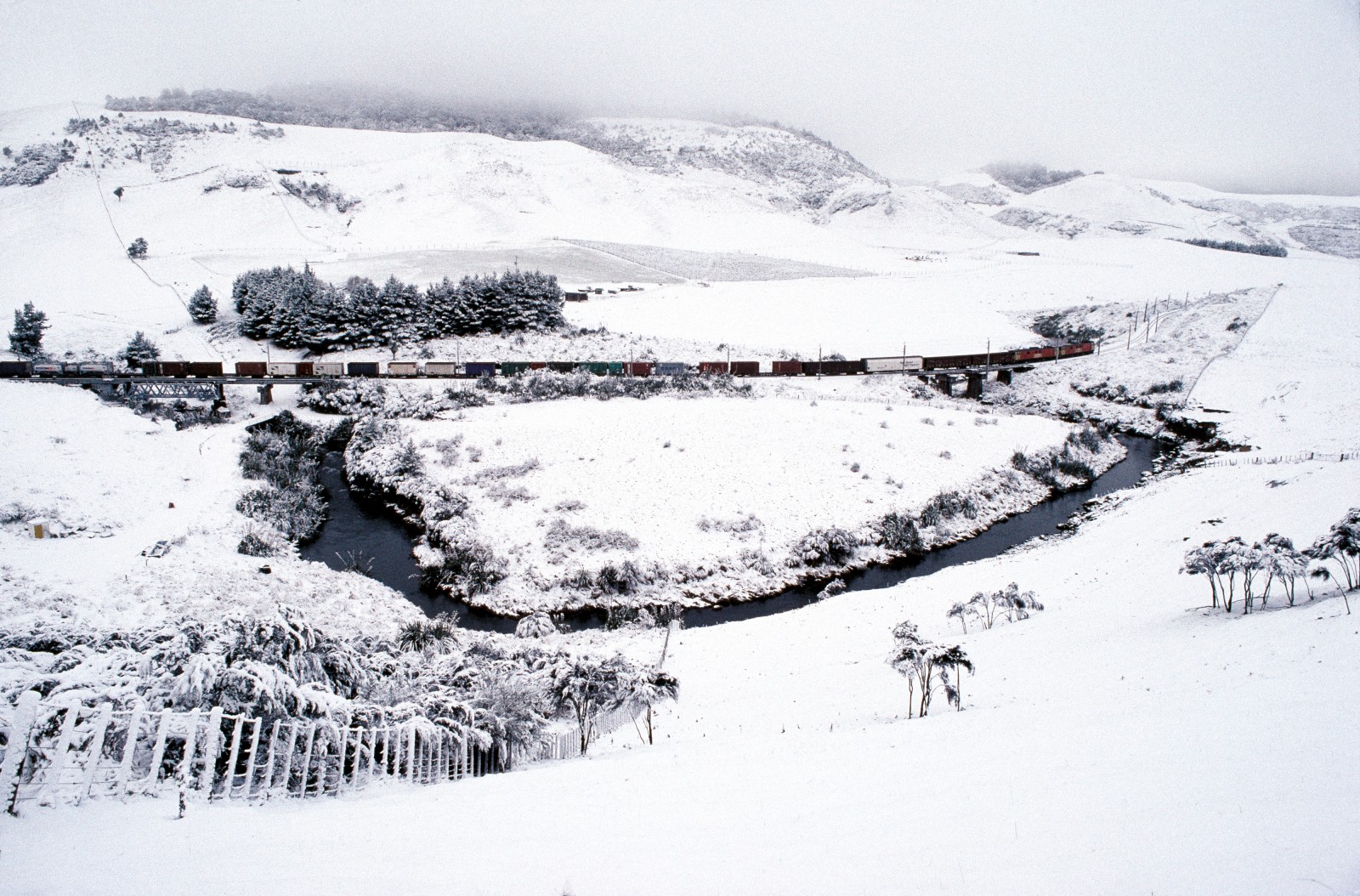
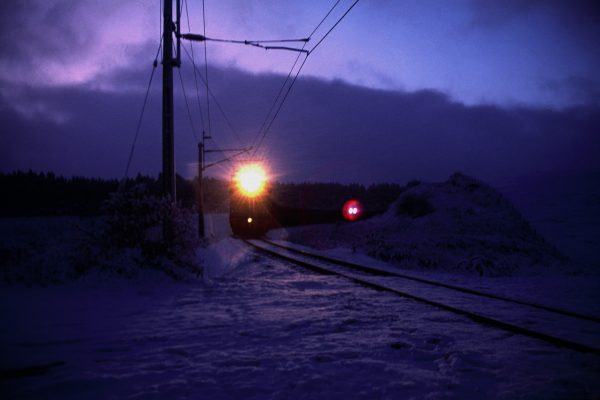
The boys got a great view of that last week.” Bob Pollard nods out the cab glass to his right, where Mt Ruapehu is little more than a dark smudge spewing cloud. Skifields are pinpricks of fairy lights on its flank. I slide open the DX diesel’s window on my side to get a tonic of crisp plateau air. Rails weave and straighten in our headlights. Tussock, signage, a steady flick past of poles. Bob dips the beam for a truck on the highway. Up ahead a red light flashes for ice. It’s one in the morning. I lean back against my seat watching the landscape drift past, lost in the rhythm of the track. Hanging off our pullbar the cars of the Northerner, New Zealand’s only night passenger train, are full of a hundred experiments as people do-se-do with sleep. Most are young—one in three under 20.
“It isn’t a sleeper,” I was forewarned over the phone when I booked my ticket. “The seats do recline, but there are no beds.” Nor is there a compensatory bar. Having spent 10,000 exhausting miles travelling through the United States on Greyhound buses, whose seats also reclined, I decided instead to be up and sucking the life out of things.
So, when we delayed at Marton while police searched the train for a teenage runaway air travel just can’t match rail’s rich repertoire of events—I had walked briskly forward along the platform to show my cab pass.
From the opening of the Main Trunk in 1908 through to 1924, when the day service began, if you wanted to get from one end of the North Island to the other you took the overnight express—and for nineteen-and-a-half hours, give or take, you could live the legend.
“Fortunate indeed our traveller who, having lightly supped in the cosiness of a two-berth cabin, attends to her mystic rituals in space-planned comfort, then surrenders to bedded warmth and slumbers untroubled—forehead serene . . .” purred a New Zealand Railways advertisement of the day.
“And after the new day has dawned . . . comes the awareness of achievement—the realisation of having travelled far.” Those who could not afford the sleeping car made the journey on horsehair seats.
I well remember the first time I attended to my own mystic rituals on the Main Trunk. It was 1975, and to get from Auckland to Wellington, where I was looking for accommodation, I caught the four-year-old Silver Star. No stranger to the squalid world of flatting, I was agog at the luxuries that could be experienced at 50 miles an hour in the dead of night with nothing but fencelines and soporific cows ghosting past outside. A private air-conditioned cabin which produced a ready-made bed at the turn of a chrome handle, a complimentary shoe-cleaning service, an ever-vigilant steward hovering at the far end of an Attendant Call button, a shower with scalding hot water and, inside it, a fold-down stainless steel flush toilet. (There is, I have since thought, much to commend a toilet in such a venue). Then, next morning, on the approach to Wellington, a generous breakfast in bed and a complimentary morning paper as the harbour capital, sheathed in a hurly burly of commuter traffic, unfolded. Oh, I forgot, and a licensed a la carte buffet car.
The Silver Star, one of the world’s finest rail services, couldn’t compete with Boeing 737s, however, and is now history. Plans to convert it for other uses foundered on difficulties in removing asbestos insulation yes, in trains as everywhere. Instead, the carriages were shipped to Asia, where they were refurbished and now form the glamour Eastern and Oriental Express, linking Singapore and Bangkok. Wasn’t it deputy Prime Minister Don McKinnon who, a few years back, encouraged New Zealand (admittedly, with the country’s trade prospects in mind) to “hitch its wagon to the Orient Express”?
Steve Voullaire, group general manager of Tranz Scenic—New Zealand Rail’s passenger-moving successor—remembers a campaign which advertised the Silver Star as “the fastest motel on wheels.” The only thing it lacked, quipped one wag, was a space to park the car. “As time went by, the real cost of vehicles and petrol fell, roads improved, air travel became more popular … .” Voullaire shrugs. Occupancy rates at the motel fell. The earlier introduction of a fast business railcar to Hamilton—the Blue Streak—hadn’t taken on, but when switched to a Main Trunk day service it did. As did its updated replacement, the diesel electric Silver Fern railcar. The old night express, refurbished as the Northerner, lingered on. Times had changed.
Now, says Voullaire, marketing the Main Trunk corridor is complex. Backpackers and others on a budget take the night train and save on accommodation. They may catch scenes by moonlight or, in summer, a good sunset, but mainly the night shift’s business is toting bodies from A to B. The clay service, the Overlander, caters for the tourist market, and for those New Zealanders who also want to catch sight of goats scaling hillsides and to be disoriented by the cabin attendant’s helpful commentary as the carriages wind through the Raurimu Spiral.
The charm of the Main Trunk is that it takes you places you’ve never seen from the State highways. It leads you through a gallery of North Island geography, from riverbanks and mellow Waikato farmland to the cave-riddled limestone country around Otorohanga, through the raw, sparsely populated King Country and up the spiral to the volcanic plateau. There it skirts active volcanoes and threads across wetlands, tussock grasslands and over a succession of high viaducts before dropping into the deeply etched valley of the Rangitikei River. Beyond lie the fertile Manawatu Plains, the Kapiti coast and finally Wellington’s palatial old rail terminus, the country’s busiest. At any time during the trip you can take your three-year-old to the toilet, kick back with a newspaper or stretch out in the observation car.
For the 685 km length of the Trunk you can experience what Voullaire grandly calls “the ambience of rail” its 111 km of curves, 19 tunnels, 23 major viaducts and 26 other bridges, all testifying to the skill of those who built it. I can certainly testify that few experiences come close to leaning from a 100-tonne engine that is highwiring it over a viaduct by moonlight.
With a public float in the wings, Voullaire is reluctant to talk figures or future plans, but says that, unlike most such services worldwide, the Trunk makes money. Over all its network, Tranz Rail is moving more passengers per year now (443,000) than in 1992 (359,000), though long-haul passengers still account for less than five per cent of revenue. The real money is in shifting freight.

Back in the cab, Bob is telling me how picturesque ice on the rails can be on a clear night. With the electric locos, he says, it can make the pantographs spark like a welding torch. “Really lights the place up.” He laughs, then lapses into the comfortable silence of someone well-used to solitude. Having picked up the DX at Palmerston North, he will take it as far as the crossing point Taumarunui perhaps. For younger drivers, he says, the shift work can play havoc with family life.
In the 1990s, New Zealand Rail pared down its rail crews, dispensing first with guards, then with firemen, one of whose vacant seats I now occupy. Ever since the death of steam in the mid-1960s, the firemen had nursed a job in search of a function. With no fire to tend and regulate, there was little to do but make the tea, keep the cab clean and strike up conversation if the driver’s eyes showed signs of glazing. Now, thanks to technology, a driver can run solo on an 800-metre freight train weighing 2000 tonnes and hauled by up to four linked locos. With centralised train control, radio contact and vigilance devices such as the “dead-man’s pedal,” which stops the train when pressure is eased, little can go wrong.”Our basic work is heavy goods,” Bob tells me.”Can get a bit lonely then.” Less so on the Northerner, which, confusingly, is still called the Northerner even when it turns around and points south for the reverse trip the Southerner works the Christchurch-Invercargill route.
Contact with train crew over the intercom helps keep things alive. At Ohakune station someone comes along to pass me up a coffee and hot roll. We take on passengers. Bob busies himself with a thermos.
*
When the main trunk expresses first ran the rails in 1908 they lugged dining cars on part of the route, though the food didn’t win over everyone. Crusty Dunedin publisher Charles Baeyertz, editor of Thad magazine, shared with readers his experience of dining 1912-style. Rebelling at the meagre menu available at 8.45 A.M., he reproduced it in full, adding caustically: “You will see that the only things still ‘on’ are curry and rice, grills (in ten minutes), and cold lamb, ham and beef. The curry is not by any means perfect on the trains, and if rice cost a guinea a pound they could scarcely give you less of it. As to the grills, the less said the better.” He might have added that a single dining car could, in practice, serve fewer than half an express’s 190 or so passengers in the time available.
New Zealand Rail got its own back on Baeyertz in 1917 when, as part of a wartime economy drive, it withdrew dining cars entirely, thus initiating that great New Zealand tradition, the refreshment room rush.
“A distinctive kind of obstacle race was devised,” wrote long-time rail historian Bill Pierre, “consisting of a short unencumbered sprint over the course along the station platform to the refreshment room counter, and a return lap to the start line juggling a tier of teacups and saucers in one hand and a pile of sandwiches in the other. All who crossed the start-finish line with cups, saucers, tea and sandwiches intact were declared winners.”
Well into the 1950s, passengers enthusiastically took on the challenge of securing a sustaining “cupper tea and pie,” often alerted well before the guard’s announcement of an upcoming station stop by shards of broken railway crockery littering the track. The more nimble among them sprang out of their seats in preparation for the sprint. Humorist C. V. Smith elaborated on what befell the victor at the counter: “They all see you have been served, and, anxious to secure your position, move forward in what military people would describe as a diverging movement . . . . There is only one really successful method of getting out. Balance the plate holding your sandwich on the top of your cup. Hold the cup and saucer with both hands about a foot away from your tummy, keeping your elbows well in. Bend forward to an angle of 30 degrees and push slowly backwards, stern first.”

Often the battle took place in the early hours, as at the Main Trunk’s most notorious refreshment stop, Taumarunui, where groggy passengers often staggered towards the cavernous refreshment rooms through frost or amid thick fog generated by the upper reaches of the Whanganui River and trapped by the surrounding hills The town gained in celebrity when Peter Cape penned his 1958 song about a bloke who fell for a tea pourer there. Desperate for her affection, he gets a job as fireman on the Limited in the hope of spending a few minutes with her each journey. Unimpressed, she switches to the day shift. He laments:
“I’m an ordinary joker getting old before my time
For my heart’s in Taumarunui on the Main Trunk Line.”
One of the few hearts that were.
As a conciliatory gesture to those who complained about the service, New Zealand Rail upgraded its rolling stock in the 1930s, introducing de luxe sleepers with leadlight toilet windows and compartments big enough to take armchairs as well as bunks and washhand basins.
For a short time, the Rotorua Limited named, like all Limiteds, because to trim travel time its size was restricted and it called at few stations—carried an American-style observation lounge car, first introduced on the Main Trunk’s Daylight Limited in 1929. The Depression worked against it, and the car was soon withdrawn.
*
If the experience of Main Trunk travel was at times memorable for passengers, the effect of the line itself on North Island settlement was profound. Once the iron road had been driven through the remote, barely comprehended fastness of the King Country early this century, it unlocked immense virgin forests of rimu, totara, kahikatea, matai and miro. For 130 km, from Porootarao to Ohakune, the trees that had held the line’s early surveyor John Rochfort spellbound began to feel the bite of sharpened steel. Surveyors’ camps were quickly replaced by mill settlements which arose along the rails, sending out vast tramways of their own. Many crossed impressive timber viaducts and climbed one in 15 grades, pushing 30 km or more into the bush. Some of the towns died with the death of the forest; others were transformed by the needs of the expanding railway.
By the Second World War the Trunk was carrying 40 per cent of New Zealand’s rail traffic, and it was not uncommon for a Night Limited to cross or overtake 45 or more trains between Auckland and Wellington one every 15 kilometres. Rail veterans, recalling those heady days, talk of 100 or more “steamers” steam locos standing in sidings at the Auckland railyards, and of Ohakune swollen with huts, scores of railway houses for married men, a hostel for refreshment room hostesses and big compounds for single men.
Taumarunui, though, is the epitome of the town that rail built. At the turn of the century, a trader and interpreter with the auspicious name of Alexander Bell was said to be the only Pakeha living there. As late as 1908, the town was in reality still a kainga—a Maori village—at the headwaters of the Whanganui, with nothing between it and Ohakune to the south but vegetation. Once the Trunk came through, making it readily accessible by land, Taumarunui’s future, like that of Taihape and Ohakune, was assured.
It wasn’t just rapacious millers who laid bare the King Country and set the crude foundations for farming. At Kakahi, 16 km south of Taumarunui, the Public Works Department pushed up to 10,000 superfeet of timber a day through the mill for sleepers, fence posts and construction timber for bridges and rail houses. Kakahi was also where southbound rail crews often added a second loco and braced themselves for an assault on Robert West Holmes’ ingenious train elevator to the Plateau, the Raurimu Spiral.
I called in to Kakahi to meet a couple who had grown up around King Country rail. For days I had shadowed the Main Trunk by road, beginning at Auckland and finding and losing it any number of times on the way to Palmerston North and back over the central plateau. It was well past dark when I finally left State Highway Four a few kilometres short of Taumarunui and wound down under the rail bridge to the cluster of houses that is Kakahi.
Jim Allen, who good-naturedly answered the late call, is 12 years retired from his job as a ganger in charge of track surfacers “surfies.” Many names, one job: to maintain the Main Trunk, or at least a part of it. Jim’s patch stretched the 25 km or so from Kakahi to Raurimu, at the foot of the spiral. He, his brother Andy and the rest of the crew were just one link in a chain that stretched from Wellington to Auckland along the steel road. Each day, come rain, snow or blistering sun, their job was to check every metre of track before the expresses came through, walking the line and running a four-wheeled twist machine over it for signs of subsidence.

Kakahi was no sinecure for surfies. The ground thereabouts is highly unstable and prone to slips just a skin of soil on a pumice bed. Often rains would carve out the substrate, leaving rails and sleepers delicately poised above an abyss. If there was an earthquake, a big storm at night or just persistent rain on saturated ground, there was nothing for it but to go find the torches and head out into the darkness once more.
But despite even these precautions, things sometimes went wrong. Jim was a baker in Kakahi in 1959 when a freight train headed by two DA diesels derailed just half a kilometre to the north. It was the first train through on Sunday evening. “We’d been playing cricket that afternoon, and there were three or four inches of water on the pitch,” he recollected. “First we knew of the washout on the track was when they came looking for axes.”
The wagons had been full of sheep. Many were killed outright; others needed to be freed or put out of their pain. “I can still smell the stench,” says Jim’s wife Joan.
When he began on the line 30 years ago, motorised trolleys had just made an appearance, and gangs worked their own turf. Now workers are trucked further afield, severing local connections. Jim has no good words for the policy.
“Our gang of five re-sleepered and re-railed. Did the lot by hand. It was like looking after your backyard,” he says. “The bigwigs would come along and assess each length of track. It soon became known who had the best rails.”
The same went for steamers. Regular crews working their own locos took pride in what they did, vying with each other to wring the best performance from their machines. Efficiency drives and the pooling system saw brass gleam less brightly, engines run a little less smoothly.
At its height, the Main Trunk was a raison d’être for its offshoot communities, and a lifeline. A prime mover. Seven or more families in each settlement depended directly on the railway for their livelihoods.
“I could ring my chemist in Taumarunui for a bottle of aspirins, and he would take it to the train,” says Joan. “The guard would make sure I got it.”
Bread from Jim’s bakehouse would go on the 9 A. m. goods train to National Park to he picked up by a passing trucker and taken to the mill. Extra trains were put on from Taumarunui on Saturday nights to get local picturegoers home. Square dances were held in nearby railway goods sheds.
Moustachioed stationmasters sporting gold braid presided over their well-ordered worlds like gods. Refreshment room staff in crisply starched aprons ministered to travellers. Gangers like Jim and Andy tirelessly tended the steel ribbons. And engine crews, immaculate in blue overalls, black Italian cloth shirts, white ties and monographed caps, fuelled the romance of steam with mountain country panache.”Didn’t need a car,” says Jim. “It was a great service, no doubt about it.”
*
The Railways in New Zealand have never been regarded, or run, as a profitmaking concern,” noted the 1925 Yearbook. “Even if practicable, there is little doubt that such a policy would not meet with the approval of the public.”Certainly not the approval of the children who lined up bottles on railside fenceposts to tempt passing train crews to part with valuable lumps of coal.
Some needed little encouragement. Engine fireman Tom Masterton relived, in his book of reminiscences, the days he helped Depression-era reforestation workers on the bleak and windswept Karioi Plains by shovelling to them “all the coal I can dispose of” as the train roared past.Nor were the crew above turning a blind eye at Erua, when inmates of the nearby prison—none serious offenders—made for the shadows of the goods wagons to hitch a ride.
For much of its life, the Main Trunk, with its tight necklace of stops, was more a tramway than an express line. A major role was to haul out timber and livestock and bring back lime, fencing materials and provisions. As late as the 1950s, two-thirds of all traffic on the route was local. By the 1990s that had shrunk to perhaps 20 per cent.
As local needs changed, small freight depots closed. Of the more than 100 that once crowded the line, fewer than 10 remain, thanks to freight deregulation which triggered a large-scale switch to trucks.

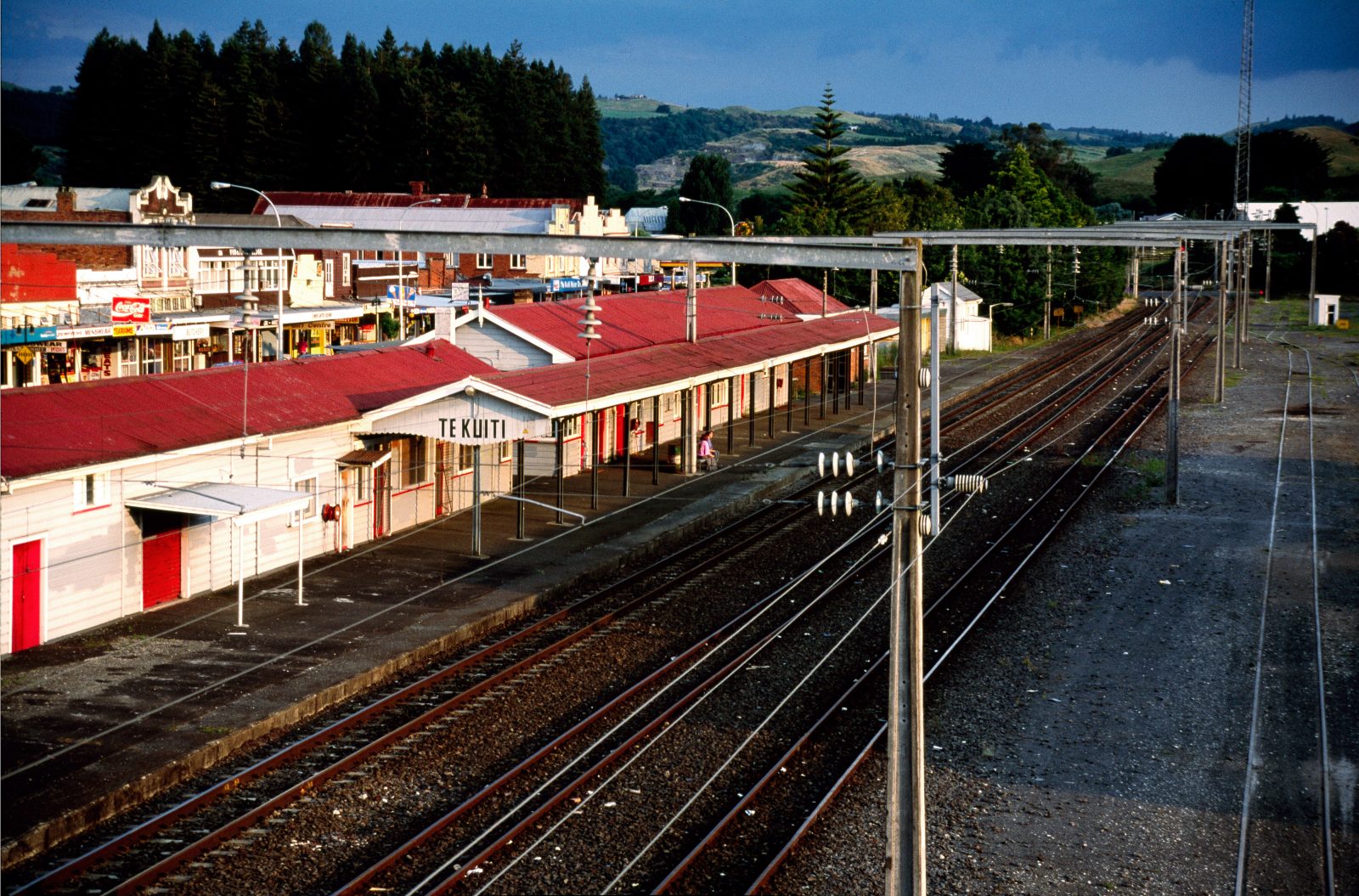
Stations linked to water stops and refreshment rooms, such as Hunterville, have also faded from the timetable. Te Awamutu lies empty, Feilding has been turned into an art gallery, and a new private owner now barbecues evening meals on the platform of National Park. Even Taumarunui, effectively, is closed for business.
The old signal boxes, too, have disappeared. One of the biggest, formerly at Hamilton’s Frankton Junction, lingers on in nearby Minogue Park, encircled by a miniature railway.
“Remuera is something we are proud of,” says Rail Heritage Trust chair Euan McQueen of the tiled and embellished station that was on the original Main Trunk out of Auckland. “It is a bit of a time warp.”
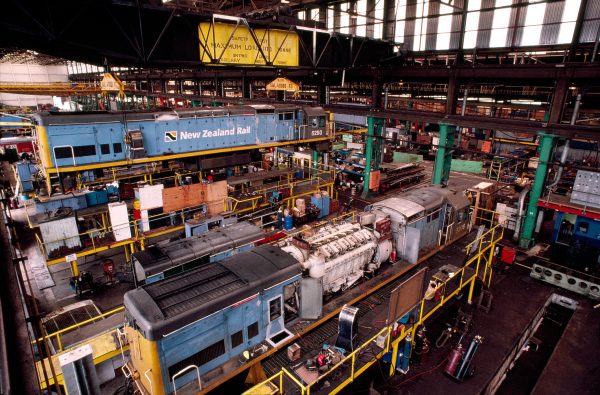
McQueen, who retired in 1988 as New Zealand Rail’s assistant general manager, saw the organisation shedding old skins as it adapted to new needs. One of the most controversial decisions was the electrification of the Main Trunk between Palmerston North and Hamilton. Arguing the need for energy self-sufficiency and for stronger muscle to drag freight on to the plateau, New Zealand Rail pushed ahead with electrification in the mid-1980s. However, an unforeseen slump in the price of oil soon took the lustre off the economics of the project, raising doubts about what had been achieved.
McQueen is sanguine. “Whether it will be justified, only time will tell,” he says. “But the Main Trunk runs through difficult rail country, and somehow it needed modernising.”
One benefit of hooking up to the national grid was the impetus it gave to upgrading signal equipment, among other things by laying fibre optic cable to protect it from electrical interference.
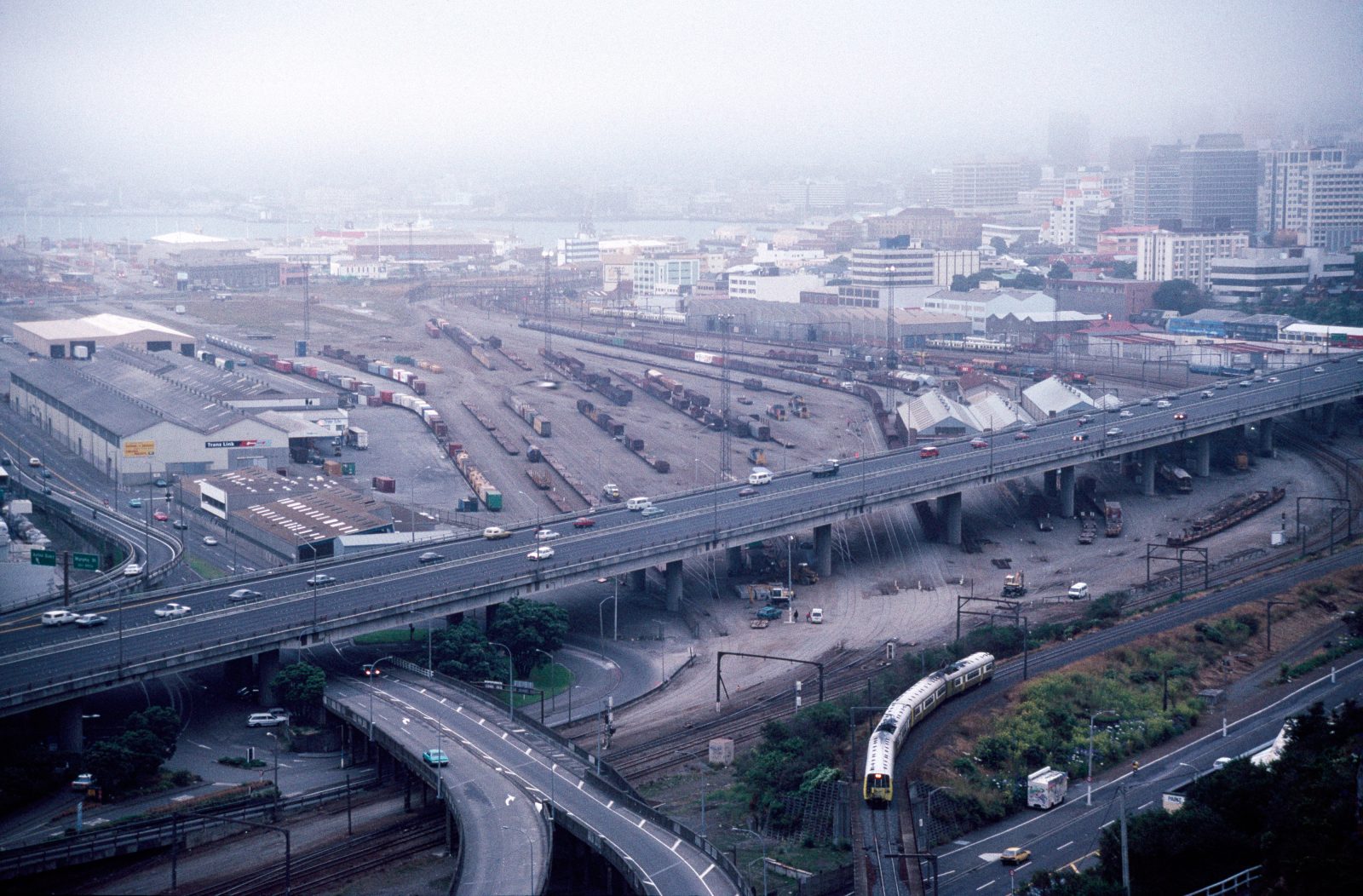
Joining Charlie Nixon in a hot Palmerston North train control room a few hundred metres from one of the country’s busiest freightyards, I get a feel for how things are changing. He sits at a U-shaped console, coloured lights winking out from a diagram of track stretching from Otaki towards Woodville and, in the other direction, up to Marton and Wanganui. Parts of the console date from well before he joined up 20 years ago. The computer screen at his side is recent.

I ask how many trains go through in a shift, and he is showing me jagged lines on a graph that look more like cardiac arrests, when the phone jangles.
“Train control, Charlie . . How many cattle?” Charlie grimaces. “I’ve got a train coming through Otaki at three forty. Where’d you say you are? No, a street name’s no good. I’ve only got towns. Between Linton and Tokomaru? If it goes wrong, you’ll have to let me know . . . . All right. Away you go.”
Eighty head of cattle crossing the line, he tells me. It happens often.
Charlie started out at a signal box at Levin—all levers and wires. Electrification changed all that, and by August 1997 all Main Trunk trains will be controlled directly from Wellington. Then cattle will have to look to the Capital before crossing the line. South Island automation is to follow.
Bucking that tide of technology, I later catch a steam excursion, a weekender to Taihape. Back to the roots of the Main Trunk. My hosts are an affable crew of enthusiasts the Mainline Steam Trust and late one Friday evening, with a voluble clatter and hiss of vapour, we leave the Trust’s Parnell depot to stretch the legs of J1211—”Gloria.”
In one of the forgotten hours of night, at one of the Trunk’s rollcall of stations, we stop to take on water or people, and I wander forward to the business end of the train. Under the station’s stark electric light Gloria comes alive. Water drips from intricate ironwork, air escapes from a hundred apertures, there is a contented click of valves, a deep red-bellied glow from the furnace that licks stones between the rails into cherries. And everywhere enveloping sweet breath of steam.
All next day we push on through the King Country, Gloria inexhaustibly “shovelling white steam over her shoulder,” as W. H. Auden would have it. Sending drifts of cloud amongst the raupo and toetoe. Early Saturday we are joined by another loco which has come up overnight from Wellington. Its ancient wooden carriages, built the year of the first through expresses, have pressed zinc ceiling panels and gas light fittings. Combined, the two engines have around 350 of us in thrall.

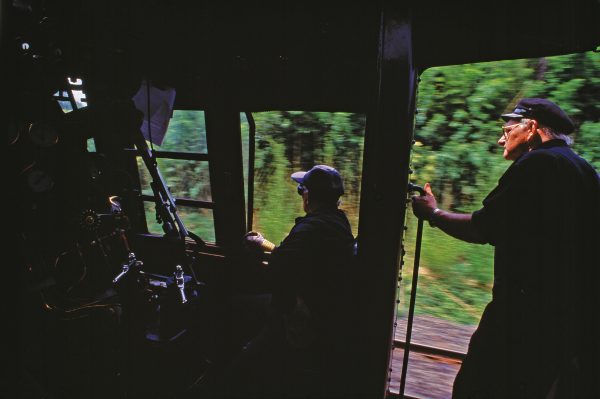
Out of Taumarunui I climb to Gloria’s footplate, sharing the cab with driver Dave Simpson and fireman Keith Jones. On the flame plate, fashioned to stop eyebrow singe from an open firebox, sits a teapot. Extravagantly weighty brass dials and levers jewel the cab.”If you have a good fireman the job’s sweet,” shouts Dave, easing off the brakes. Dave’s grandfather was a rail employee. So was his father a King Country man who worked the Trunk as a driver most of his life. Rail got in a family’s blood, back then.
He tells me how he would wrap steak, potatoes and onions in tinfoil and sit them near one of the cab’s hot spots. “Two to three hours and they would be cooked.” He smiles at the recollection. “Beautiful.”
We are swallowed by the first tunnel of the Raurimu Spiral, and flecks of soot swirl in the confined darkness. It gets mighty hot fast. We press cloths to our faces, straining for breath as 19 chains of rock I build my own mental picture of how long a chain is creep past. Then, at last, cool oxygen and the bleached glare of sunlight.
Keith is spared the need to shovel coal, J1211 having long been converted to an oilburner, but when heading underground Gloria’s footplate is not the place to be. For safety reasons, tunnel length was restricted in the age of steam, but even short ones sometimes left crew dazed. One runaway train, which ran a set of points and smashed the Samson block at the end of the line, was found to have an unconscious crew in the cab.
Steam did, however, have redeeming qualities. For one thing, the bogie of a steam loco would crush snow before the driving wheels reached it, enabling them to get a good grip on the rails. Diesels are compromised by having their driving wheels up front. And if a diesel gets sick, it dies. With steam, if you break a rod, for example, you can disengage it and keep on going.
This track wisdom comes from Eric Burns, 78, who began his working life as an engineer in 1938 predating Gloria’s debut by a year. Engines like the 108‑ tonne J would get through a tonne of coal an hour, he says. Js could haul 300-tonne expresses at 60 or more miles an hour, and were capable of reaching 90, but it was thirsty work. An express out of Auckland chewed through almost two tonnes of coal and was dry by the time it reached Hamilton.
Thanks to simple physics, Gloria stayed in work long after diesels had become commonplace in New Zealand, and even after late twentieth century technology had carried people to the moon. Survival hinged on creature comfort: steam from her boiler could be used to heat carriages in winter.Though it was a long time coming, the end could not be put off indefinitely. In 1971, steam heating vans arrived, and J1211 left the rails. Not to he cut up, however, thanks to rescue work by Ian Welch and others.

I spend much of the next day m the company of Ian, who has what is very likely the largest private collection of steamers in the Southern Hemisphere, if not the world. Seventeen in all.
His attachment to steam had a chance beginning. Just weeks after he had enjoyed a steam excursion through Arthur’s Pass in 1968, he learned that the depot foreman had taken a gas torch to the spokes of the engine to immobilise it. It was the rail equivalent of harpooning a whale. Some time later, his wife’s girlfriend’s father yes, it’s one of those stories whose job happened to involve deciding the fate of engines, asked him over the dinner table if he had any use for one.
“I thought about it for a few days, and ended up owning a J,” he says.Ian went on to found Steam Incorporated in Wellington, then the Auckland-based Mainline Steam Trust. Both organisations run excursions.
Still jetlagged from a visit to Britain, he is upbeat about the 15 carriages he bought there. Some, he says, offer a standard of luxury rare in New Zealand.
Late Sunday night, as we re-enter Auckland’s urban sprawl, running for home alongside the southern motorway, I stand on the van’s lurching platform with him. “Best seat in the house,” he shouts above the unbelievable din of steel on steel and the blast of chill air. It is a rollercoaster of a ride. Eyes streaming, hair wild and gritty with soot, we grin forward. With every twist of the track I glimpse Gloria’s billowing smoke, her red-bellied glow. Earthbound and ironlimbed. Indefatigable.
Joyful to again be riding this familiar steel, I pitch and shudder at the rail.
Subscribe to our free newsletter for news and prizes
3
$1 trial for two weeks, thereafter $8.50 every two months, cancel any time
Signed in as . Sign out