Decades ago, red admiral butterflies all but abandoned Auckland city. Now, united by two retirees and a tolerance for stinging nettles, dozens of volunteers are doing everything they can to bring the butterflies back. (more…)
More by Greg Bruce



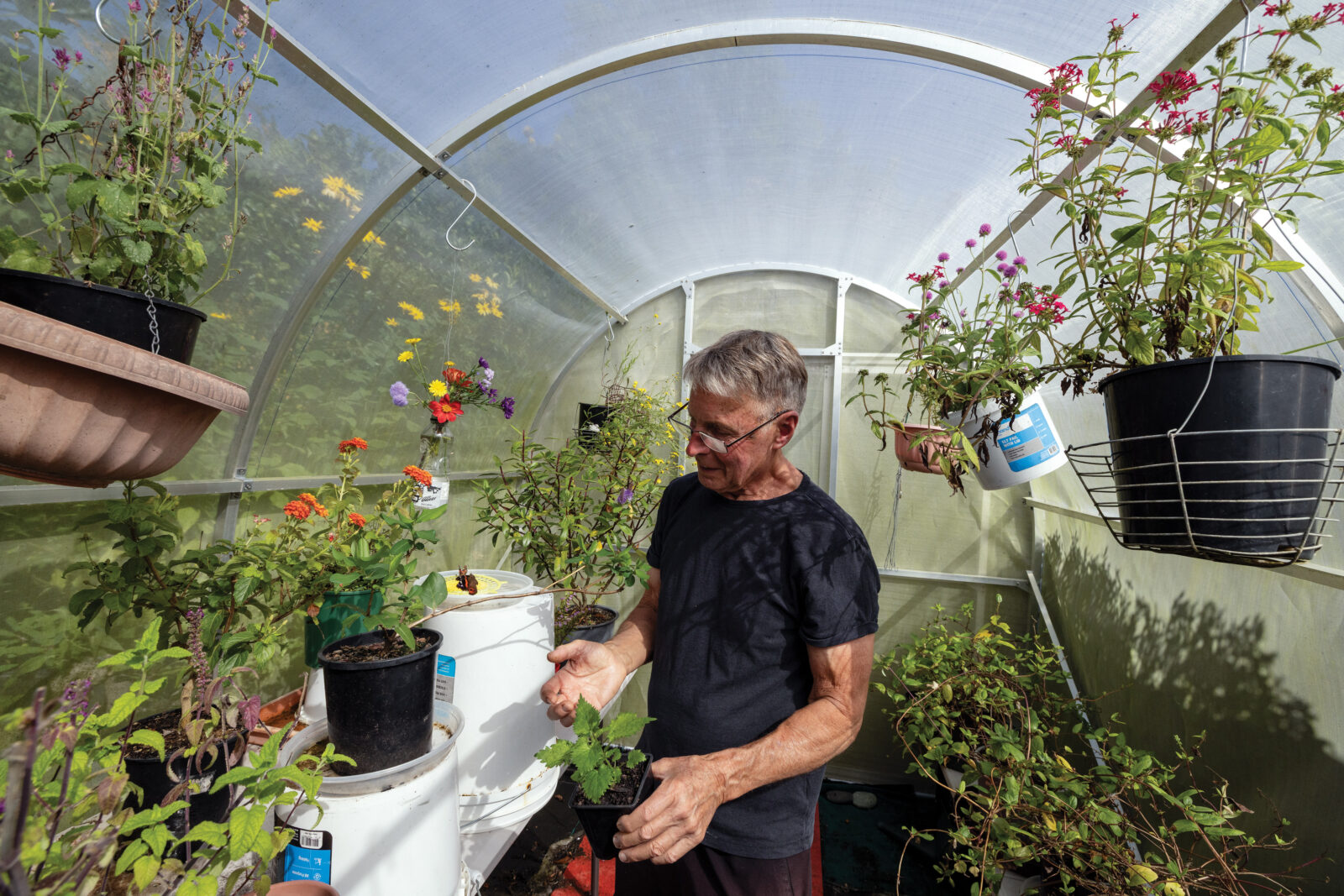
Down a long right-of-way in West Auckland, behind the rear flat in a block of two, is where, amidst a torrent of foliage, I find retired high school biology teacher Neville Wright pouring an e2 energy drink for some red admiral butterflies.
Yesterday, Wright purchased some Powerade to see if the butterflies liked it as much as they did the e2, but he hasn’t yet decided whether he’ll try it, because as any good scientist will tell you, don’t change a winning formula. He says he could make his own butterfly food, but he worries about getting the concentrations wrong and accidentally killing them.
“At least this says it’s isotonic,” he says, brandishing the bottle of e2. “It’s got niacin… sodium… what’s the other thing it said it’s got in it? Ummm…” He looks closely at the label. Dietary fibre and vitamin B6. “There you are!” he says. “It’s got all that good stuff!”
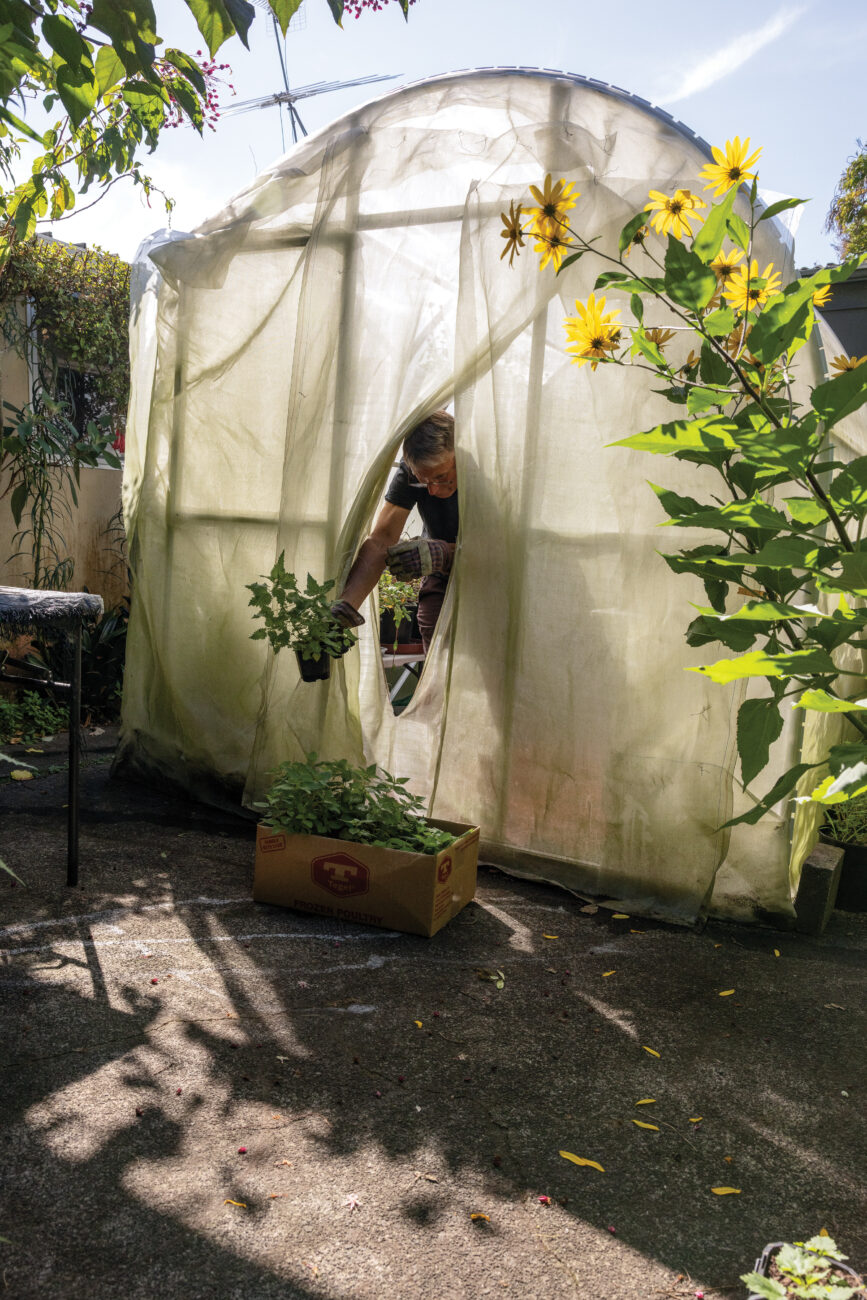
We are standing in Wright’s small butterfly house, which is wrapped in two layers of mesh to keep out the predators, mostly wasps, which want very much to eat butterflies, especially as eggs and tiny caterpillars.
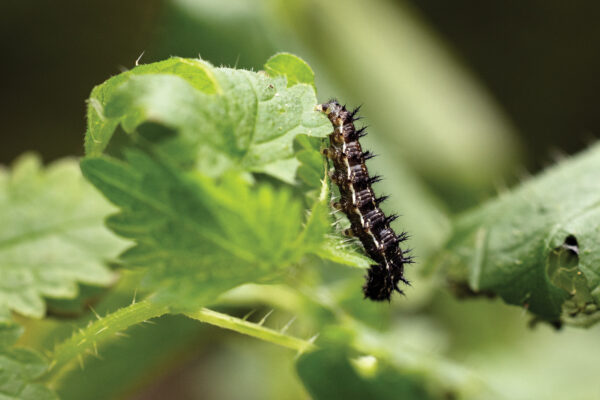
A red admiral flutters excitedly above Wright’s head for a few seconds before settling down onto a nettle leaf next to him. “Look at her!”, he says excitedly. “She’s about to lay an egg!”
The butterfly smells the leaf and then feels it, to make sure it’s the right plant, and once suitably assured, pushes her wings right back and her body down and, Wright says, the deed is done. He holds the plant aloft. It’s like the famous scene from The Lion King but vastly less cinematic. Wright points to the eggs, which are much less prominent than my dandruff, so I have to take it on faith that he is right when he counts them off, getting to 10, which he says is about optimum for sending to a volunteer, one of the network around Auckland standing ready to care for and protect the butterflies as they grow.
He points at another leaf adorned with what appear to be mould spores, but are in fact tiny caterpillars. Then he shows me a leaf that is curled in on itself in such a way that it resembles a tent. This has been made by a caterpillar using silk thread to pull the leaf tight around itself, making its meal serve, too, as protection from the predators Wright has already spent so much time and money guarding it from.
To be fair, the red admiral needs a lot of protection. Several different wasp species like to eat the young of this butterfly in a range of horrific ways. The method employed by the parasitic wasp Pteromalus puparum, which is only about the size of an ant, is arguably the most horrific. It was starkly outlined in a 2019 article by Aja Pendergrast and Ben Goodwin of Auckland Zoo:
“The female wasp (about 3mm in length) lands on a caterpillar as it’s pupating. Using her ovipositor she injects dozens of eggs into the pupae, which soon hatch into grub-like larvae and then devour the caterpillar from the inside.”
Others, including the common, German and paper wasp, will “meticulously search the butterfly’s host plants, finding the caterpillars and dragging them back to the nest where they are chopped into pieces and fed to their larvae”.
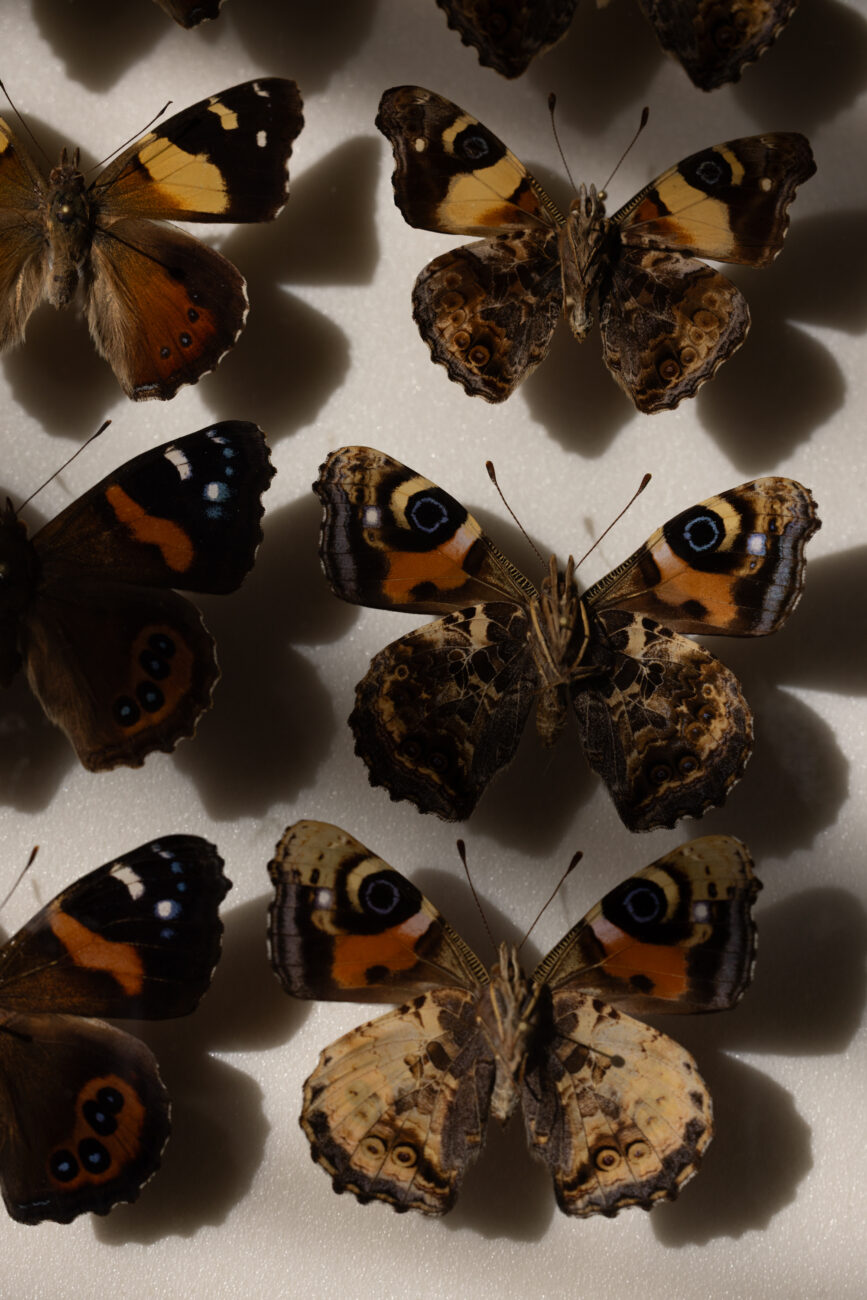
Red admirals exist in other parts of the world but these ones—called kahukura, which means red cloak, and also called Vanessa gonerilla—are endemic to Aotearoa. The adult butterflies help pollinate some of our iconic plants, such as hebe and rātā, while the grubs provide food for native birds such as tūī and tauhou, silvereye. Red admirals used to be everywhere. One hundred years ago, naturalist James Drummond wrote for the Hawke’s Bay Tribune: “They may be seen sometimes even in city streets, amongst crowded traffic. They are the most familiar butterflies in the Dominion.” The red admiral is much rarer now, but still widely beloved. In the Entomological Society of New Zealand’s 2024 bug of the year competition, it scored a runaway victory with 2275 votes. For context, the second-placed Mt Arthur giant wētā got 1719.
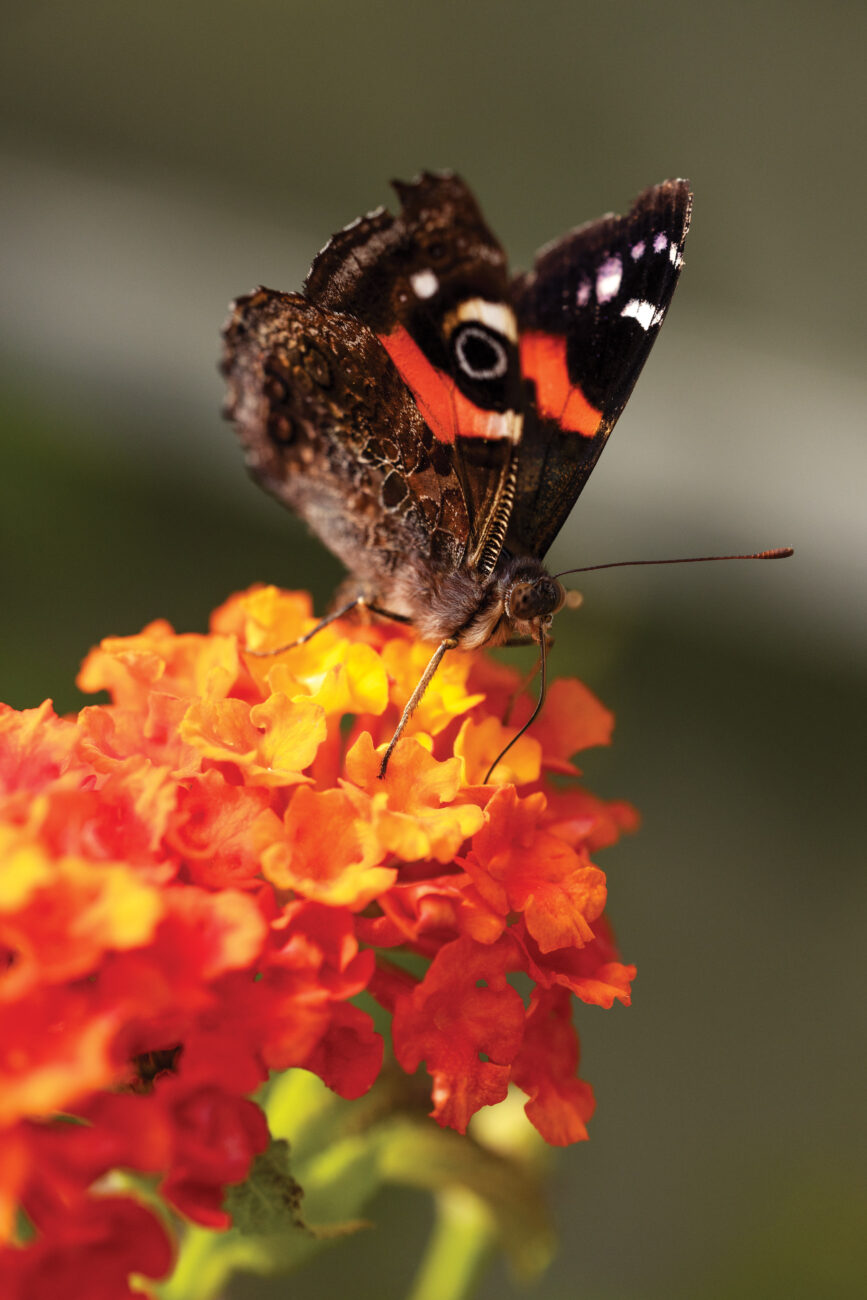
The forewings are where the action is, aesthetically speaking. The part of the wing closest to the body looks a bit like a dry leaf, then, as your eye moves outwards, there’s a sudden swipe of red and then everything goes psychedelic.
After emerging from the chrysalis, male red admirals spend a few days developing their claspers, which they need to hold onto the females while mating. Females are highly selective. They might mate straight away if they like a male but can wait up to a week to find the right one.
They’re active in the morning, like a snooze somewhere shaded in the middle of the day, then get active again in the middle of the afternoon. An hour or two before sunset, they begin flying around excitedly in their act of courtship and that’s when the mating happens. They need room for this, Wright says, which is what his high-roofed butterfly house offers them. Unlike moth dates, where the female chucks out a pheromone and waits, the red admirals prefer some movement, some flash and dash.
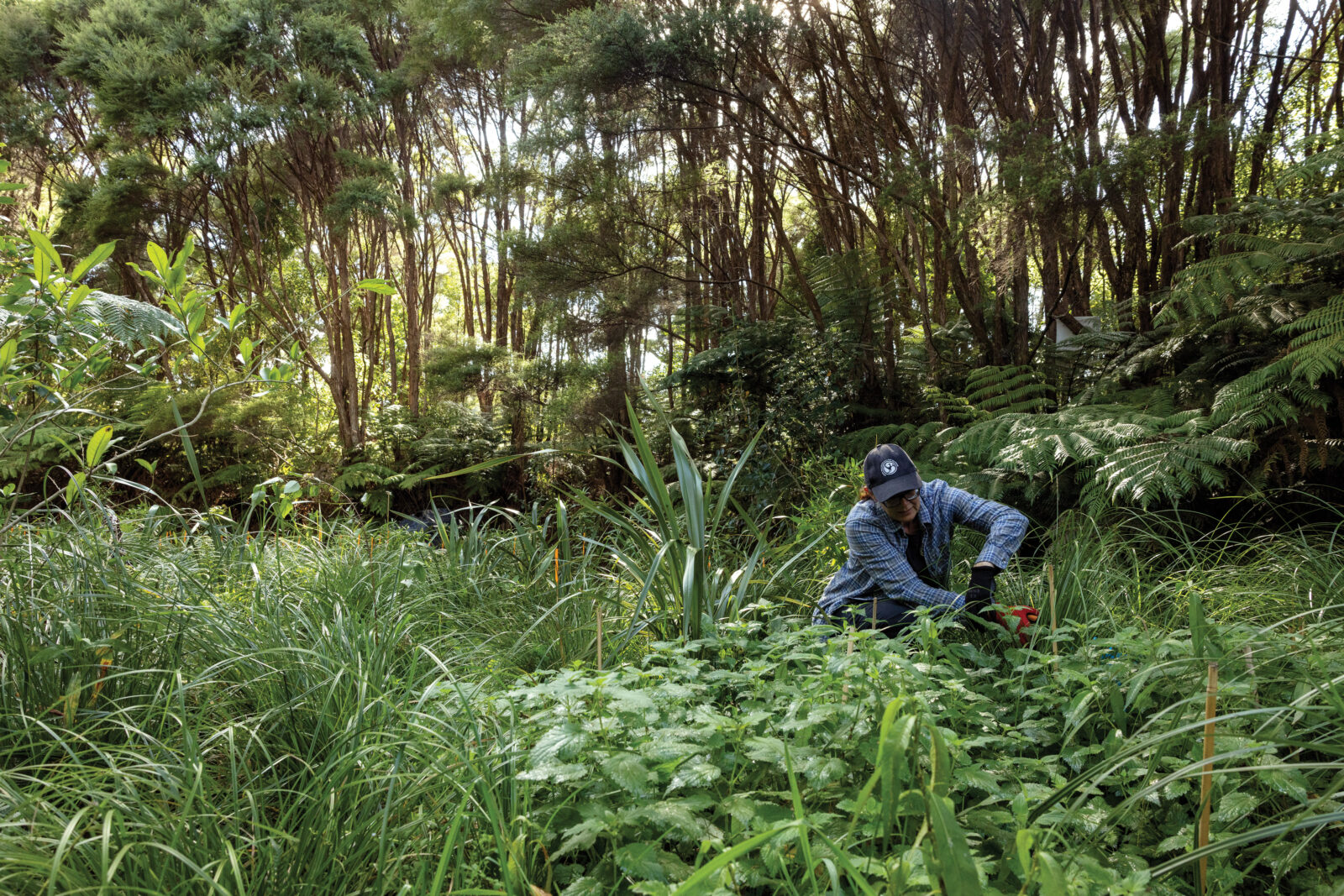
The red admiral’s disappearance from Auckland is somewhat of a mystery. (Although data is sparse, anecdotal evidence suggests they’re still relatively abundant elsewhere in the country.) Some believe the early-2000s aerial spraying to eradicate the painted apple moth was largely responsible, although the wasps have played their part—and so has human distaste for stinging nettles. The red admiral caterpillar’s favourite plant is the stinging nettle Urtica ferox, or ongaonga, although it will also feed on other nettles both stinging and non. Nettles are scarce in the city now. As one person spoken to for this story put it: “People generally don’t want things that will hurt them in their gardens.” Seeds are hard to come by. Wright is fighting to bring nettles back, but he knows it’s a battle that won’t be easily won: “How many people do you know that would allow a nettle to grow in their backyard?”
It’s hard to imagine a better steward of the red admiral than Wright. He is a man of habit. Every morning, he goes to the gym, the results of which you can see in his incredible biceps, then returns to his garden and goes to work for his tiny charges: watering and caring for plants, checking for wasps, filling water trays that function as moats to protect against ants, refilling and replacing the e2, moving growing caterpillars into caterpillar castles (long rectangular mesh cages, in which they are safe from parasites) and ensuring conditions are right for mating.
It’s not a job for the time-poor. It’s a job for someone methodical, reliable and knowledgeable, someone like a career biology teacher with impressive arm development. “Thank goodness I’m retired and passionate about it,” Wright says.
In the early afternoon, he loads up his car with nettles containing eggs and caterpillars in various stages of their lifecycle and drives 10 minutes down the road to a house in a quiet cul-de-sac in Blockhouse Bay, and that’s where things really start to take off.
*
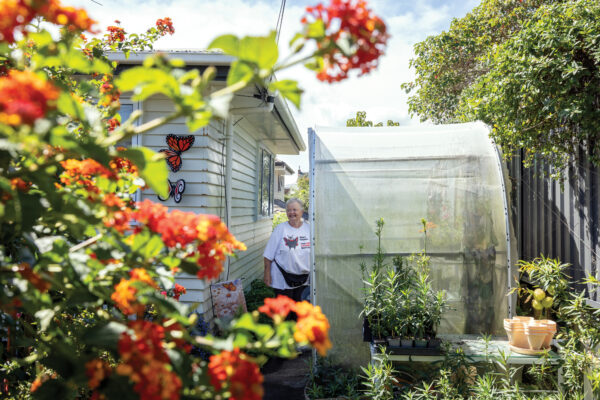
Jacqui Knight is the leader and driving force of the Moths and Butterflies of New Zealand Trust, which she founded in 2005. On arrival at her house, you are greeted by a sign on her white picket fence reading: The Moths and Butterflies of New Zealand Trust acknowledges the outstanding work of Jacqui Knight in creating habitat for New Zealand’s butterflies and moths.
A few steps up her garden path is a colourful banner planted in the ground, adorned with pictures of flowers, monarch butterflies and the word Welcome, and a few steps further on another banner reading hello. The front of her house is decorated with two much-larger-than-life wooden butterfly sculptures.
Knight is an extremely organised and methodical woman who knows her way around a spreadsheet but also maintains a garden that is a riot of colour and mayhem—zinnias, cosmos, Mexican marigolds—designed almost entirely for the benefit and betterment of butterflies.
She stumbled into the world of butterflies when her then-primary-school-age son Christopher wrote to the editor of a newspaper to ask where monarch butterflies go in the winter. The letter got him interviews on radio and in newspapers, and he was encouraged to start a butterfly club, which he did. It was an instant hit, and letters poured in from around the country. Within a few weeks, Chris had gone from a curious kid with a question to arguably the country’s most prominent child butterfly advocate.
A few weeks after that, his interest shifted to jet planes and he no longer wanted anything to do with the butterfly club, leaving his mum to pick up the slack, which she did with such righteous passion that 20 years on, she is the country’s go-to source on all things butterfly and moth-related, and the beating heart of the effort to restore to prominence the red admiral.
She is an equal-opportunity lepidopterist engaged in an ongoing battle against monarchism. She is often invited by community groups to speak about monarchs, to which she says she’ll reply, “Yes, I’d love to come and speak about moths and butterflies”, and then deliver the talk she wants to deliver, and by the time she leaves, she says, people are asking how to grow stinging nettles of their own.
Watching Wright coming up the garden path with his armfuls of egg-bearing nettles, she calls out a cheery “Hello, Neville!”
“A lot of nice plants today, Jacqui,” Wright says.
“Yeah, we’re getting there,” she replies.
“They’re looking nice and fresh, well fertilised.”
As she takes the plants from Wright and places them in her butterfly house, I ask if she usually checks them for caterpillars. “No,” she says, “I usually can’t see them.” In other words, she takes it on faith.
“Just as well we haven’t got real jobs, isn’t it?” Knight says.
“I would never have been able to do it,” Wright says.
“Thank goodness the government’s paying us to do nothing.”
“Don’t say that,” Wright says, “because it’s not true.”
“Aren’t we retired?”
“Yes, but we’re not doing nothing.”
“No, we’re not doing nothing. You’re right. That’s very true.”
As they place the plants, Wright announces he’s seen a wasp. The mood abruptly shifts.
The two search around, without success. They open the door. Wright’s head emerges: “Did you see anything come out?” he asks. We have not.
He goes back in. After a moment or two, he says he’s just seen it fly out, but then his voice drops: “Oh no,” he says, “that’s a butterfly.”
He goes back in. Everyone is quiet.
“There it is!” Knight says.
Wright spots it.
“It’s not a wasp at all!” he says. The relief in his voice is obvious. “It’s a little carder bee. Cute little thing. Completely harmless.”
“Off you go,” Knight says to the bee. And it does.
Although they say that usually there is no jeopardy inherent in the transport of eggs, Knight recalls once tripping over and getting a black eye while taking some plants to a school, then taking a week off work to recover, during which time she tripped over again, falling into a nettle patch and getting a second black eye.
That nettles are the butterfly’s favoured habitat makes no sense to the outsider, because butterflies are notoriously fragile and nettles are very scratchy, although they don’t seem to faze hardened red-admiral advocates.
“We’re so used to nettles, aren’t we, Jacqui? We’re nettled to death. Stung all the time.”
The editor of this magazine, who grew up on an orchard surrounded by nettles, suggested I touch one in order to pass on what it was like. Believing her to be a fundamentally decent person who would never intentionally cause harm to another, I grabbed the first nettle I saw and was immediately filled with both regret and resentment. The sting was instant and vivid and the only reason I didn’t scream was that I didn’t want to appear a wuss. The worst of the pain was gone in a few minutes. The tingling and discomfort lasted for hours.
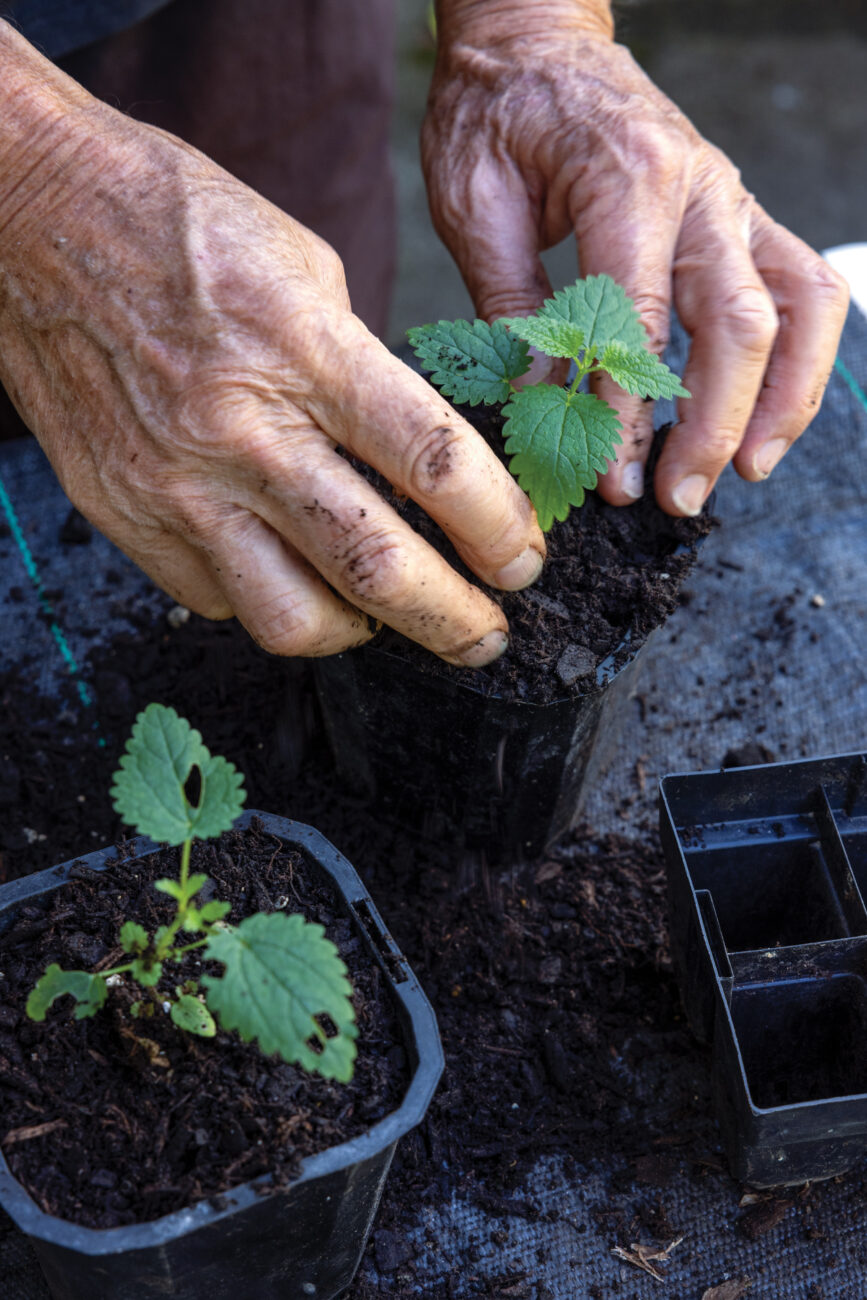
A red admiral caterpillar will eat “quite a few” leaves before it pupates, Knight says. They’re not as voracious as monarchs—but they’re much harder to cater for. Swan plants, the monarchs’ favourite, get their own stand at the garden centre. But to feed red admirals you either have to forage wild nettles or grow your own, typically from seed. There’s no easy top-up if you get caught short. Knight won’t let anyone raise red admirals if they don’t have enough nettles. Someone emailed her the other day asking for caterpillars. She made him send photos of his nettles and told him he couldn’t have any caterpillars until he grew more.
*
Knight maintains a Google Doc containing the names and locations of 32 people from all parts of the city and beyond, spanning Kaiaua, 82 kilometres south of Auckland, to Silverdale, 32 kilometres north. Whenever she gets a delivery from Wright, she sends a message to the group. Over the following few days, the faithful will turn up to her house, take a plant or two and head home to help create beautiful butterflies.
One of these people is Craig Suckling, a 41-year-old flight attendant. When I visit him at his home in Northcote Point, he has just returned from a flight to Rarotonga and is relaxing with his partner, three cats, a dog, a fish, a rabbit and a kaleidoscope of butterflies at various stages.
His house looks out over a beautiful park and across State Highway 1 to Oneoneroa/Shoal Bay. A fine place to launch.
Suckling’s introduction to the red-admiral restoration project took place a few months back, in December 2025. He found some monarch butterfly eggs on a swan plant in his garden, which rekindled for him childhood memories of raising monarchs with his mother. He decided to put them in a mesh-covered greenhouse to raise them and, while researching how to do so, he discovered a Facebook group dedicated to monarchs. It had been infiltrated by red-admiral loyalists.
Entranced, Suckling got in touch with Jacqui Knight and, in January, he planted some nettles and received his first red admiral eggs, which quickly turned into very hungry caterpillars. He says: “I could only see maybe three or four caterpillars when I got the plants, and I thought, ‘Oh, yeah, that’s manageable for starters.’ Then in a week or two’s time, I just started seeing them everywhere. I was like, ‘Oh, shit, I don’t have enough.’”
They stripped the nettles so quickly, he had to make four separate trips back to Knight’s house for nettles: “I’d come back from a work trip and I’d be, like, ‘Shit, I’ve got nothing but stalks and these caterpillars are everywhere and they’re climbing under and escaping the greenhouse.’”
Now, under a roof of leaky corrugated plastic in a small outdoor patio, he is holding a small mesh cage containing five red admirals ready for release. Without fanfare, he opens it, and… nothing happens. He puts his finger in and gently encourages a butterfly to hop on, which it does, and there it sits for some time, searching fruitlessly with its long proboscis for food on his finger. He strokes its body gently, trying to get it to open its wings. Eventually it does, spreading them wide, displaying those brilliant top surfaces. Then it closes them again. Then it opens them again.
He watches, patiently. “Off you go,” he says. And finally it does. Over his fence and to who knows where.
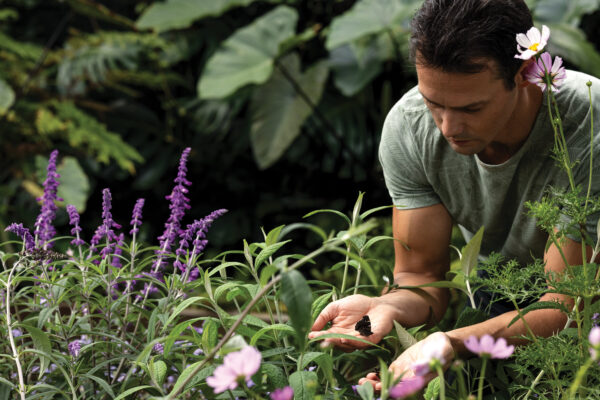
Unlike the monarch, the red admiral is too small to carry a tracking tag, so neither Suckling nor Wright, Knight or anyone else can say with any certainty where this butterfly will go or whether it will survive, or if any of this is doing much good. But they and dozens of others do it anyway. In a world in which everything, it seems, is tracked and measured against goals, measures, targets, KPIs and so forth, there’s something wistful and romantic and reassuringly human about that.
As Suckling watches the butterfly leave his garden, he says a silent goodbye. He is okay not knowing what will happen to it, and not knowing whether he’s making any difference. It is just the way it is. You do what you can. You can do no more.
More by Greg Bruce
Subscribe to our free newsletter for news and prizes
3
$1 trial for two weeks, thereafter $8.50 every two months, cancel any time
Signed in as . Sign out