






Cheese moulds have collaborated genetically to evolve, but now there’s no way back.
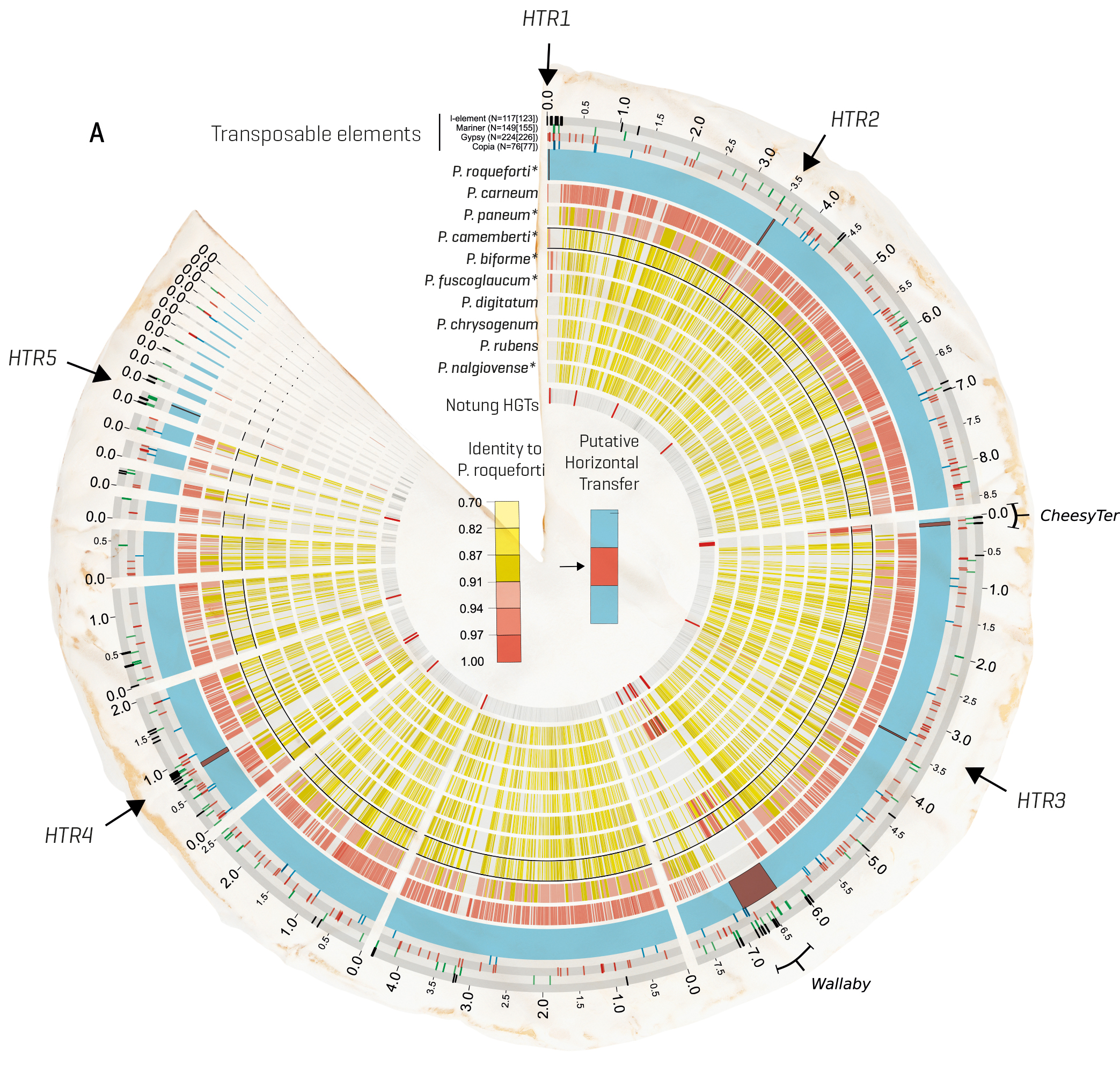
Two distantly related species of the Penicillium cheese mould, P. roqueforti and P. camemberti, are used in production of the majority of blue, camembert and brie cheeses. French scientists compared these species with eight others and found that the dairy-dwelling fungi have evolved to suit cheese in a very short time by passing certain sections of their genome—up to five per cent—directly to other species through horizontal gene transfer.
The transferred genes give the fungi the upper hand, allowing them to out- compete other micro-organisms and make better use of nutrients that appear in the early stages of cheese maturation. However, by evolving to become cheese specialists, the moulds have also traded away their freedom—they now have less ability to thrive without cheese.
This is to be expected, says study author Ricardo Rodriguez de la Vega. “We know that the wild varieties of Penicillium roqueforti are much more diverse than the multiple strains used for cheese production. Such reduction of the genetic diversity is a landmark of domestication, not only in fungi but also in crops and livestock.”
More by Skye Wishart