


Whanganui

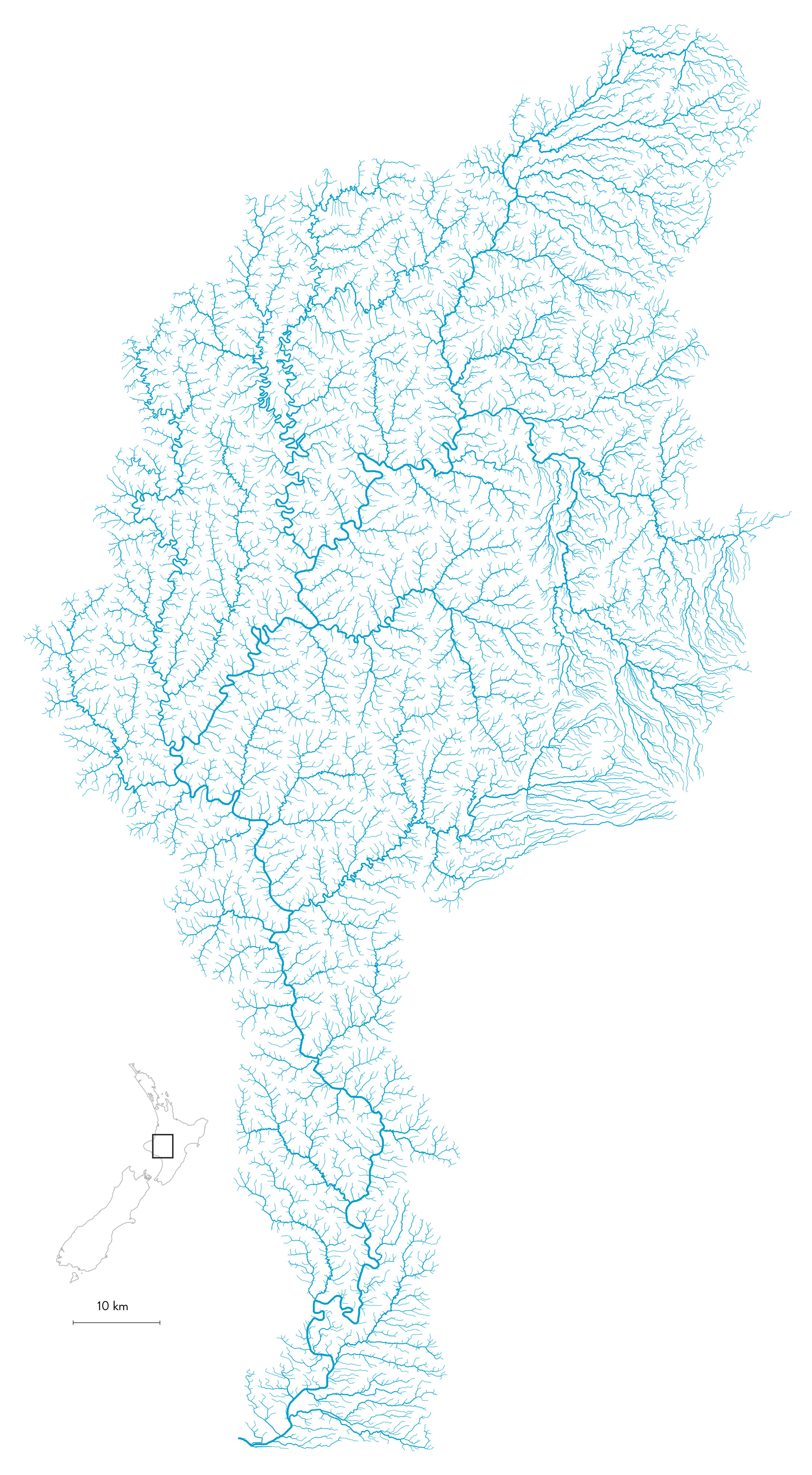
Whanganui is Aotearoa’s third-longest river. It begins on Mount Tongariro and flows 290 kilometres to the Tasman Sea, joined by thousands of small tributaries along the way.

Whanganui iwi have long sought legal recognition of their relationship with the river. They petitioned Parliament in the 1870s for protection of their awa.

From the 1880s, the Crown undertook a series of damaging ‘improvements’ to the river. Works to establish steamship services destroyed eel weirs and fisheries. Mineral extraction and the introduction of foreign fish and plants further damaged the river’s ecologies. The Crown did not consult iwi on the diversion of Whanganui waters into the Tongariro Power Scheme before construction began in 1971.

In March 2017, Te Awa Tupua (Whanganui River Claims Settlement) Act passed into law. The Act covers the main river and “all tributaries, steams and other natural watercourses” that flow into it.

Like Te Urewera Act 2014, the Act recognises the Whanganui River as a legal person. The legislation describes the river as an ancestor of the Whanganui people: Te Awa Tupua is an indivisible and living whole from the mountains to the sea, incorporating the Whanganui River and all of its physical and metaphysical elements.

This map shows the Whanganui catchment’s astonishing complexity.

More by

Whanganui is Aotearoa’s third-longest river. It begins on Mount Tongariro and flows 290 kilometres to the Tasman Sea, joined by thousands of small tributaries along the way.

Whanganui iwi have long sought legal recognition of their relationship with the river. They petitioned Parliament in the 1870s for protection of their awa.

From the 1880s, the Crown undertook a series of damaging ‘improvements’ to the river. Works to establish steamship services destroyed eel weirs and fisheries. Mineral extraction and the introduction of foreign fish and plants further damaged the river’s ecologies. The Crown did not consult iwi on the diversion of Whanganui waters into the Tongariro Power Scheme before construction began in 1971.

In March 2017, Te Awa Tupua (Whanganui River Claims Settlement) Act passed into law. The Act covers the main river and “all tributaries, steams and other natural watercourses” that flow into it.

Like Te Urewera Act 2014, the Act recognises the Whanganui River as a legal person. The legislation describes the river as an ancestor of the Whanganui people: Te Awa Tupua is an indivisible and living whole from the mountains to the sea, incorporating the Whanganui River and all of its physical and metaphysical elements.

This map shows the Whanganui catchment’s astonishing complexity.

More by

Issue 168

Mar - Apr 2021

Vaccines

Pollination

Rangitoto Baches

Tree Hunters

Fallback image

More by

×

Subscribe to our free newsletter for news and prizes

3 FREE ARTICLES LEFT

Subscribe for $1  | 

3 FREE ARTICLES LEFT THIS MONTH


Keep reading for just $1

$1 trial for two weeks, thereafter $8.50 every two months, cancel any time

Signed in as . Sign out