




We’re about to find out what the deadliest avian flu in history means for a nation of birds
Only 300 individual birds in New Zealand have any sort of protection from H5N1, which has devastated wild birds and domestic poultry across the world. The virus has also killed tens of thousands of sea lions and fur seals. What will it do now it’s here?
On Wednesday, the scenario we’ve been dreading, and fully expecting, finally played out: a brown skua picked up on a Petone beach tested positive for H5N1. We passed the press release around a New Zealand Geographic group chat. “And so it begins,” wrote oceans photographer Richard Robinson. That night, he dreamed about the sea lion colony he’s documented on Enderby Island—so many big bodies dead on the sand, in the water, skuas and giant petrels picking at the carcasses and flying the flu to the next island.
He knows it’s a nightmare that has already come to pass elsewhere. Since 2020, this lethal strain of H5N1 avian influenza has swept through North America, Asia and Europe, decimating domestic poultry flocks and wild bird colonies, before making its way into South America in 2022.
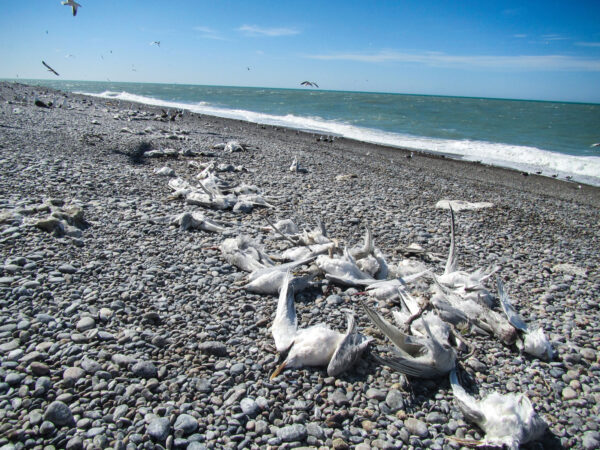
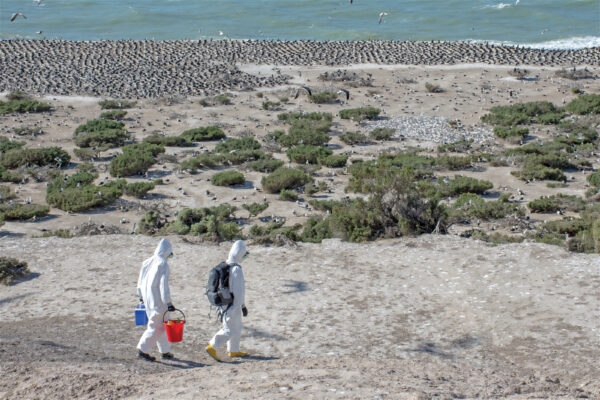
In a feature we published late in 2024 conservationists in the UK told me about stumbling through raucous seabird colonies gone deathly quiet; of the awful work of weeks spent collecting thousands of dead birds and burning them. This disease was “soul destroying”, “horrendous”, they said, destroying three-quarters of the UK’s great skua population and tens of thousands of gannets, terns, and other breeding seabirds. “The way the birds die is terrible,” said Ellie Owen, a seabird officer with the National Trust in Scotland.
“They have these neurological symptoms, so their heads can be all limp and they’re just circling around. It’s otherworldly.”
In South America, the flu jumped into pinnipeds, killing 20,000 sea lions in Peru and Chile and around 17,000 elephant seals in Argentina.
The virus then hurdled the Drake Passage, probably on the wings of migrating seabirds, to arrive on the Antarctic Peninsula, before crossing the southern Indian Ocean to arrive on Heard Island. There, it wiped out at least three-quarters of last summer’s elephant seal pups—around 13,000 animals.
In late June, the disease was discovered in a dead skua on the western Australian mainland and it has now been found at several locations across the continent. With the huge numbers of seabirds migrating through our waters, it was inevitable it would eventually get here. “It was kind of counting down the days,” says University of Otago virologist Jemma Geoghegan.
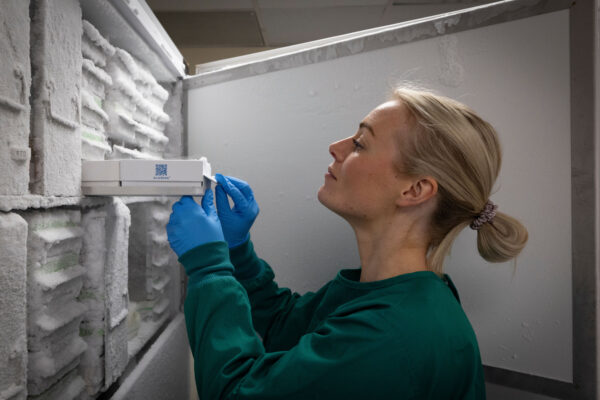
Geoghegan is surprised it took the virus this long to arrive—but that delay has given us a chance to get ready for it, to the extent we can. “I think our preparedness has definitely ramped up in recent times,” she says, “as well as public awareness of reporting sick or dead birds.”
“We’ve had this head start where we can see what’s happening around the world, and we can make assumptions about what will happen in New Zealand. We can only assume that it will have the same sort of devastation here too.”
H5N1, like any virus, continuously evolves as it moves from population to population, enabling it to affect species in different ways. In North America, for example, it’s crossed into dairy cattle, causing widespread illness, but to date it has only been found in one cow in Europe. “We won’t know its broader impact until it starts actually spreading within New Zealand,” says Geoghegan.
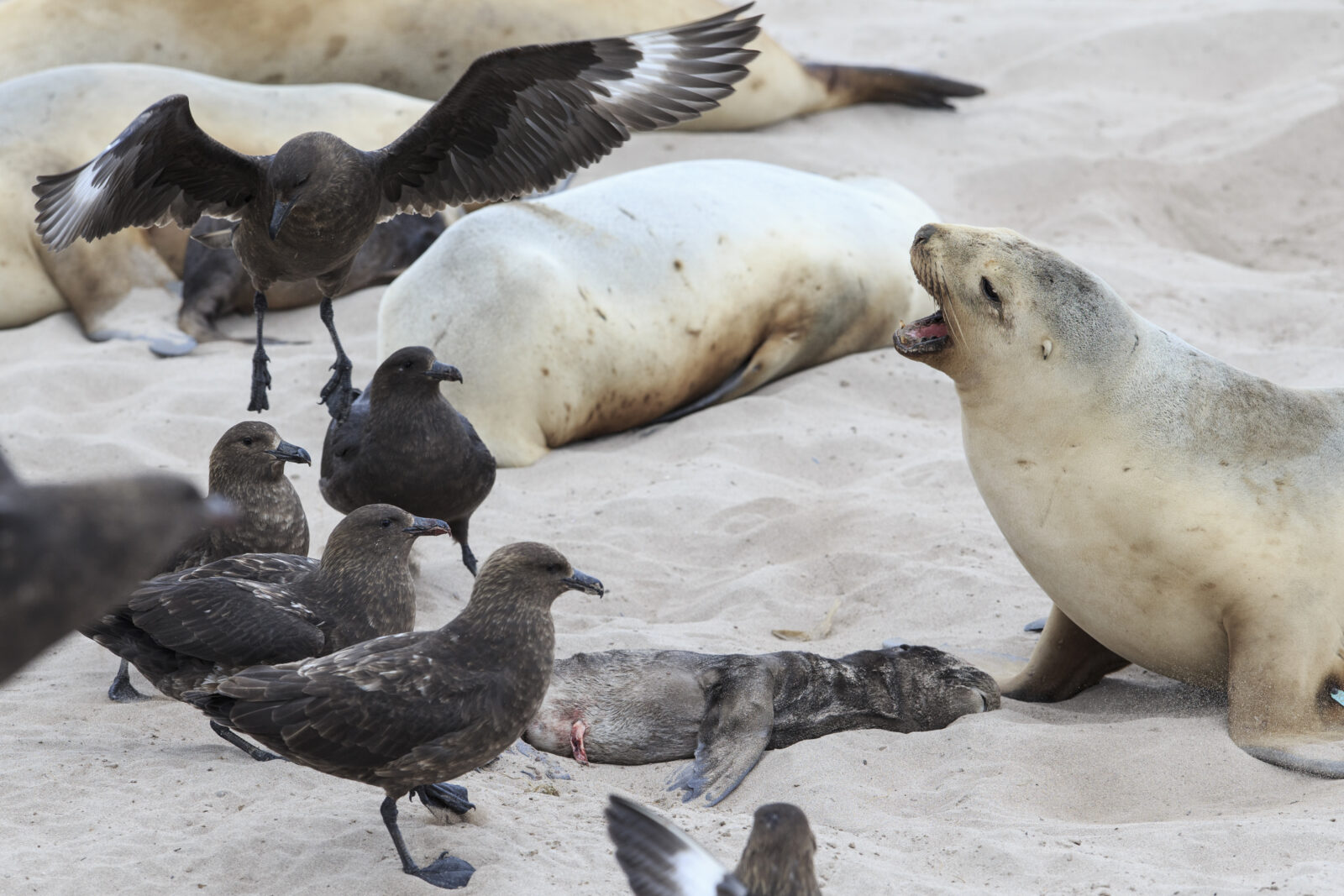
For conservationists, the news comes as a sickening blow. “Petrifying,” says Louise Chilvers, a biologist with Massey University’s Wildbase Hospital. At mainland fur seal colonies like Kaikōura’s Ōhau Point, she says, “you’re potentially going to have hundreds of dying or dead pups.”
Chilvers is particularly worried about our endangered New Zealand sea lions, one of the world’s rarest pinnipeds, and thought to be in decline. Their crowded breeding colonies on the subantarctic Campbell and Auckland Islands are likely to be at high risk.
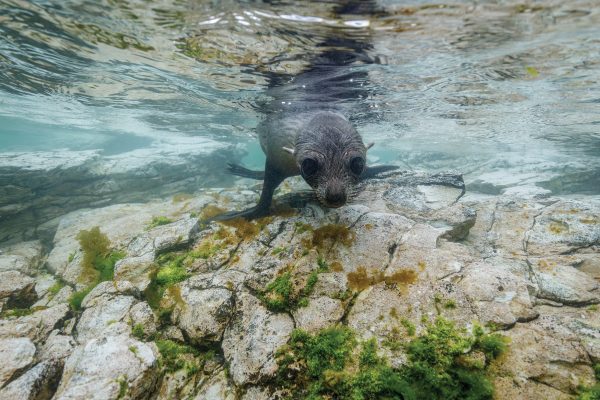
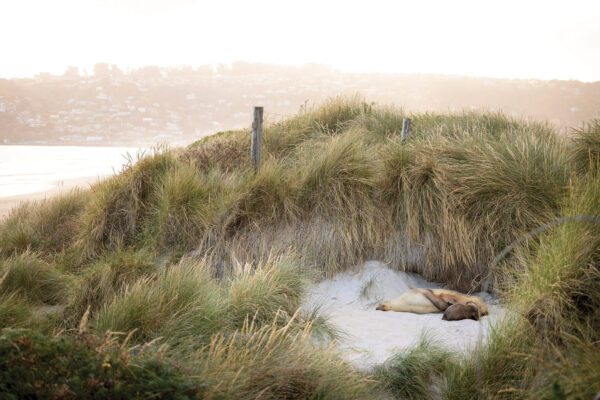
Chilvers hopes that the steadily increasing population of sea lions in Otago and Southland will fare better. Due to their lower numbers, these animals don’t breed in busy colonies but individually, tucked out of sight in bushes, which may reduce the risk of the disease spreading. For Jordana Whyte of the New Zealand Sea Lion Trust, this offers a small, but important, glimmer of hope. “We’ve always talked about the mainland population as an insurance population,” she says.
The Otago sea lions produced 38 pups last year, a record since the species began repopulating the mainland. For more than two decades the volunteer-staffed New Zealand Sea Lion Trust has worked alongside the Department of Conservation to protect the animals from dogs, cars and other threats, and to educate the public about them. After all that effort, the arrival of bird flu, says Whyte, is “very deflating”.
“I was naively hoping we could get away with it for another year.” She will spend the next few months on tenterhooks—it’s not until the sea lions congregate for the breeding season in October that the impact of H5N1 will become clear.
Chilvers says that while research on vaccination of Hawaiian monk seals is underway, the trials are still in their infancy, and in any case, the practicalities of vaccinating hundreds of sea lions here are likely to preclude it. “You could do it, but who’s going to come up with the money for that?” she says.
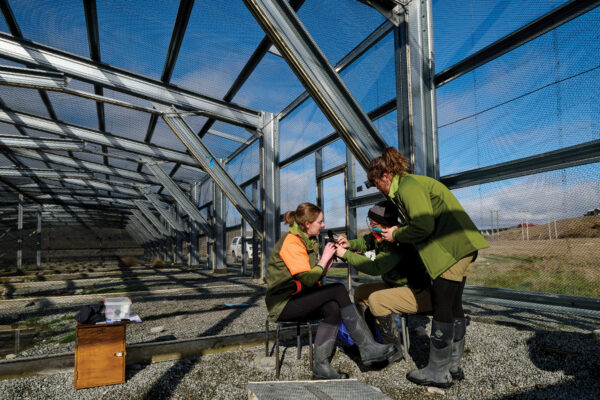
Since 2024, DOC has been trialling vaccinations for some native birds. The vaccine has been found to be safe and effective, and the department has now started vaccinating around 300 kākāpō, takahē, orange-fronted kākāriki, shore plover and black stilts. But that’s 300 individuals, and only five species—each bird must be caught and dosed twice, which means vaccination is only really practical for small, captive populations of our most endangered species.
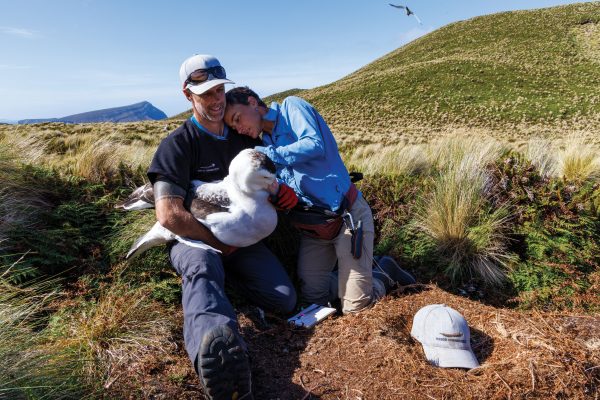
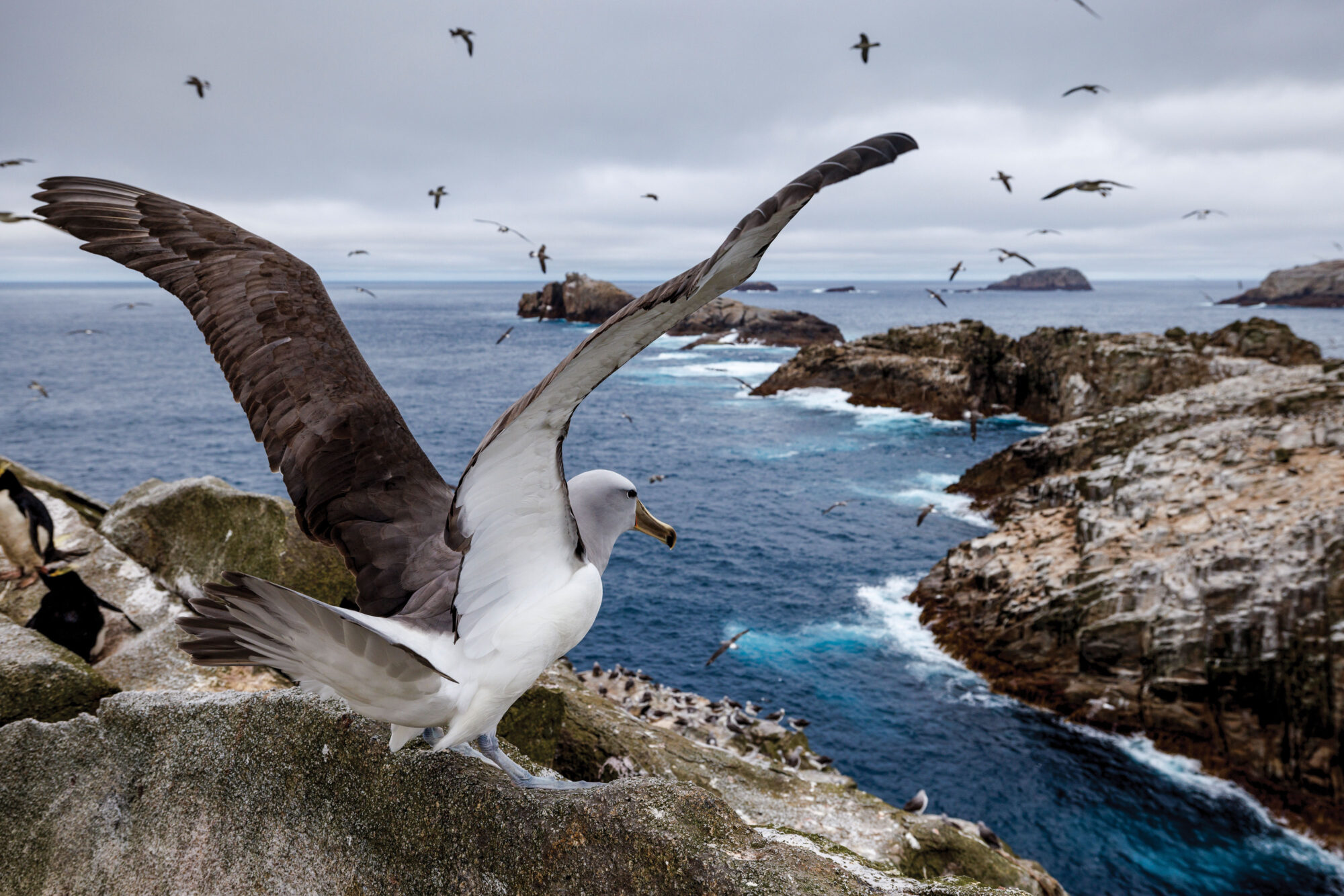
Wild seabirds, which nest largely on remote islands, will be out on their own. Graham Parker of Parker Conservation says he fears most for Gibson’s and Antipodean albatrosses, which breed on the Auckland and Antipodes Islands and have been steadily declining for years. For these birds, he says, the flu “could be a step change”. That’s partly because albatross pairs only rear one chick every two years. It’s very difficult for them to rebuild after a mass-mortality event.
While a healthy seabird colony might be able to cope with a disease outbreak, many of our species are already being hammered by fishing bycatch and a rapidly changing ocean environment.
Bird flu piling on top of that is likely to be devastating, and recovery, says Parker, “could be slow to non-existent”.
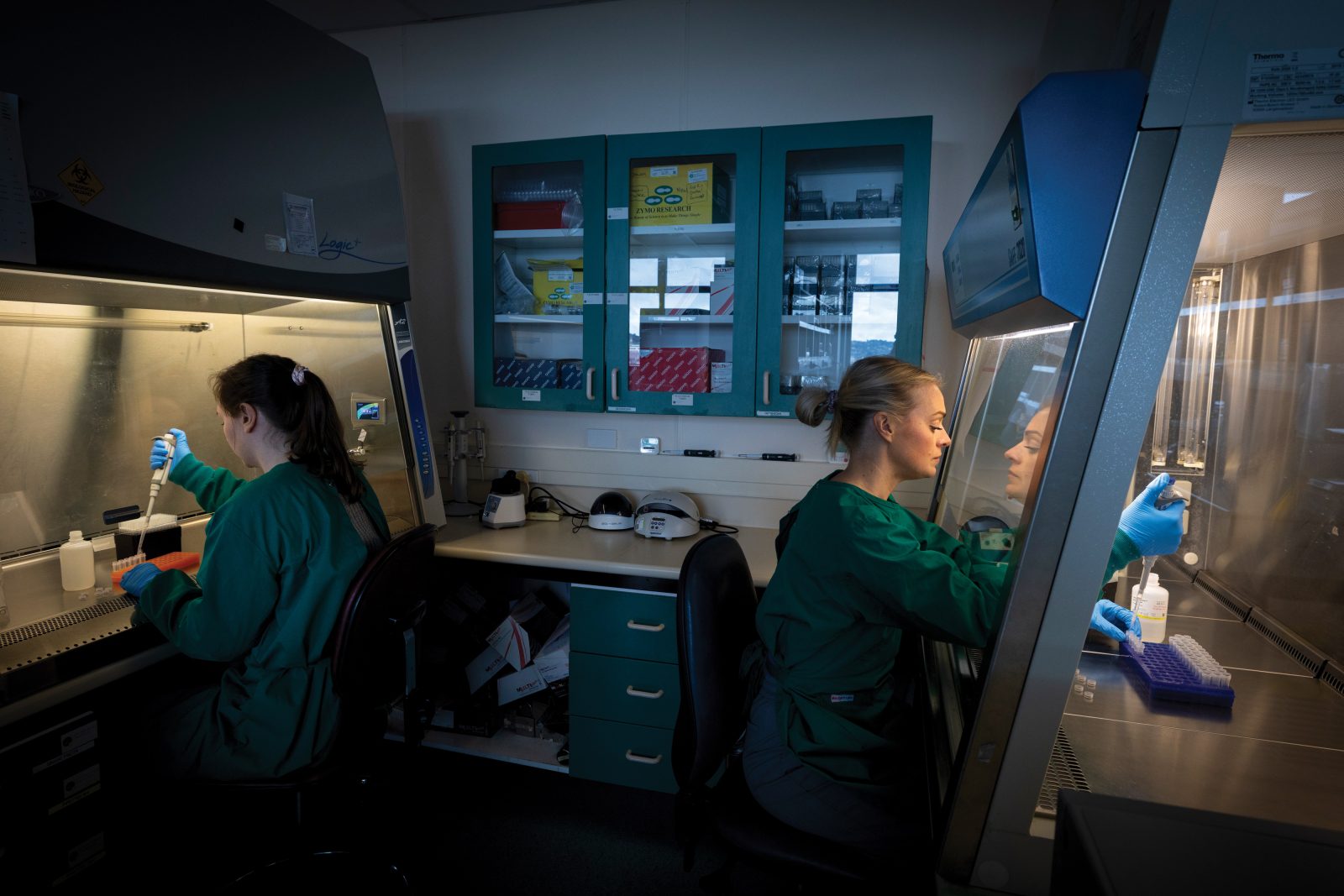
Geoghegan says there’s likely to be little we can do to protect most wild species. She and her colleagues are developing a rapid “point-of-need” test for bird flu, which would allow farmers and conservationists to immediately diagnose an infection, and perhaps take steps to limit its spread. (Authorities overseas have resorted to mass culling in poultry farms: submerging birds in toxic foam, using gas chambers, or shutting down barn ventilation systems and pumping in hot air.)
When an infection does take hold in a colony or a domestic flock, she says, it will also be important to remove the dead. “Wild animals feasting on infected and dead animals are a major reservoir of how wildlife get infected,” she says, “Being proactive in terms of managing that, and trying to lessen that risk, is really important.”