




“It’s really easy to say you don’t have a problem when you don’t look.”
“Forever chemicals” linked to serious health effects in humans are finding their way into our freshwater fish, a new study has found.
PFAS are oil- and water-resistant chemicals used in the manufacture of many consumer products, from non-stick frying pans to raincoats, food packaging to fire-fighting foam.
Held together with powerful carbon-fluorine bonds, PFAS (per- and polyfluoroalkyl substances) persist indefinitely in the environment and leach into waterways, where they find their way into the bodies of fish and other animals. They are frequently detected near landfills and military bases.
Although PFAS contamination has been shown to be a major problem overseas, there has been little research into the issue in New Zealand, says Massey University master’s student Carys Marulli de Barletta. She sampled PFAS levels in trout, perch, carp, bullies, gambusia and shortfin eels from the Lower Rangitīkei river catchment and Kāpiti region, in the lower North Island. “When I started, nobody thought I was going to find anything,” she says.
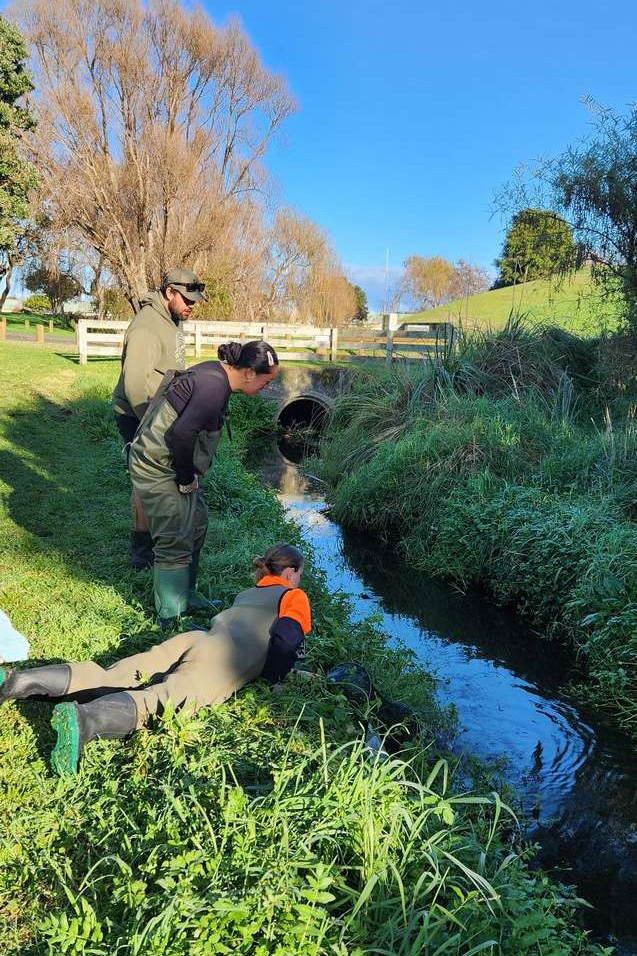
She caught some of the fish herself using an electric fishing machine, while others were provided to her by anglers. Under the guidance of experts from the University of Melbourne’s Laboratory for Emerging Contaminants, Marulli de Barletta analysed the livers of the fish, where pollutants like PFAS tends to concentrate, thinking it was more likely to detect trace amounts. As it turned out, she had no trouble finding PFAS at all.
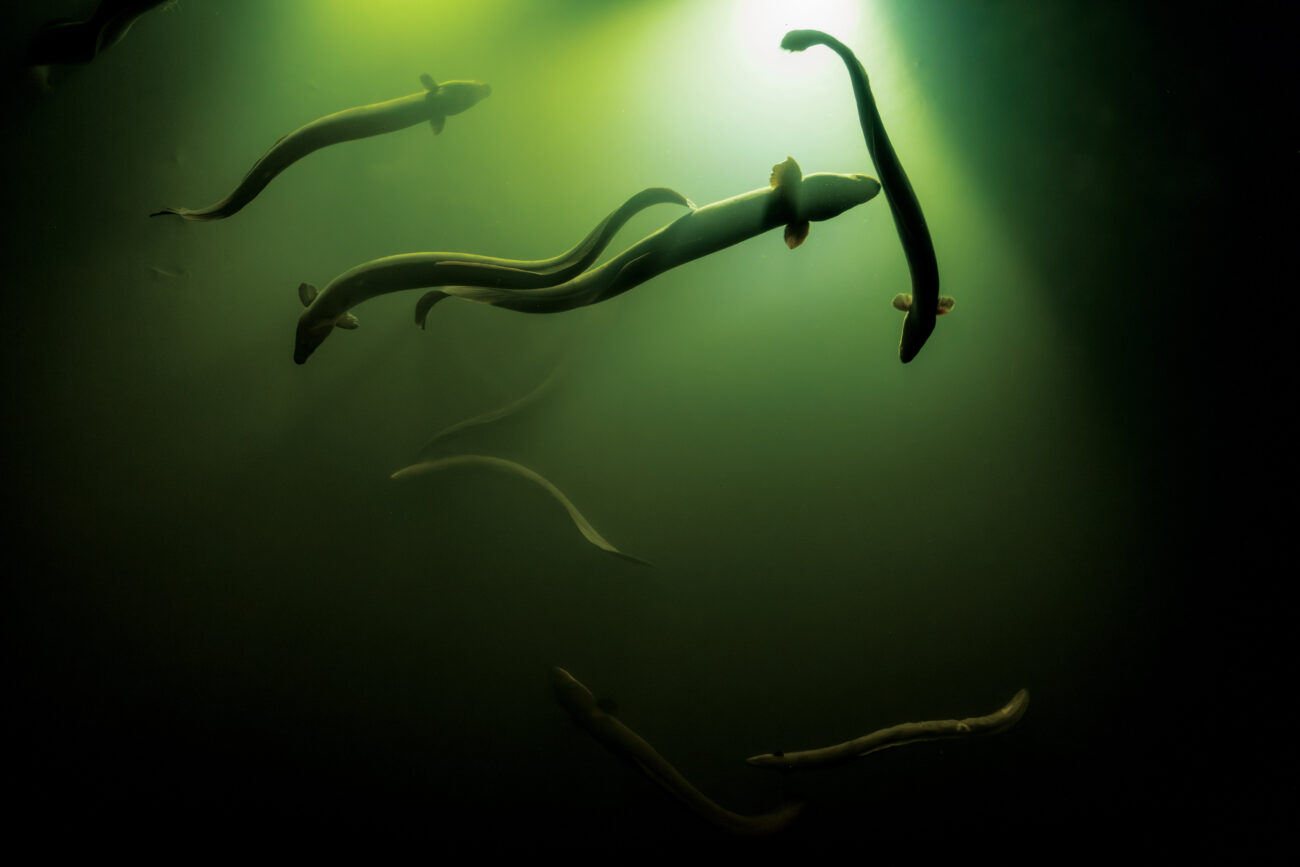
Every fish she sampled had PFAS in its body. While some species, such as trout, had lower PFAS loads (perhaps due to the relatively pristine rivers in which they were caught), shortfin eels she sampled had some of the highest average concentrations of PFAS in freshwater eels seen anywhere in the world. The highest levels were found in eels caught downstream of the RNZAF Ōhakea air base, near Bulls.
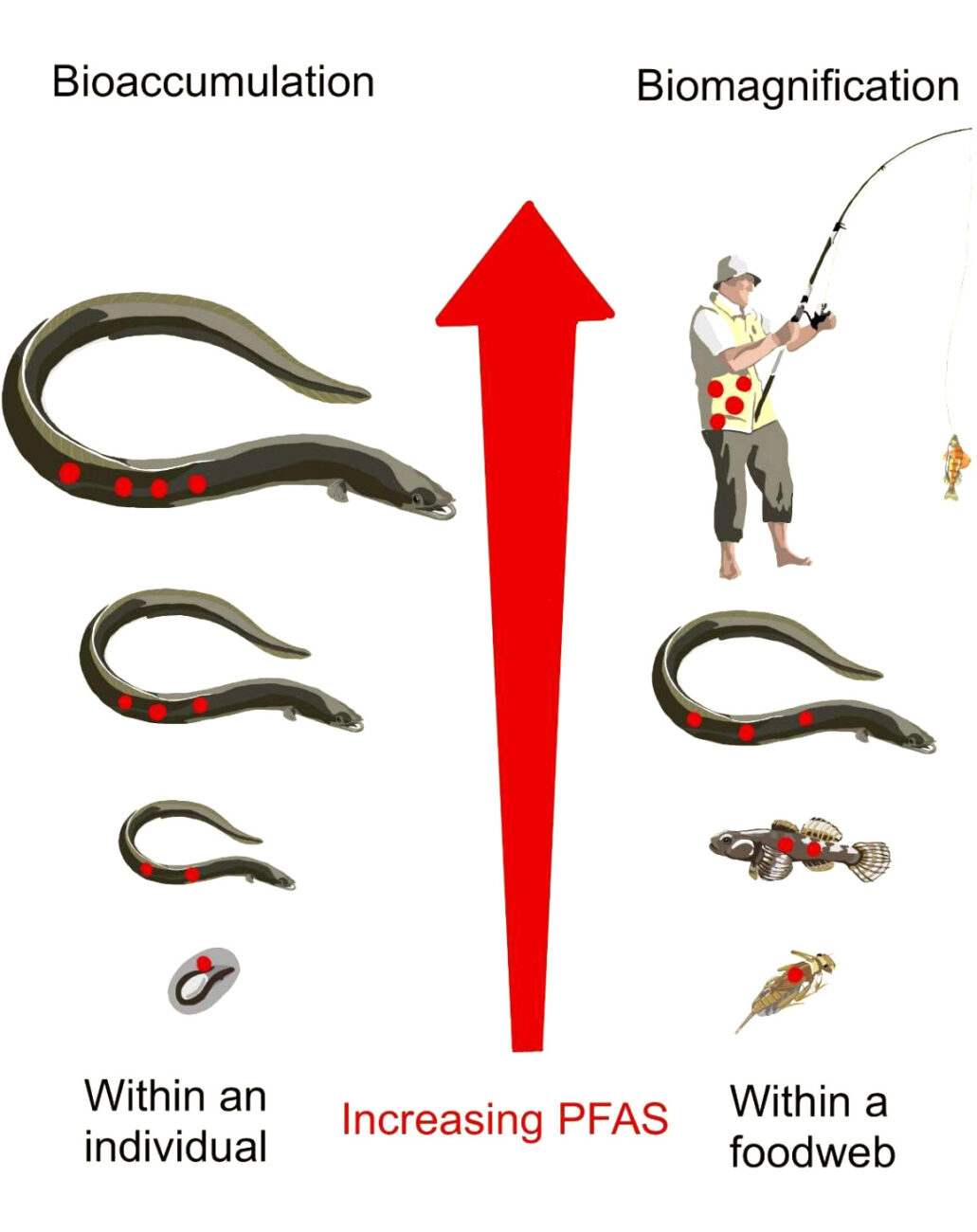
Forever chemicals percolate upward through the food chain, becoming more concentrated in the bodies of top predators like trout and eels. They also steadily accumulate through a fish’s lifetime, meaning longer-lived fish such as eels will have higher PFAS loads.
In fish, high PFAS loads are linked with underdeveloped swim bladders, eye deficiencies, and increased incidence of liver cancer. In humans, PFAS exposure has been linked to kidney and liver cancers in heavily exposed groups, though the most consistent evidence points to immune suppression and hormonal disruption, including reduced vaccine response and lower birth weight.
The study cuts to the heart of New Zealand’s wild food culture, says Massey University ecology professor Alastair Robertson who supervised Marulli de Barletta’s research. “If you’re routinely consuming fish from some of these rivers, you’re probably much more exposed than the average person.”
Having only sampled the livers, Marulli de Barletta had to estimate the level of PFAS in fish flesh using an established conversion factor. Half of her estimates exceeded Ministry for Primary Industries guidelines for safe monthly consumption.
PFAS contamination, says Marulli de Barletta, will inevitably affect Māori disproportionately. On average, Māori consume about twice as much wild-caught fish as non-Māori, and for many, harvesting eels is critical for sustenance.
Tūrangi-based tōhunga and eel researcher John Morgan (Ngāti Maniapoto, Ngāti Tūwharetoa) says the contamination of freshwater by PFAS chemicals and other pollutants is “a big concern for our people”. He called for more in-depth testing of streams and rivers to get a clearer picture of how lowered stream health might be affecting consumers of fish. “It’s our hauora, our whole health system; the land, water, and air.”
New Zealand Food Safety acting deputy director-general Mike Inglis noted in an email statement that the Ōhakea airbase has been known as a hotspot for PFAS for almost a decade and the area had been the target of a government-led response in 2018.
“We are still carefully reviewing the thesis,” he said, “but for an accurate human health risk assessment, we ideally need information from eel flesh rather than estimates derived from liver results, and we need to be confident the results are representative of the area they were sampled from.
“If there was sufficient evidence of an immediate food safety risk, we would take swift action.”
A 2019 report commissioned by the New Zealand Defence Force says that the PFAS plume under Ōhakea air base, which originates from historic use of fire-fighting foam, will persist for up to 125 years. It is expected to double in size to cover 3000 hectares. (A 2025 peer-reviewed paper increased that estimate again to 4300 hectares, persisting for 150 years.)
Marulli de Barletta acknowledged her results are preliminary and a lot more work is required to get a clearer picture of how many PFAS chemicals are loose in our waterways. She has already shown that a non-lethal fin clip strongly predicts an eel’s PFOS load, which would let fish be returned to the water alive—a method she now wants to validate against fillet samples.
She also hopes to expand her research to test for other contaminants, particularly pesticides, which are likely to be more of a problem in rural areas than PFAS. She also hopes to start testing for PFAS in human blood.
Working with the Melbourne team, she says, “opened my eyes to not just PFAS, but the other emerging contaminants that New Zealand’s probably not testing for in our fish.”
She says the government needs to be doing a lot more to monitor forever chemicals in our waterways. “If our eels have got the potential to accumulate these kinds of contaminants at these kinds of levels, that’s cause for concern.
“I think for a long time there’s been this rhetoric in New Zealand that we don’t have a PFAS issue,” she says. “It’s really easy to say you don’t have a problem when you don’t look.”