



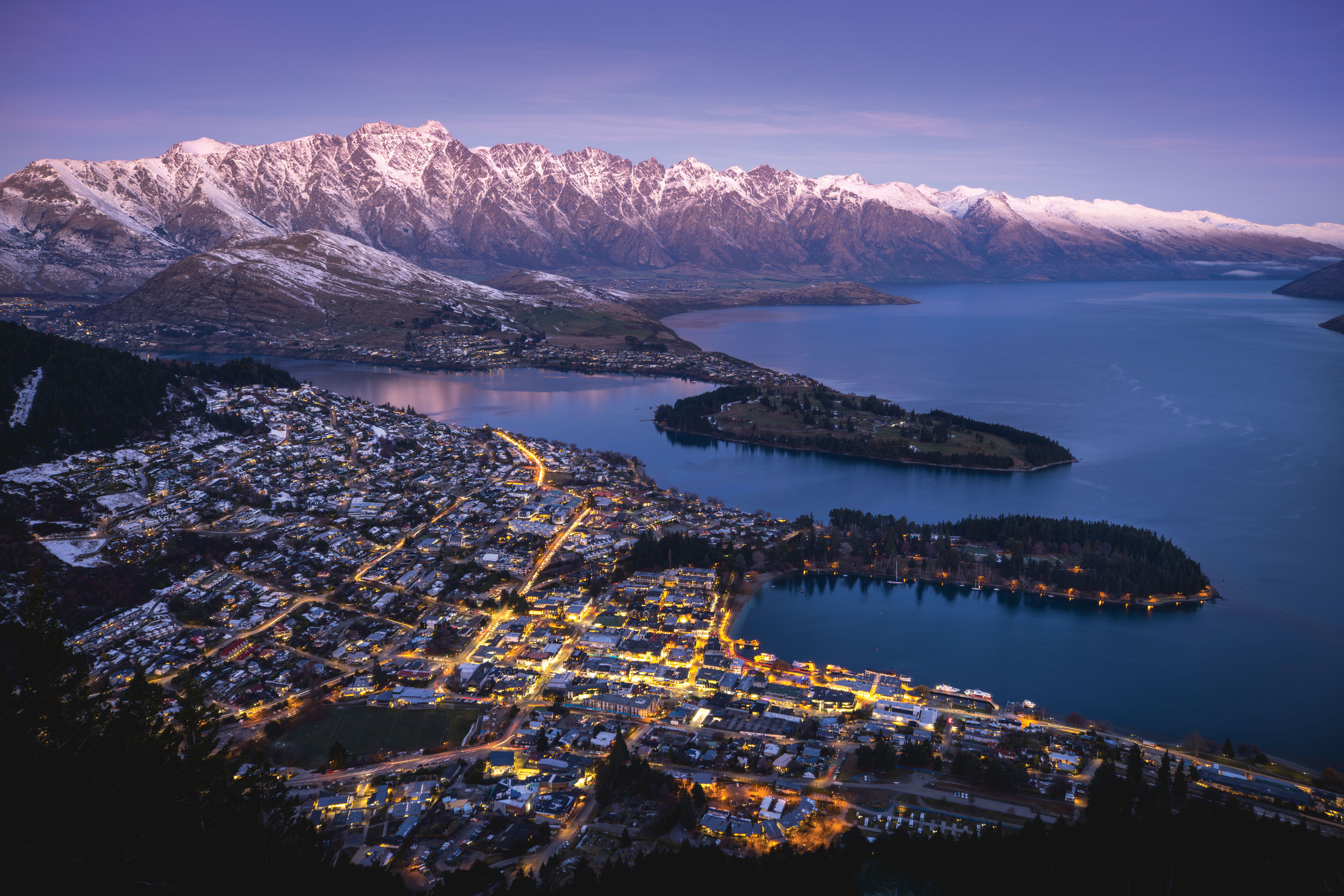
Queenstown, Wānaka and the surrounding region have set an audacious goal of becoming carbon zero and creating a regenerative visitor economy by 2030. Right now it might look impossible, but the district remains determined.
When you look back at the history of Queenstown, Wānaka and the Southern Lakes region, it has always been a place of pioneers. Early Māori ventured inland to find pounamu; early Europeans opened the land to farming and gold mining; and the people who followed their outdoor passions eventually turned them into a tourism industry.
“There is an entrepreneurial spirit here,” says Mat Woods, the CEO of Destination Queenstown. When it came to developing a Destination Management Plan (DMP), it wanted to embody that spirit and “do the most ambitious thing possible”: the region has committed to creating a regenerative visitor economy and becoming carbon zero by 2030.
Woods says the idea started in 2019. It was the peak of tourism, the region’s infrastructure was struggling to cope and the community didn’t feel like they were benefiting. Residents were asking “What’s in it for us?”. The traditional response from the tourism sector was “Imagine what it would be like if no-one came?”
“Well, we lived that,” says Woods. The borders closed due to Covid and they stayed closed for almost two years. Woods says it was worse than the worst-case scenario, but it did offer Destination Queenstown, Lake Wānaka Tourism and Queenstown Lakes District Council, an opportunity to develop a plan, in conjunction with Kāi Tahu and DOC.
They spent time asking communities across Glenorchy, Wānaka, Queenstown and Arrowtown three simple questions: What do you love about this place? What are your treasures / taonga? And what would you like it to look like for your future generations?
Two years later, the draft was released. It was unanimously endorsed by the council and 1600 people took to the website to read it and over 600 people downloaded it, which Woods says clearly shows the level of engagement in a region with 50,000 residents. There were 23 projects and 116 actions included, but the overwhelming piece of feedback was “if you want to be regenerative you need to decarbonise”.
The Paris Accord’s goal of net carbon zero by 2050 was deemed too far away, as was 2040, “because you may not have to do it on your shift, whereas 2030 made people a bit uncomfortable and created some ambition,” says Woods.
“When we ran this past the Queenstown Lakes District climate action group, which includes renowned climate scientist Dr Jim Salinger, their comment was ‘scientifically, you know this isn’t currently possible?’ to which we responded ‘but shouldn’t we try?’ They said we should definitely try and that’s when we realised there’s a difference between climate science and climate leadership.”
Other local businesses were already trying. Ngāi Tahu Tourism was building an electric Shotover Jet Boat. RealNZ was looking to decarbonise the Earnslaw. The ski industry had joined forces to trial hybrid groomers. Air New Zealand announced plans to have the first electric plane in the air by 2026 with the hope of regional flights being electrified by 2030. Woods says most operators are doing something, whether large decarbonisation projects or composting with the help of local legend Michael Sly.
“You start here, and then you go there. And then you say ‘What else can we do?’”
That’s the question Ewan Mackie asks himself in his role as Treble Cone ski area manager and sustainability lead for RealNZ. He doesn’t shy away from the challenges, or the fact that skiing and holidays are high emission activities.
The groomers, snowmobiles and buses for Cardrona and Treble Cone that all run on diesel contribute most to the ski field’s emissions. RealNZ’s fleet of groomers are modern and fuel efficient and can run on a less polluting Hydrotreated Vegetable Oil, but the problem—like the promise of sustainable aviation fuel—is availability.
“We just can’t get it,” says Mackie. The company has just bought a new diesel-electric groomer and says electric options that can do the job should be available in the next three to four years. Electric snowmobiles are also available and it is looking to purchase some next year.
All the vehicles driving up the mountain are also a significant source of scope 3 emissions—what Mackie calls “our biggest moral footprint”—so it decided to offer free buses to try and take some cars off the road. Despite the buses now counting towards RealNZ’s own emissions, it was the right thing to do, he says.
While Cardrona has good mains electricity supply for snowmaking, lifts and other needs, Treble Cone is much further from the main lines and it’s too expensive to upgrade them, especially for a business that only operates three months a year. It relies on a combination of hydro power from a run of river power scheme and diesel generation. It is exploring the potential for solar and batteries and is hoping to expand the hydro scheme in the future, says Mackie.
While some of these decisions are yet to be made, it has already made strides in waste reduction and efficiency.
“Being Scottish, I’m a bit stingy,” says Russ Mackintosh, Cardrona’s food and beverage lead. “But being stingy means you’re efficient and being efficient is more sustainable.”
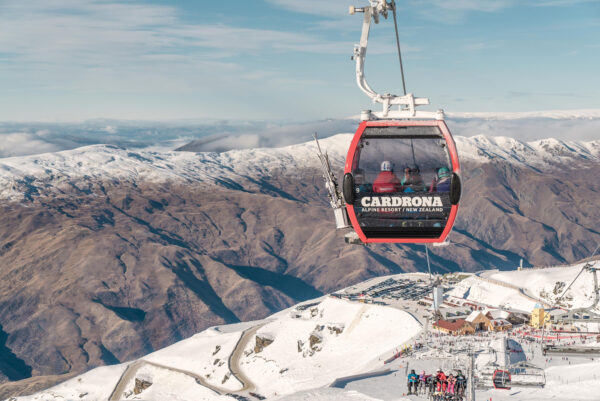
It now asks customers to take out what they take in and that means it can’t sell things that create unnecessary waste.
“We thought removing one of our biggest products—plastic bottles of water—was insanity as it brought in $60k every year. But we ran the numbers, made the decision and found that if customers have $20, they’ll spend it on something else and we can provide some fresh mountain water… I’ve got a science degree but you don’t need one to know that you should get rid of the packaging that’s unnecessary.”
It also started composting food scraps up the mountain, reduced the number of runs groomers need to make to drop food and beverage supplies at different locations, changed to a more expensive natural wax in the rental department, and got rid of takeaway coffee cups.
“Where are you taking it? Sit down, enjoy the experience, have a cheese scone,” says Mackintosh.
Most customers have praised the new initiatives. Mackintosh says they now have people applying to work here, “because they like what we stand for,” and overseas resorts are asking for advice.
Because of the company’s scale, their carbon-zero plans influence the food and beverage sector across the whole region.
One of the dangers with a focus on waste is that the effort might have unintended consequences. Surveys continue to show that New Zealanders believe recycling is one of the best ways to solve climate change, which is not true, but Mackie sees waste as something of a gateway drug to responsible consumption. And while most of the focus is on carbon, he also gets excited about the planting, trapping and biodiversity improvements.
“The goal is to help the world fall in love with conservation. Even from a ski perspective, what we’re doing is enabling people to have a love for nature. And [parent company RealNZ] releasing 120 kakariki on Stewart Island is tangible. We can feel good about it and see a noticeable difference.”
NZSki’s CEO Paul Anderson, who presides over Coronet Peak and The Remarkables, also wants to make a difference.
“It’s easy to look around and find excuses not to take action,” he says. “You can look at different countries and companies and their lack of action, but the best thing we can do is demonstrate it is possible.”
He says NZSki had started on this journey about five or six years ago, but had kept a lot of it quiet. The “big hairy audacious goal” in the carbon-zero plan presented an opportunity to start talking about what the organisation had done and was planning.
“I talk about sustainability as four quadrants: support your people, deliver great processes, give great customer service, and your financial outcomes will come from that.”
It is following a similar path to RealNZ by trying to decarbonise its machinery and transport. It is also part of a consortium led by Rod Drury backing an electric gondola that will take people up to Coronet Peak.
“We want to give them a choice. Don’t drive up the access road. Go in an electric gondola, which will be safer, cheaper and faster and is part of your pass for the day.”
He doesn’t think the gondola would be large enough to close the road completely, but the disincentive of extra fuel and parking costs is likely to make it more appealing. Then it becomes a question of how you get people from town to the gondola and electric buses exist now and are cheaper to run than diesel buses.
Woods says the Otago Regional Council plans to have electrified its bus fleet by 2035.
“Can they do that faster? Of course they can,” he says. “It’s your cost saving plan.”
Offsetting is off the table for NZSki and RealNZ because both companies say they would rather put money into real emissions reduction projects. “The easiest thing we could have done is written a cheque for $150,000 and said we’re carbon neutral. But then we would have taken our eyes off the right prize.”
More by NZ Geographic
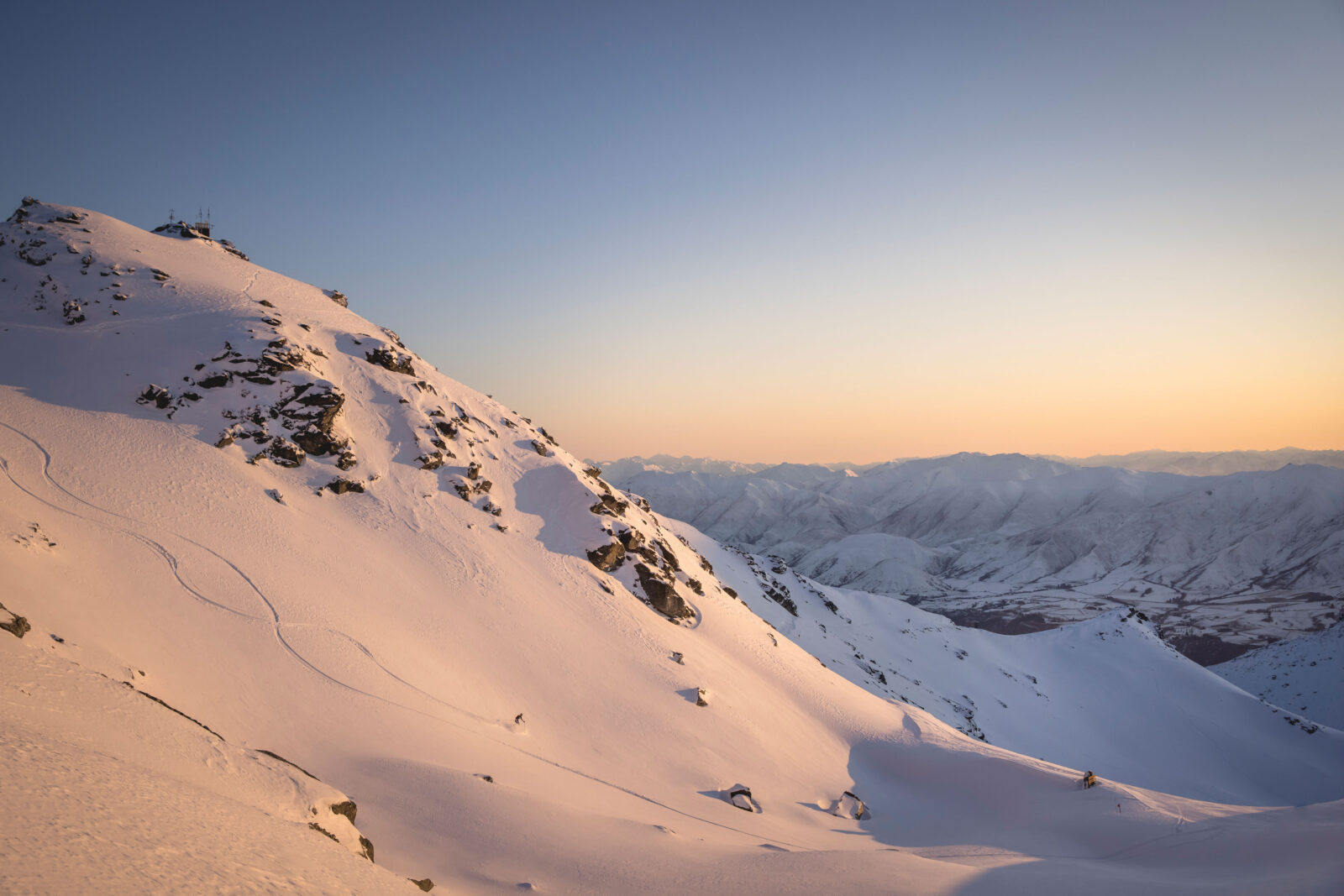
Part of the region’s vision is to attract the right kind of visitors; those who contribute more than just economic value and try to give something back.
“We want people who share our values,” says Anderson. “It is a choice for us, but we have to do it to maintain our social licence and we have to be leaders in it.”
Around 250,000 skiers visit the region each year—around 60% from New Zealand and 30% from Australia—and Woods says it’s a very influential audience. They can see the seasons are getting shorter, they know something needs to change and they have an opportunity to support the other businesses in the region that are making an effort.
There is some positive peer pressure building, he says, in large part because there’s a clear goal in place. And while there’s nothing to force the community and its businesses to adhere to the plan, “the community adopted it so we have to act on it or as a district we look stupid”.
One benefit of focusing on the visitor economy is that things wear out quickly and need replacing.
“If it’s a bus it might be a million miles. If it’s a van it might be 100,000 kilometres. I’m looking out at the Appellation Wine Tours van right now and it’s an electric Ford Transit.”
He says Nomad Safaris bought its first electric bus recently, Ngāi Tahu Tourism is building a 30 person capacity bus, and a range of businesses are choosing EVs as fleet vehicles.
The year 2030 is not far away, so does Woods think the region is on track?
“I’m delighted every day to see the small incremental changes that are happening … You can’t wish your way out of this. You need tangible solutions. But I truly believe the solutions are there. We just need to exploit them. Right now it might be a stretch, but we don’t know what technology will be available in the future.”