Summer Sounds

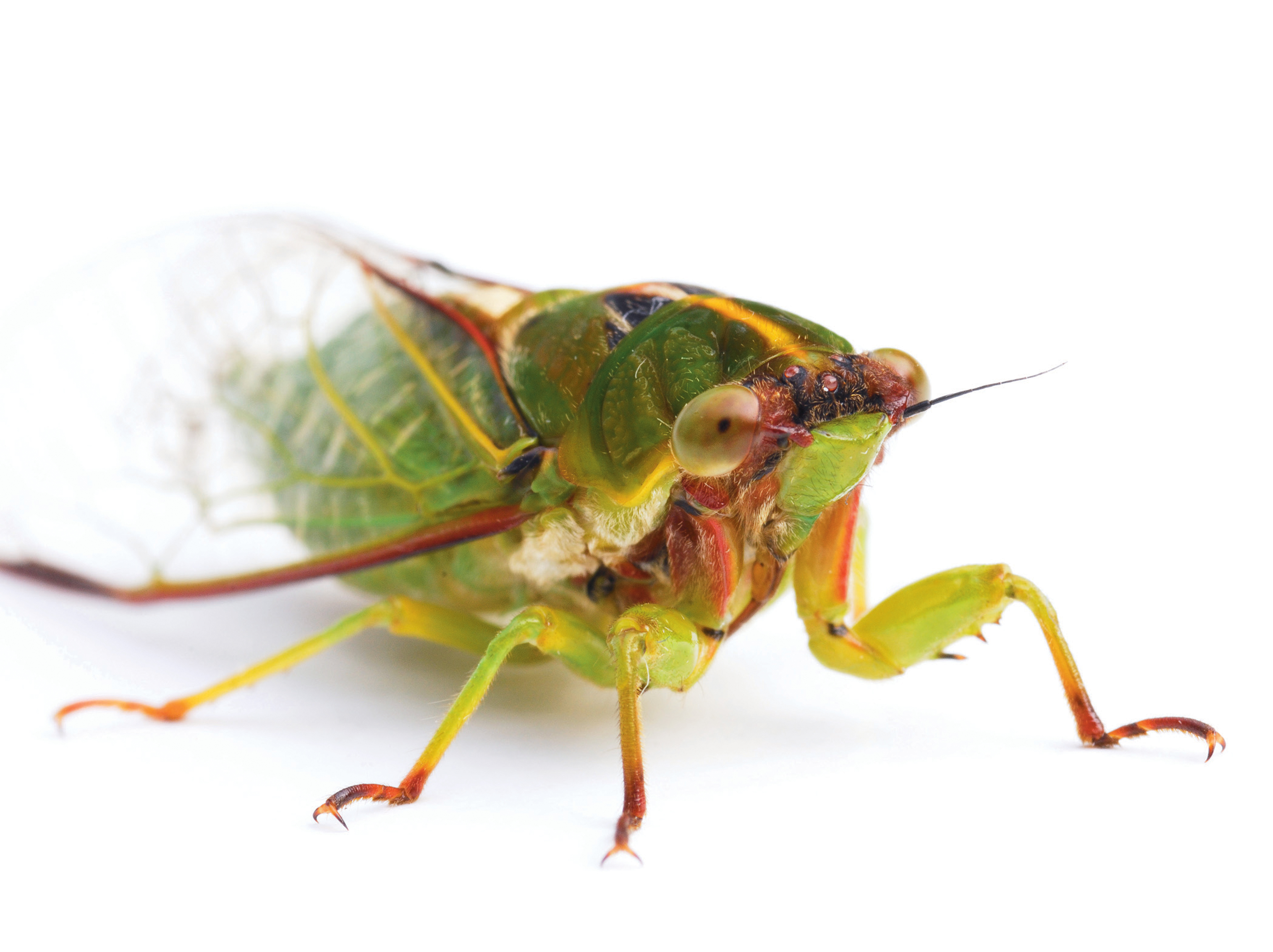
Around about now the cicadas will be making their usual summer racket. But that isn’t the deafening sound of a single type of cicada, but a number of different species: New Zealand has five genera and at least 54 known species. “And there’s probably more,” says Jim Esson, an entomologist and cicada en­thusiast who has collected two or three cicada specimens he believes to be new species.

Written by

Arno Gasteiger

No two cicada species sound the same, and this helps the cicadas recog­nise their own and prevent them from hybridising with other species that live alongside them. As Esson points out, ci­cadas have a method of making sound that is peculiar to them. On the back, just behind the wings, is the tymbal, a ridged plate which is buckled by a powerful muscle up to 500 times per second. (Unlike crickets, grasshoppers, weta and a number of other insects, which make sound by rubbing their legs against their abdomen.) It’s the arrangement and number of the ridges on the tymbal which are responsible for the differences in cicada songs. The sound is amplified by the mostly hol­low abdomen and cicadas can adjust the volume of the sound by tightening the body wall.

Some cicada songs are so highly pitched that only children can hear them. It took the sharp ears of two schoolboys, David and John Lane, to recognise that our largest cicada had two types of sound, leading scientists to realise it was two species, Amphipsalta zelandica and Amphipsalta cingulata.

Esson, who worked at the Depart­ment of Scientific and Industrial Re­search and the Ministry of Agriculture before retiring, continues to devote a considerable amount of his time in ci­cada research, as well as alerting his grandchildren to their infinite variety. “They’re wonderful creatures,” he says. “To me they really are the sound of summer.”

More by

Arno Gasteiger

Around about now the cicadas will be making their usual summer racket. But that isn’t the deafening sound of a single type of cicada, but a number of different species: New Zealand has five genera and at least 54 known species. “And there’s probably more,” says Jim Esson, an entomologist and cicada en­thusiast who has collected two or three cicada specimens he believes to be new species. (more…)

More by

Issue 095

Jan - Feb 2009

Butterflies
Darwin
Godwits
Olive oil
Ratana

Issue 095 Jan - Feb 2009
New Zealand Geographic and Heritage Expeditions are pleased to announce their second premium adventure, a journey through Fiordland with New Zealand conservation stalwart, award-winning author, photographer and natural history filmmaker Rod Morris....

More by

×

Subscribe to our free newsletter for news and prizes

3 FREE ARTICLES LEFT

Subscribe for $1  | 

3 FREE ARTICLES LEFT THIS MONTH


Keep reading for just $1

$1 trial for two weeks, thereafter $8.50 every two months, cancel any time

Signed in as . Sign out