




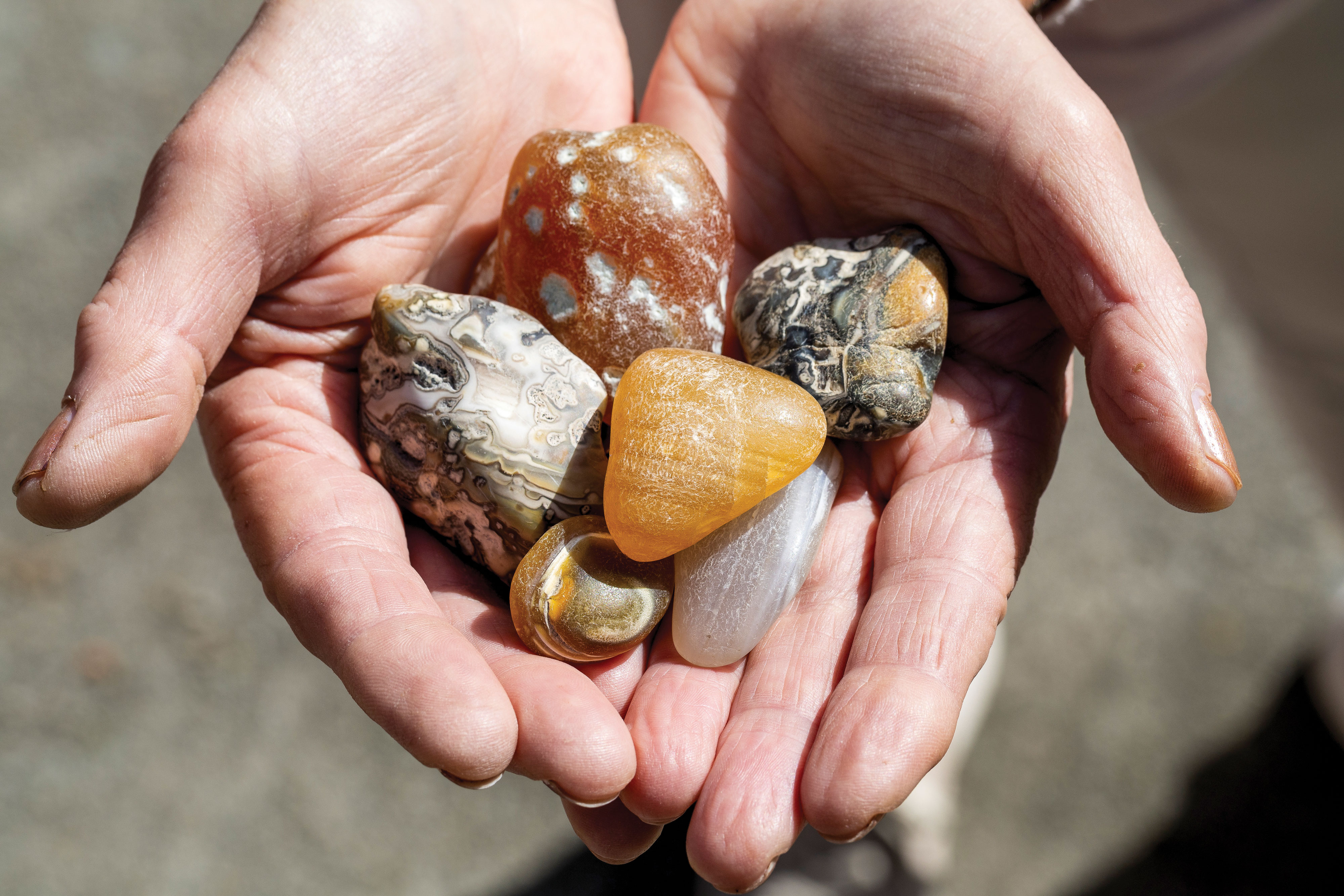
These lustrous pieces of agate were found on Rangiatea Station in Canterbury, home to Sara and Blair Gallagher. The farm is rich in agates, and the couple use some of it to run a small jewellery business on the side. But the agates shown here weren’t split and polished by jewellers, or rockhounds—instead, more than half a millennium ago, they were swallowed by moa, and rubbed smooth as they jumbled together in the birds’ gizzards.
Moa, like dinosaurs and birds, occasionally ate small stones to help grind tough food. When these ancient digestive aids are discovered now, they’re considered trace fossils, as are nests, burrows and footprints—and they give scientists valuable insights into the behaviour of the creature that left them behind.
Sara Gallagher often finds stones left by long-gone moa. “It always makes me very happy,” she says. “I just say it’s my lucky day when I find a gizzard stone.”
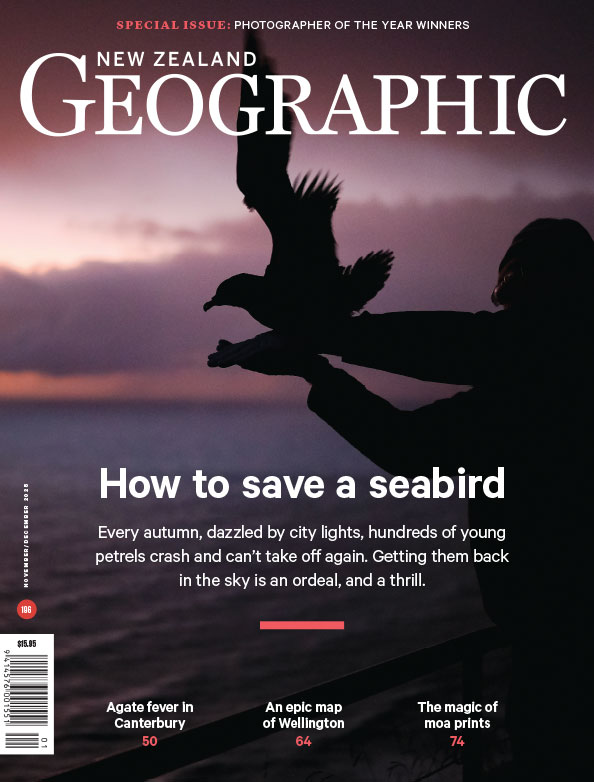
In this issue, we’re covering both moa footprints and the beautiful rocks the big birds scoffed: see ‘The Track Makers’, and ‘Dragonlust’.
More by Catherine Woulfe