


For over a century, we hammered hāpuku. We hit the huge fish so hard that in five decades of underwater exploring, filmmaker Andrew Penniket had encountered them only once. Oceans photographer Richard Robinson had not seen a hāpuku at all, and not for want of trying. Until this winter, when the two made a remarkable trip to Fiordland.
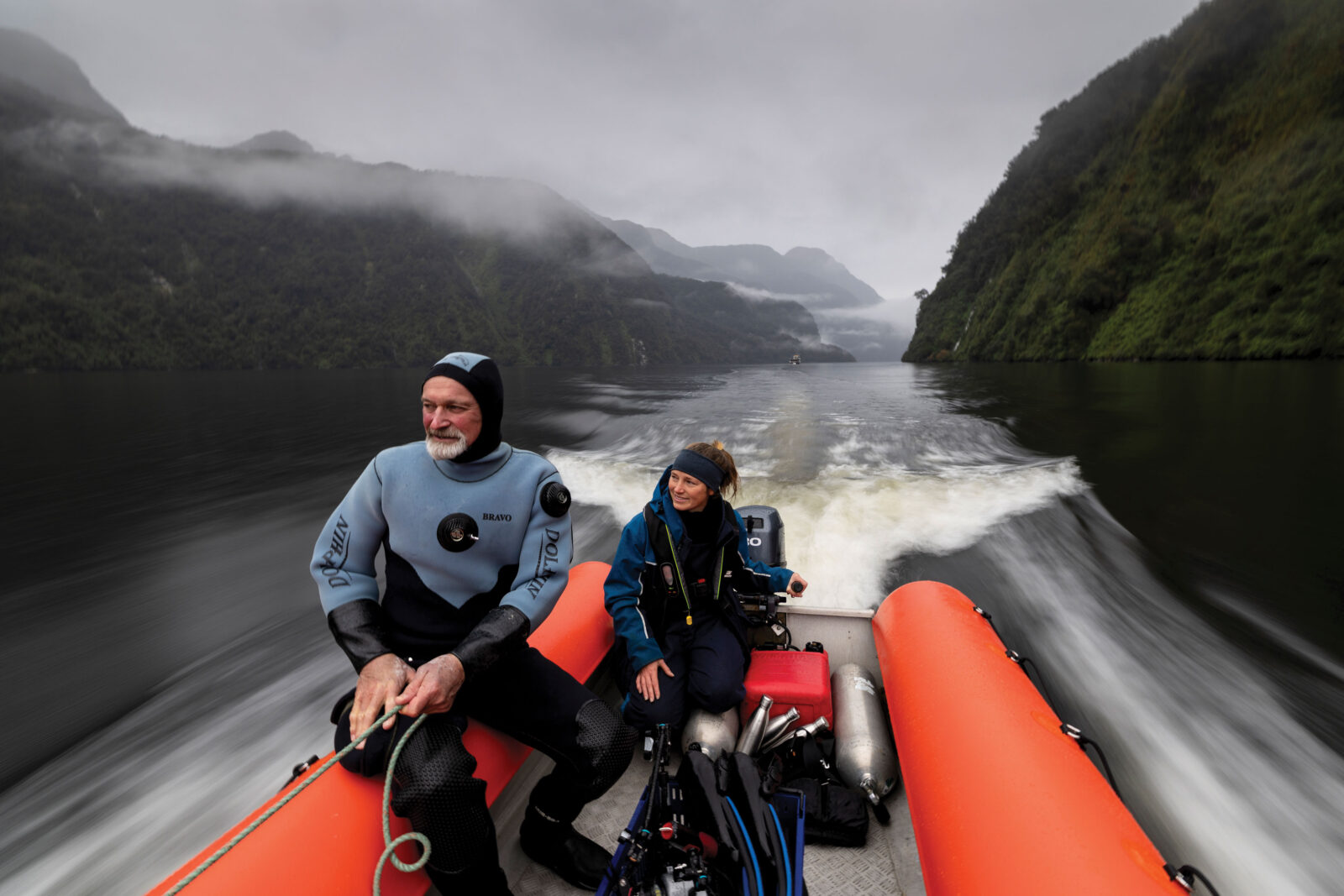
It’s a strange place to launch a hunt for a saltwater fish: Manapōuri, a quiet town on the shore of one of our deepest lakes. But to dive with hāpuku these days, your best bet is to fly.
Our heavily loaded helicopter tracks across the lake, up the Spey River, over Pillans Pass then slowly down Seaforth River to the 27-metre ex-Navy vessel Flightless, now a floating lodge for charter operators Pure Salt. She’s moored at the enticingly named Shark Cove, at the head of Tamatea/Dusky Sound, which looks like the lake we have just left: dark fresh water and overhanging trees. The only hint that we are on the sea is that it’s low tide, with logs exposed along the shore. “Terrestrial input,” they call it—stuff that falls into the sea. It’s the basis of the food chain this far away from the open ocean. Worms and urchins gobble the branches and leaves, crayfish eat the urchins, and hāpuku, if they’re really here, will eat crayfish, and whatever else they want to.
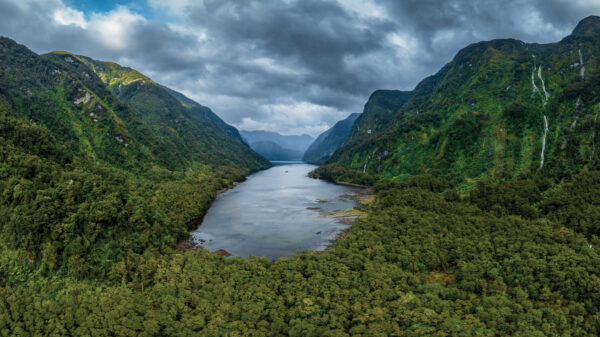
As we motor through Acheron Passage, cloud engulfs the mountains and curtains of rain waft toward us. It’s almost midwinter and dusk is falling as we reach the entrance to Wet Jacket Arm. Twenty years ago, all 2007 hectares of this 20-kilometre-long finger of water was made a marine reserve. The fact that it’s inland is crucial: unlike similar-sized reserves in the open ocean, fishers can’t thrash the perimeter.
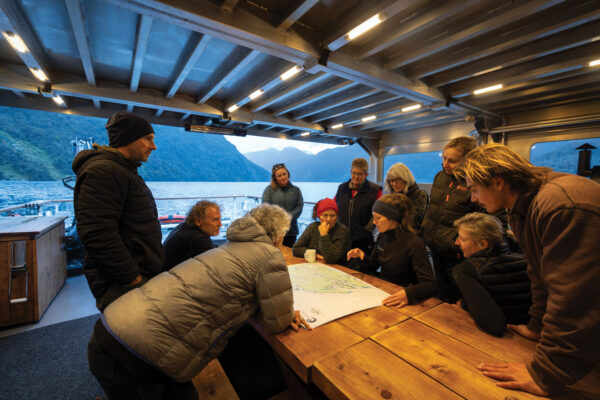
Climbing up to the bridge, I join Flightless co-owner Seán Ellis and skipper Matt Jolly as they discuss plans. It’s pitch dark apart from the multicoloured depth sounder plotting our progress. I watch the screen as we move across a 300-metre-deep basin, then up over a drowned sill. After half an hour, we graduate to a mere 100 metres deep. Drop anything over the side and you won’t be getting it back.
We’re making for the head of the fiord where six years ago, Ellis tells me, the Pure Salt team had a camera overboard and a single hāpuku came to investigate, giving everyone “a hell of a surprise”. Since then, the team have seen many more hāpuku in that unlikely spot and watched, thrilled, as the fish grew bigger. They think the population is growing, too. Diver after diver has come up astonished, with eyes like saucers. Richie and I try to stay calm. After decades of diving hoping to see hāpuku, it still seems too far-fetched to be true.
*
Nowadays, we know hāpuku, Polyprion oxygeneios, as a fish that is rarely caught, and then on remote reefs in very deep water. (They are also commonly known as grouper or groper, or hāpuka.) But once, schools of the stocky giants were common on the coast around most of Aotearoa, even inside harbours and nosing into river mouths. All-round heavyweight predators, they ate a wide variety of fish and invertebrates—tarakihi, blue cod, hoki, squid, octopus and probably anything else they could swallow.
Appropriately, in te reo, hāpuku doubles as a verb, meaning to cram something into the mouth. Hāpuku in turn were a delicious treat: their firm white flesh made them a prestigious food for early Māori, who paddled far offshore to catch the biggest fish. It was considered bad luck to utter their name when fishing for them, or for a hāpuku to touch the side of the waka on the way up. Avoiding such pitfalls, waka would return to shore filled with fish.
Still, when Europeans arrived with their iron hooks, hāpuku were abundant. In the 1890s, Captain John Fairchild of the lighthouse vessel Hinemoa told the Otago Daily Times that the great fish “can be caught in any quantity at French Pass, Pelorus and Queen Charlotte Sounds, about the Bay of Islands, the Hauraki Gulf and the Bay of Plenty”. The Times, raving about the species’ commercial potential, noted it could be “cut off in large slices like beefsteak” and was “as fine a flavoured fish as any epicure could desire”. When hāpuku were gorging, they hit lines so violently they would blister your hands, the paper said. But lines weren’t always necessary. “There have at times appeared immense shoals of the fish at the surface of the sea, so that a boat could not be rowed among them without striking them with oars and numbers have at such times been caught with the harpoon or hooked with the gaff.”
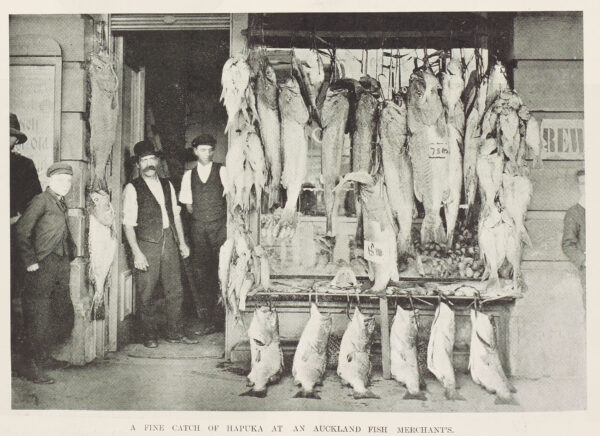
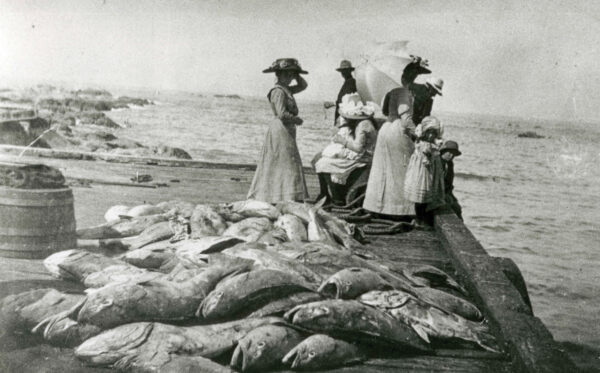
In May 1929, the Dominion carried the story of fishermen working out of Bluff who came upon an “exceptionally fine groper patch”. With no bait on board, one of the men baited six hooks with a piece of bread “and before long landed six groper on deck”.
Iron hooks were just the first in a cascade of new technology. Sometime early last century, a fisherman in the Bay of Islands came up with the idea of a long line with many hooks attached. Imaginatively called a longline, it was very effective and quickly adopted in other regions. A 1928 Dominion tells of lines at Moeraki that were a kilometre long, bristling with 400 hooks and landing as many as 100 hāpuku at a time. Industrial-scale fishing had come for the giants.
New fishing grounds were discovered, too, the paper reported, “from which phenomenal supplies of hapuka were being obtained… The freezers were filled and still the supply of fish continued unabated.”
As early as the 1930s, there were concerns that we were fishing hāpuku too hard. Fish stocks seemed to be depleting and longlining was held responsible. Time and again, a new reef was discovered and then repeatedly fished until all the resident hāpuku were caught. Fishing boats ventured out further and longer, equipped with freezers and ice that let them store bigger hauls. Then, in the 1950s, came the first depth sounders. Fishers quickly discovered hundreds of offshore reefs. But the precise location of these was hard to nail down—at this stage, you still needed to triangulate using landmarks such as headlands, houses, and trees. For a while, the reefs further offshore remained a refuge for hāpuku.
*
That was the state of play when skindivers, as they were called, first entered the sea, spearguns in hand, in the 1950s. They intruded into a surreal scene: huge crayfish and snapper and truly gigantic hāpuku. Bill Palmer, one of those old-timers, leads me up his garden path on Auckland’s North Shore. Sitting back in his armchair with a handful of old newspaper cuttings, he recalls joining the Whangārei Spearfishing Club in 1958, at the age of just 15. Hāpuku were common then, he says, and a frequent target for spearfishing. The shallow gap between the main Poor Knights Islands was a hotspot for “bloody huge hāpuku”. A quick sip of tea.
“Once I was snorkelling with a mate there and felt that he was swimming alongside me. But when I glanced to my right, I was looking into the eye of the biggest hāpuku I had seen. It seemed to be almost as long as me. When I recovered from shitting myself, it calmly swam away.”
Bill was one of the first to use the newfangled scuba kits when they arrived in the country. The setup had a small yellow bottle, the same as the oxygen bottles used in aircraft, and some of his mates thought he was “bloody cheating”, he remembers. He talks of trevally schools 100 yards across; a packhorse cray he weighed in at eight kilograms. This was the world that scuba opened up—and one of its main attractions was the chance to get deep enough to spear hāpuku.
*
In 1962, Wade and Jan Doak, pioneers of diving in New Zealand, moved up from the South Island, drawn north by tales of clear warm seas and fabulous underwater scenery. The couple published Dive NZ, New Zealand’s first magazine for divers. After decades of marine conservation work, Wade died in 2019; Jan still lives on the coast in their cottage at Ngunguru, north-east of Whangārei. When I visit, it’s overcast, and a westerly stirs the trees. Jan flicks through a precious archive of magazines. On page after page, there are stories of spearing and fighting hāpuku, and photos of beaming divers hoisting big dead fish.
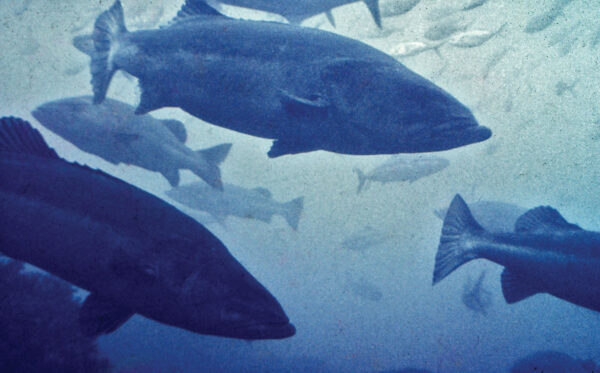
Just one taste: In early 1964, Dave Barnett landed a 43-kilogram hāpuku while diving on scuba at Taheke Reef, seaward of the Cavalli Islands. He had been down to 60 metres on scuba and was on the way up when a large hāpuku emerged from a cave. Dave shot at such close range that he had to shake the spear from the gun. Strangely, the fish didn’t react. And Dave’s air was low. He released his 45-metre line, but this only let him get up to 15 metres below the surface. The fish was still on the bottom; fortuitously, it died before Dave’s air ran out. But it was a close call. Dave casually noted “the danger of spearfishing with scuba”. If he’d kept fighting the monster, Dave could well have got the bends. Best-case scenario had him losing his speargun.
Often, like Dave, those hunting hāpuku dived too deep and, inevitably, tragedy struck. The bends claimed at least one life, and other divers were left permanently crippled.
As hāpuku numbers dwindled around the mainland, divers pushed further offshore. Wade wrote of a 1966 trip to the Three Kings Islands, for example: “At a hundred feet [30 metres] a herd of over thirty huge hapuka was moving up the steep slope from the dim-clear depths. Jag and I perched dumbfounded on an outcrop while they swarmed around us, between and round our legs. From forty to over one hundred pounds [18-45 kilograms] their huge jagged dorsal fins filled our viewfinders.” Wade was only taking photos, but around him, others were spearing. It was carnage. Dead fish on every dive.
At Whakaari/White Island the boys enjoyed more mayhem. In 1969, John Dearling wrote that the hāpuku “were like a carpet on the ocean floor”. They took 20 that day, mostly on scuba.
These wild stories were the diet of myself and friends in our teenage years and the brave “spearos” were our heroes.
At school we fantasised about diving to great depths and shafting huge hāpuku, wrestling them to the surface and plunging our dive knives into their skulls.
It was better than Biggles. We pored over magazines and debated the merits of drop-off heads, stainless-steel shafts and double rubbers. We argued over whose gun was the most powerful and how many hāpuku we were going to spear. But it all came to naught. By the time we were old enough to go on dive expeditions, the hāpuku were gone.
*
The closest I got to spearing a hāpuku was buying one from a fisherman in Doubtless Bay in 1974. We were blown out of our Cape Karikari campsite by a rising easterly, clouds scudding across the sky. As three newly fledged scuba divers we retreated south, stopping off at Mangōnui Wharf in the hope of a treasure dive—lost knives, sunglasses and so on. Tied up at the wharf was a fishing boat with a handsome 20-something long-haired fisherman unloading hāpuku and bass into bins of ice. Enthusiastic teenagers, we pestered him with questions, which he good-naturedly batted. His name was John Catton and he had just returned from the Three Kings Islands. In the days of compass and dead reckoning, he was fishing some of the wildest seas in New Zealand. We bought a decent-sized hāpuku to take home, not quite the same as spearing it yourself.
I bumped into John again a couple of years later at an Auckland University Underwater Club meeting where I discovered he was a closet law student, fishing for hāpuku in his holidays to fund his degree. My girlfriend was quite taken by John but I reassured myself she probably liked his bright-yellow Sunbeam Rapier sports car. John rather reluctantly confessed he held the New Zealand spearfishing record for hāpuku. He’d been anchored at the Three Kings and had gone for a quick swim to get pāua for dinner when he spotted a large “puka” in the shallows. Heart pounding, he returned to the boat for his speargun. Simple as that: a New Zealand free-dive record of 40.8 kilograms.
In August 1979, John went diving with two mates at hāpuku haunt North Reef, a scary, deep pinnacle known for its strong currents, near the Poor Knights. He never returned to the boat. He was 26. His hāpuku record stands and is unlikely to be broken.
*
The early divers hit hāpuku hard but their impact was a drop in the ocean compared with what the commercial boys were landing on hook, line and sinker. Then, in the 1980s, satellites entered the scene. Now, fishers could precisely locate those distant reefs and fishing grounds reliably and repeatedly. “Bastards would sit in their runabouts off the river mouth and follow me out to my favourite fishing spots,” John Baker, a veteran diver and Whakatāne charter boat skipper, once told me. “They got the GPS marks and then everyone knows. I used to ration hāpuku, only allowing a couple a charter and saving some for next time. But they got totally fished out once the marks were known.”
There were other innovations, too—new configurations of hooks and lines and electric reels. Accurate satellite weather forecasts; faster, bigger boats and emergency beacons allowed more risky trips to far-off banks and reefs until there was nowhere in the sea that couldn’t be fished. There came a virtual strip-mining of even the most remote reefs, like the Kings and Essex Banks, way, way north of Cape Reinga/Te Rerenga Wairua. The hāpuku didn’t have a chance.
I ring an old friend, retired commercial fisherman Adrian Thomas, catching him moving cattle between muddy Northland paddocks. Lofty Adrian’s curly mop has polished the wheelhouse ceiling on many a boat fishing around the North Island. He admits to making a fair dent in hāpuku numbers.
While trawlers have had a huge impact, trashing the habitat and swooping up juveniles, Adrian lays some of the blame on amateur fishers with high-speed trailer boats that can nip out to offshore reefs in a matter of hours. He has seen hundreds of boats out from Tutukaka and the Bay of Islands, all aiming for their five hāpuku per person (this bag limit was reduced in 2024 to two per person).
One of Adrian’s commercial fishing mates told him of coming across a horror scene—a trailer boat of weekend warriors at the Garden Patch, a deep reef 20 kilometres off Cape Karikari, where the fishers were upsizing their hāpuku catch.
This involved stabbing the swollen, distorted swim bladders of smaller hāpuku with a knife and throwing them back, hoping to catch larger fish to take home for their allocation. Adrian sums it up. “They’ve had a hell of a hiding, eh.”
*
Despite their star turn in our fishing histories, we know very little about hāpuku. Mostly, we know how often we catch them. This is typical of deepwater fish. How do you study something deep and inaccessible, other than by killing it?
The Ministry for Primary Industries’ 2024 Fisheries Assessment plenary notes that hāpuku typically take 10 to 13 years to mature sexually, at which point they’re around 80 to 90 centimetres long. The document also says most of the fish landed these days measure between 70 and 100 centimetres.
Migration patterns, the plenary says, are “little known”. The few tagging studies show that most fish have “a high degree of site fidelity”; in other words, they stick around one reef. “Other information,” the plenary says, “is largely anecdotal and speculative”.
We know hāpuku spawn in winter, but we don’t know where. Juveniles hang out at sea, around floating seaweeds. “It is known that good fishing grounds, particularly pinnacles and reefs or ledges, can be quickly fished out…” the plenary says. We know that left alone, a hāpuku can grow well past 140 centimetres long, and live for 60 years or more.
So: long lived, slow growing, easily wiped out. And we’re catching them before they have a chance to breed, or when they’re only just getting started.
*
By the 1980s, when I stumbled into a career making underwater films, hāpuku had largely vanished. I was diving Fiordland, the Chatham Islands, Rakiura/Stewart Island, and intensively around the Poor Knights. For decades, I didn’t see a single hāpuku.
Then, in 2005, I was at the Poor Knights filming underwater caves for the BBC series Planet Earth. Wade and Jan Doak’s son, Brady, and I had been for a long dive in Rikoriko Cave and were swimming past some large boulders, 15 metres down, when I saw a peculiar fish, grey-brown, about half a metre long, swimming toward me. It took me several seconds to realise I was staring at a hāpuku. And it wasn’t alone: three juveniles were hanging about a boulder, retreating underneath when we got close, then venturing back out. Genuine live hāpuku! Nothing like the monsters of old, but I felt like I’d seen a unicorn.
More by Andrew Penniket
More by Richard Robinson
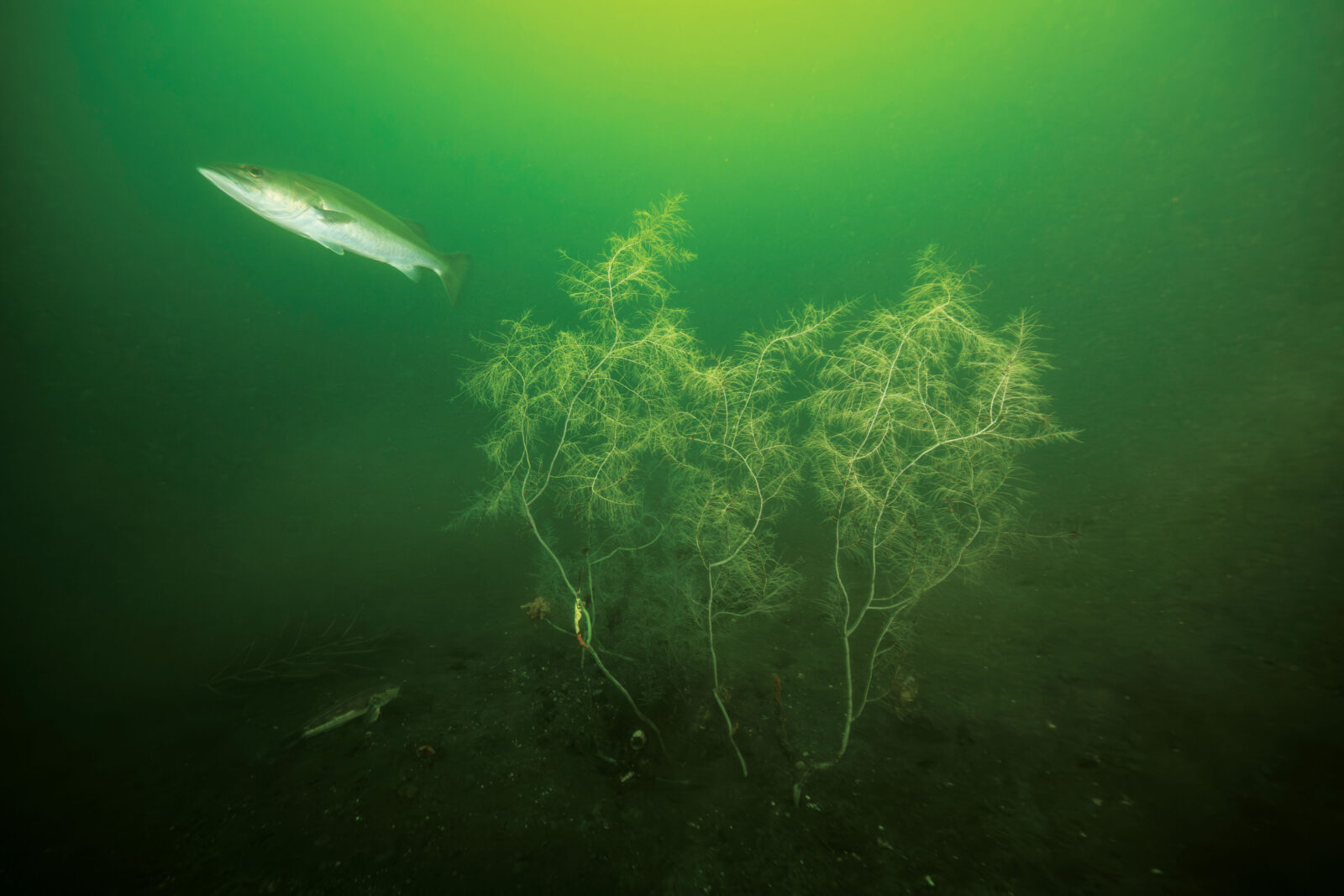
Back on shore we bubbled out our discovery to Wade and Jan. We all hoped this might be the beginning of a return of hāpuku to the Poor Knights Islands Marine Reserve. One day, we dreamed, this spot might become like the Cod Hole on the Great Barrier Reef, where large, friendly potato groupers hang out, waiting for the next crop of tourists to visit. Or like the Kermadec Islands Marine Reserve, which still boasts an unfished population of another species, the spotted black grouper.
It wasn’t to be. The young hāpuku hung around outside Rikoriko for two or three weeks before disappearing into the depths. Today, the fish remain very rare at the Poor Knights, and something Wade once told me seems to be true: “I think the marine reserve is just too small to hold a resident population of hāpuku.”
I resigned myself to never seeing the fish again. But last summer, an old diving friend, Mike Bradstock, came to stay. He was just back from Fiordland, where they were seeing hāpuku in shallow water right up to the surface in Moana Uta (Wet Jacket Arm) Marine Reserve. My ears pricked up. Granted, this reserve was slightly smaller than the one at the Poor Knights, but it had those fortress walls protecting three sides. If hāpuku were making a recovery anywhere, this could be the spot.
*
At the head of Wet Jacket it’s dark, Fiordland dark—rain, with no stars and no moon. Richie is up well before dawn, camera and strobes assembled, champing at the bit. Half-heartedly, I prepare, too. In the first grey light, Ellis points out a jumble of logs at the base of a slip that starts up in the clouds. Last week, he says, right there, were “heaps of hāpuku”. When scuba divers got too close, some of the fish jumped right out of the water onto the rocks. After much flapping, all but one made it back to the water. Seán shows me the footage on his phone. A diver rescues the last fish—it’s more than a metre long—and puts it back into the sea, giving it a kiss as he lets it free. Unbelievable. But I’m a bit worried. Maybe scuba bubbles terrify these fish?
We drop in at the slip and sink into the layer of cold fresh water which sits on top of the saltwater. Four metres down, its blurriness gives way to warmer, clear salt. Thirteen degrees: I’m glad I brought my 25-year-old drysuit out of retirement and even more glad it has no leaks. I follow Richie as he explores among the logs and then heads along the underwater slope. Sprigs of black coral adorn the bottom. Big blue cod provide an escort, keeping an eye on us. Out of the corner of my eye a larger shape appears; a sevengill shark cruising by. Seventy minutes later, we have covered more than 500 metres of fiord and seen zero hāpuku. We head back to Flightless for fresh scuba tanks and a rethink.
This time, Richie snorkels in the shallows, in the murky fresh water, while I supervise from the inflatable, crying old age. Suddenly, he pops his head out, bellowing, “There’s one here!”
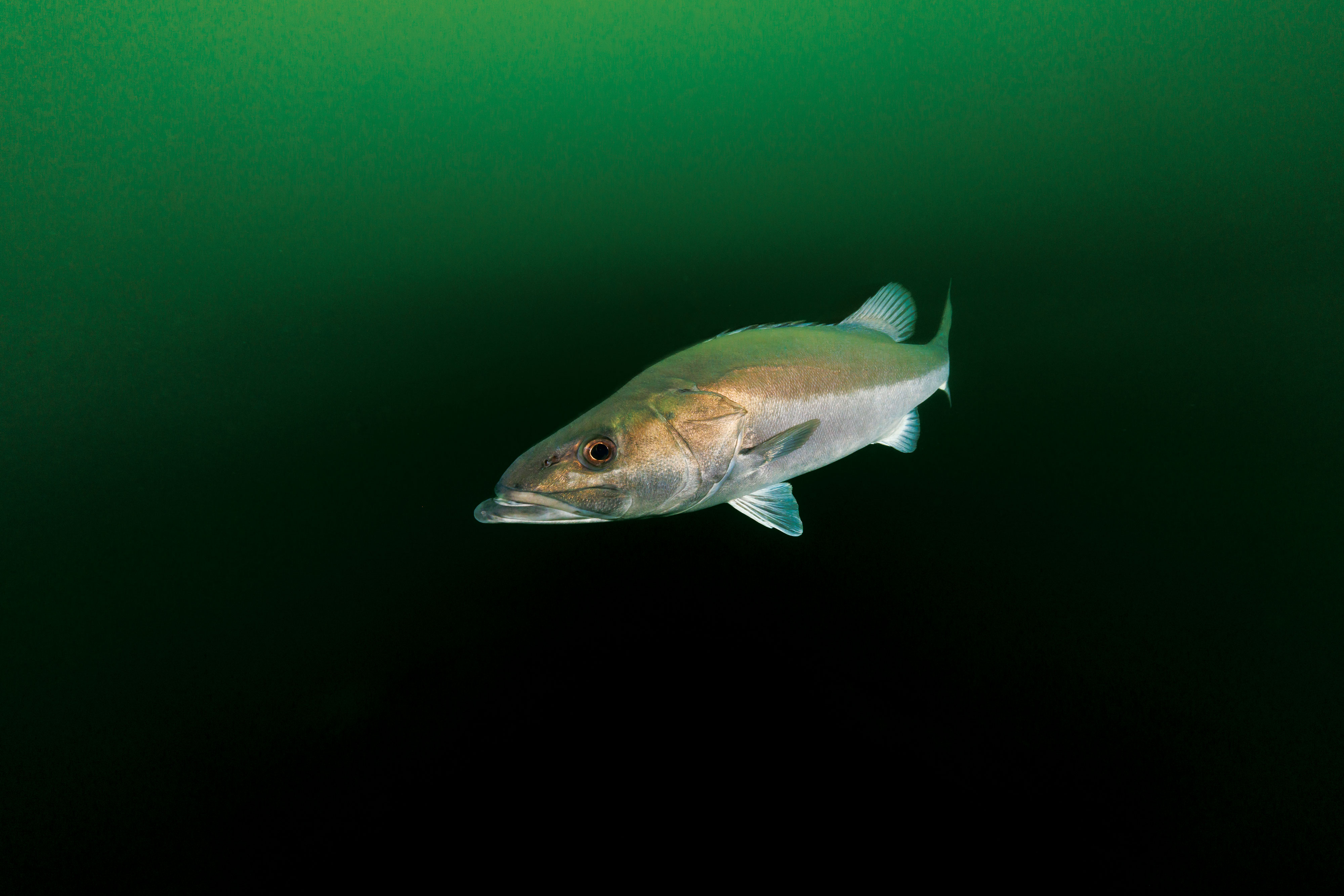
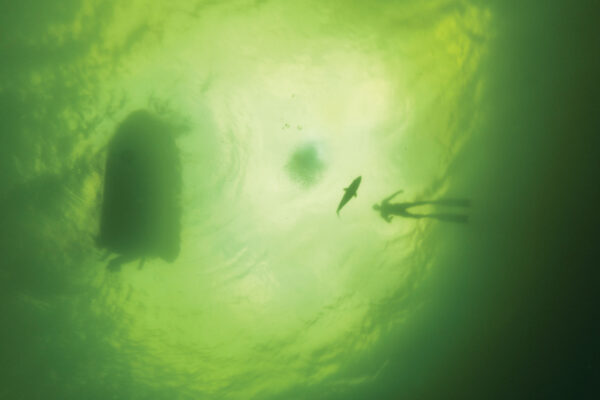
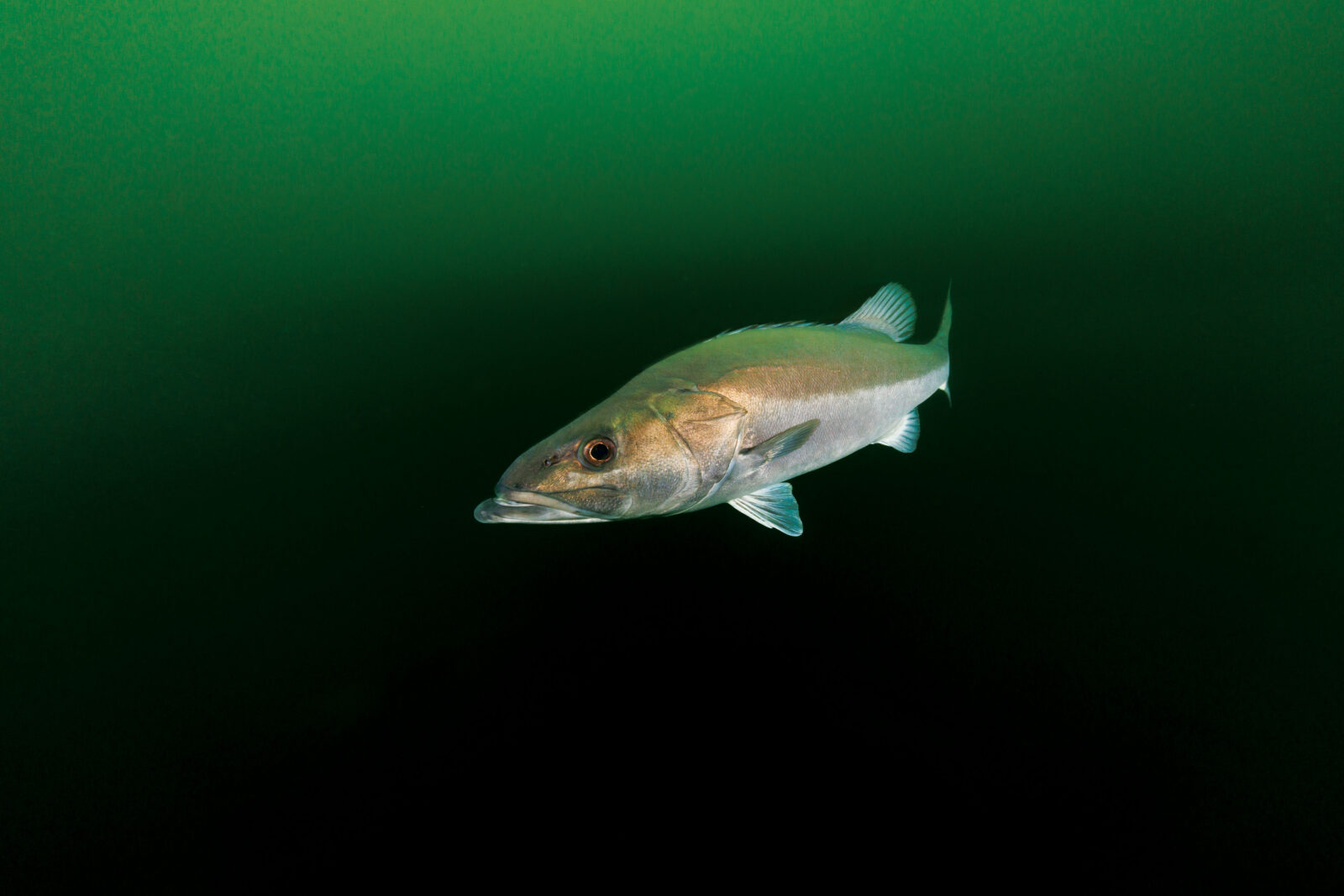
I’m over the side in a flash. Out of the darkness a large fish materialises. Hāpuku! It comes close and circles, inspecting the red light of my video camera then moving on to Richie and his camera gear. It circles us again, then disappears. Though only half grown, it’s still a big fish, more than a metre long. A minute later it’s back and biting my light like a playful dog. On its next visit it appears to rest on Richie’s shoulder, parrot-like. Now there’s a story to tell his kids.
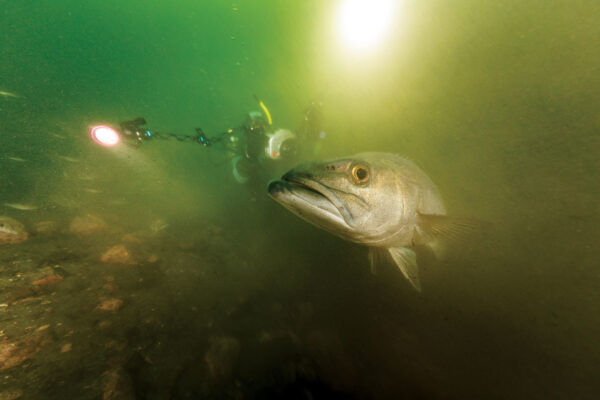
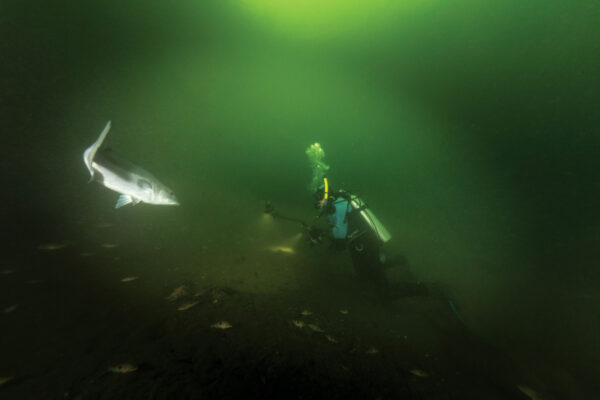
After 85 minutes of waiting and filming, waiting and filming, I start to get cold and am hoping Richie is running low on air so we can get out. But he’s like a fish, absorbing oxygen from the sea. After a quarter of an hour sitting on the mud with no sightings, he heads to the surface. Back to Flightless and cold high fives.
A cup of tea and an hour’s break then we’re back into it. Again, a hāpuku appears. It travels backwards and forwards between us and the inflatable. Tane Tarlton, grandson of renowned diver and treasure hunter Kelly Tarlton, arrives free diving and lies on the bottom. The hāpuku passes me by and investigates Tane’s torch before circling him and heading off. Tane shakes his head in disbelief. It’s his first hāpuku.
At one point, a group of 10 or more fish appear beside me, then just as quickly disappear.
When Wade started ringing the alarm bell in the 1980s and advocating for large-scale marine reserves, he was sure divers would never again see a herd of hāpuku. It would be like “seeing a flock of moa”, he wrote.
It’s getting dark; we have seen the moa. We call it quits.
Next morning, in the rain, Richie searches the shallows. I play the old age card again and sit in the inflatable, feeding sandflies. Richie bursts to the surface. “There’s a whole herd of hāpuku here!” I’m overboard, dropping down in his wake. Eight metres deep, a grove of pretty coral trees are attached to rocks on the muddy floor. A hāpuku zooms in to inspect us, then zips away again. Richie takes off in a cloud of silt while I hang out, filming, beside two especially picturesque corals. The hāpuku repeats its dash, over and over.
Back in the inflatable, Richie’s rapt—he recounts being abruptly surrounded by hāpuku, 20 or more, hard to say. He photographed three beside a coral tree before they took off again. Back aboard Flightless, we retire to the hot tub and dissect the trip over a celebratory beer in the rain. We dived with hāpuku all right, in the last place we expected: the muddy freshwater shallows of a fiord.
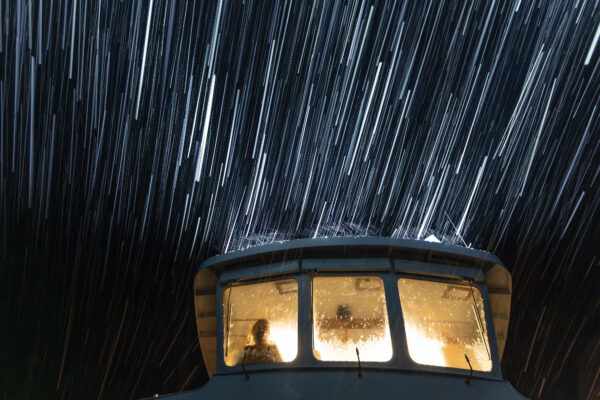
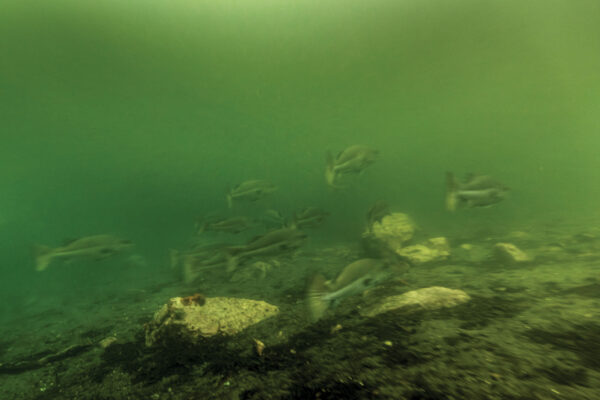
It seems there is no science tracking this comeback. No one knows quite what the fish are doing here—one hypothesis floating around is that it’s something to do with shedding parasites—or what they’re eating. But I remain convinced the giants wouldn’t be here at all if the marine reserve were smaller, or open to the ocean like the reserve at the Poor Knights. The haven here has just expanded: in April 2024, new fisheries regulations banned the taking of hāpuku anywhere inside the fiords, reserve or not.
We have one more day on Flightless as the team service predator traps on the outer islands and survey underwater for the invasive Undaria kelp. On our last night aboard, the rain gives way to hail, then heavy snow.
In the morning, the chopper flies us back to Manapōuri over mountains and forests all covered white. My mind is still swimming with hāpuku. For decades, I have dreamed of diving with these fish. I just hope I live long enough to see them grow into giants.