Every year, we haul tonnes of eels out of our lakes and rivers. Many are shipped off live for export. To some people, it’s a way of life and a livelihood. To others, it’s a travesty. (more…)
More by Bill Morris






More by Bill Morris
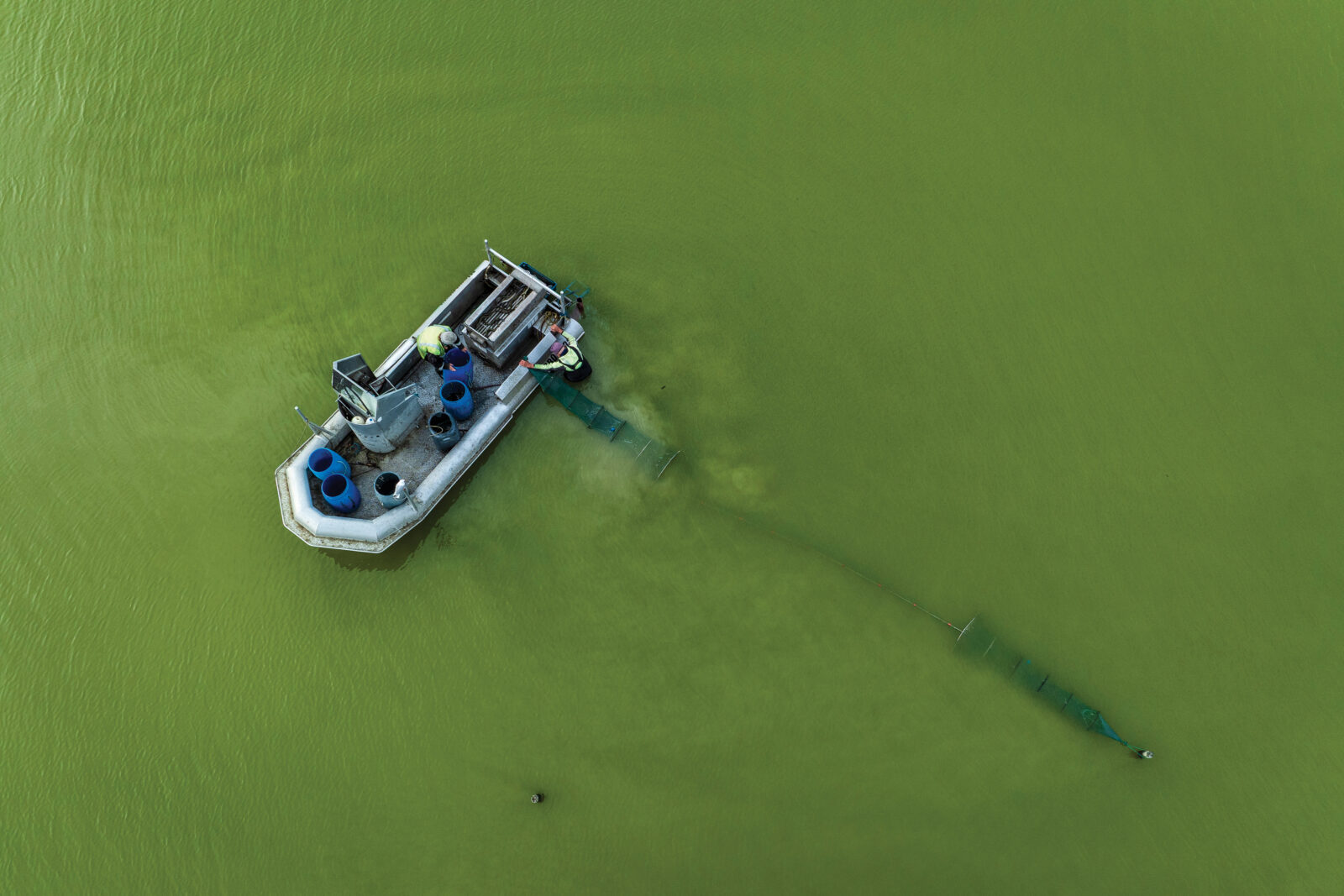
Brushing aside clouds of midges, photographer Richard Robinson and I putter out onto a placid Te Waihora/Lake Ellesmere in a small aluminium boat. Clem Smith, a 74-year-old commercial eel fisherman, is hauling in nets crammed full of squirming shortfin eels.
When Smith started out in the 1970s, commercial eeling was one of New Zealand’s most lucrative fisheries. Not any more. He’ll get paid $2.50 a kilogram for these eels, barely enough to meet costs. Smith came to fathering late, and with two young kids to feed, he tells me, there’s “no hope of retiring anytime soon”.
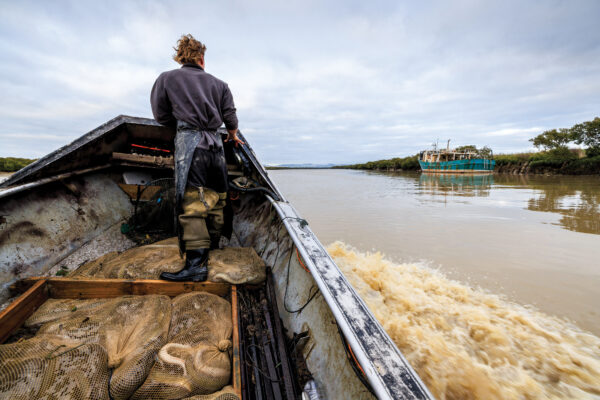
Smith’s is one of two eel-fishing operations on Te Waihora. The annual quota is around 122 tonnes, although Smith says they’re not catching that much, due to a lack of demand. His eels arrive at a factory further around the lake, where about half are electrocuted in a specially designed eel-shocker, and packed for export. The others are kept alive in plastic bins for up to six weeks, before being loaded onto a plane. Their final destination will be a restaurant in Europe, America, China or Korea, where they’ll be killed fresh for diners.
Once, there were more than 30 eel factories around New Zealand. But the industry has been dwindling for decades, with exporters struggling to find markets. Outside of Māoridom, where demand is met by customary catch allowance, there’s no real domestic market. New Zealanders all but stopped eating eels, and one by one, the factories closed. The factory at Te Waihora is now one of only two left in the country.
*
As part of the 1992 Treaty of Waitangi fisheries settlement, iwi received 20 per cent of the commercial eel quota. Māori now own at least half the North Island allocation. Some iwi, however, elect not to fish or sell their quota.
One of these is Ngāti Manawa, whose rohe is on the Rangitāiki River in the Bay of Plenty. Freshwater kaitiaki Karito Paul tells me that for Ngāti Manawa, buying and selling eels relegates them “from the sacred to the mundane”, something his people want no truck with. Commercial fishers who venture up the Rangitāiki have been known to have their nets sliced open.
*
While shortfin eels, which form the bulk of the national catch, are not considered threatened, our endemic longfins are now listed as “At Risk-Declining” by the Department of Conservation (DOC). The longfin eel industry has been the subject of intense scrutiny, with many, including former Parliamentary Commissioner for the Environment Jan Wright, calling for its closure in 2013. With eels impacted by historic eradication campaigns, declining water quality, habitat loss and dams, Wright’s report found, a moratorium on commercial longfin fishing was the one immediate action that should be taken to alleviate pressure.
However, most people I talk with who are connected to the fishing industry reject the idea that longfins are threatened. “Complete bullshit, and you can quote me,” says Bill Chisholm, a fisheries consultant who works with the eel industry. “Don’t get me wrong, they’re a slow-growing species, so you have to be very conservative in setting your catch limits. But if anything, we know that they’re increasing quite a lot in most areas.”
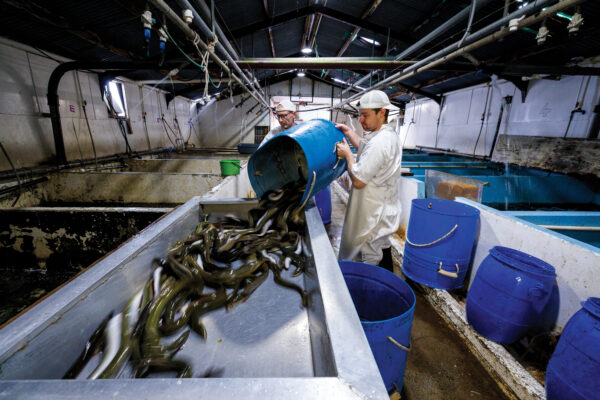
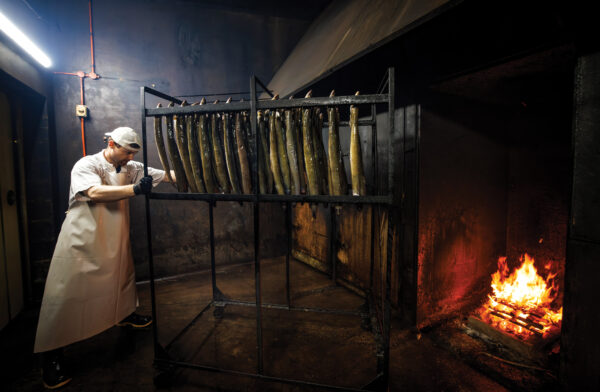
Longfin quota has been hugely cut in recent years, and an upper size limit of four kilograms imposed to protect older eels. Eel fisher Mike Holmes heads the Eel Enhancement Company, which conducted trap-and-transfer on the Waikato River for around 20 years. (Local iwi recently took it over.) Holmes says the quota cuts have worked, and the longfins he catches now are bigger than ever, meaning he’s throwing more and more back. He’d like to see the upper size limit removed, and points out that the recent upsurge in farmers planting and fencing riparian areas—creating more eel habitat—has paid huge dividends for the species.
Gerry Closs, a freshwater ecologist with the University of Otago, sits on the DOC panel that decides the threat ranking for eels. The group has to take a precautionary approach, he says.
“No one’s disputing there are lots of eels. Are they a hard species to manage? You betcha. Because they only spawn once, at the end of a long life.”
He says there’s little doubt that eel numbers have declined over the past century and a half. As to what their populations are doing year-to-year now, “there really isn’t any good quality data”.
This murkiness, combined with the eels’ long life cycle, Closs says, means “we wouldn’t know whether we’ve got a population collapse under way until we were 20 years into it”.
Subscribe to our free newsletter for news and prizes
3
$1 trial for two weeks, thereafter $8.50 every two months, cancel any time
Signed in as . Sign out