For the Fleet

The idea of establishing the Women’s Royal New Zealand Naval Service—known as the Wrens—was first floated in May 1941, but it was another year before the navy appointed a Direc­tor, Miss R Herrick and her deputy, Miss F H Fenwick, and recruitment began in earnest. Selection standards were high: of the first 870 applications received up to January 1943, 350 were turned down for being unsuitable, not qualified enough or for having inferior health.

Written by

The status of the Wrens in the New Zea­land navy was closely modelled on the role of their British counterparts—it was a Brit­ish poster campaign that had the “Join the Wrens and free a man for the fleet” slogan. This poster is one of many naval artefacts to feature in Kelly Ana Morey’s Service From the Sea, a new book which tells New Zealand na­val history through the collections of the Royal New Zealand Navy Museum.

The first Wrens were trained in various types of communication work, possibly because women had already proven their abilities in the Post and Telegraph Department, and mostly worked as visual signallers, coders or telegra­phists, although they later proved themselves valuable in the torpedo branch and proficient at crewing.

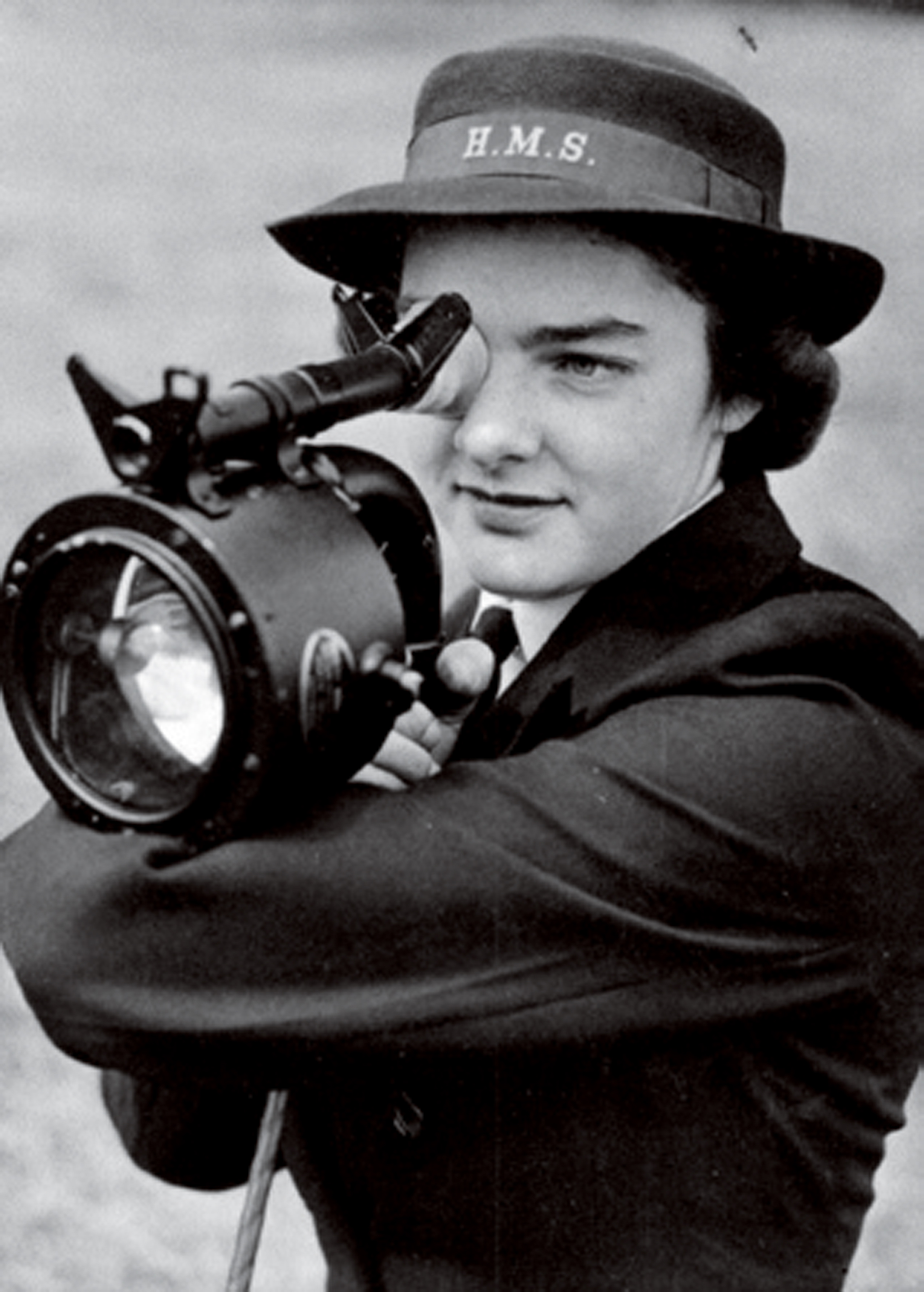
Fourth Officer Barbara Macky, who joined the Wrens in 1942, recalls the regular parades aimed at boosting patriotic spirit. “Anything that would give it a boost—a bit of military band music and stuff.” She also remembers how strict naval etiquette was: “I can remember the first [parade] we were in, I can remember being told: ‘If you so much as glance to one side or the other, bang goes your leave for the next 10 years!” That’s Macky holding the Aldis lamp (above). “I did do the [signalling] course, but I was never called upon to do semaphore,” she says. “That photograph of me holding the Aldis lamp, that is the one and only time I ever held an Aldis lamp in my whole naval career as a signalman.”


More by

The idea of establishing the Women’s Royal New Zealand Naval Service—known as the Wrens—was first floated in May 1941, but it was another year before the navy appointed a Direc­tor, Miss R Herrick and her deputy, Miss F H Fenwick, and recruitment began in earnest. Selection standards were high: of the first 870 applications received up to January 1943, 350 were turned down for being unsuitable, not qualified enough or for having inferior health. (more…)

More by

Issue 095

Jan - Feb 2009

Butterflies
Darwin
Godwits
Olive oil
Ratana

Issue 095 Jan - Feb 2009
New Zealand Geographic and Heritage Expeditions are pleased to announce their second premium adventure, a journey through Fiordland with New Zealand conservation stalwart, award-winning author, photographer and natural history filmmaker Rod Morris....

More by

×

Subscribe to our free newsletter for news and prizes

3 FREE ARTICLES LEFT

Subscribe for $1  | 

3 FREE ARTICLES LEFT THIS MONTH


Keep reading for just $1

$1 trial for two weeks, thereafter $8.50 every two months, cancel any time

Signed in as . Sign out