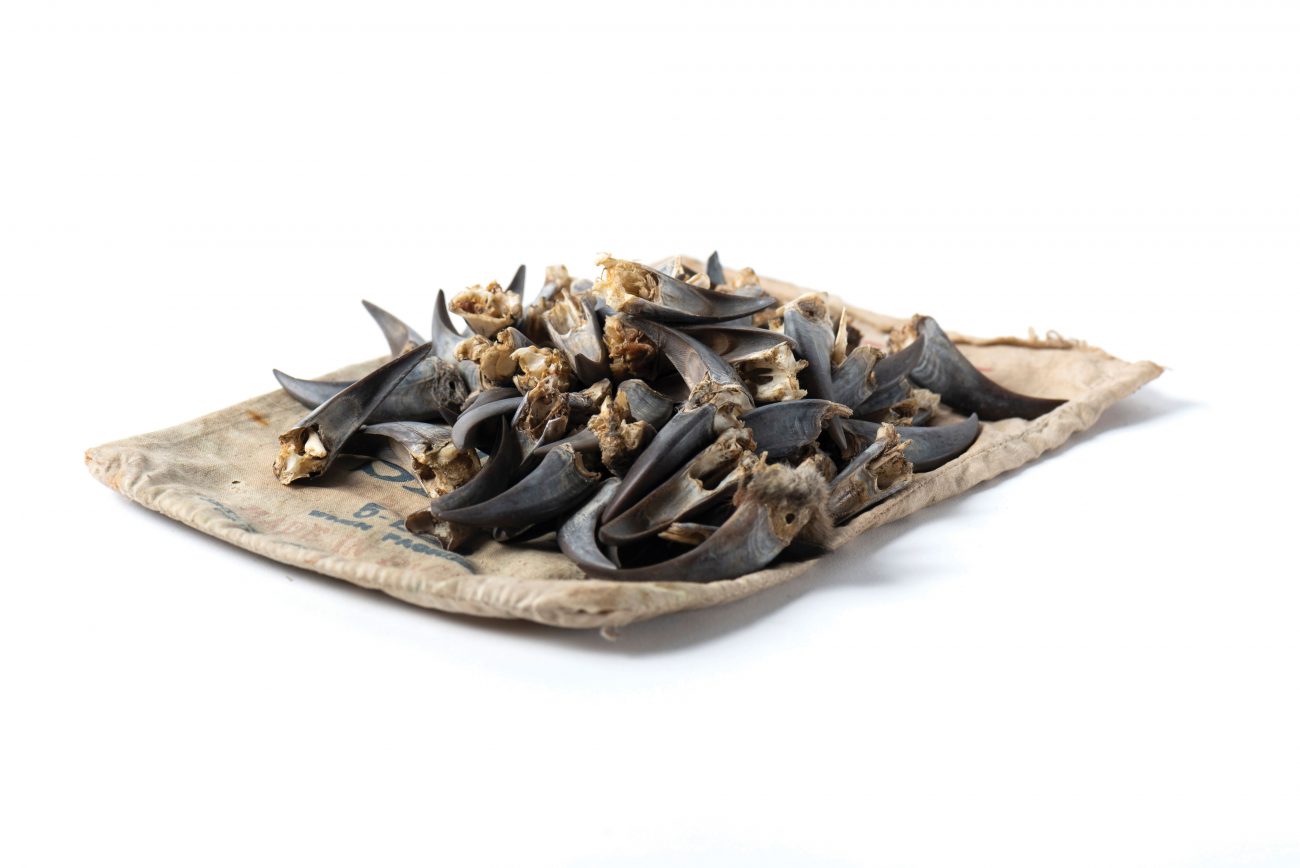
When the 70 kea beaks slide out of the ancient cloth salt bag onto a table in the Otago Museum, they jingle like a sack full of money. It’s appropriate, because for a century, that’s pretty much what they were. Between 1867 and 1970, anyone could walk into any county clerk’s office in the South […]...
The skin and feathers of this muff once belonged to a little spotted kiwi....
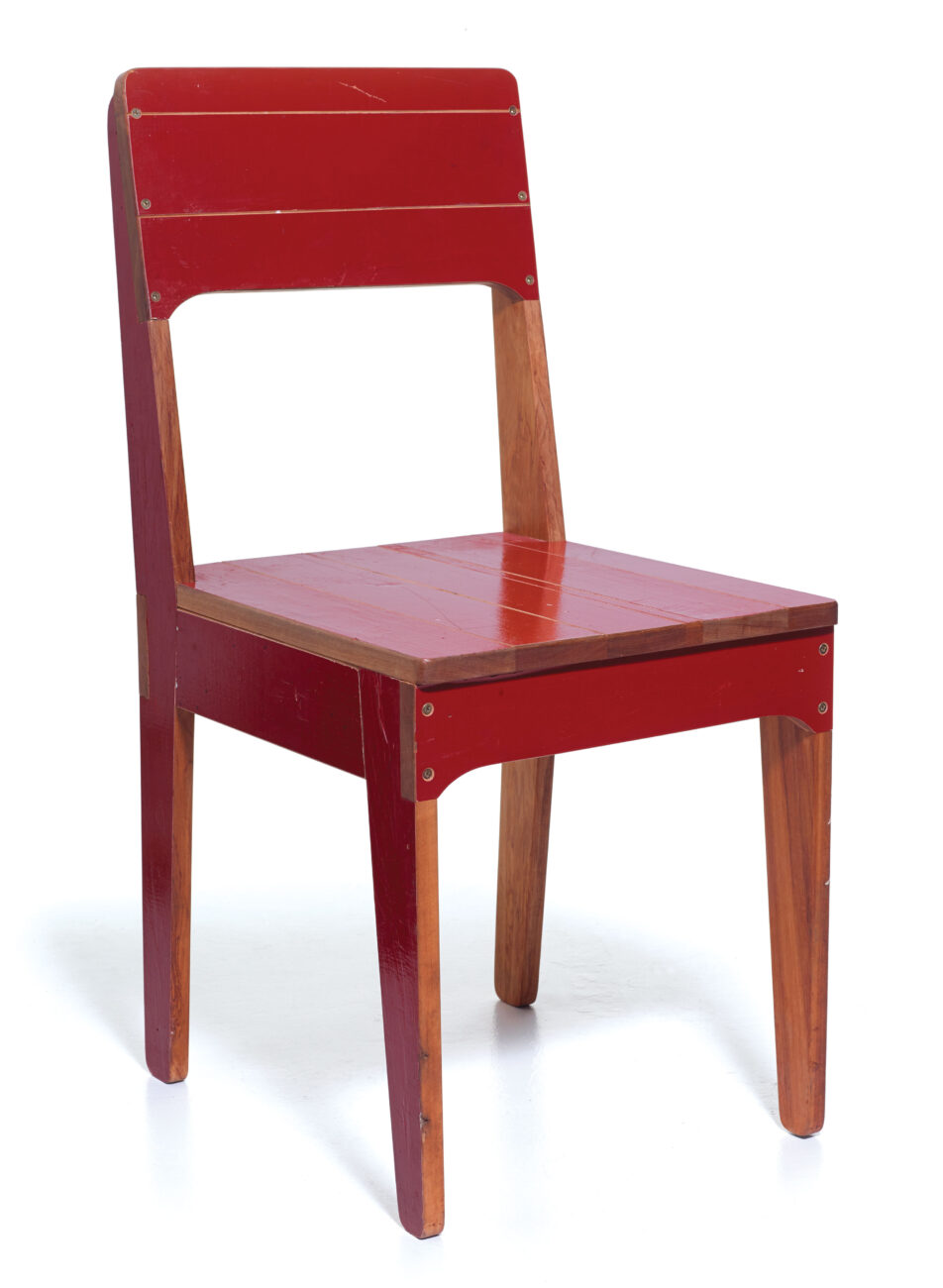
When Juliet Arnott came across a pile of red-painted timber labelled ‘Firewood’ in the Christchurch suburb of Mount Pleasant, she paused. The stack of wood was on land that had once belonged to a church. The church had been badly damaged in the second Canterbury earthquake, along with the homes of many of its parishioners. […]...
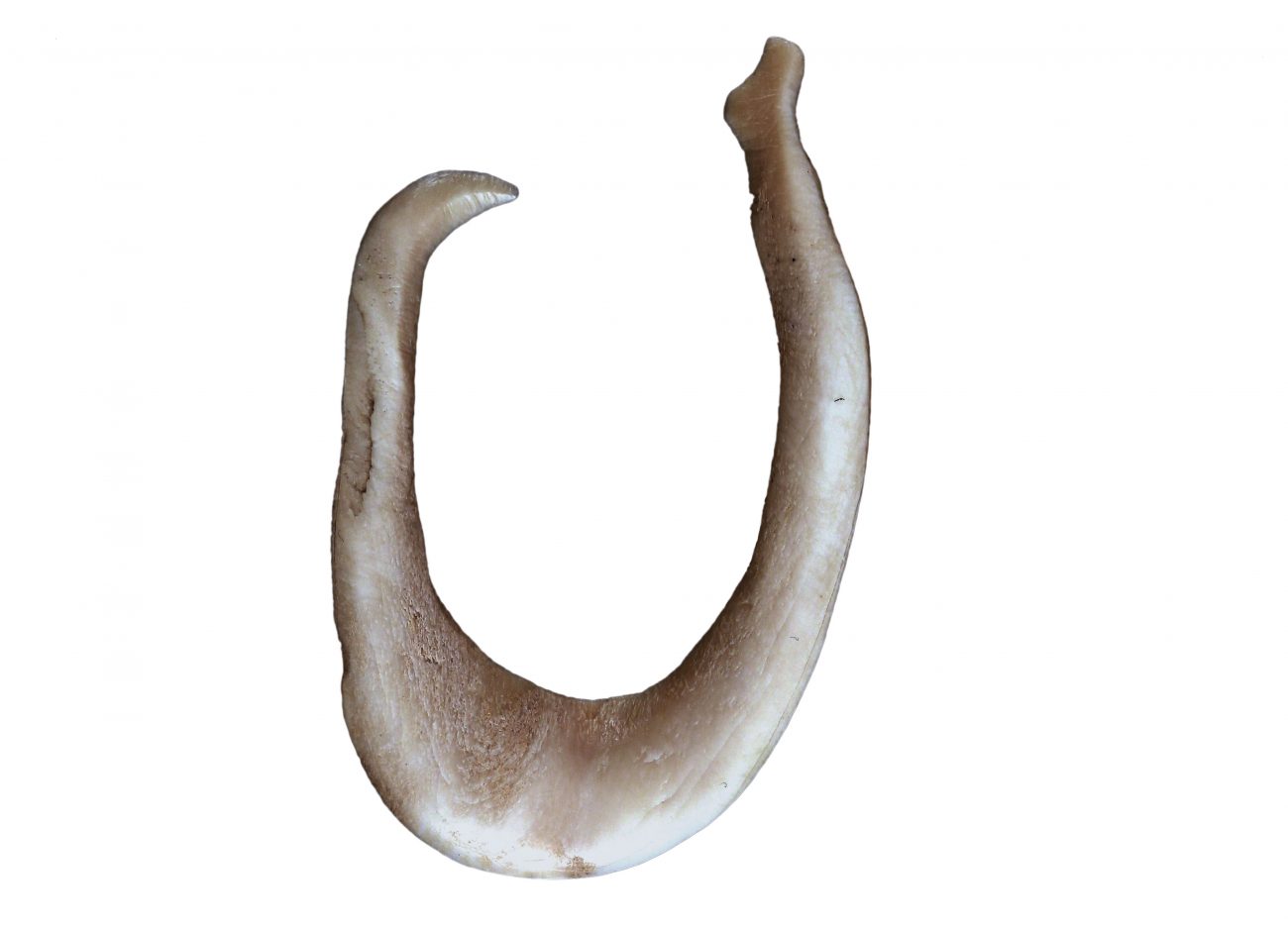
Displaying animal skeletons in museums is just one of many reasons for preparing bones. Museums also maintain extensive collections of bones for the study of comparative anatomy. All vertebrate animals have skeletons based on the same plan, because they involved from a common ancestor. By comparing them side by side, researchers can study the process […]...
A victim of the eruption of Vesuvius surprised researchers....
When this orange roughy hatched, European navigators were still colouring in their map of the world....
Revolutionary designer John Britten redesigned the racing bike from scratch....
A violin reprises the ANZAC experience of war....
Māori kept kākā as pets—and Judas parrots....