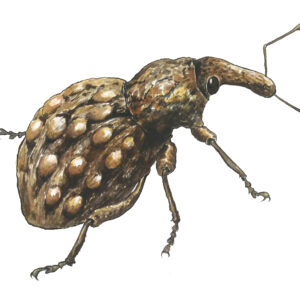





An Auckland Zoo programme is saving the Hauturu-o-toi/Little Barrier Island wētāpunga.
When people talk about their gateway drugs at university, you don’t normally expect the answer to be the Poor Knights giant wētā. But that was the insect which hooked Don McFarlane on ectotherms.
McFarlane (today Auckland Zoo’s ectotherms curator) was part of a team at ZSL London Zoo with permission to work with giant wētā in the early 2000s, focusing on chemical signals called pheromones. Incidentally, they discovered a large gut parasite that created asymmetry in their bodies and affected their ability to grow.
In 2014, McFarlane relocated to New Zealand to further his field conservation career with Auckland Zoo, which included the opportunity to shift his attention to the wētāpunga of Hauturu-o-toi/Little Barrier Island.
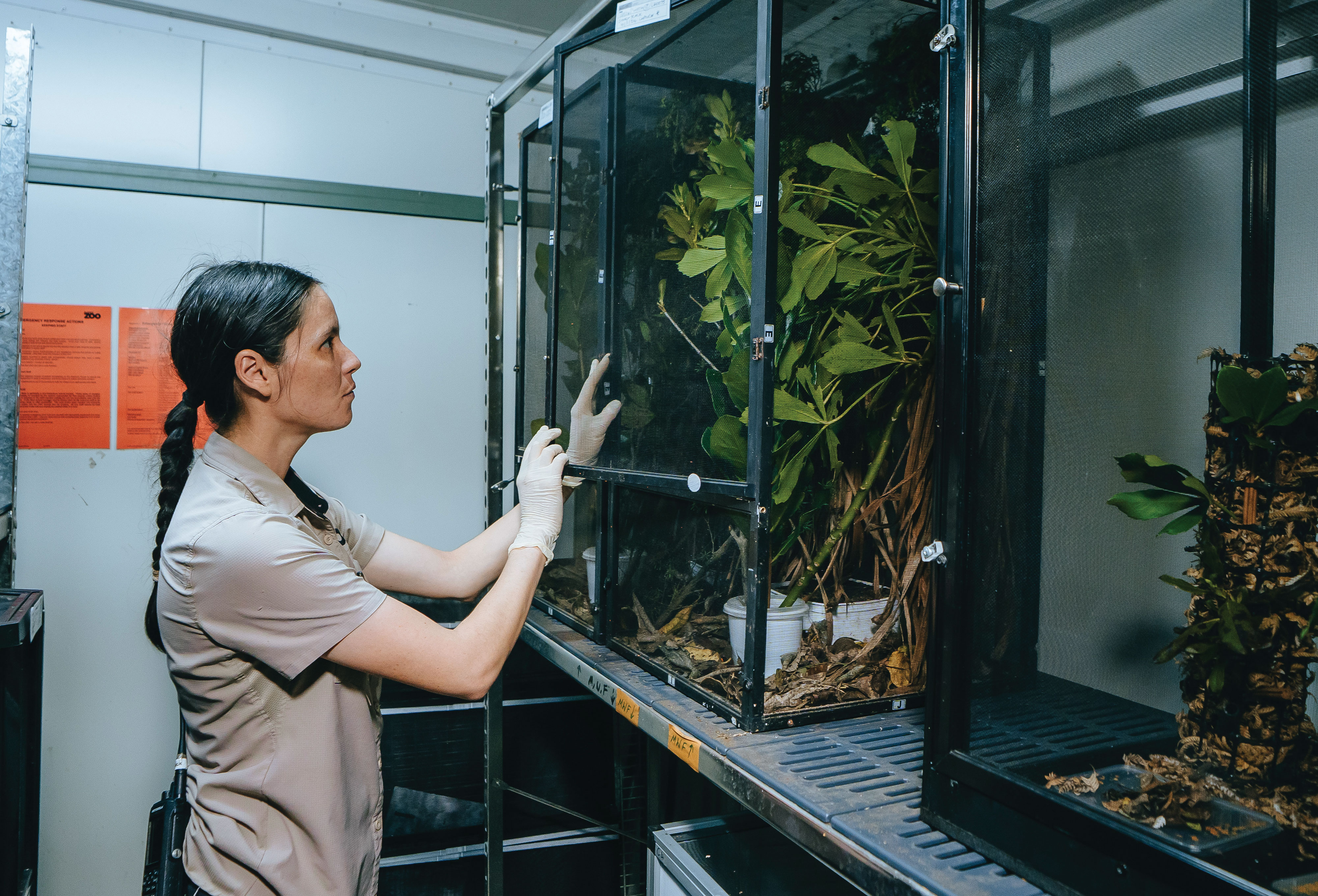
Auckland Zoo’s breed-for-release programme was established in 2012 in collaboration with Butterfly Creek – which had been breeding and releasing small numbers since 2008 – with the support of Ngāti Manuhiri and DOC. The Zoo subsequently expanded the scale and scope of the programme.
The final ‘founders’ were collected last year and have been breeding in their thousands since January. Offspring are now being released onto The Noises’ Islands (Ōtata and Motuhorapapa) as well as Motuihe in the Hauraki Gulf, and Te Tai Tokerau/Northland’s Iripiri group of islands. Since 2014, around 8,000 insects have been released across eight different predator-free islands. While the zoo-based work is set to come to an end next year, “much of the hard mahi comes after the releases,” says McFarlane.
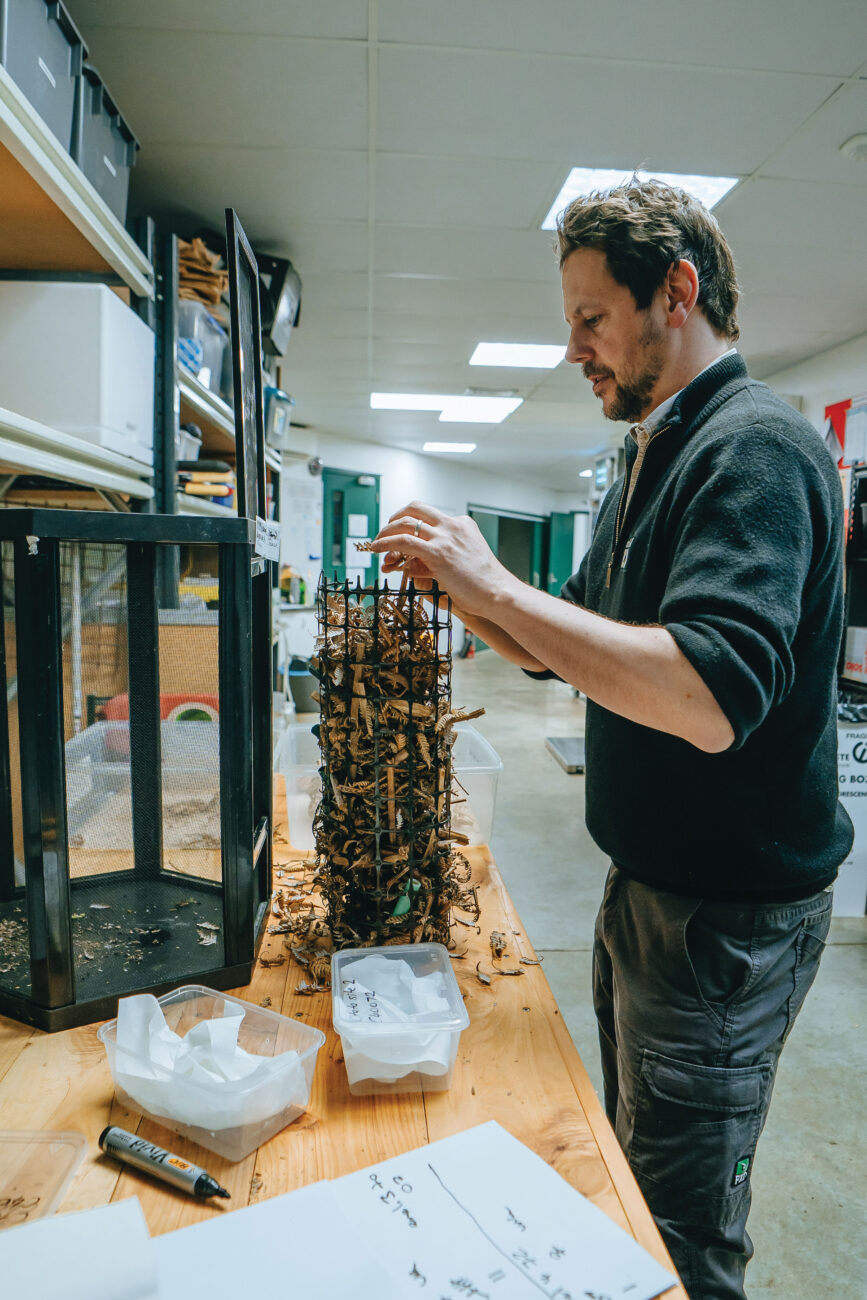
Regular surveys closely monitor populations so that DOC can review the species’ threat classification. “The lifespan of a wētā is about three years, so if we see more when we go back [in three years] and we see them spreading to other habitats, we can see they are self-sustaining.”
Even after 12 years, he says every release event is a special experience. “I’ve been doing this for so long now, but each release still feels as magical as it did on the first day. There’s a realisation of ‘Oh my goodness, look at the stage we’re at now, look what we’re doing!’”
McFarlane admits that nothing is guaranteed from all this conservation work. Islands are vulnerable—to climate change, fires, disease, and predators—but the team has given the species a greater chance of survival by taking it from one location to eight. Auckland Zoo continues to support the Butterfly Creek project with new founders for breeding and release to mainland reserves Tāwharanui and Shakespear Regional Parks, where this insect’s ability to persist alongside mice will be tested.
“The news is full of bleak stories, but this is a story of hope,” he says.
Removing introduced predators has been a crucial part of the equation for the survival of wētāpunga. Whether they can survive in the presence of mice remains uncertain. “It’s a subject being researched quite heavily, and not just for insects, but also for endemic lizards.”
On The Noises, where releases first began in 2015, the island’s guardians have told the team ‘they are everywhere’. Fifty adults were recently found in just a few hours one night, as well as many young, an insect infestation everyone seems very happy about.
“It’s easy to understand how they are contributing to healthy terrestrial ecosystems. You only have to see the size, and amount, of their poo. Like fertiliser pellets that contribute to healthy vegetation,” says Sue Neureuter, one of The Noises’ trustees.
“In turn, they are a natural part of the diet for certain birds. Ruru have increased in number and now breed regularly on Ōtata, and we’re seeing other, more subtle ecological benefits.”
Neither cute nor cuddly, McFarlane says the wētāpunga is more of a challenge when it comes to engaging people about its plight.
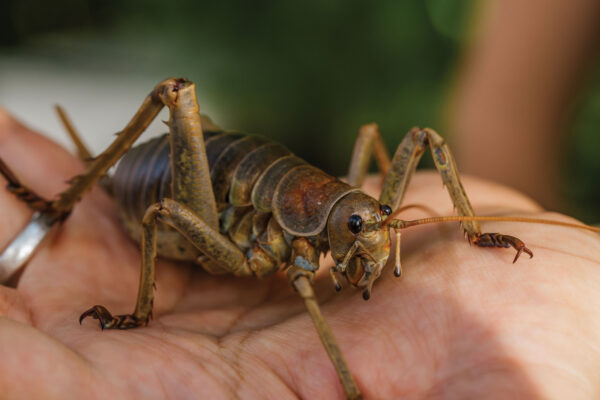
“The best thing to do is to have a bit of fun with that. Kids like the grotesque stuff, the weird and kinda cool, and the wētāpunga is a Guinness World Record holder. It’s the world’s largest cricket, and one of the world’s largest insects. It’s also endemic, so these are taonga and absolutely precious to Aotearoa. If people don’t see one for themselves it’s difficult to imagine how it might affect them when they’re gone. But seeing a wētāpunga on the hand … you’re focused on nothing else. They are ginormous!”
The role of good, modern zoos is very different from the past, he says, and science, research and conservation are at the heart of Auckland Zoo’s mission statement. That’s a big part of what attracted him here and McFarlane says it’s phenomenal that the programme has been so successful.
There are more than 100 species of wētā, 16 of which are listed as at risk, and there are thousands of other endangered insects in New Zealand, so there’s plenty more work to be done.
“They’re all just as deserving of time and attention and funding,” he says. “The problem is that they’re small and they’re poorly understood. There’s a long line of very sad faces because not a lot of money gets allocated to invertebrates. They need a few more champions. But if this is what we can achieve in a single project room, imagine what we could achieve with a bit more resource.”
More by NZ Geographic