





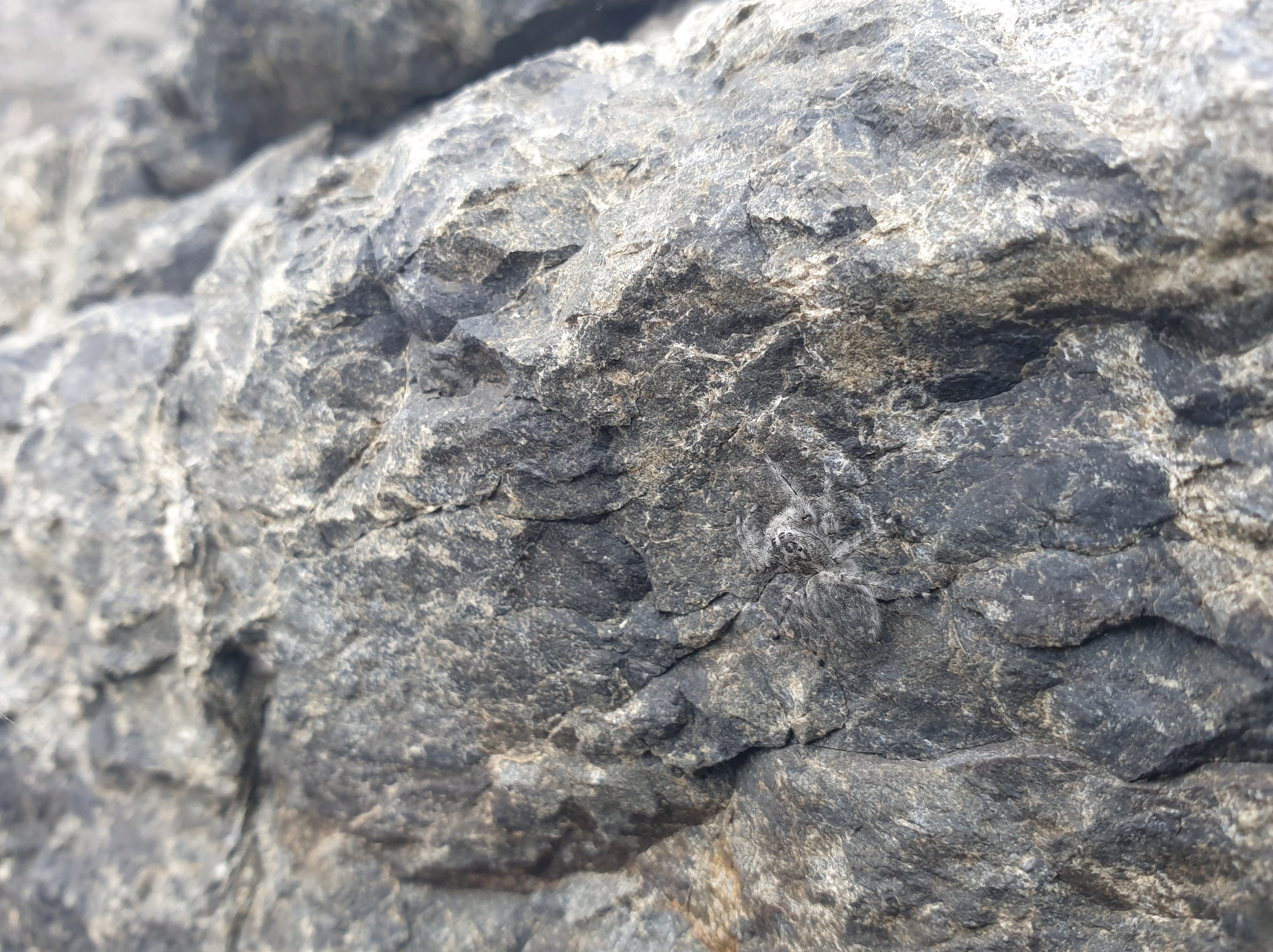
Look at the centre of the image above. Now slightly to the right. That’s a New Zealand jumping spider—one of a whole new genus discovered by Lincoln University master’s student Robin Long. Her extraordinary spider hunt spanned two years and 19 alpine areas across the South Island.
Spotting these camo-masters was one thing, Long says. Jumping spiders are also like birds or cats, in that they’re highly visual and very fast. And, she says dryly, “they also jump”. She learned not to try to catch them in the open, instead turning over rocks. There, she found many more spiders, hunkered down in silken “tents”.
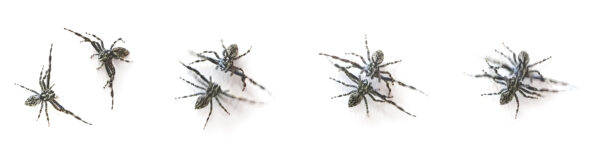
Under a microscope, subtle differences became apparent. Certain females had a fringe of orange hairs on their clypeal setae—think bristly moustache—and Long named that species saffroclypeus, for saffron. The master of disguise pictured above and below is petroides, named for the rock it mimics; another is kowhai, because its abdomen turns yellow in ethanol. “That one, I was scraping the barrel a bit,” Long says. She identified 12 new species in all, naming the genus Ourea, for deities linked with mountains in Greek mythology.
Long was also interested to know how these spiders mated, and what would happen if she put two of the same sex together. Cue tiny, fast fights.
More by Catherine Woulfe