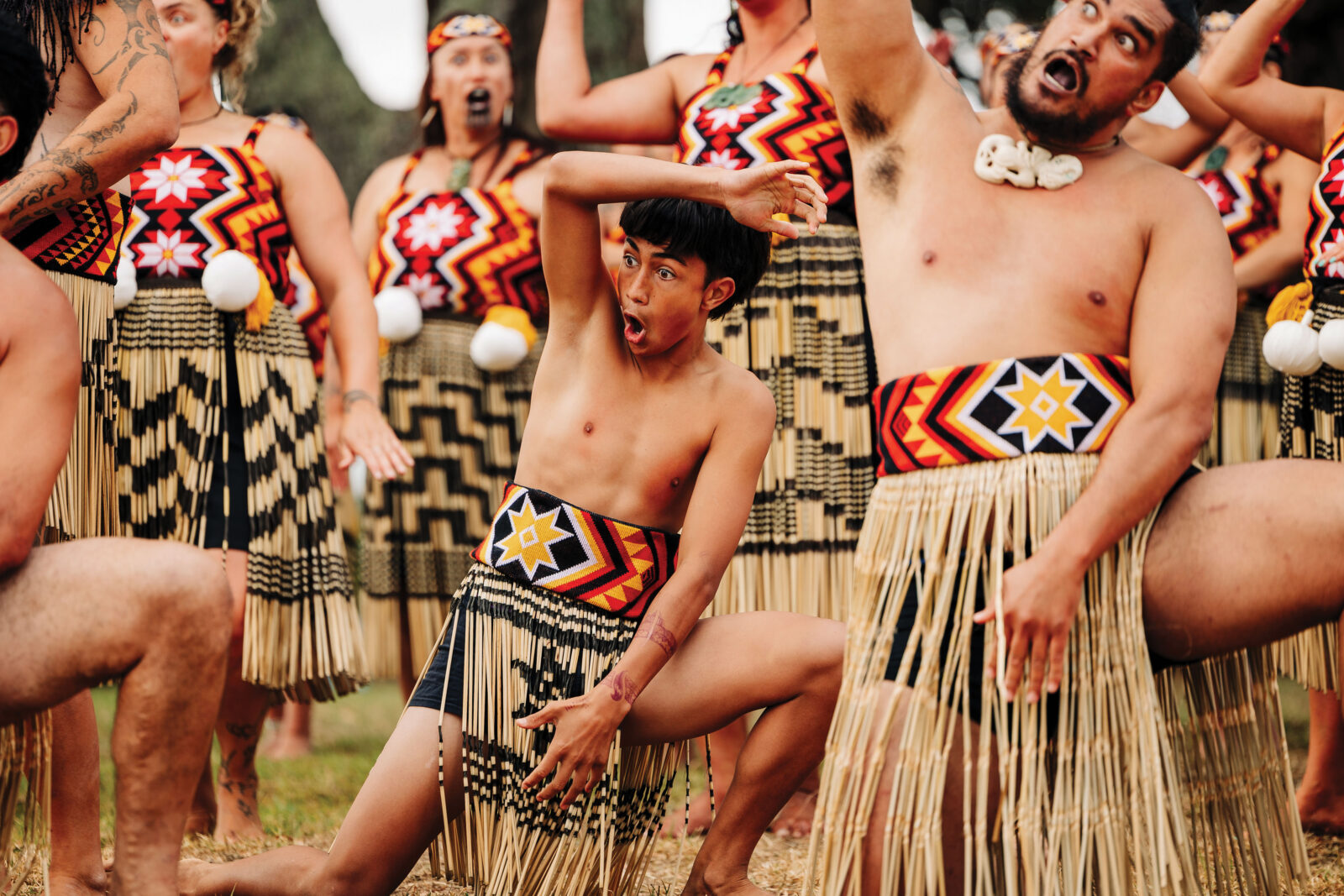





Often, kapa haka teams order their piupiu in batches. This year, a newbie team from the East Cape decided to make their own—40 piupiu, all with individual designs—and debut them on the biggest stage in the country. Erica Sinclair photographed the elaborate process.
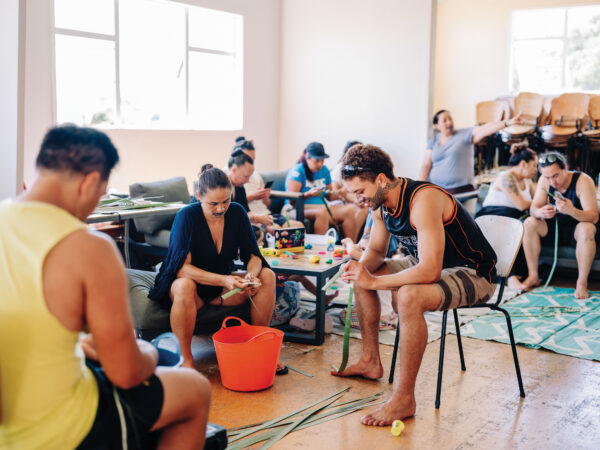
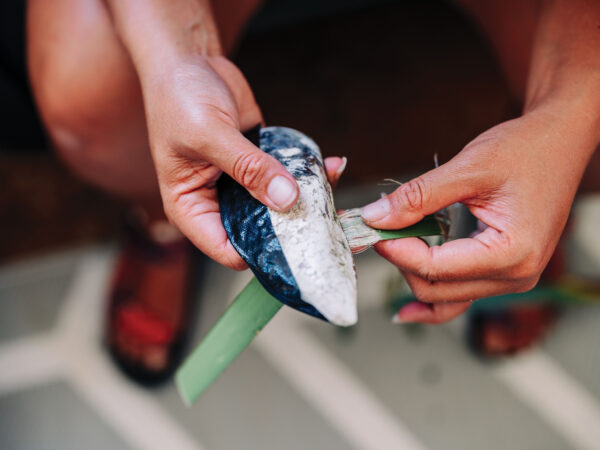
Wairūrū Marae is across the road from the beach, so if anyone looks out of the windows of the hall, they’ll see Waiau Bay sparkling through the waharoa, the gateway, and the forest-covered hills beyond. Inside, though, people are bent over their work, focused on scraping the edge of a mussel shell along a blade of flax. The pressure has to be just right: hard enough to lift the thick green outer layer, but not so much that the fibres within snap, or the mussel shell scrapes too much of the green away, ruining the pattern.
It’s difficult work, and Erica Sinclair is getting frustrated. She puts down her kuku—her mussel shell—and picks up one of her cameras instead. Scattered around the room are the members of the kapa haka team Te Taumata o Apanui, outnumbered by their whānau. Sinclair has been documenting the team since day one, almost a year ago; her partner is one of the performers. This wānanga, a cross between a whānau meet-up and a working bee, is to create their outfits for the national championships, Te Matatini.
In February, a week after this magazine goes to press, Te Taumata o Apanui will be competing in New Plymouth against 54 other kapa haka teams from around the country. The fiercest competition may be from home: teams from their iwi, Te Whānau-ā-Apanui, have taken the overall title three times in the past decade.
Each half-hour performance includes six elements—a choreographed entrance introducing the team and its kaupapa, or purpose, a speech, a song in response, a poi display, a haka, and a finale and exit. All are unique; this time, Te Taumata o Apanui’s haka will be about the moki, a fish sacred to Te Whānau-ā-Apanui, and its arrival in their coastal waters.
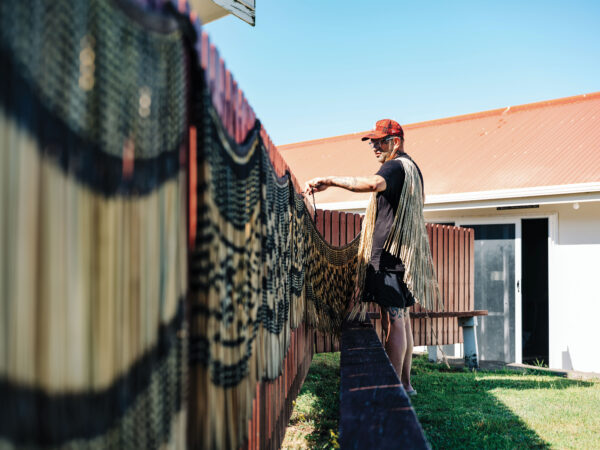
Most of the team’s songs were composed by the artist and musician Rob Ruha, who’s from the same hapū as Sinclair. When they secured their spot on the big stage, Ruha began to consider how they might stand out. Perhaps, he thought, they could do something special with piupiu, the handmade skirts worn by all performers. “When we create movement and create our songs, we’re also creating with the piupiu in mind—how does it add percussively to the song,” says Ruha. “Here on the coast, we are known for big movement, and the piupiu plays a huge part in that.”
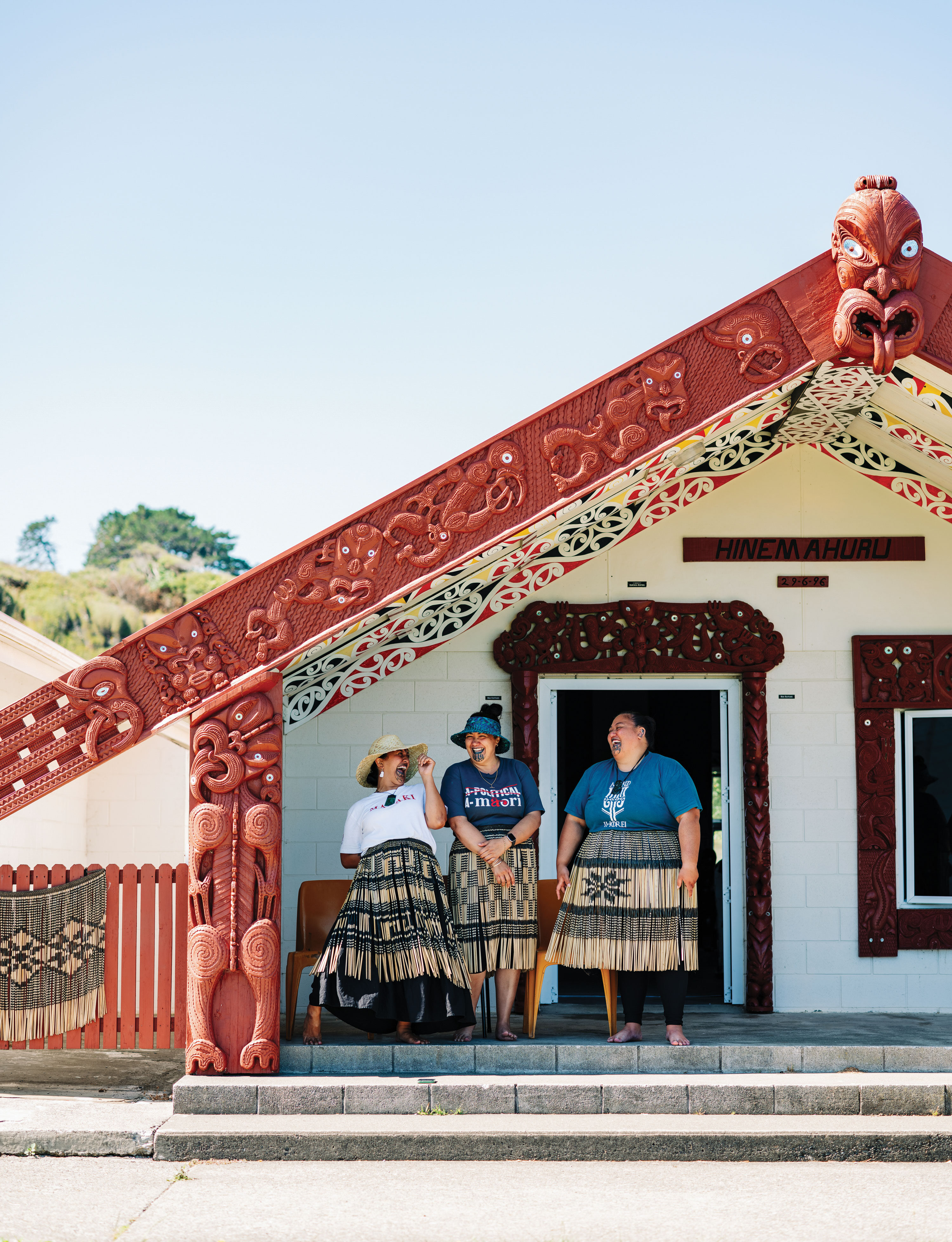
Kapa haka teams usually wear piupiu featuring the same pattern; piupiu are batch-ordered, and it’s more efficient for makers to repeat a design 40 times than come up with individualised patterns. Men wear short piupiu and women wear long ones.
But in historical photographs of the team’s ancestors, each person has their own piupiu pattern, and everyone’s wearing them below the knee. Ruha decided to revive those styles. “It’s going to be quite unique for our team to be wearing 40 completely different designs,” he says. “It’s the first time in Te Matatini history that there will be a team doing that.”
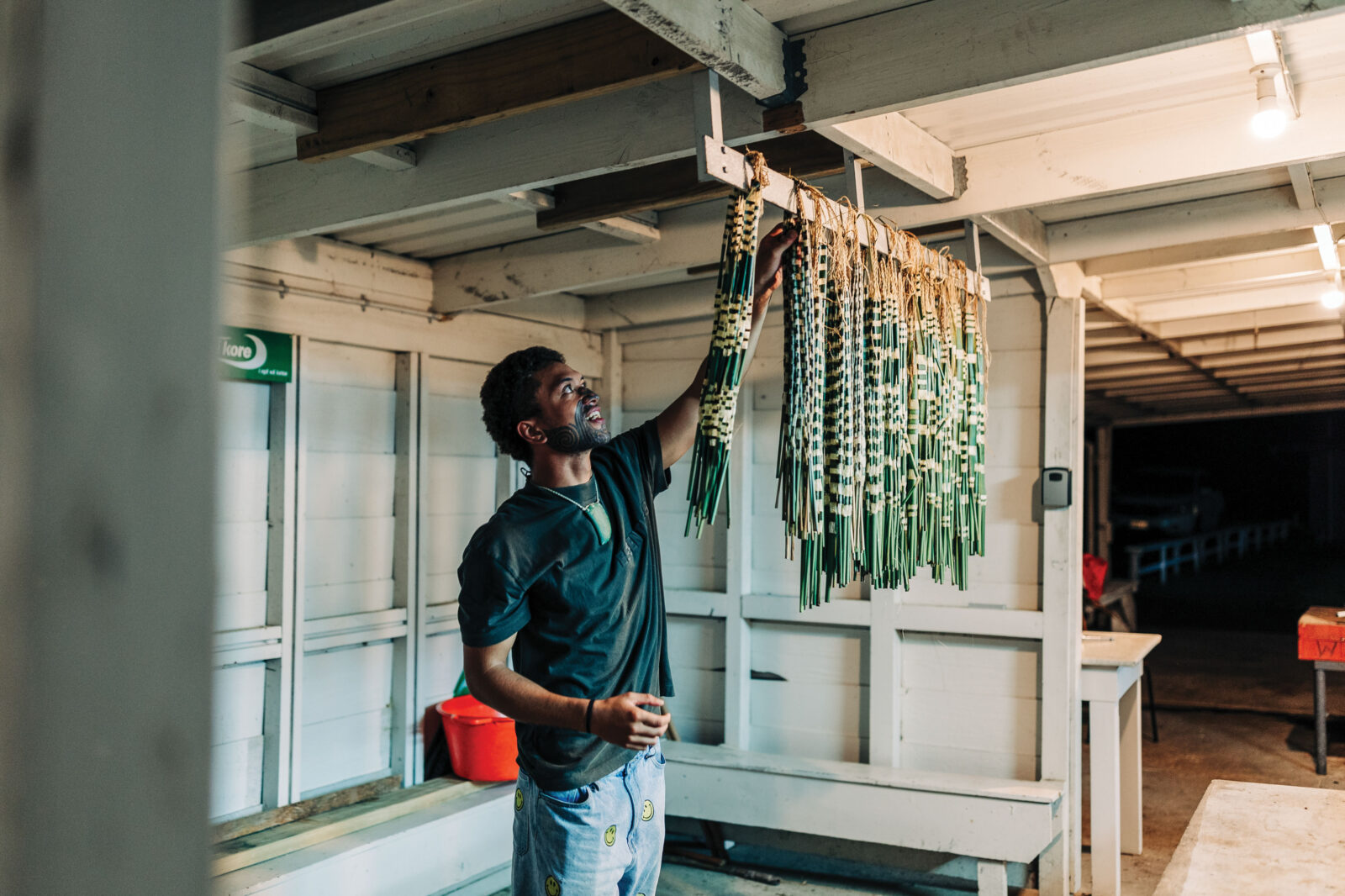
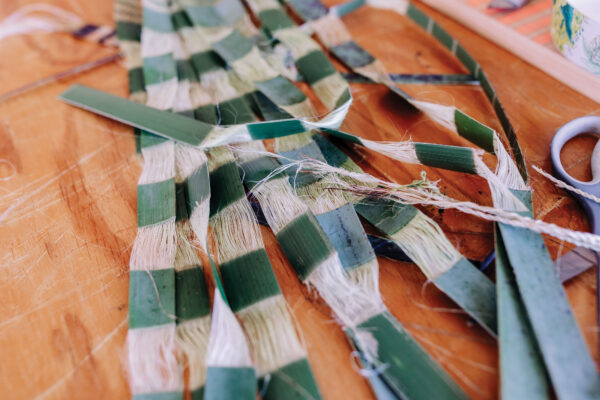
To make a single piupiu takes about 100 hours, and around 200 to 300 strands of harakeke. First, the pattern is cut into the green outer surface of the flax. Then, using a kuku, the surface is scraped away in sections to reveal the pale fibres within. The resulting strand of flax looks striped, with alternating sections of green surface layer and white inner fibre.
“I’ll tell you what; that mahi is actually so much harder than it looks,” says Sinclair. “Because out of all the strands I tried to do over that weekend, I think only one of them may have made it into a piupiu.
“I really wanted to be good at it, but I’m not there yet.”
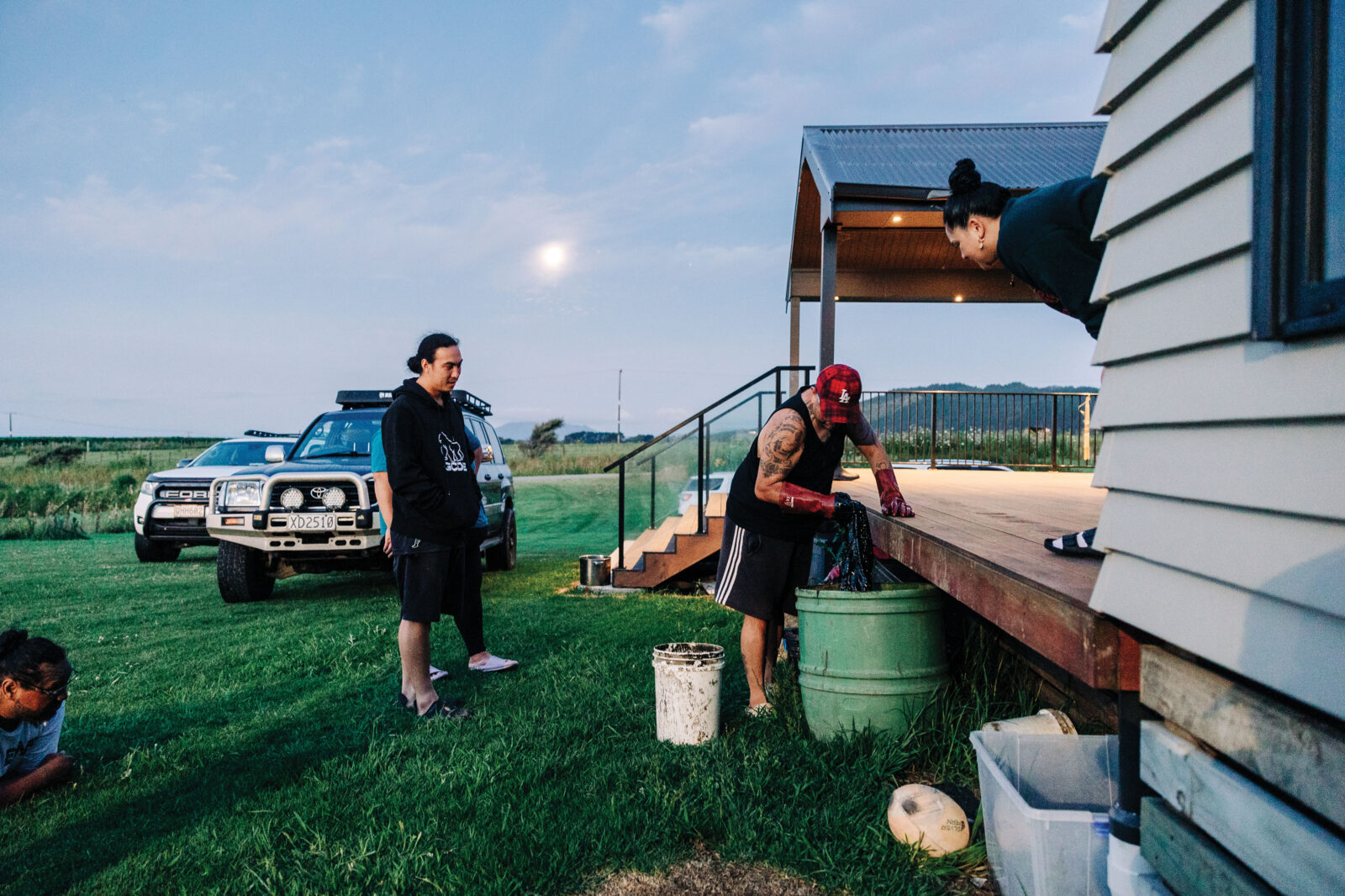
Next, the strands are boiled to strip the colour, then left to dry for about a week, during which each strand curls into a cylinder. At this point, the strands are woven into a belt to create the skirt, then the whole thing is soaked in a natural dye. “Depending on the plant that you use, it’ll either yield a gold or it’ll yield an orange, or sometimes even a dark green,” says Ruha. After that, the flax is soaked in peat, which dyes the exposed fibres black, chocolate brown, ash grey, or even a purple-blue. “Just depends where you get it from,” says Ruha. “It’s an organic matter, so it reacts differently.”
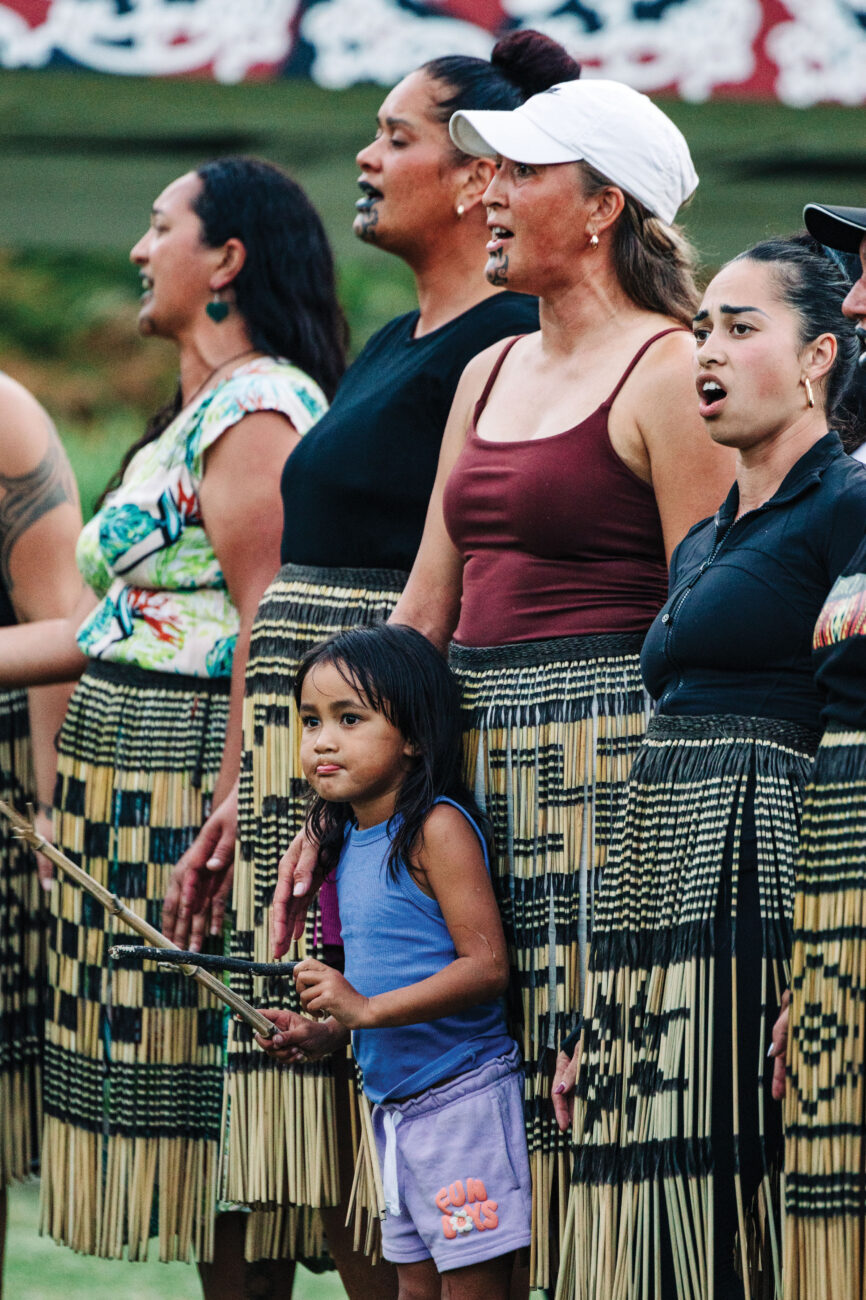
Following the historical photographs, only the women’s piupiu were dyed: the men’s remain a natural blond colour. As the flax dries, the blades curl into cylinders.
Sinclair started documenting the team’s journey for Facebook and Instagram, mostly as an attempt to drum up an audience for their first performance. They were scheduled to perform at the regional championships at 8.30am. Since they were a new team, and an unknown quantity, they figured no one would show up that early—unless people learned about them in advance. They asked Sinclair if she could help, and her efforts were so successful that other teams have taken note.
“Te Matatini kapa haka is fiercely competitive,” says Ruha.
“I’ve been doing this for the last 30 years of my life, and it’s amazing seeing the teams fully embrace that and finding ways where they can have the competitive edge. And they’re using socials to do that.”
Ruha hopes that the individualised piupiu will give the team that edge—but that’s not the main motivation behind the project. “The whole reason for running wānanga and for doing 40 bespoke patterns was to inspire other people to take up the craft, because it’s dying,” he says. “Other than myself and my wife, who are residents living back here in the iwi making piupiu, I don’t know of anyone else [in the iwi doing it]. And the whole 40 patterns thing, hopefully that gives them a taste of what you can do with this art form, how you can express yourself.”
At the wānanga, most of the tamariki were too young to be much help with the technical work of preparing flax. Still, it’s important to involve them in traditions like this, says Ruha. “What we know and what we feel as performers has come from running in the ranks and watching our nannies and watching our aunties and watching those that we looked up to,” he says. “So I think that that’s our natural way of how we transmit knowledge and share knowledge intergenerationally. We weave it into their bones.”
More by Rebekah White
More by Erica Sinclair