

New sea monster just dropped

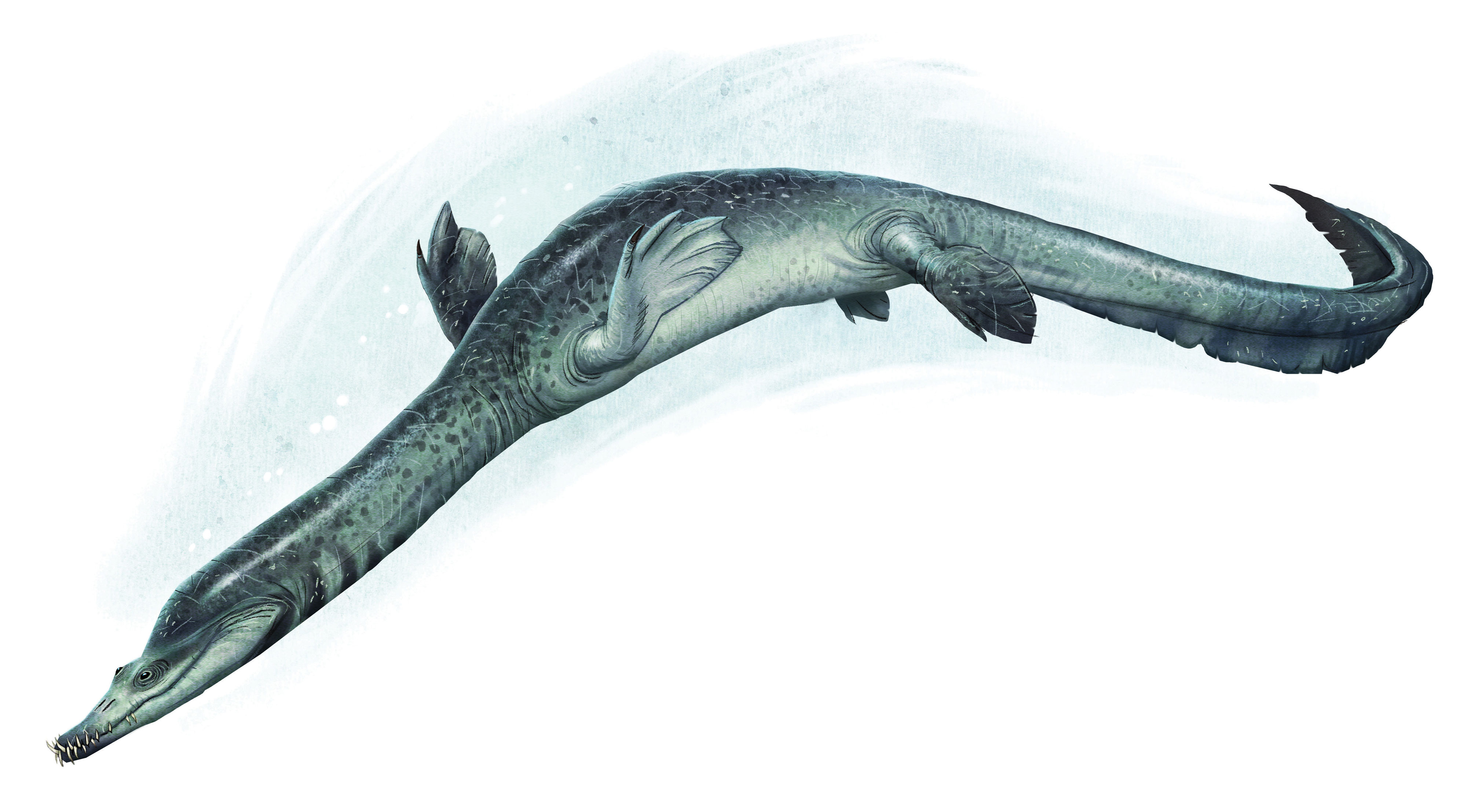
A fossilised bone found in a Canterbury stream turns out to be from a nothosaur—the first proof that these massive, predatory marine reptiles ever lived in the southern hemisphere.

Nothosaurs could grow as long as seven metres (although much of that was neck and tail) and hunted the shallow waters around the coasts.

Like their better-known sauropterygian cousins the plesiosaurs, they propelled themselves through ancient seas using four flat paddles, snatching fish and squid in sharp, conical teeth.

Hamish Campbell, of GNS Science, found the large vertebra in 1978, in the Mount Harper/Mahaanui area. GNS loaned the fossil to palaeontologist Ewan Fordyce at the University of Otago, and there it stayed, carefully labelled and shelved, for nearly three decades.

In 2017, Fordyce showed the fossil to Benjamin Kear, a Swedish marine reptile specialist he was collaborating with. Kear knew he was looking at something special, and led a team who have formally described the find in the journal Current Biology.

Based on shells in the encasing siltstone, the team determined this animal lived around 246 million years ago, not long after the mass extinction that wiped out 90 per cent of marine life at the end of the Permian period. Such mass extinctions, Kear explains, can drive diversification as new groups race to fill vacant ecological niches.

The nothosaur and other sauropterygians, he says, evolved from a land-dwelling ancestor, and this fossil—the earliest sauropterygian ever found in the southern hemisphere—illustrates just how successful they were. “It’s the first clue that not only did these things adapt to live in the oceans very quickly, but they explosively dispersed all around the world.”

Kear believes the find also indicates that the remains of many other extinct marine giants are waiting to be discovered here.

For Campbell, the discovery highlights the importance of collections. Fossils, he says, may only reveal their importance many years, or in this case decades, after they were collected—when “the right person with the right pair of eyes came along”.

A fossilised bone found in a Canterbury stream turns out to be from a nothosaur—the first proof that these massive, predatory marine reptiles ever lived in the southern hemisphere.

Nothosaurs could grow as long as seven metres (although much of that was neck and tail) and hunted the shallow waters around the coasts.

Like their better-known sauropterygian cousins the plesiosaurs, they propelled themselves through ancient seas using four flat paddles, snatching fish and squid in sharp, conical teeth.

Hamish Campbell, of GNS Science, found the large vertebra in 1978, in the Mount Harper/Mahaanui area. GNS loaned the fossil to palaeontologist Ewan Fordyce at the University of Otago, and there it stayed, carefully labelled and shelved, for nearly three decades.

In 2017, Fordyce showed the fossil to Benjamin Kear, a Swedish marine reptile specialist he was collaborating with. Kear knew he was looking at something special, and led a team who have formally described the find in the journal Current Biology.

Based on shells in the encasing siltstone, the team determined this animal lived around 246 million years ago, not long after the mass extinction that wiped out 90 per cent of marine life at the end of the Permian period. Such mass extinctions, Kear explains, can drive diversification as new groups race to fill vacant ecological niches.

The nothosaur and other sauropterygians, he says, evolved from a land-dwelling ancestor, and this fossil—the earliest sauropterygian ever found in the southern hemisphere—illustrates just how successful they were. “It’s the first clue that not only did these things adapt to live in the oceans very quickly, but they explosively dispersed all around the world.”

Kear believes the find also indicates that the remains of many other extinct marine giants are waiting to be discovered here.

For Campbell, the discovery highlights the importance of collections. Fossils, he says, may only reveal their importance many years, or in this case decades, after they were collected—when “the right person with the right pair of eyes came along”.

3 FREE ARTICLES LEFT

Subscribe for $1  | 

3 FREE ARTICLES LEFT THIS MONTH


Keep reading for just $1

$1 trial for two weeks, thereafter $8.50 every two months, cancel any time

Already a subscriber?

Signed in as . Sign out