





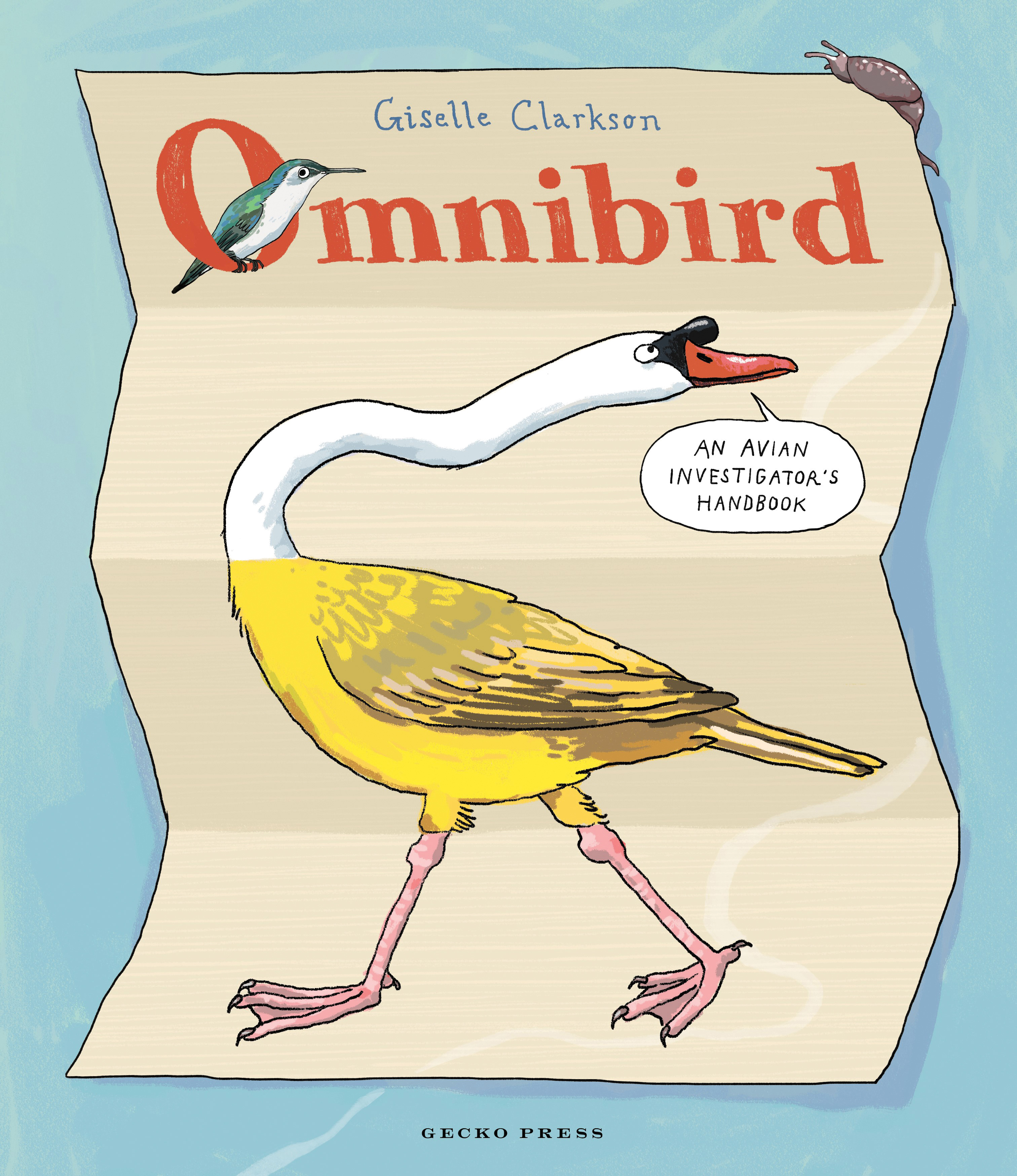
Giselle Clarkson , Gecko Press, $44.99
Have you seen any birds today? Doesn’t mean they haven’t seen you. Writer and comic artist Giselle Clarkson’s Omnibird is an illustrated guide to spying on all the avian life around us, and it doubles as an encyclopaedia of the essential attributes of bird-ness. What can the form of a beak tell a clever observer? What about the shape of a bird’s feet? Potential bird detectives are surrounded by investigative opportunities, says Clarkson. (“Being dragged outside for some fresh air,” for one.)
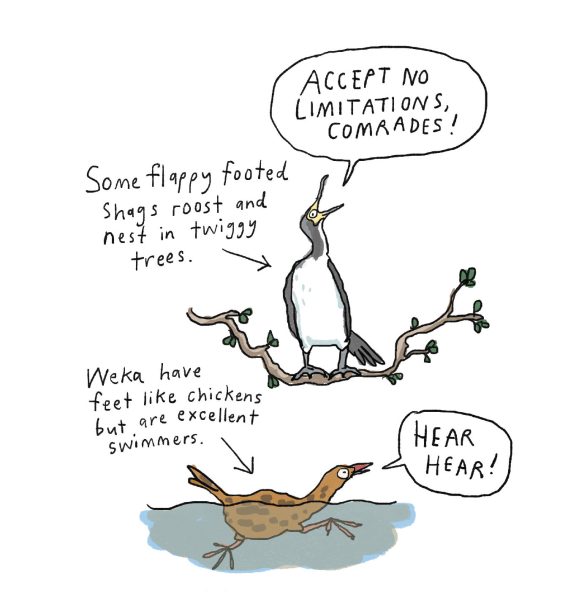
Omnibird is also a how-to guide: not only how to look at birds, but how to be birds. Included are directions for imitating the wing movements of various species, assisting with nest construction, and eavesdropping on avian conversation. There are even tips on joining in with the chat.
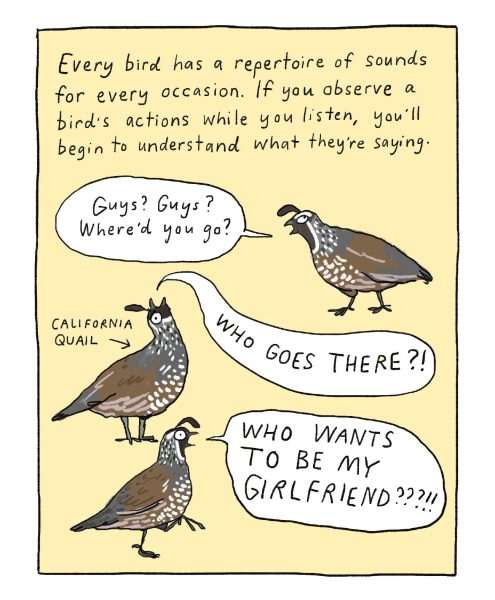
This appears to be a book for young people, but don’t let that fool you. I’ve written about birds professionally for a decade, and yet I didn’t know that hummingbird tongues are forked, that those blobby things on a turkey’s face are called caruncles, that starlings can imitate sirens, or that the reason blackbirds flick their tails up and down is that they’ve spotted potential danger (and that danger is probably me).
Even ordinary birds are discoveries waiting to be made. But why, asks Clarkson, do we call them ordinary? Aren’t they dinosaurs in minature? Don’t they perform Olympic feats of endurance and look like works of art?
“When we see something all the time, it’s easy to forget that it’s extraordinary,” she writes. “Mistaking the world for ordinary is a terrible habit that you should always struggle against. It’s much worse than even picking your nose.”
More by Rebekah White