






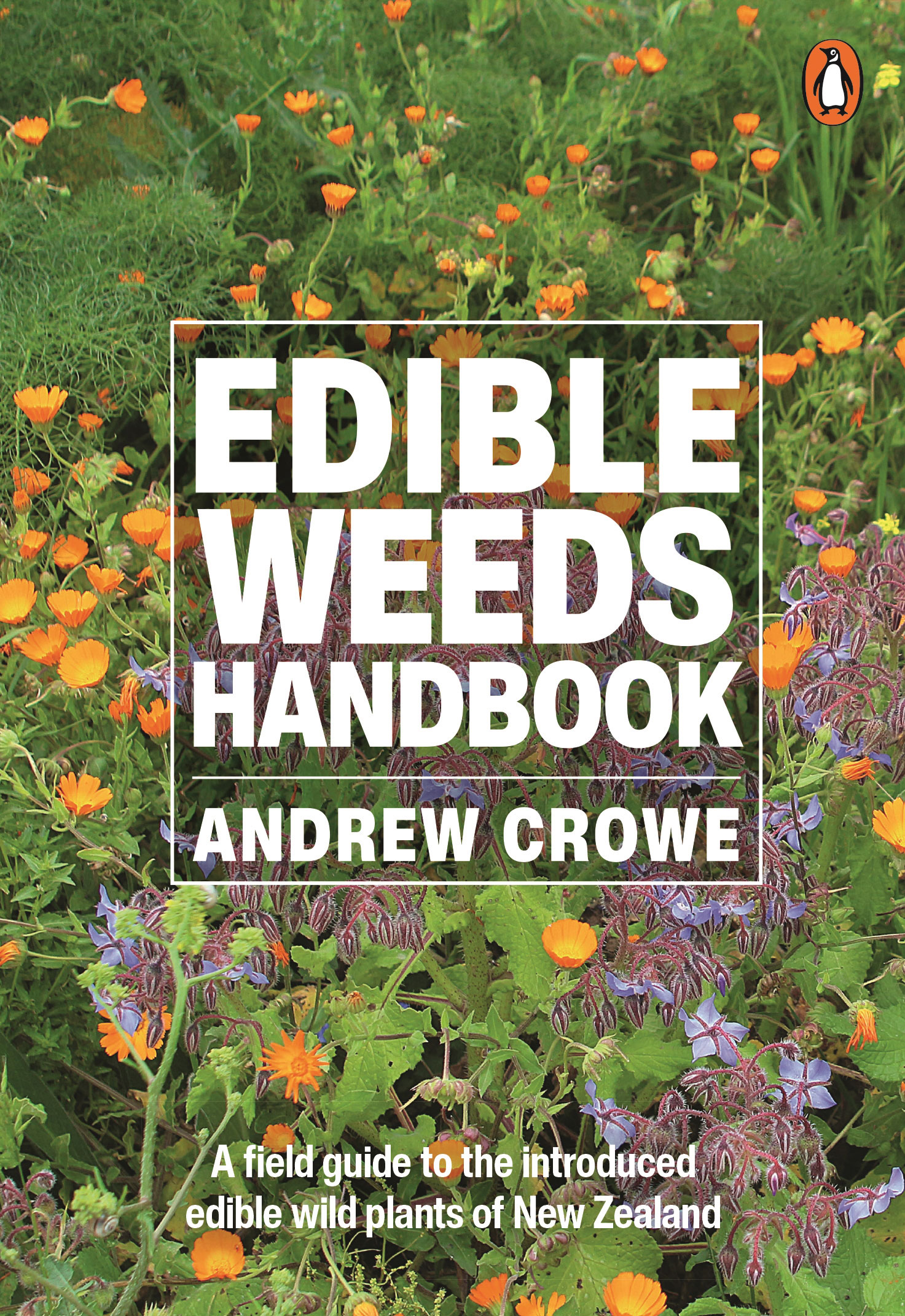
Andrew Crowe, Penguin, $35, September 2
There are many ways to look at a plant. You might see art and history, as in Case Studies in the review opposite; you might see with a scientist’s eye—or see double, as in our feature on page 78.
Andrew Crowe sees plants as food. This field guide is a companion to his 2004 book about eating native plants, and to my mind it’s the more practical: I am now eyeing with interest the nasturtium and dock that are overtaking my vege garden, and the tiny Indian strawberries smothering the side path. (“Small and insipid,” Crowe writes, “yet they have been used lately also in Europe for garnishing cakes and pastries.”)
Crowe is careful to flag “toxic lookalikes”—he doesn’t want you merrily scoffing snowflakes, which look like onion weed, or tutu, which might be mistaken for wild asparagus. There are 160-odd plants featured, and each gets a quick description as well as a clear photograph—leaves, fruit, roots. Crowe then ticks through where to find it, the plant’s nutritional value, and how to prepare it. He intends the book, he writes, as “a kind of antidote” to the global food industry. But more than that: “It concerns a sense of fulfilment that can come from taking the trouble to engage more fully with the natural world.”
More by Catherine Woulfe