






First flights

Scientists are still puzzling over how the first birds flew

Written by

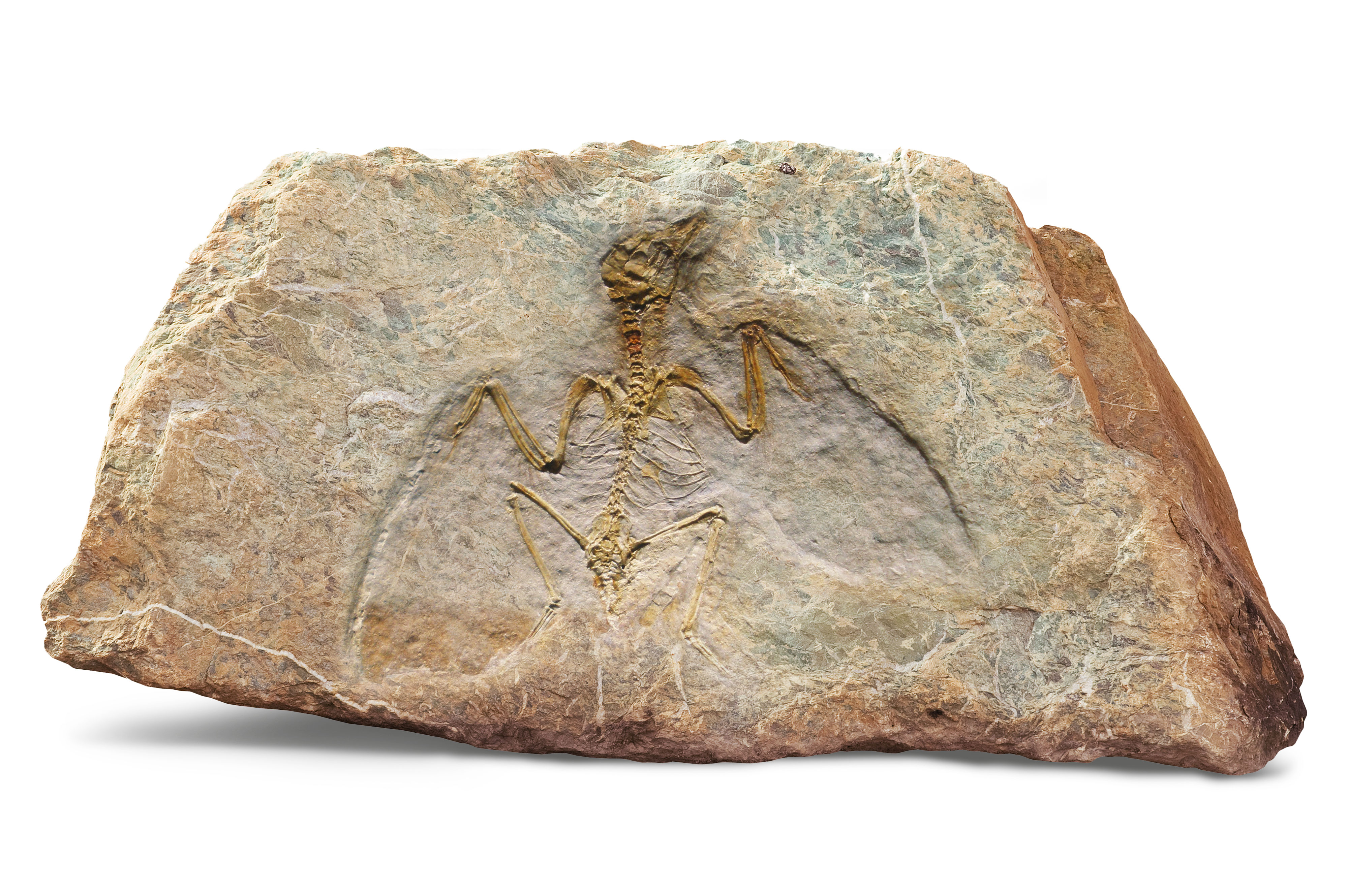
A juvenile Liaoxiornis delicatus met its end in muddy sediment, as did all enantiornithines, a group of birds now long extinct.

Soaring, flapping, flap-gliding, bounding or bursts—there are many ways a modern bird can fly. But birds alive during the reign of the dinosaurs, and now long extinct, may have flown in ways that were unlike any of these, according to a study by scientist Roger Close of Monash University in Melbourne.

Close looked at fossilised wishbones, which are broad and boomerang-shaped in modern soaring birds (albatrosses, for example) and V-shaped in birds that mostly flap (like ducks) or dive (like penguins). Really a fused collar bone, a modern bird’s wishbone is the anchor site of the main flight muscle, the pectoralis, which controls downward thrust in flight.

However, most of the fossilised wishbones of Mesozoic birds from 250 million to 65 million years ago don’t conform to these shapes, and scientists are baffled as to how the birds flew.

One group, the ornithurines, from which modern birds are descended, had wishbones quite like those of today’s flapping flyers. But in two other groups of birds (the enantiorni­thines and the primitive basals), wishbones were either too V-shaped to imply that they were strong flyers or too broadly boomerang-shaped for them to be soarers.

Close concluded that the dino-birds must have flown in a completely different fashion from modern birds, or the way in which their muscles were arranged on the skeleton was dramatically different.

More by

A juvenile Liaoxiornis delicatus met its end in muddy sediment, as did all enantiornithines, a group of birds now long extinct.

Scientists are still puzzling over how the first birds flew

Soaring, flapping, flap-gliding, bounding or bursts—there are many ways a modern bird can fly. But birds alive during the reign of the dinosaurs, and now long extinct, may have flown in ways that were unlike any of these, according to a study by scientist Roger Close of Monash University in Melbourne.

Close looked at fossilised wishbones, which are broad and boomerang-shaped in modern soaring birds (albatrosses, for example) and V-shaped in birds that mostly flap (like ducks) or dive (like penguins). Really a fused collar bone, a modern bird’s wishbone is the anchor site of the main flight muscle, the pectoralis, which controls downward thrust in flight.

However, most of the fossilised wishbones of Mesozoic birds from 250 million to 65 million years ago don’t conform to these shapes, and scientists are baffled as to how the birds flew.

One group, the ornithurines, from which modern birds are descended, had wishbones quite like those of today’s flapping flyers. But in two other groups of birds (the enantiorni­thines and the primitive basals), wishbones were either too V-shaped to imply that they were strong flyers or too broadly boomerang-shaped for them to be soarers.

Close concluded that the dino-birds must have flown in a completely different fashion from modern birds, or the way in which their muscles were arranged on the skeleton was dramatically different.

More by

×

Subscribe to our free newsletter for news and prizes

3 FREE ARTICLES LEFT

Subscribe for $1  | 

3 FREE ARTICLES LEFT THIS MONTH


Keep reading for just $1

$1 trial for two weeks, thereafter $8.50 every two months, cancel any time

Signed in as . Sign out