






Need a mobile home? An incubation chamber? Dinner? Hundreds of species have hit on an elegant solution: find a nice juicy critter—and turn it into a zombie.
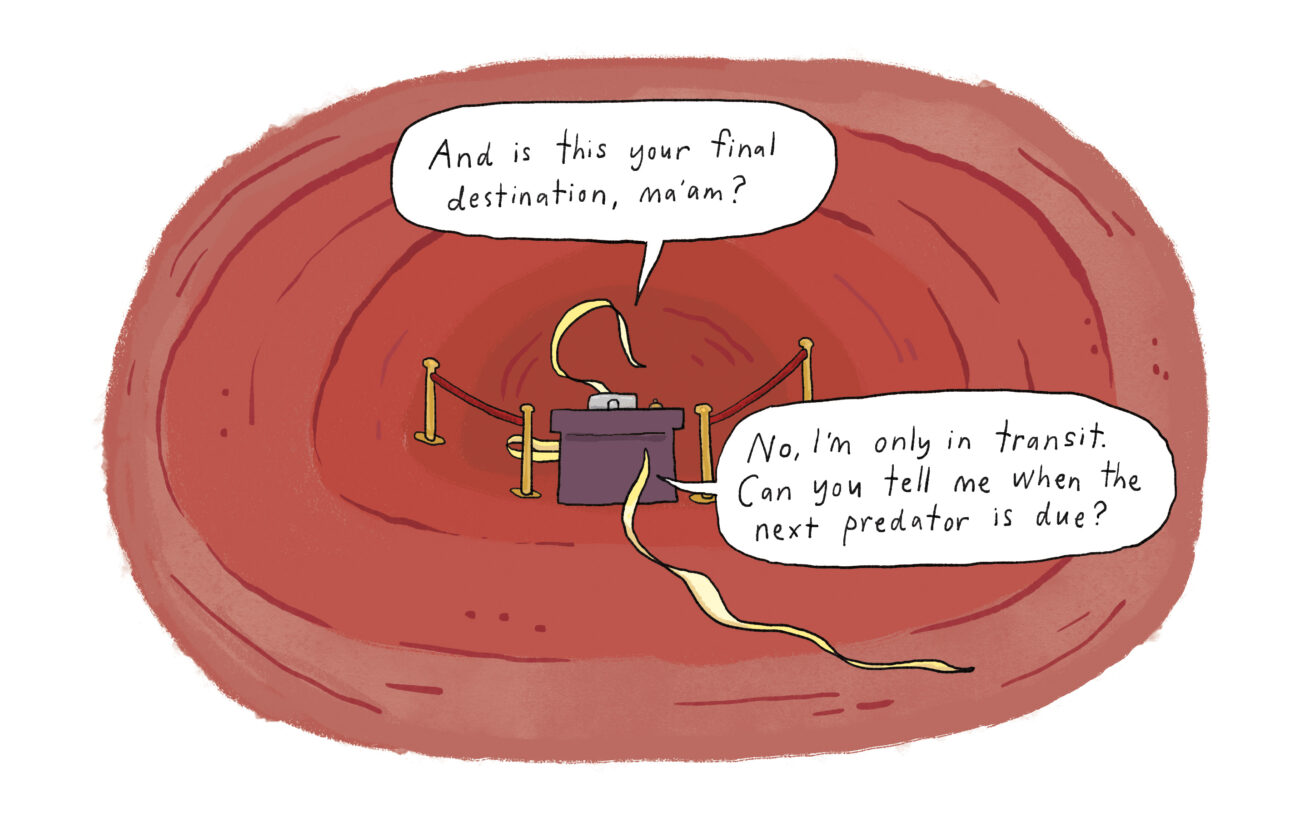
The young hairworm, coiled up in the belly of the wētā, was ready to move out and find a mate. For months, the worm had lived inside the wētā, stealing its resources by simply existing: the worm did not have a mouth for chewing and sucking, but instead absorbed the wētā’s food and flesh via its permeable skin. Now, the parasite took over its host’s mind, too. The wētā started wandering about hyperactively. About an hour later, it marched over the tussock grass of The Remarkables, near Queenstown, and leapt into a pool of snowmelt.
The wētā had barely drowned before the 25-centimetre dark-brown worm came wriggling out of its abdomen. University of Otago parasitologist Robert Poulin came across the scene while tramping with his family. The worm, an aquatic species, was still alive, still looking for love, and the wētā’s body lay beside it in the water.
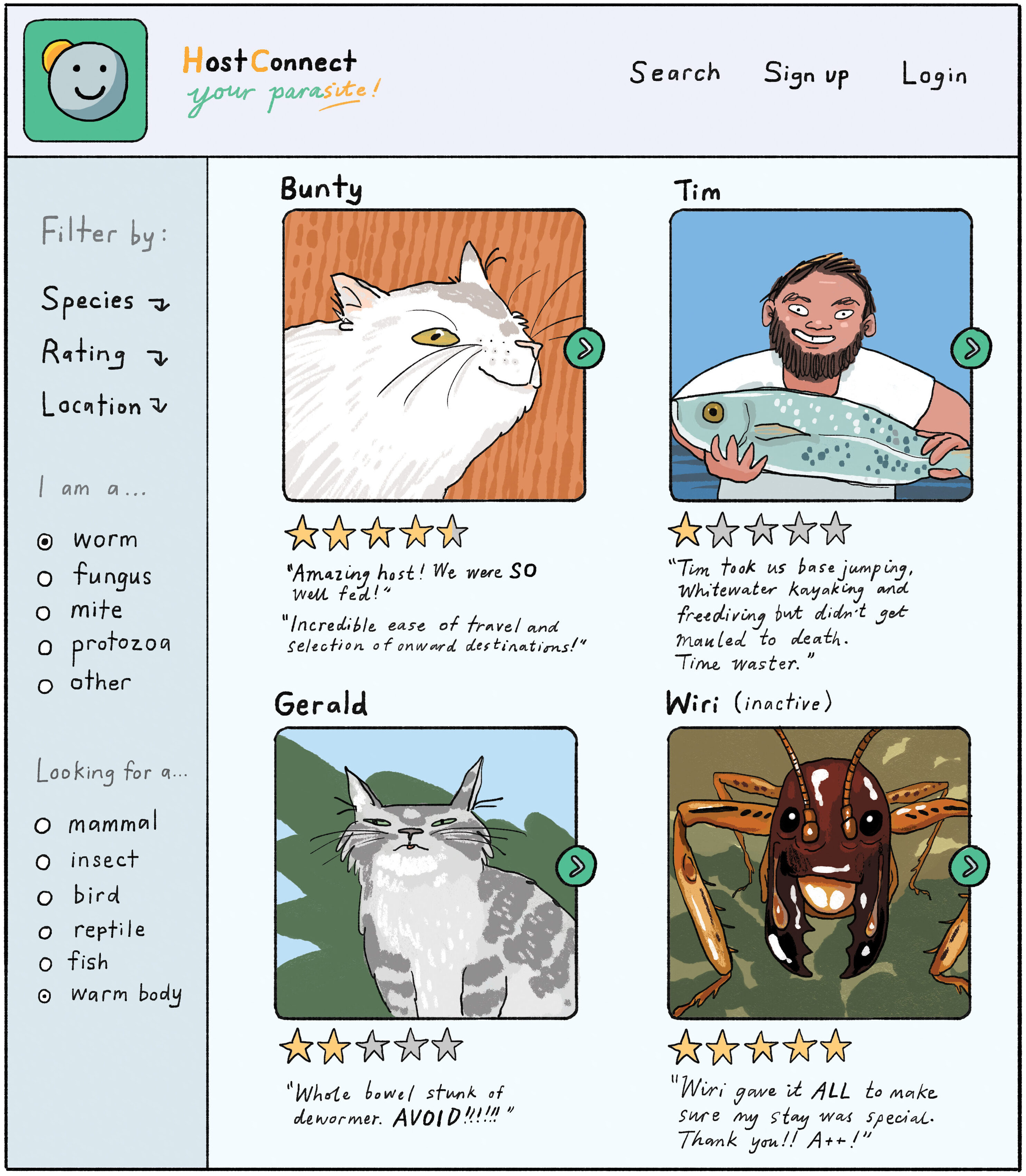
Poulin is an expert on parasitism: the many ways in which various viruses, bacteria, fungi, and insects live on or in other organisms, at the hosts’ expense. It’s an incredibly successful evolutionary strategy, Poulin says, that’s thought to have separately evolved more than 200 times—much more often than other brilliant adaptations such as flight or brains—and it’s everywhere, across all branches of the tree of life.
Evolution favours parasites for obvious reasons, says Poulin. Get it right, and it’s a cushy ride for the freeloader. “You obtain food for life, and as long as you can cope with the immune system, you’re in a safe place.”
Several hundred species of parasites take their dominion to the next level, turning their hosts into living zombies by manipulating their behaviour, appearance, and even their minds.
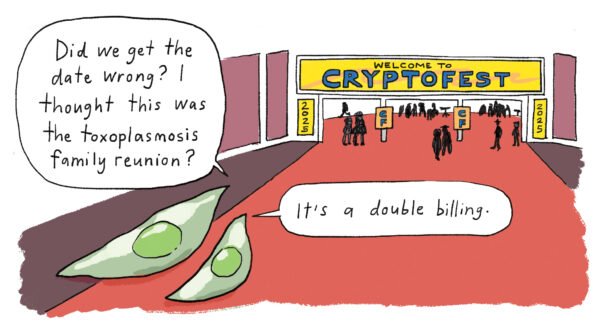
The protozoan Toxoplasma gondii makes rats and mice less cautious around cats, for example. When one of these unwisely brazen carriers is eaten, the parasite lands in a feline belly—just where it needs to be to reproduce.
Because cats are everywhere, and land and sea are laced with traces of their poo, species that are not natural cat snacks become collateral damage. Kiwi get sick with toxoplasmosis, and it kills Hector’s and Māui dolphins. Wolves can carry the parasite; it makes them more aggressive. And humans? It’s estimated that up to half of us have toxoplasmosis. In most people, it’s dormant—but emerging evidence hints that in others, the infection might affect dopamine production and increase risk-taking behaviour.
For most creatures, however, takeover by a zombifying organism has much more drastic consequences than a sudden propensity to drive fast or invest in crypto. Science journalist and film-school graduate Mindy Weisberger explores a litany of these exploitative relationships in her book, Rise of the Zombie Bugs. “The horror fan in me is deeply fascinated by the sheer grossness of zombification as a survival strategy,” she writes.
Her favourite example, she tells me, is the “disco-eyed zombie snail”: the chimera consisting of Leucochloridium—a parasitic worm—and its host, a European land snail.
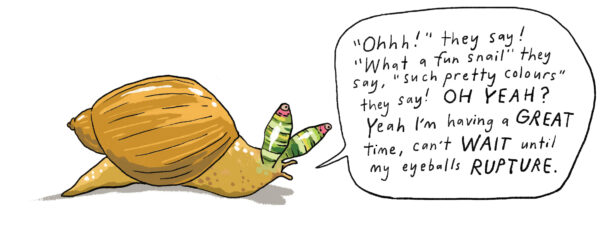
These worms hatch and grow inside the snails, but need to reproduce inside birds—and they’ve evolved an ingenious, if nauseating, way to get there. The worm larvae mature inside stripy, sausage-shaped brood sacs, which migrate into the snail’s eye stalks when they’re ready to switch hosts.
“The snail looks quite ordinary, except it has these massively swollen eye stalks that are really colourful, and they pulsate,” Weisberger tells me. “They look an awful lot like creeping caterpillars”—or, to a bird, like neon signs saying Eat Me. The worm also alters the snail’s behaviour, making it wander out in the open.
The next stage, too, is expedited. “What scientists found in experiments is that the swollen eye stalks detach very easily,” Weisberger says. “They rupture—and the worm ends up exactly where it needs to be to reproduce, inside the bird’s guts.”
A parasite found in New Zealand, the thorny-headed worm, employs a similar strategy to get inside birds, says Poulin. It infects amphipods—tiny coastal crustaceans—and causes them to change colour from a browny-grey to bright blue or green—ruining the crustaceans’ camouflage, and making them irresistible to passing oystercatchers and black-backed gulls.
To Poulin, using the amphipod as a stepping-stone “seems overly complex”. “Why not just infect the bird?” And it gets even more elaborate. “Some parasites require passage through four different animal species in a particular order just to complete one generation. This has baffled people—how these complicated life cycles evolve.”
*
Fungi are perhaps the best-known zombifiers. Weisberger gleefully describes the manipulations of Massospora cicadina, a fungus that infects North American periodical cicadas—the ones that emerge from underground every 17 years.
During the cicada nymphs’ long adolescence, the fungus lies in wait, too. But when the winged adults slough off their nymph shells and take to the skies, “that’s when the fungus really goes to town”, says Weisberger. It begins by devouring the cicada’s body tissues and reproductive organs and weakening the joints of its exoskeleton.
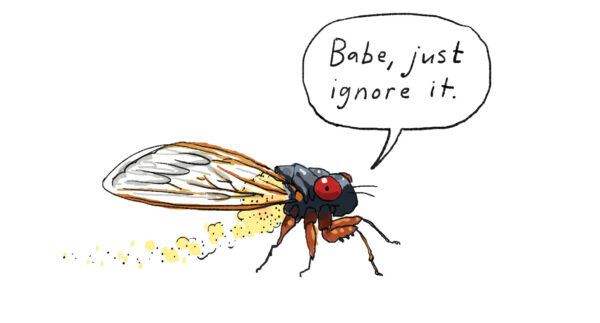
Eventually, the insect’s abdomen drops off entirely. “What you will see then is a living cicada that is walking around with no back end—and where its butt should be is a yellow solid mass of spores,” says Weisberger. “And not only are they still walking around, but they’re trying to mate as much as they possibly can.”
Scientists recently discovered that Massospora cicadina secretes psychoactive compounds—psilocybin, the hallucinogen in magic mushrooms, and cathinone, a type of amphetamine—which find their way into the cicada’s brain. Now, though the zombie cicada is disintegrating, it is also tireless—and sex crazed.
In what Weisberger calls a “ghastly act of sexually transmitted zombification”, the drugged cicada then infects every partner it comes across. Those adults don’t usually develop the full spore plug, but instead become what one scientist dubbed “flying salt shakers of death”, scattering fungal spores across the landscape to infect the next generation of cicada nymphs.
Then there’s Entomophthora muscae, a fungus that afflicts more than 20 different species of fly. Evolutionary biologist Carolyn Elya, of Harvard University, noticed dying and infected flies in her California backyard; she collected them and studied them in the lab. A stray fungal spore on a fly’s body will germinate and grow, she and her colleagues found, its hyphae reaching inside the insect’s body and wrapping around its heart, brain, and nerve cord.
Less than a week after infection, the fly can no longer fly, but it can still walk.
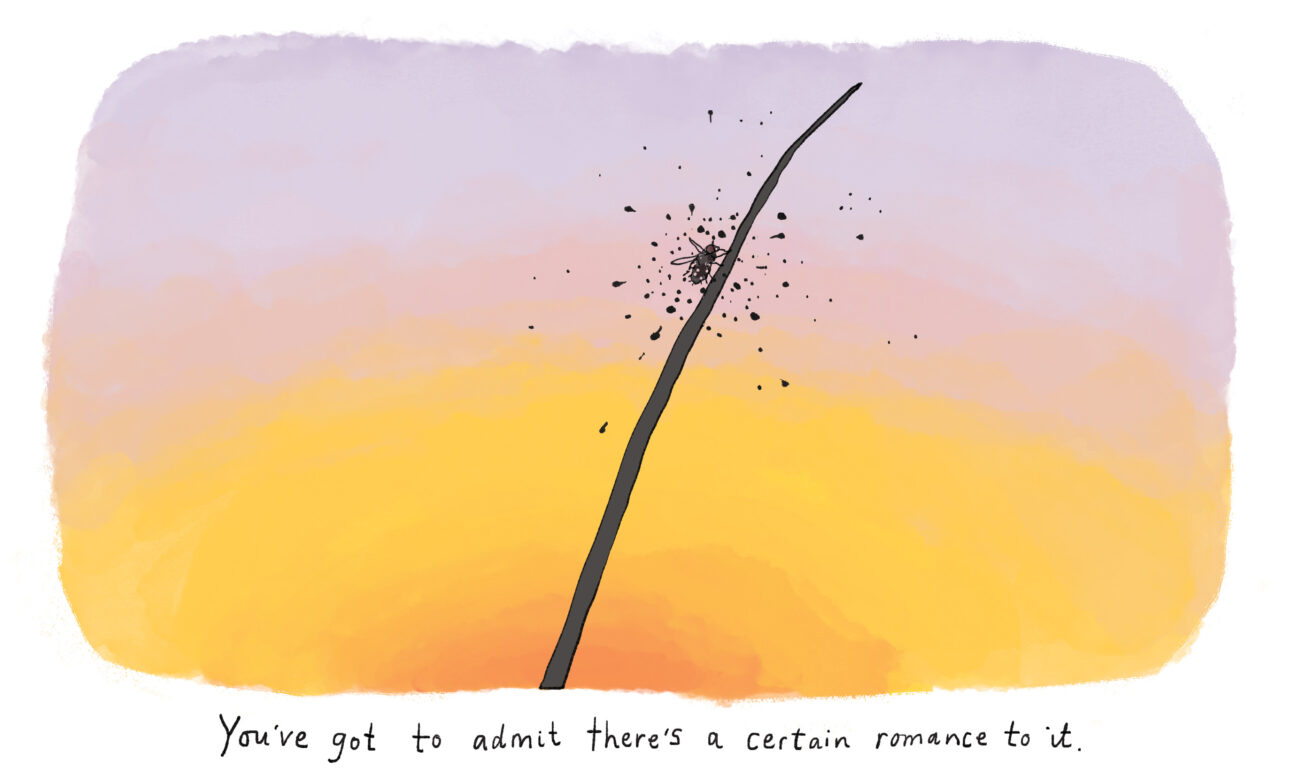
In an eerie zombie march, timed to coincide with sunset, the fungus compels the fly to climb nearby grasses, plants or buildings—as high as it can get.
When the fly can go no further, it pokes out its proboscis—now coated with a mysteriously strong adhesive—and glues itself to whatever it’s climbing. The fly’s exhausted wings jerkily extend outwards in a macabre imitation of sexual receptiveness, and it dies, frozen in place.
The grand finale is an “explosive poof”, Weisberger writes, as the fungus dramatically ejects spores from the zombified host. But it gets worse.
Back in 1988, ecologist Anders Pape Møller discovered that male flies actually prefer to mate with fungally zombified cadavers. Spread wings and a rounded abdomen signal attractiveness to male flies, regardless of whether that abdomen is stuffed with eggs or fungal spores, he suggested.
In 2022, Danish scientists completed the picture, finding that the parasitic fungus releases a love potion of chemicals that seduce the senses of male flies. Thus, the fungus attracts another victim.
“It’s so specific, and just so amazing to see how beautifully this works,” Weisberger says. ”For the fungus.”
*
Zombifiers and their hapless hosts have been around a lot longer than humans. One chunk of Baltic amber contains a Cretaceous-era carpenter ant complete with stalks of parasitic fungi sprouting from behind its head. “Further compromising the dead ant’s dignity was a mushroom cap poking from its rear end,” Weisberger writes.
This fossil ant had probably been invaded by a fungus in the Ophiocordyceps genus, one species of which is known to control the minds of tropical ants, beetles, moths and butterflies today—compelling them to climb up into specific spots in the canopy that are ideal for fungal growth and spore-spraying, and to clamp their jaws around twigs or leaves, securing their bodies in place before they die. The fungus then extends a long, spore-producing stalk out of the host’s corpse.
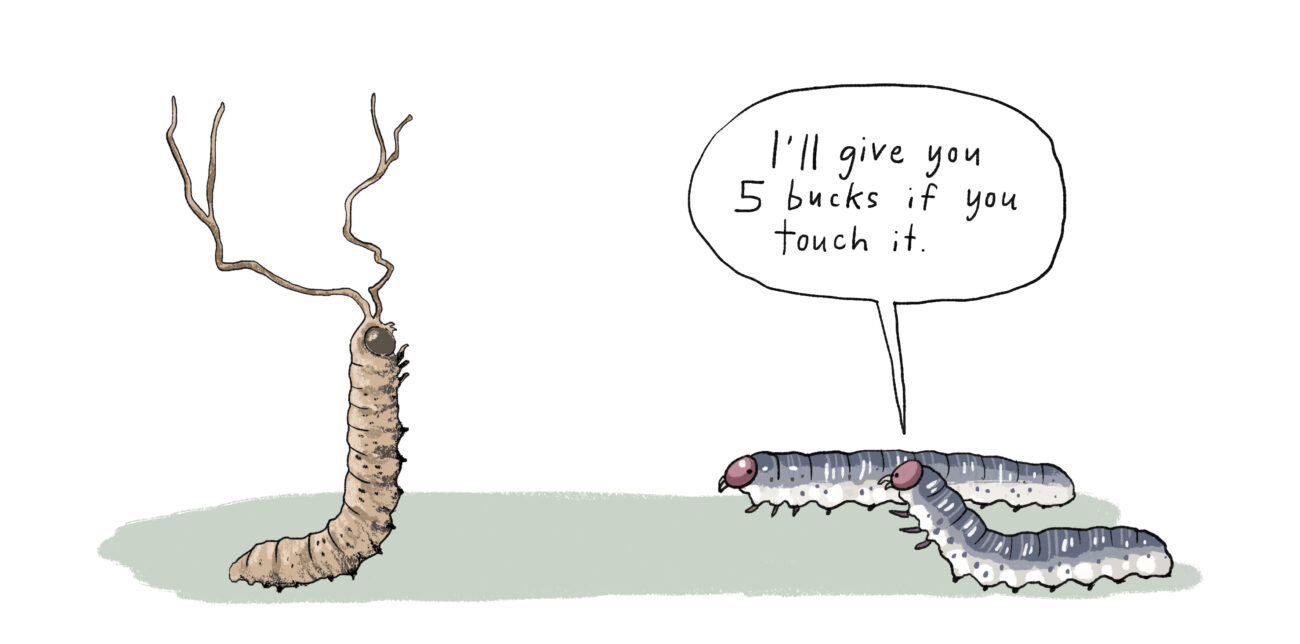
New Zealand has two of its own Ophiocordyceps species, and it seems likely they are zombifiers, too. Ophiocordyceps robertsii and the less-common Ophiocordyceps hauturu infect two species of ghost moth, mummifying the caterpillar’s body underground and extending a telltale spore-stalk from its head that sticks up above the leaf litter—described in this magazine in 1991 as a “thin brown stick, something like a sparkler”.
Māori knew these “vegetable caterpillars” as āwheto or nutara, says Rebekah Fuller (Ngāpuhi), who researched mātauranga regarding Aotearoa’s fungi for her doctorate. These species were occasionally eaten, she says—“it’s described as having a nutty flavour, and some people said it was more sought after than huhu grubs”—but were mostly used to make an ink for tā moko.
When burned, āwheto produce an unusual black ash. “You would get leaves from the māhoe tree, burn them separately, and then mix them together with water to make a really nice dark ink,” says Fuller.
The caterpillars and their fungal sparklers aroused considerable interest among early Pākehā settlers, too—Ophiocordyceps robertsii was the first New Zealand fungus to be scientifically named.
In the early 1900s, children ran alongside the Auckland-to-Rotorua train when it slowed on an incline in the Mamaku Ranges, selling āwheto to tourists as souvenirs. When American writer Mark Twain was gifted one in Dunedin in 1895, the “ghastly curiosity” led him to muse on the cruelties of parasitism. The caterpillar, he wrote, was only following instinct when it set about digging “a little grave”, and settling into it. Enter Nature, which blew the fungus’ spores across its back. “The roots forced themselves down into the worm’s person, and rearward along through its body, sucking up the creature’s juices for sap… And here he was now, a wooden caterpillar… with that stem standing up out of him for his monument.
“Nature,” Twain wrote, “is always acting like that.”
A closely related fungal species in China produces a mummified caterpillar that’s in demand as an aphrodisiac, a status symbol, and in traditional medicine. Worth up to $180,000 per kilogram, it is overharvested in the wild. After decades of work and millions of dollars, it seems one Chinese company has succeeded in artificially cultivating Ophiocordyceps sinensis. Our own āwheto is more mysterious: it exists only in the wild, and scientists have never managed to initiate its takeover in the lab, says Peter Buchanan, a mycologist based at Manaaki Whenua—Landcare. Āwheto also maintain a delicate ecological balance, he says, creating caterpillar-zombies just often enough to perpetuate the fungus, but not so often as to drive the moth to extinction. “It’s so specific, and so seemingly unlikely to occur—and yet it does.”
*
But back to the story of the wētā and the worm. “Hairworm” is perhaps a misnomer; these things can be as thick as a shoelace. The largest native hairworm found so far was a metre long, inside a large alpine wētā, Poulin says.
In the wild, after the worms mate in freshwater, the eggs hatch into tiny larvae, which burrow into juvenile caddisflies and mayflies, forming a protective cyst around themselves. When the flies metamorphose and die, a few might be eaten by a hungry wētā, cyst and all. The worm emerges, and begins to grow.
Scientists are trying to figure out exactly how such zombie-makers pull off their mind-control tricks. Neurotransmitters such as serotonin and dopamine seem to be involved.
Poulin’s team is focused instead on gene expression: they want to know whether the worms are fiddling with the genetic switchboard of their host. In their Dunedin lab, they fed captive cave wētā small juvenile caddisflies and mayflies—some of which had up to 50 worm larvae inside them.
But although the scientists tried various techniques—whole flies, mixing bits of insect tissue with pellets, spreading it on lettuce—after two years of trying, they still weren’t reliably able to infect the wētā.
However, overseas studies of hairworms that infect crickets, and Poulin’s own work with a related nematode worm that infects earwigs and also drives them into water, have had more success. Hours before the infected cricket or earwig makes its fatal leap, dramatic changes occur in genes relating to vision, activity levels, and metabolic rate.
“We can identify hundreds of genes, if not thousands, that show a different expression compared to the brains of a healthy animal,” says Poulin. The latest theory is that the addled insect is drawn to polarised light reflecting from the water’s surface. Poulin’s confident something similar is happening with wētā. “I’d bet my house that there are similar changes in gene expression with a worm-infected wētā brain. It’s just that we couldn’t do it.”
There is an irony, of course, in trying to control the mind-controllers. “In French a common word for an experiment is a manipulation,” says Poulin, who is French Canadian. “If we were having this conversation in French, I would say we are using a manipulation to test the manipulation abilities of the worm.”
More by Kate Evans
More by Giselle Clarkson