




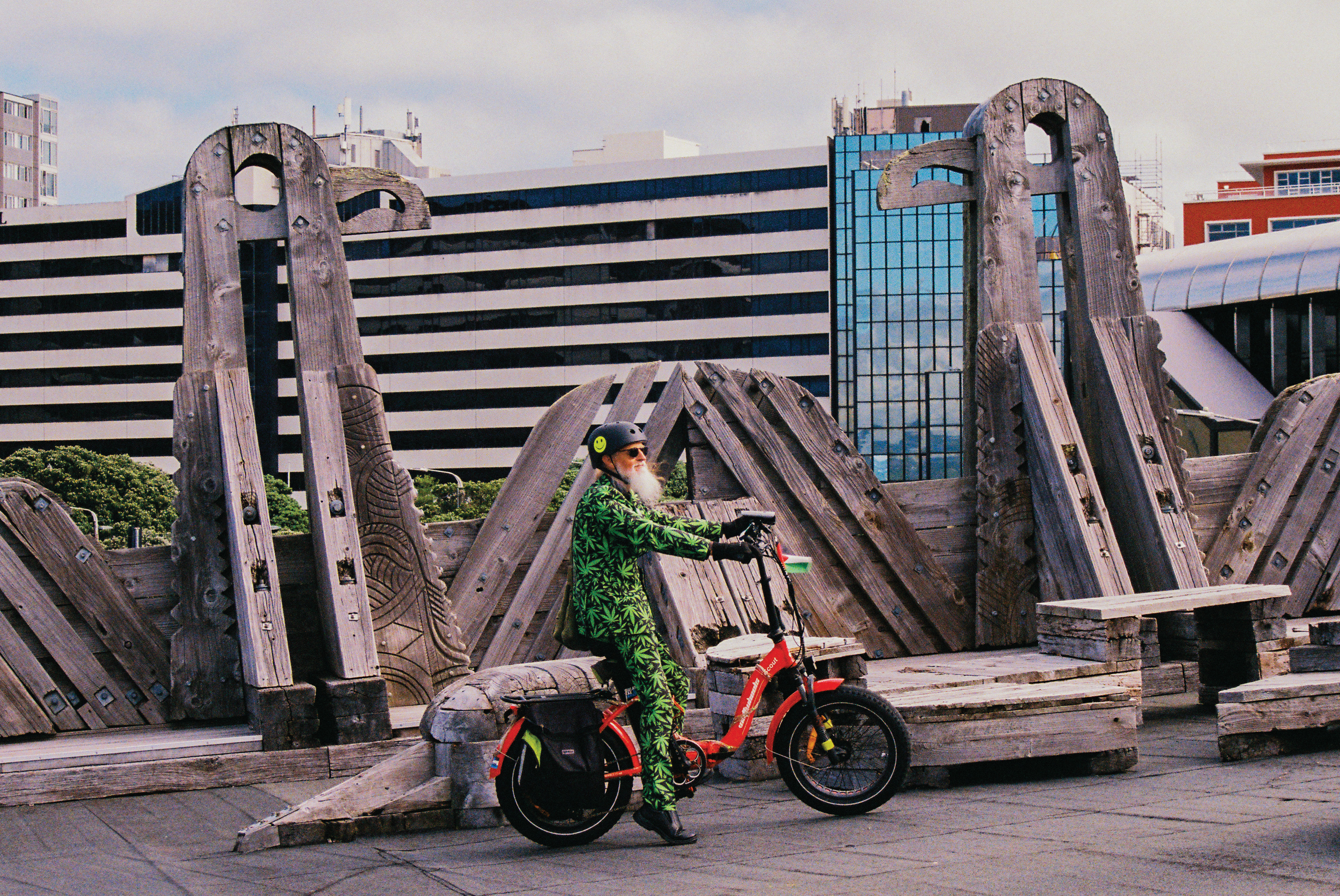
On paper, Wellington city’s not looking too flash. But photographer Louis Elorfi Macalister finds life—loud, colourful, and dynamic—on every corner.
Shifting political winds can feel the strongest in Te Whanganui-a-Tara, Wellington, where the breath of Tāwhirimātea pushes and swirls around the Beehive, whistles through the high-rises of Lambton Quay, gives lift to the surfers of Lyall Bay, and sweeps out across the Cook Strait.
Thousands of the people who live in this city have lost their jobs in recent years—almost 6000 jobs went in the year to June 2025 alone. There are stories of public servants applying for hundreds of jobs with no success. Meanwhile, the cost of living is cutting deep. Restaurateurs and retailers report custom is the worst they’ve seen.
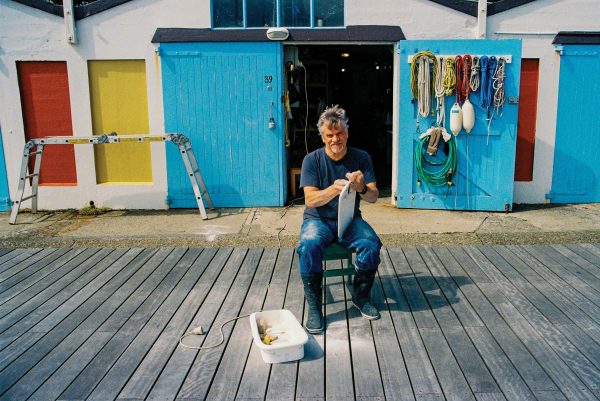
In November, another blow: citing cost blowouts and other priorities, new mayor Andrew Little hit pause on the Golden Mile, the plan to revitalise 2.6 kilometres of the inner city’s streetscape.
The much-loved City to Sea Bridge, a walkable sculpture which encourages people to wander between the waterfront and the heart of the city, is also in limbo, due to the cost of seismic strengthening.
*
But heading into 2026, there is good stuff on the horizon—Te Matapihi Central Library will re-open in March, and City Gallery Wellington Te Whare Toi in October.
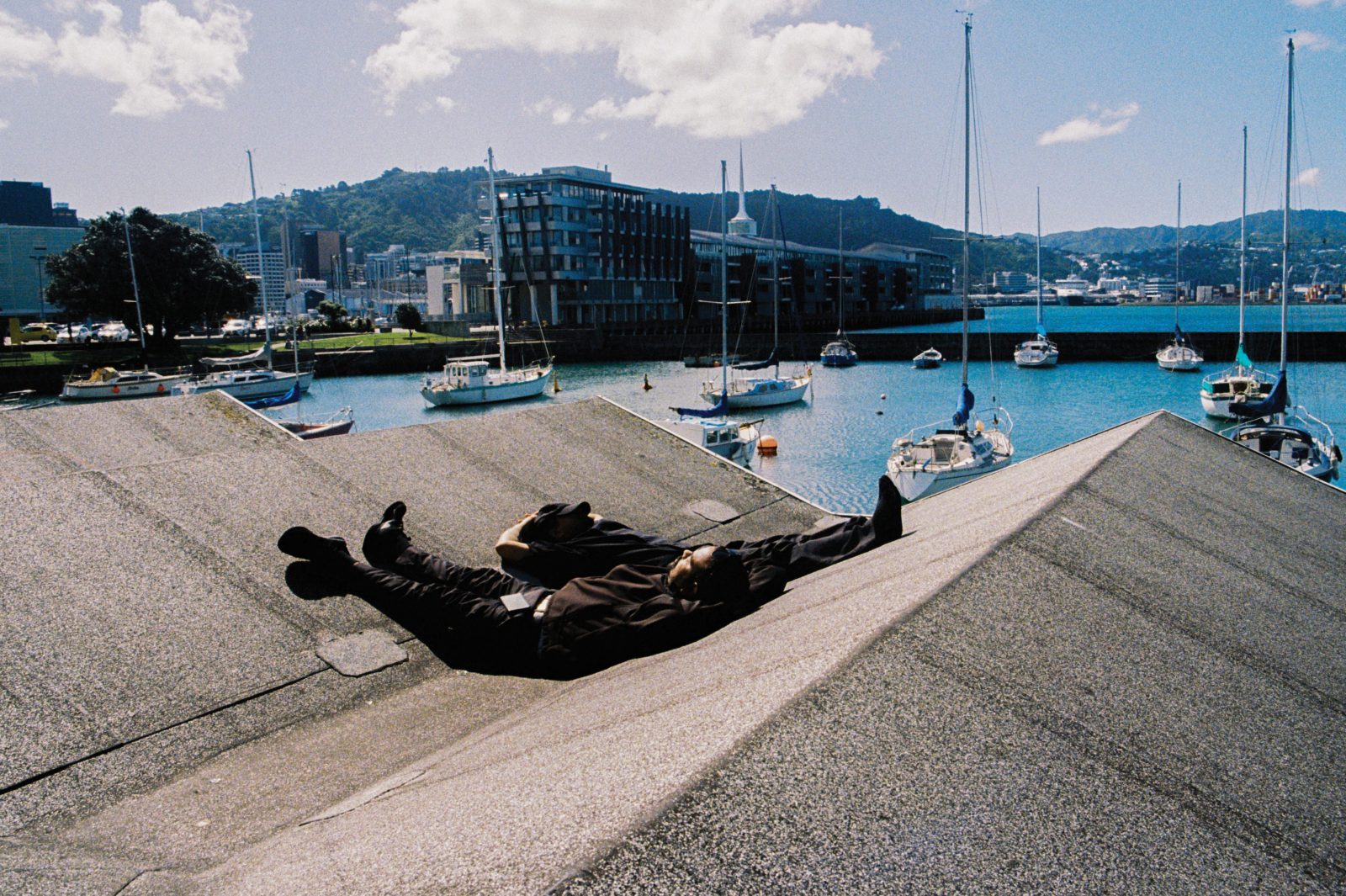
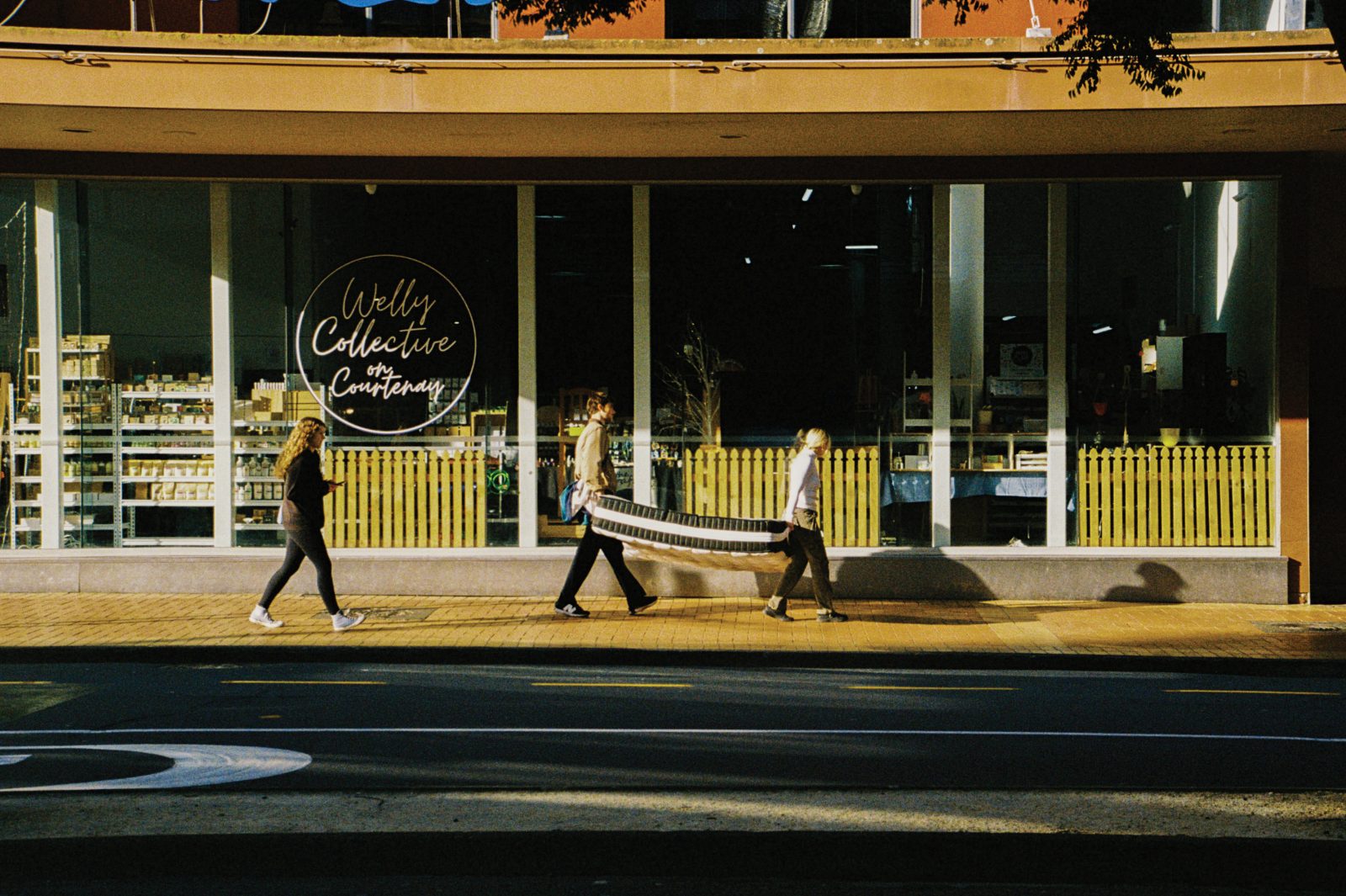
And at street level, things can look different. People still live in and love this city. They bike to work in a blinding northerly, following the curves of Evans Bay Parade; they schlep up Cuba Street with their mates, ducking in and out of cult favourites Cosmic or Iko Iko; they wait for an early-morning train to the Hutt Valley after being out all night. Workmen, couples on lunch dates, hardy protesters, families out for a stroll, someone popping down the road in their PJs; Wellingtonians, living their best lives.
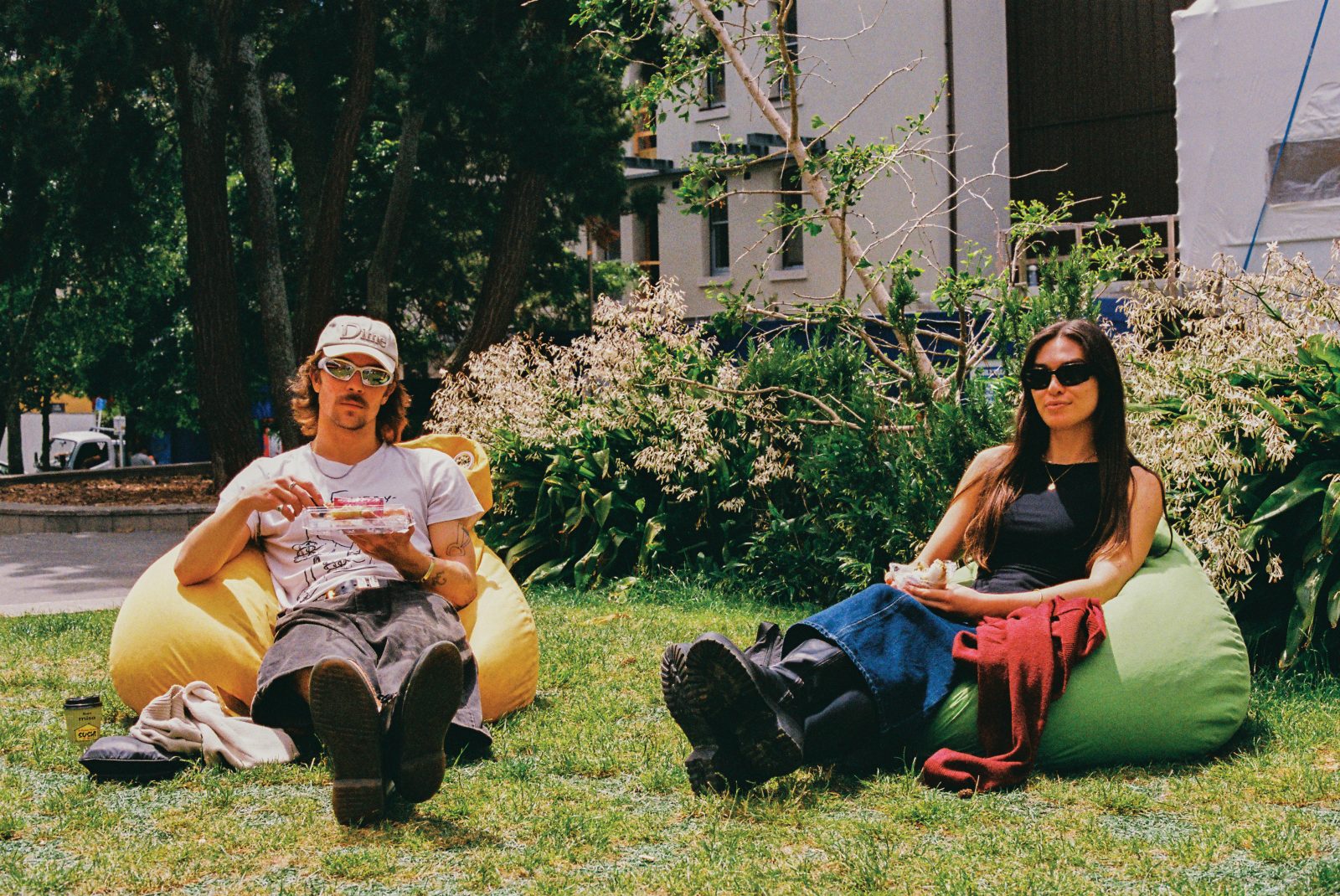
“It’s cool vibes here, the people are nice and friendly, and we’re the gayest city in the country, slay,” says Island Bay local and video production coordinator Grace Bush, 26. She’s eating sushi in Glover Park with her friend Max Walker, 26. He’s a jeweller who is trying to make his mark as the go-to in Aotearoa for dental grills. (“I call them smile enhancers,” he says.)
Louis Elorfi Macalister approaches the pair on a Friday lunchtime, and chats easily as he kneels in the grass with his Canon EOS-1. Four frames and he’s done: a wide shot, Walker lifting sushi to his mouth, Bush behind her sunnies, a close-up of Walker’s bejewelled knuckles. That’s all it takes, and that’s all he’s got—Macalister only shoots stills on film. He never goes back and re-shoots, and he doesn’t know what he’s got until the film’s developed. He likes it that way, saying it makes the whole thing seem more ephemeral, magic. “I like the slow process of it, and I feel like it’s the most true to life you can get,” he says.
“It’s not polished and crisp. Then, when you look back at them, it’s a little bit like how memory feels. The colours might be a little saturated, and it feels softer.”
The 24-year-old from Nelson picked up his first film camera as a teen. He started street photography when studying politics in Auckland, and loves the way it allows him to get under the skin of a place. Last year, he was named New Zealand Geographic’s young photographer of the year. He also has an online following as one of the creators of YouTube channel the Department of Information, documenting subcultures.
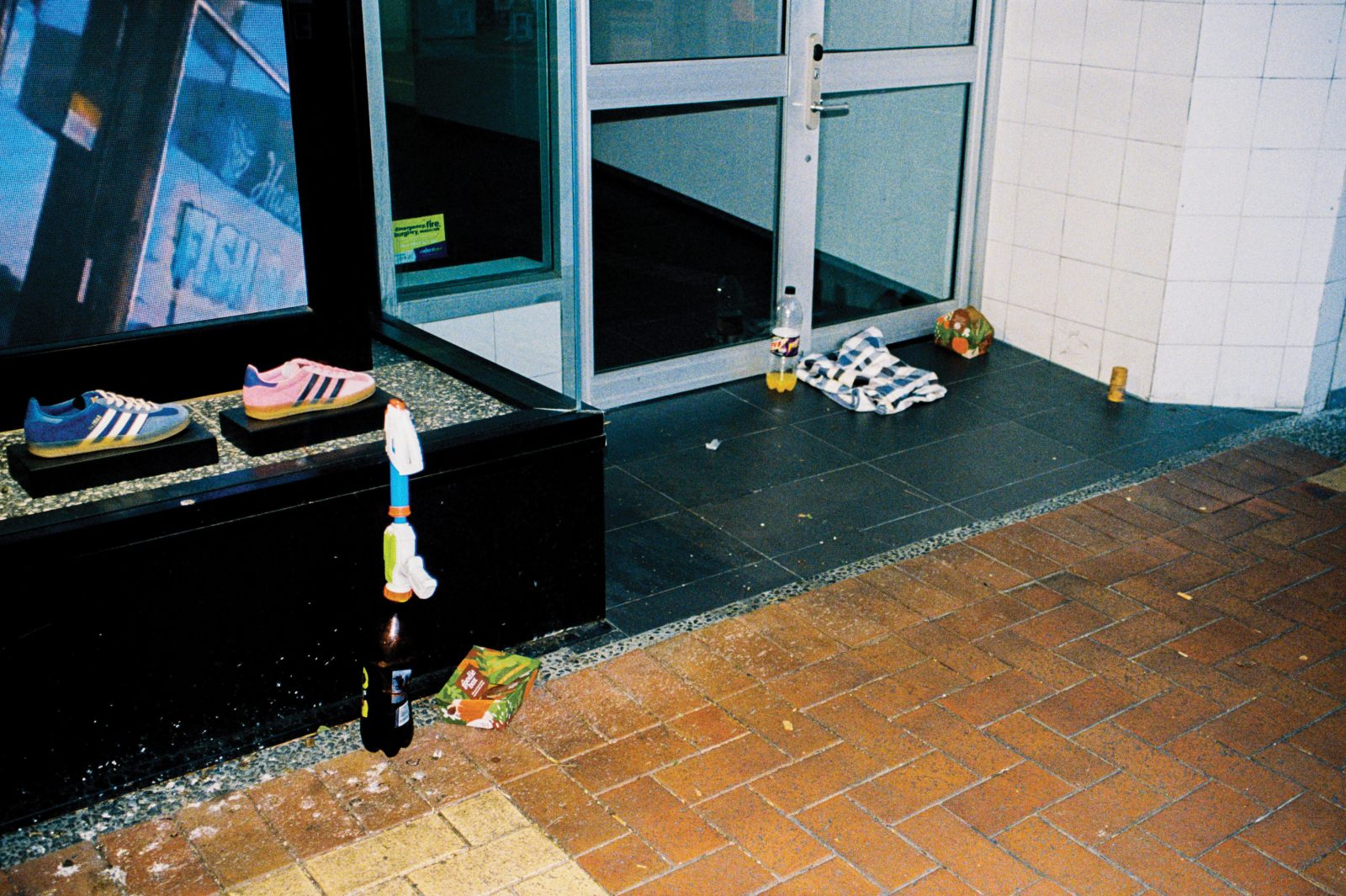
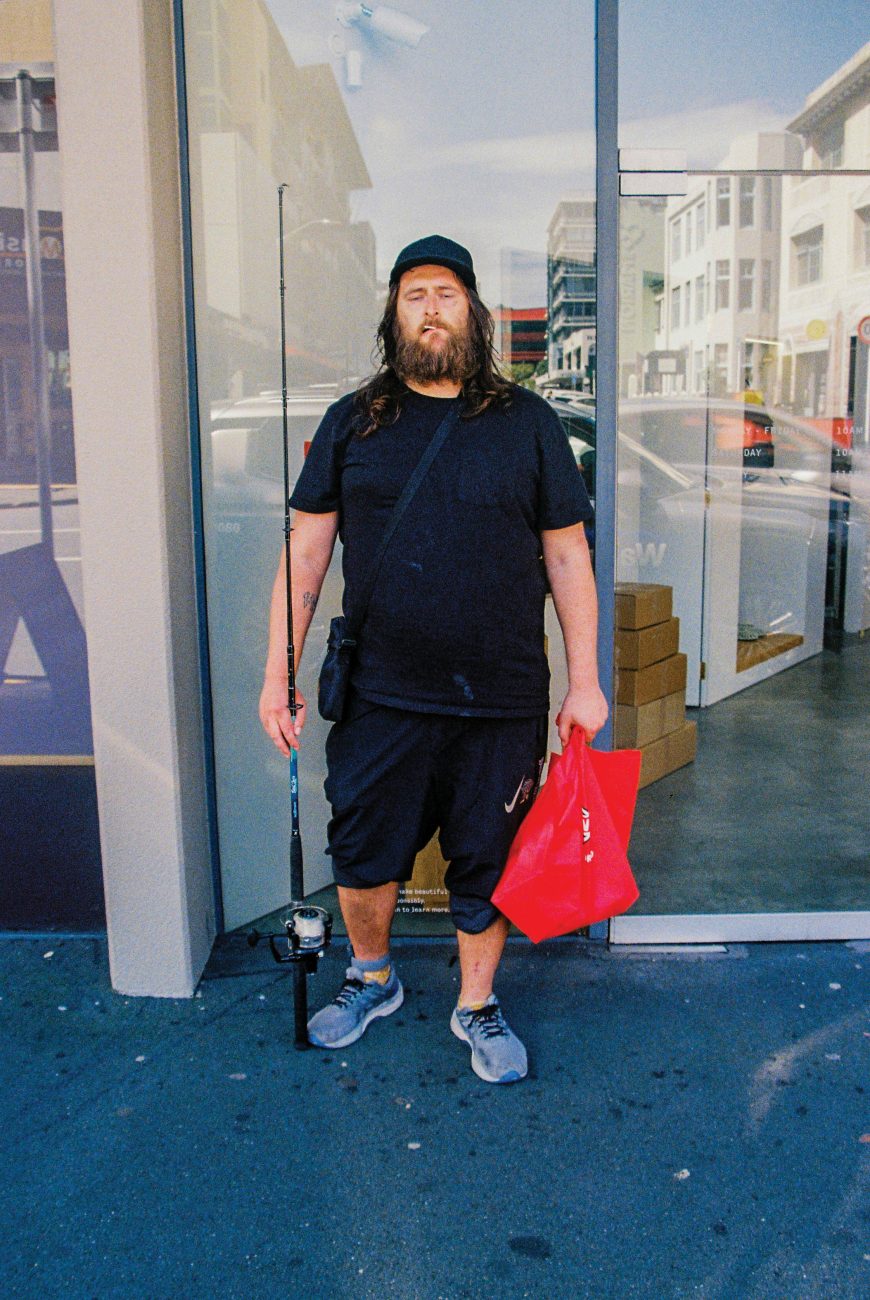
He shot most of this series while staying with his grandmother in Wellington, and walking the city each day on the way to and from his day job as a carpenter. “You see people in the city and think, ‘What are they up to?’ ” Macalister says. “Everyone was talking about Wellington as this dying CBD, which I thought was interesting, because it doesn’t feel like that to me.” He hopes his “simple photos” push back at the idea of a place in decline.
Approaching strangers hasn’t always come naturally.
“It’s not the easiest question, asking someone to take their photo, because it doesn’t feel like a fair exchange. You just have to force yourself to do it.”
But he’s had moving feedback from people whose photos he has taken, too; some have asked for a copy of the photograph, because it captured a meaningful moment in their own story.
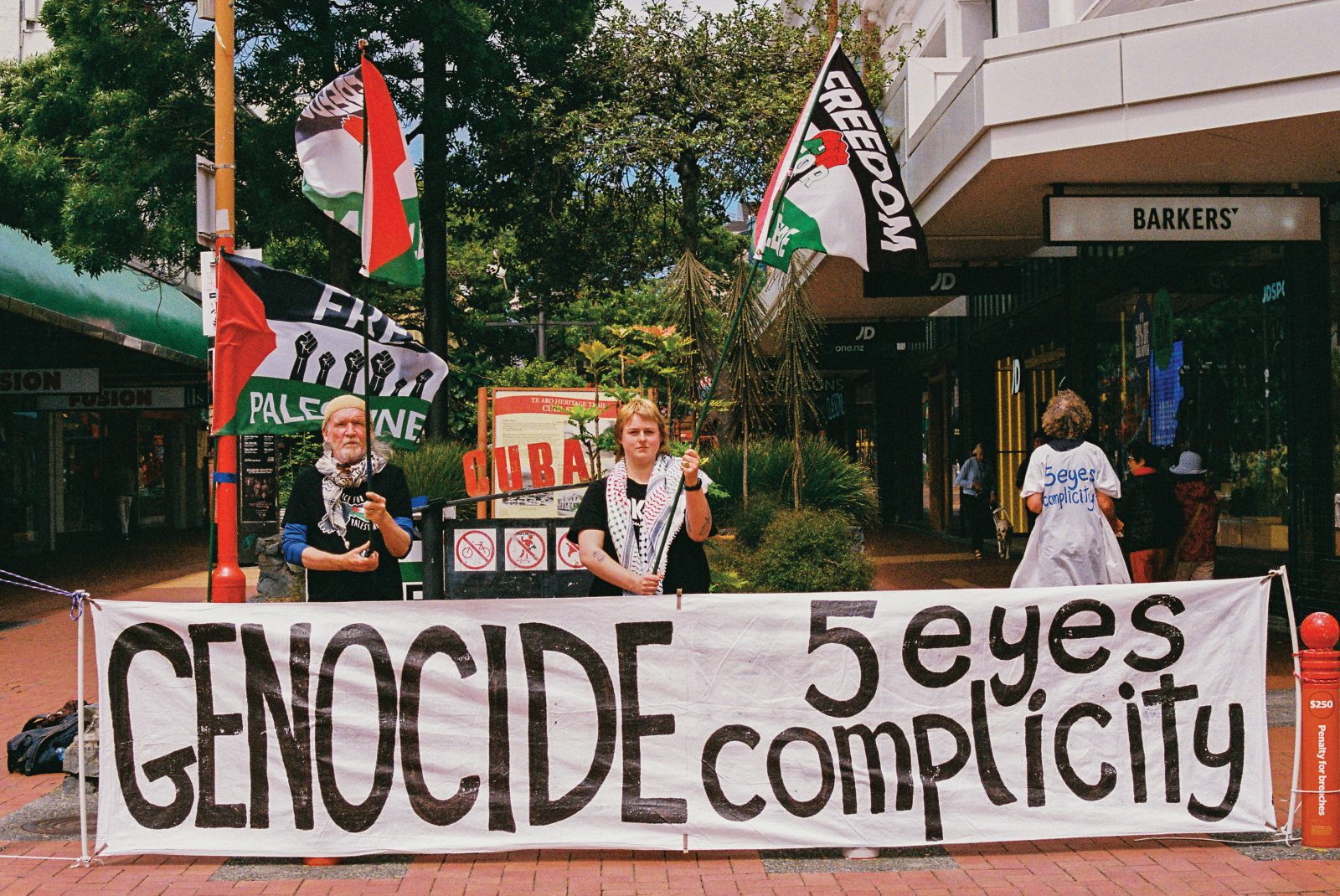
Further down Cuba Street, Eamonn King, 66, waves a flag, music pumping from a speaker behind him. Originally from Galway, he’s been part of the Palestine protest movement since the 1980s and is holding the line today with Lili Norman, who studies mental health and addictions at Massey University. “The Irish really understand what is happening in Palestine, and New Zealand is slow to pick it up,” he says. He’s been protesting all over the city with groups Occupy Brandon St and Justice for Palestine, including outside the Israeli Embassy and on the Hill Street motorway overbridge. “It’s really nice that it’s sunny today, because it has been pretty miserable over winter,” King says. “We’re just handing out information; we’re not aggressive. I had to do something, and I’m semi-retired so I’ve got time on my hands.”
Macalister is off again, intercepting a young mother carrying her baby snug in a front pack. “She was holding his little hands,” he says, and later, in the photograph, there it is: tiny fingers in hers, bub peeking out from underneath his hat, taking in his city.
“I just love all the details, and I don’t always pick up they’re there, at the time,” Macalister says. “It’s nice how it all builds up to tell a story.”
More by Michelle Duff
More by Louis Elorfi Macalister