



Philip Garnock-Jones has spent more than a decade photographing our native flowers as they’ve never been shown before: in luscious, three-dimensional detail.
Philip Garnock-Jones was trying to find the smallest flower in the world, and he was failing. He wanted to include it in an unusual visual encyclopaedia that he was compiling: a catalogue of New Zealand’s flowers, all photographed in three dimensions.
The smallest flower in the world is hard to find not because it’s rare but because it’s invisible to the human eye—it’s a fraction of a millimetre across, so it can be seen only through a microscope. It blooms on a tiny plant: Wolffia australiana, usually called watermeal because it looks like green flour sprinkled over the surface of a pond. “They’re just little green dots,” says Garnock-Jones. “You don’t even see them unless you get very close to the water level.”
Garnock-Jones started growing watermeal in a bucket at home in Atawhai, Nelson, so he could check regularly for flowers, but it wouldn’t bloom. He tried adding gibberellic acid, a hormone found in plants, because he’d read a paper which suggested it stimulated flowering in watermeal. Nothing. He gave up. The watermeal died.
A few months later, he decided to try again. He went back to his local park, Miyazu Japanese Garden, and dipped another handful of watermeal out of the pond. This time, when he checked it under the microscope, it was blossoming. Two flowers in a tiny green pocket: one male, one female. He took it straight to his camera set-up.
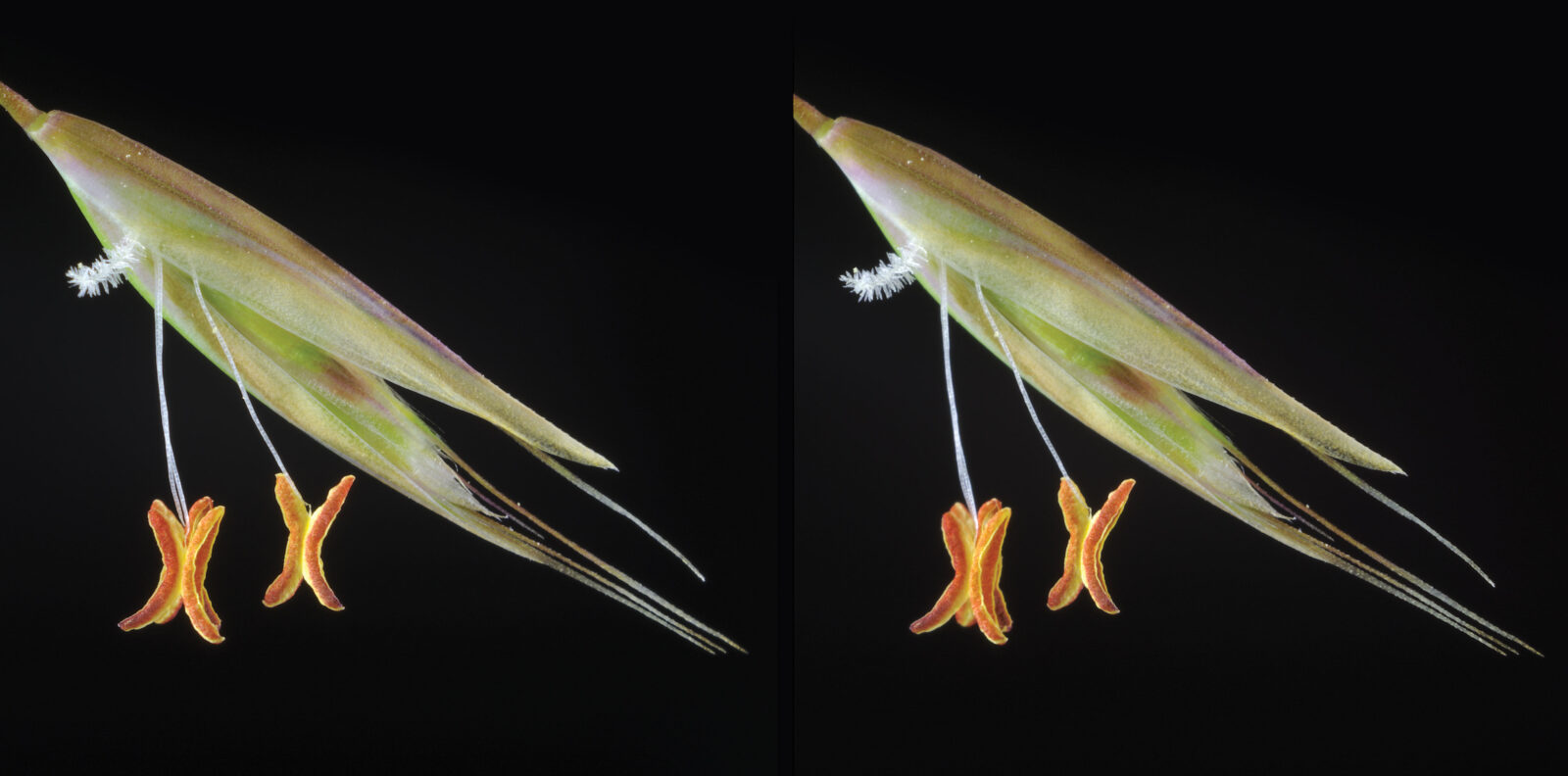
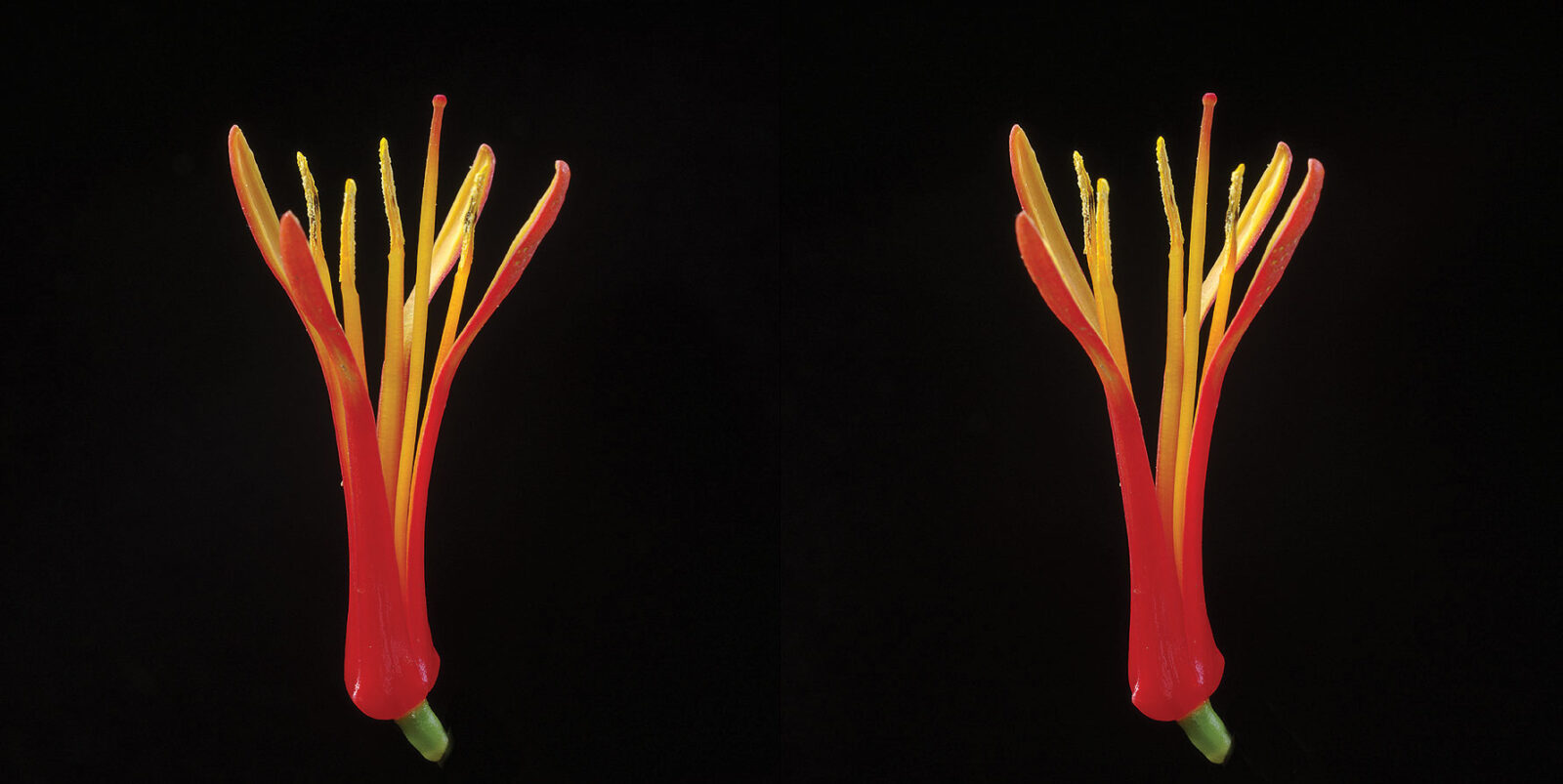
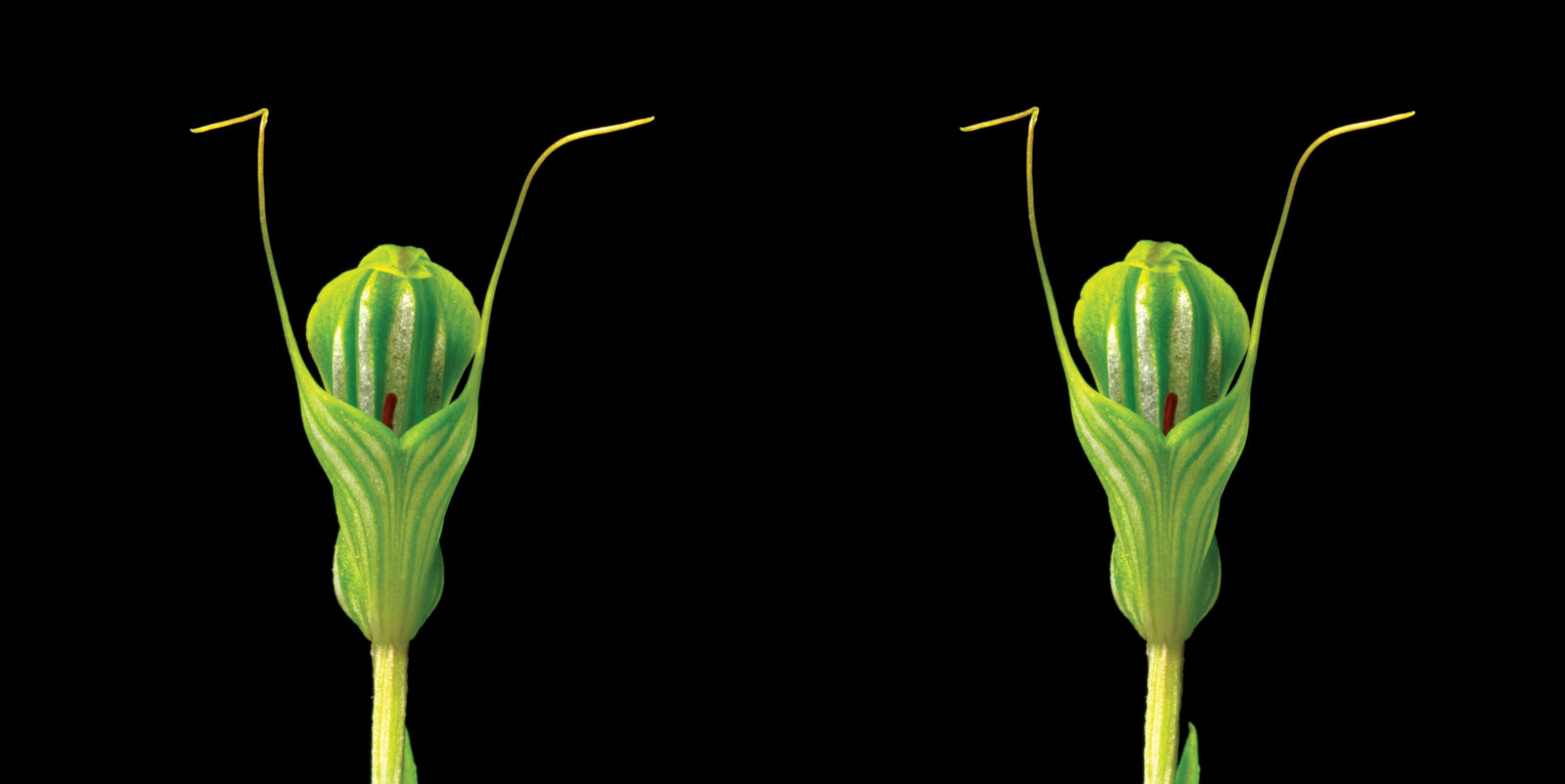
Garnock-Jones takes two pictures of everything, and those pictures are slightly different: one represents what your left eye would see, and the other, your right eye. Seen through a stereoscopic viewer, they create a three-dimensional image.
Which means that Garnock-Jones’s new visual encyclopaedia, He Puāwai, can only truly be appreciated with the aid of the pair of glasses tucked into the back pocket of the book. (It’s possible, but tricky, to view his 3D images without them—see the sidebar below.)
A flower is three-dimensional for a reason, says Garnock-Jones, who was a professor of botany at Victoria University before his retirement: its shape is crucial to attracting and rewarding pollinators. “It often is controlling the pollinator’s behaviour as well, making a funnel or a tube or a tuft of hairs that means the insect has to duck around it.
“And even for wind-pollinated flowers, there’s a three-dimensionality, too, because the stamens have to be exposed for the pollen to be taken away. Same with the stigma; it’s got to be presented outside the flower to receive pollen.”
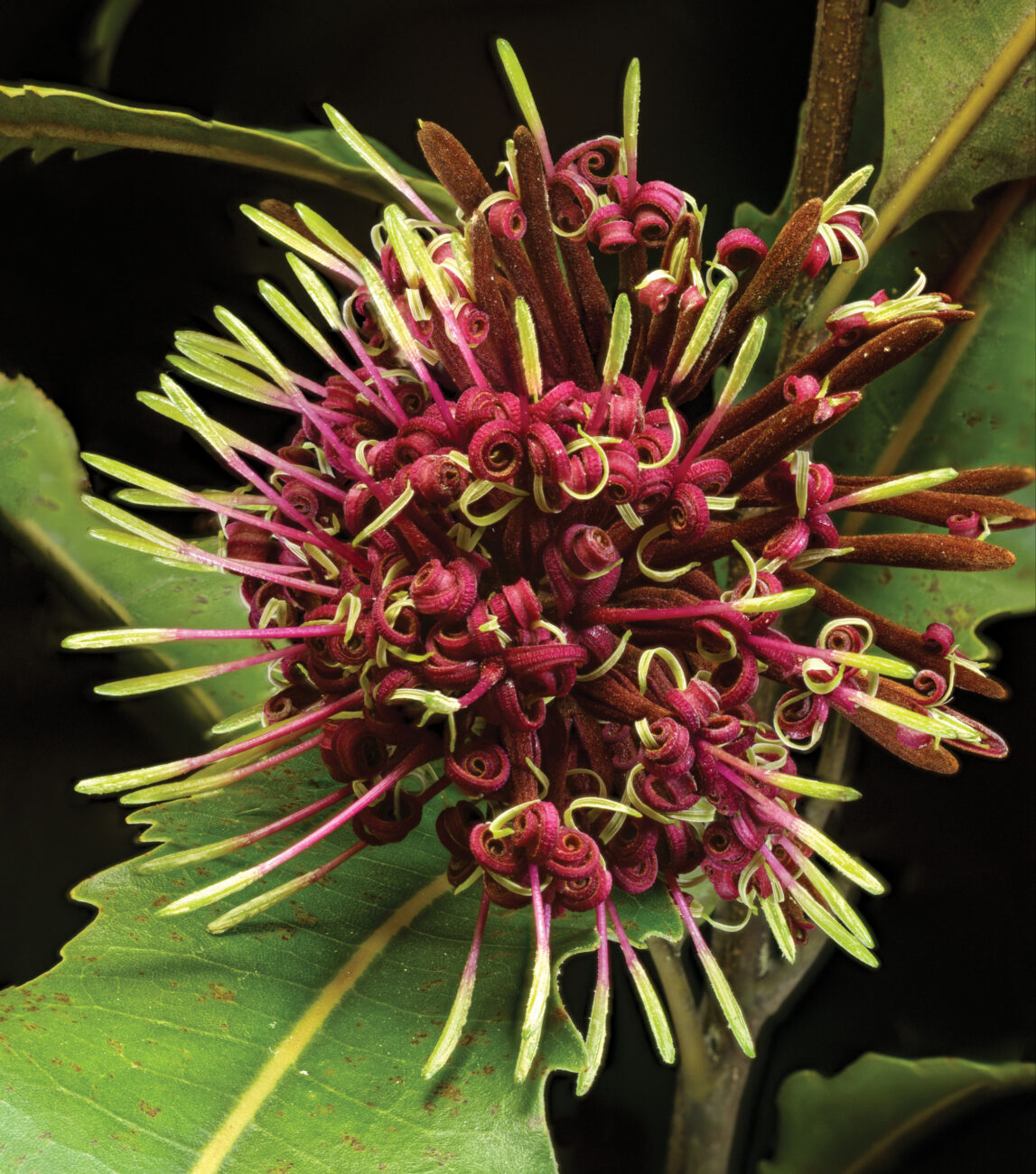
In fact, I hadn’t seen most of the flowers in He Puāwai in any dimensions, let alone three. I had no idea that pūriri trees produced fluorescently pink blossoms, or that if I looked closely along the water’s edge, salt or fresh, I might find a shore spurge with silvery pointed leaves and blood-coloured flowers, each of its four petals shaped like croissants. It’s called waiū atua, milk of the gods, for the colour of the sap when its red stem is broken.
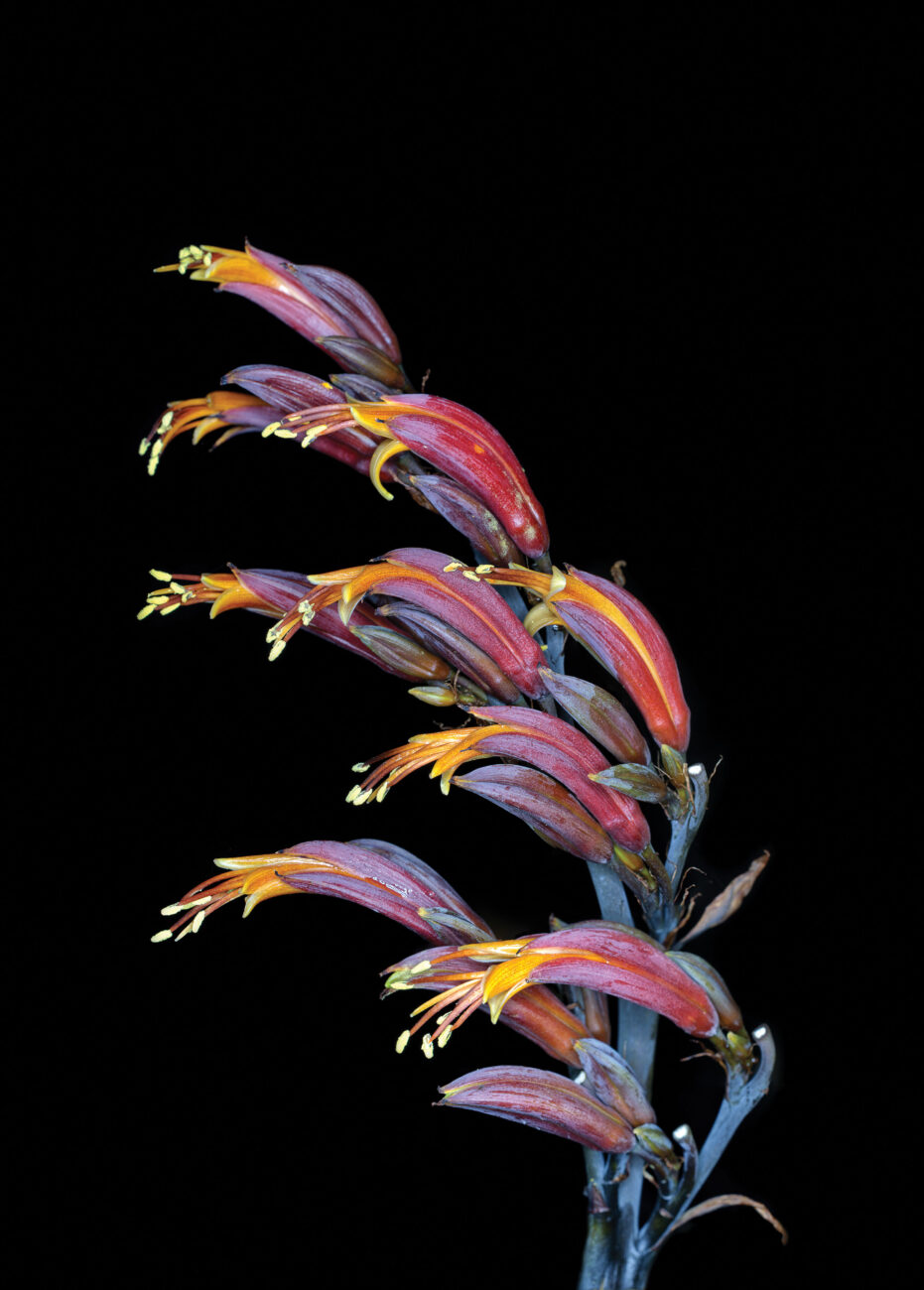
I didn’t know that we have a native hibiscus, puarangi, which blooms only for a day: big, soft, creamy flowers with a maroon eye at their centre. Or that I might easily find putaputawētā among the smaller trees of the bush, and catch the scent of its star-like flowers. Perhaps, if I looked up, I’d also see the bell-shaped flowers of the makomako tree, which start off pale pink and darken over time to the colour of wine.
Some of the flowers seem unfamiliar because I’ve never looked at them closely before. I grew up surrounded by mānuka, using their hard seed pods as projectiles, but I’d never noticed the fringe of stamens at the centre of the blossom, each topped with a little pink cap. And I learn that one of my favourite trees, Dracophyllum—the one that looks like Dr Seuss’s truffula trees—has clusters of long, pale, trumpet-like flowers. “Some of them are so rare and unusual that people won’t have ever seen them,” says Garnock-Jones. “Like, the lobelia that’s in the book is a spectacular blue flower, but it’s not grown very much. It should be.”
*
Trouble is, my idea of a flower is fundamentally a European one: I always picture the kind painted by van Gogh or Monet.
For a long time, I barely noticed flowers in the New Zealand bush because so many of them look nothing like what I thought a flower was.
Ours aren’t colourful or large; they tend to be subtle and stealthy.
Part of the reason is that only a fraction of our flowers are bird-pollinated—three per cent, maximum—and while birds are drawn by bright colours, other pollinators don’t care about colour in the same way. Flowers have to resort to other strategies to draw in bees, flies, moths, butterflies, or beetles, and we can’t always see or sense those enticements.
“I think people will be surprised by some of the flowers in the book that are not what you think of when you look at a flower,” says Garnock-Jones. “I was surprised by some of these things, too, because I’d never looked closely at a lot of flowers before I started doing this.”
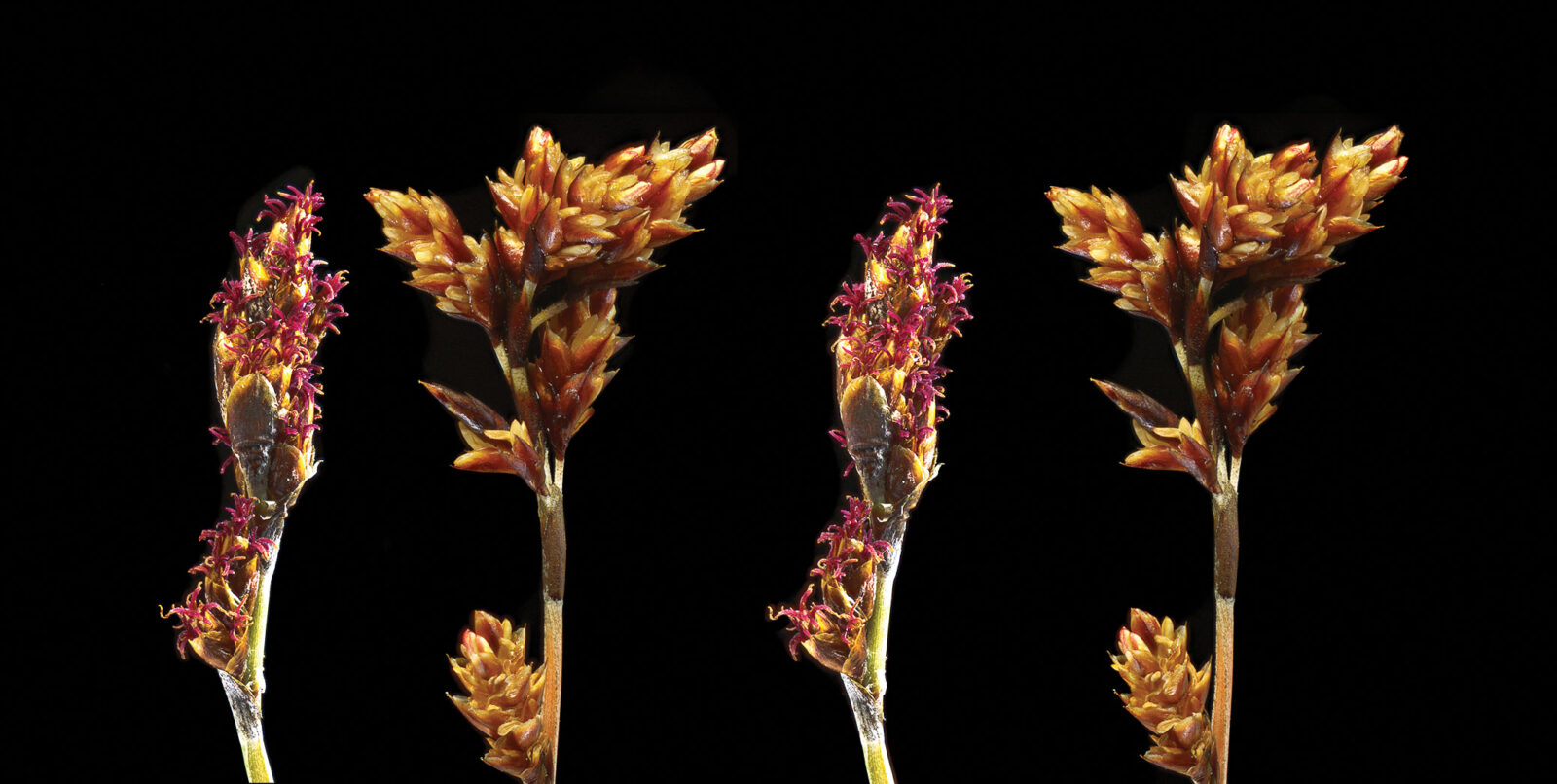
Kiekie, for instance, are super weird—the flowers don’t even try to attract pollinators, but outsource the job to bracts: fleshy, sweet leaves that surround the clusters of flowers, which take minimalism to the maximum: no petals, no sepals. “The female is just an ovary, and the male is just a group of stamens,” he says.
He needed help finding eelgrass flowers, “one of New Zealand’s strangest flowers”, which he located with the help of summer students at the Cawthron Institute who were studying the plant. Eelgrass, or nana, uses water to distribute its pollen, and so its flowers, which don’t have to attract pollinators, look like small green blobs. Like kiekie, they are the simplest version of what a flower could be.
*
How you look at a flower depends on your species, your culture, and your priorities. Most of us look at flowers like birds do: we’re drawn by colour, so we like really bright ones, such as kōwhai and ngutukākā. Insects see a different set of colours, as well as perceiving chemical cues with a sense we don’t have. Māori see tohu, signs of changing seasons: pōhutukawa were a signal that the kina were fat, puawānanga a sign that winter was half done, tipping towards summer. The Victorians assigned symbolism to flowers, especially for communicating feelings discreetly: bluebells meant friendship, tulips meant passion, and if you didn’t feel the same way, a bouquet of yellow carnations would get the message across. None of this was new: the Victorian “language of flowers” was built on floriography traditions from around the world. We’ve always turned flowers into symbols.
Botanists, on the other hand, see stamens, filaments, pistils, carpels, spurs, triggers, anthers: clues to how a plant lives and how it communicates.
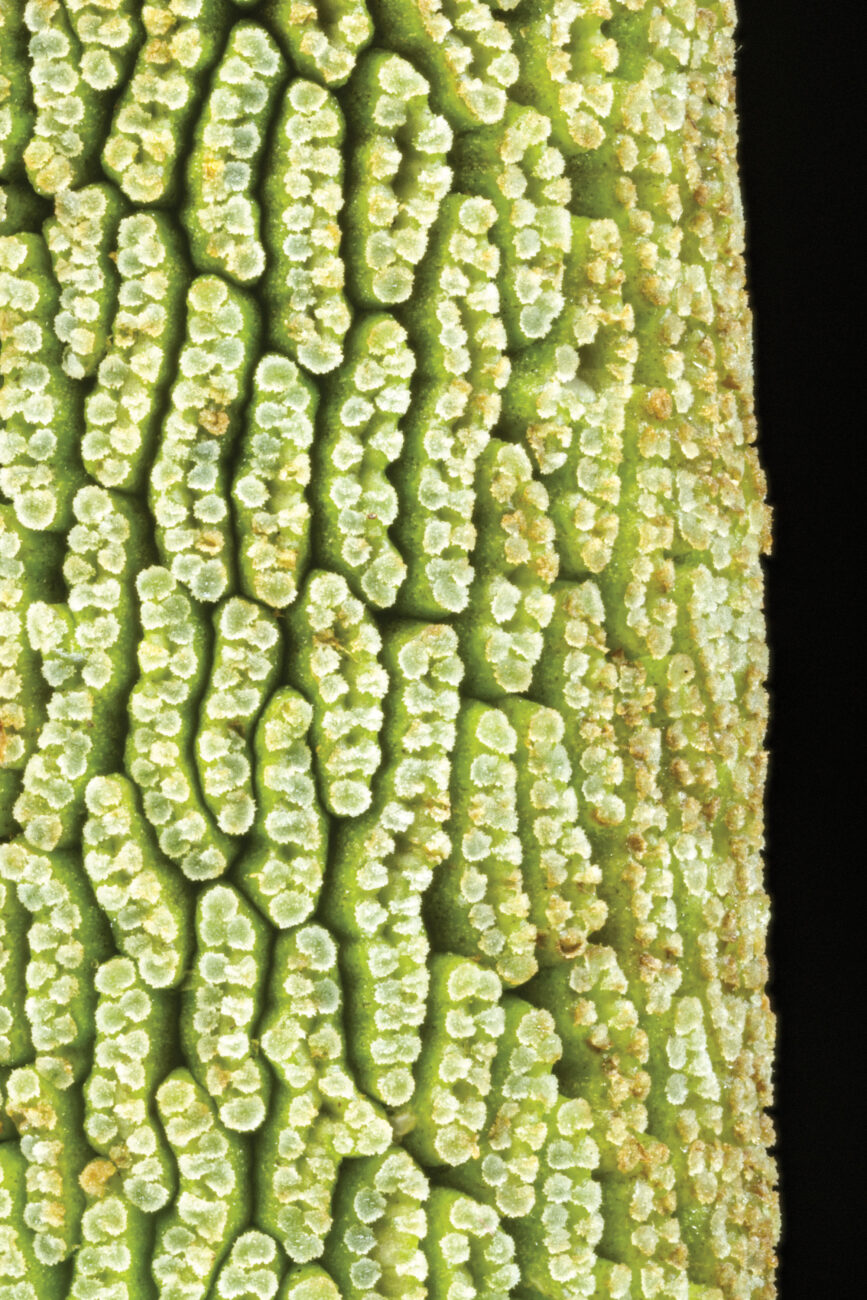
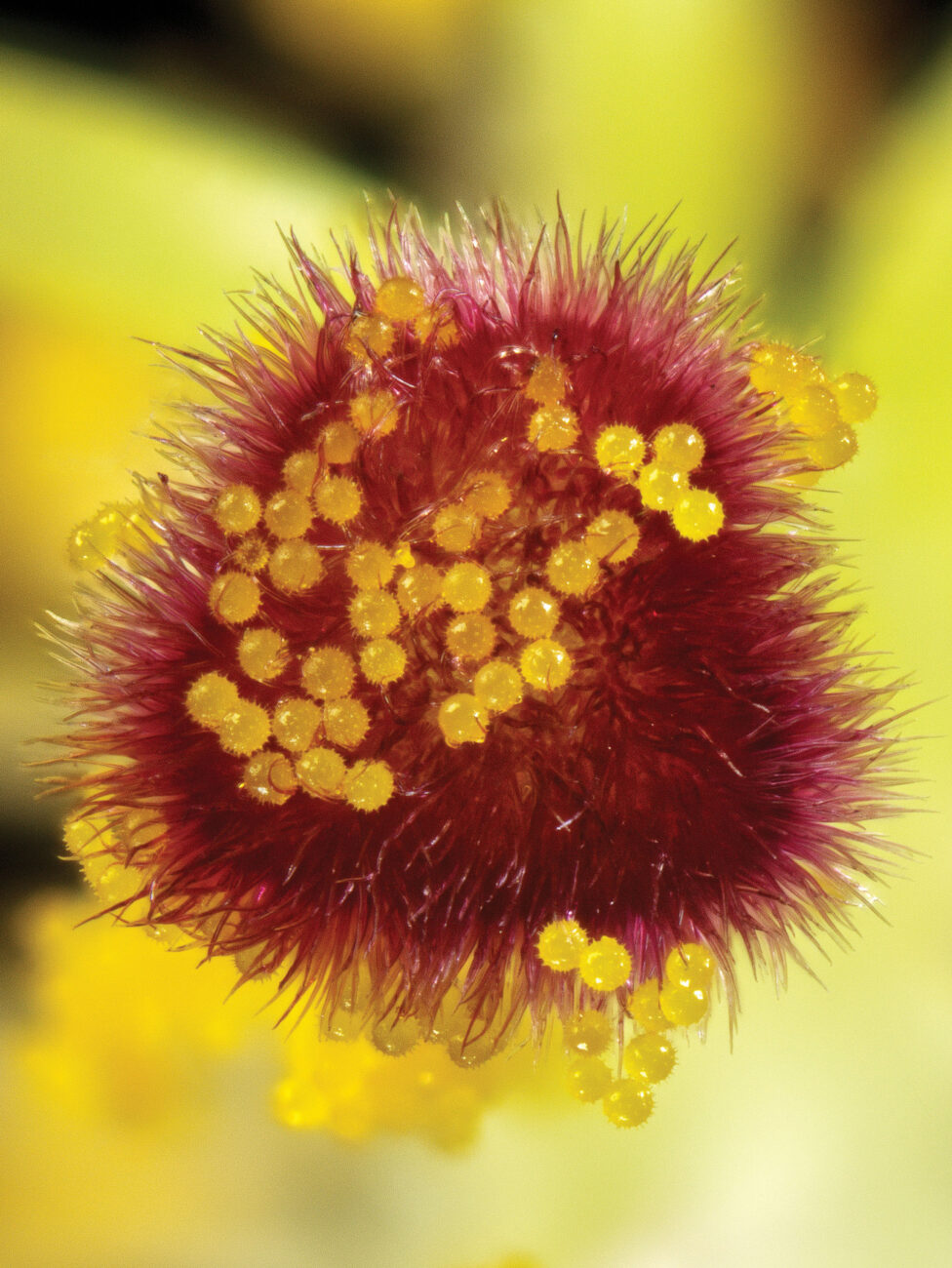
When I viewed Garnock-Jones’s photographs in three dimensions, I was astonished. I noticed tiny details which my eye had previously skipped over: hairs on stalks, stamens dusted in pollen. Somehow I was perceiving them differently, as though my brain was being tricked into seeing more clearly. That’s partly to do with the botanist’s-eye view that the photographs present.
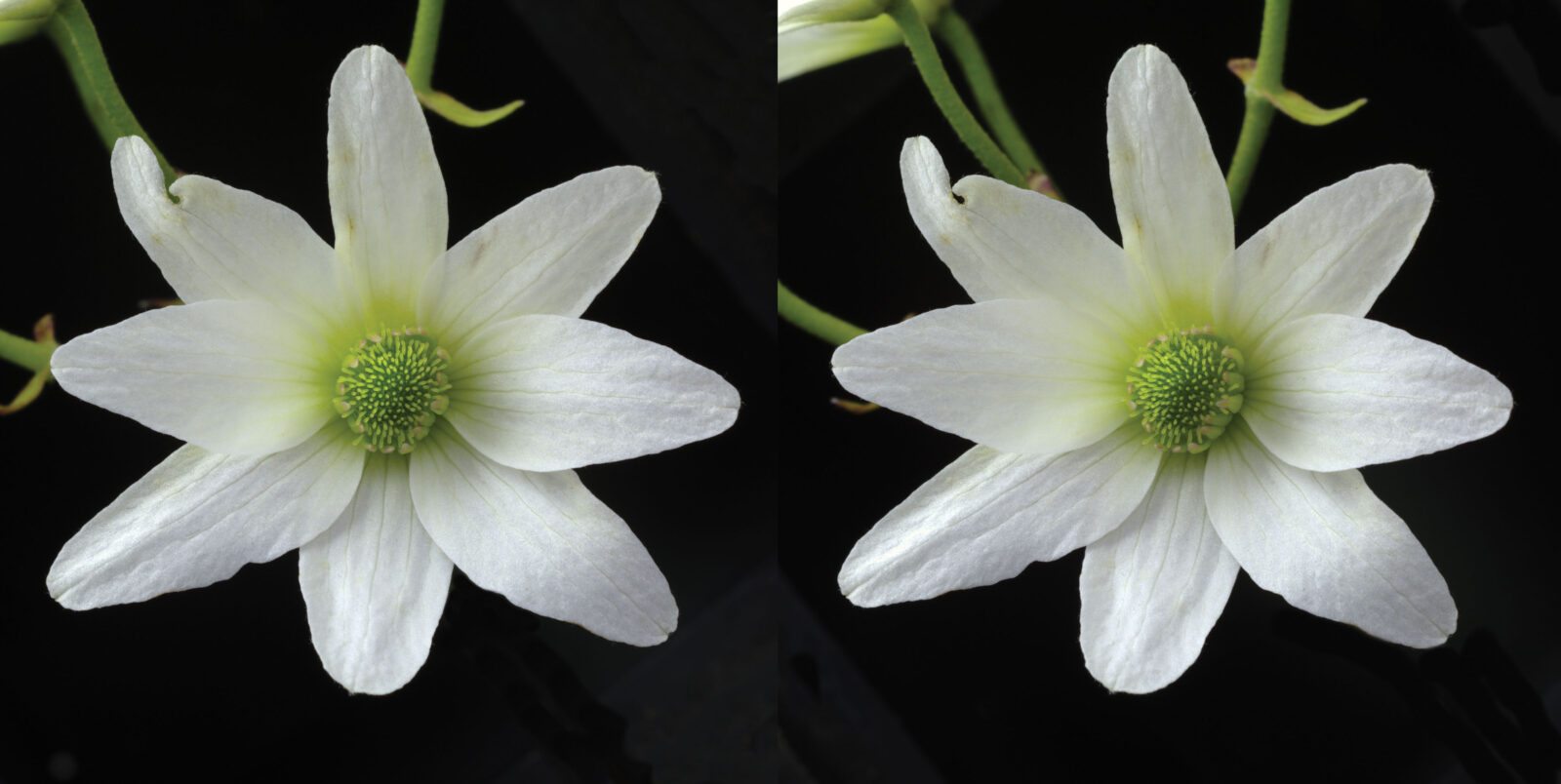
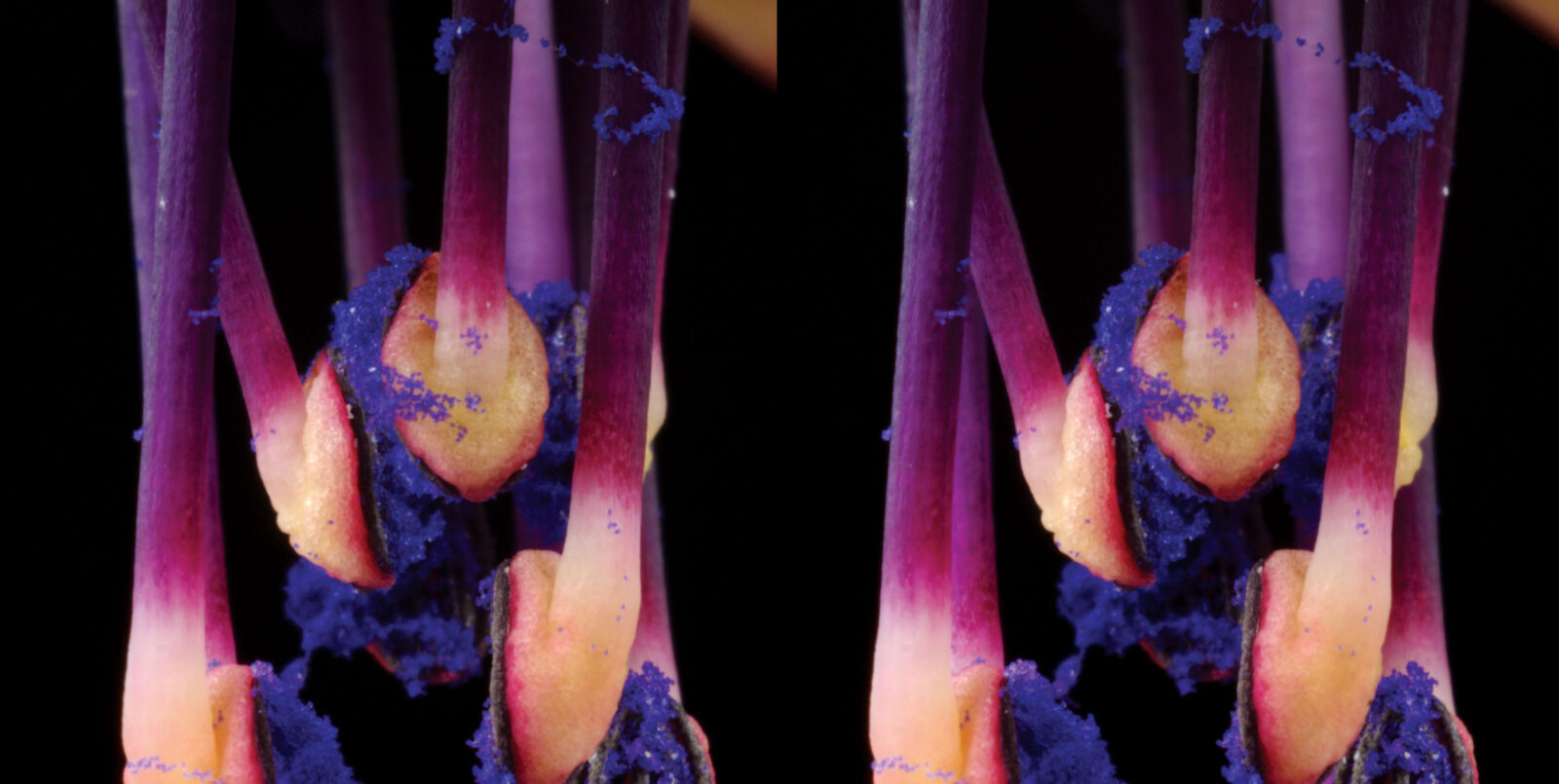
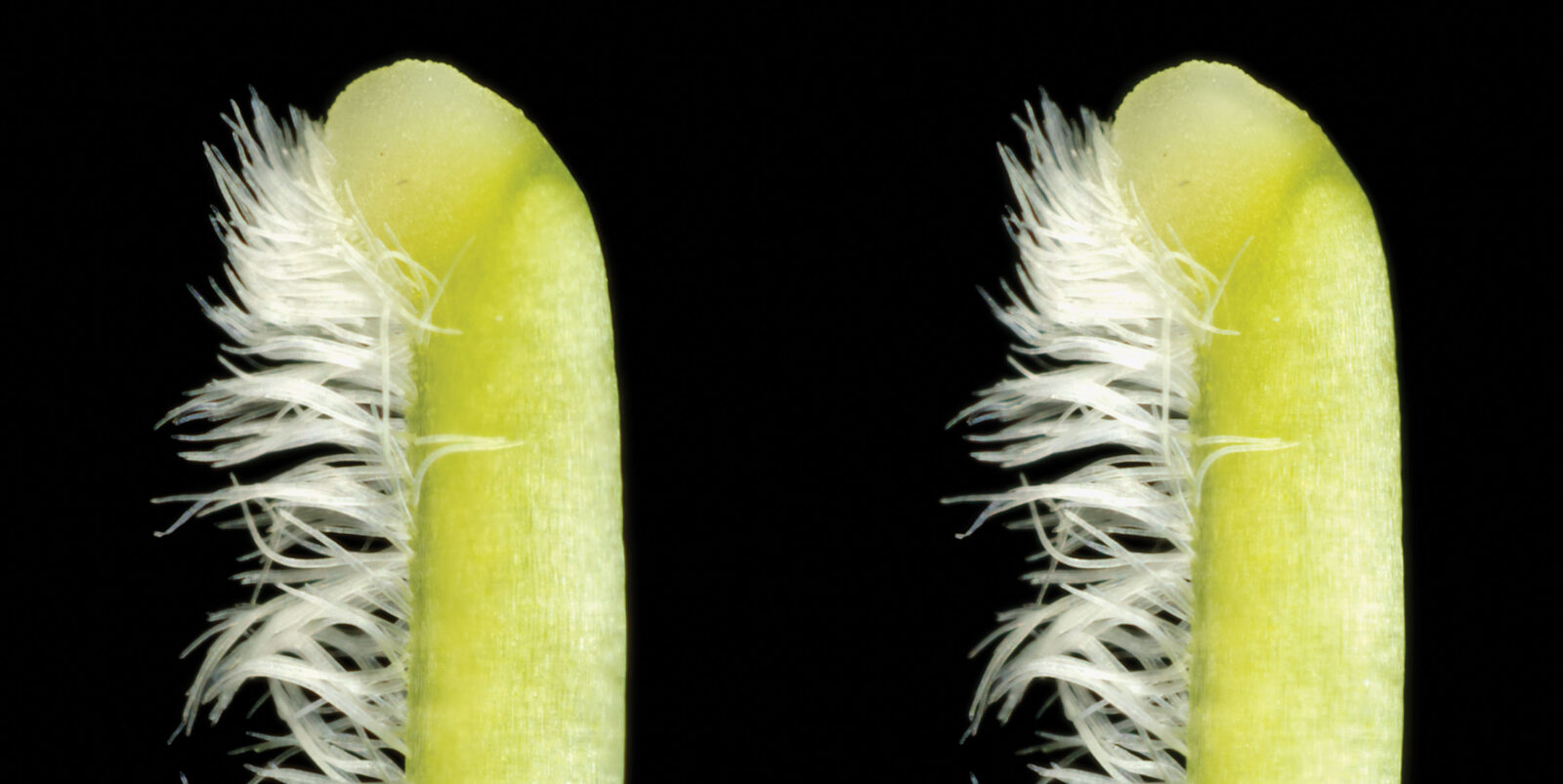
“The kind of things that I’m focusing on in the book are [to do with] sexuality,” says Garnock-Jones, “so whether the flowers are unisexual or hermaphrodite, or differences between the male flowers and the female flowers if they’re separate.”
You might just be wowed by a kōwhai bigger than you’ve ever seen one before, and that’s all right with him, too. He wants to show us what he’s spent his life transfixed by: small things, blown large.
*
The first stereoscopic viewer was created in 1838, but the method really took off after stereograms were exhibited at the World’s Fair in London in 1851 and Queen Victoria took a liking to them. Stereographs became a craze; stereo viewers became a common household item in Britain, while stereo photographers travelled around the world to produce images of scenes domestic and exotic, including castles, pyramids, Mayan ruins, Japanese temples, and news events, such as the Great Fire of Chicago.
In 1899, amateur photographer William Williams gave a lecture to the Dunedin Photographic Society in which he extolled the superiority of the stereograph. If you were to show a friend an album of photographs and an album of stereographs, he said, they might hardly be bothered to turn the pages of the former, “while they go into raptures over the stereographs”, he told the crowd. “There is absolutely no comparison in the interest they excite side by side.”
Williams reassured society members that they didn’t need a stereoscopic camera: they could simply move their own camera a little to the left or right for the second picture. He photographed all kinds of things in stereo: family outings, landscapes, city scenes. He even made a stereograph of his family looking at stereographs.
Stereo photography runs in Garnock-Jones’s family. His father, an architect, was fascinated by it; he took family portraits in stereo, too, with the aid of a gadget for his camera that let him slide it 35 millimetres to the side.
Garnock-Jones was born in the United Kingdom, but has few memories of it—the iridescent colour of a sea of bluebells under bare trees, little more. His mother died when he was a baby, and he has one photograph of her, dressed in her Liverpool auxiliary police uniform during World War II.
His father remarried, and in the 1950s, when Garnock-Jones was five, the family emigrated to Tauranga. There were only four houses between theirs and the paddock at the end of the street, and so Garnock-Jones was outdoors all the time. “I always enjoyed learning the names of the plants, and finding new ones, and knowing where things were,” he says.
As a teenager, he drew pictures in stereo, carefully creating right-eye and left-eye views of streets or buildings by hand. His first job in botany involved contributing to a guide to introduced plants in New Zealand. “I did the thistles and the dandelions and their relatives,” he says. And part of the daisy family, which continues to fascinate him. “That’s partly why there’s a section on daisies in the book—because they’re so strange.”
A few months ago, Garnock-Jones’ attention was drawn to a detail on the portrait of his mother: the name of the photographer. It had been part of the picture his whole life, but this time, he decided to look it up online. “I found that there’s a museum in Liverpool dedicated to that photographic company, and they’ve got all of the negatives and all of the prints that survived.”
He wrote to the museum, asking if they had any other images from his mother’s photoshoot. They did—the museum sent him half a dozen more pictures of her.
“And two of them are naturally a stereo pair,” he says. One of them is slightly offset from the other. “I put them together and I get a stereo image of my mother, who I never knew. It’s just amazing.”
*
He Puāwai is complete, but the work continues. Garnock-Jones collects most of his flowers as buds and keeps them at home, waiting for them to bloom. “So, yes, there’s flowers in glasses and cups all over the kitchen bench. With grasses, I suffer from hay fever terribly, so bringing grasses into the house is a mistake—but it has to be done.”
He finds them through location tags on iNaturalist, through contacts at botanic gardens, or enthusiasts around the country.
“When I retired, I thought, ‘I’m going to leave botany behind and do other things,’” he says, and laughs.
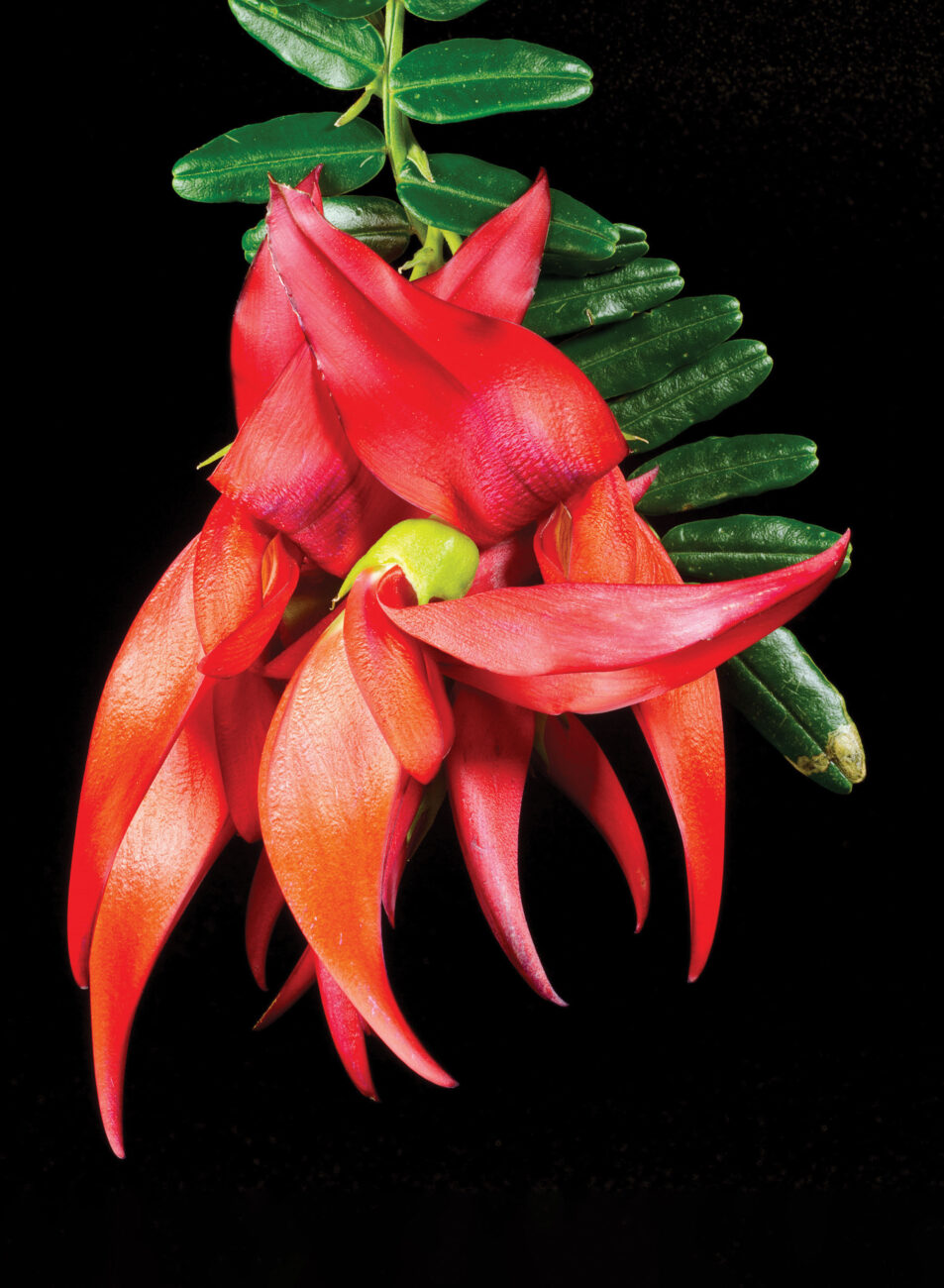
He’s just ordered a new microscope camera lens for extreme close-ups, and he’s been creating his own stereo glasses, thanks to a local teenager who can 3D-print frames. He’d really like to use stereographs in the classroom, or when giving talks. If he could figure out how to project them, and then distribute viewers to all his audiences, then they, too, could see flowers all over again, in all their astonishing detail. “Flowers in two dimensions are unsatisfying now to me,” he says. “And it’s getting that way for landscapes and portraits, too. I always take two pictures now.”
This spring, Garnock-Jones is hoping that one of the English bluebells he’s been growing will bloom. He’s been trying to find English bluebells for years—not Spanish bluebells, and not hybrid ones—and finally, he tracked down some bulbs from a specialist. They’re looking promising. “The flower stalk is 100 millimetres tall and growing every day,” he says. “Sometime in the next few days, I might have some real bluebells to photograph.”
More by Rebekah White
More by Philip Garnock-Jones