





How an audacious young pilot pulled off an aviation first.
Just before 1am on January 7, 1931, at a small shop near Sydney’s Mascot aerodrome, 21-year-old Guy Menzies finished his meal of ham and eggs, walked out into the night, boarded the single-engine biplane everyone believed he was flying to Perth, and set off for New Zealand.
He had kept his plan secret because he believed authorities might forbid it but, shortly before take-off, he handed letters for friends and family to his brother Ian, telling them his true aim.
No one had ever made a solo crossing of the Tasman. Menzies didn’t believe he could fail. His plane, Southern Cross Junior, had, one year earlier, carried legendary Australian aviator Charles Kingsford Smith on a record-breaking flight from England to Australia.
Menzies, who described the aircraft as an “excellent bus”, carried neither radio nor emergency supplies.
A friend who was with him at the time of his pre-flight meal later described the aviator’s demeanour as “calm and cheerful”. That would change soon enough.
Bad weather set in about 50 miles into the flight and didn’t let up. Headwinds buffeted the plane, slowing its progress and making it increasingly clear Menzies would have to reconsider his original plan to land in Blenheim.
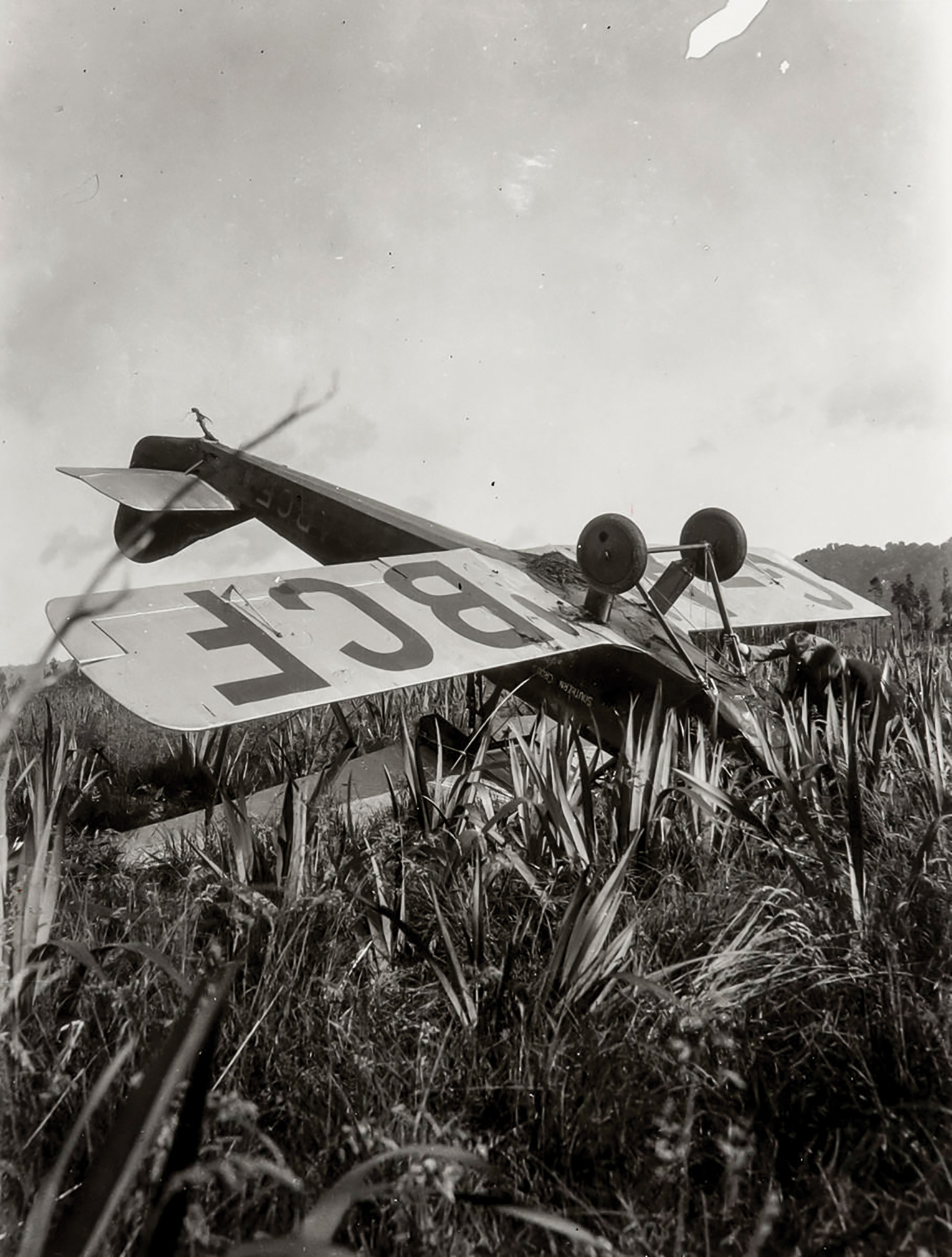
Running low on fuel, he flew up and down the West Coast looking for a suitable spot. At 3.12pm, after nearly 12 hours in the air, he found what he thought was a grassy paddock near Harihari and guided the plane into what he realised, too late, was a swamp. On landing, the plane dug into the mud and flipped.
Menzies unhooked himself from his harness and dropped headfirst into the swamp.
Apart from a few scratches, he was unharmed. He was also triumphant. He had fulfilled what he called a “lifelong dream”. He told reporters he wouldn’t do it again for £50,000.
The owner of the farm on which he landed, astonished to find a dirty Australian and an upside-down biplane on his property, took Menzies to a nearby house for a cuppa. News spread quickly and Menzies was driven to Hokitika. A large cheering crowd carried him shoulder-high into Keller’s Hotel, where he was received by the mayor.
Newspapers around the country couldn’t get enough. No detail was too small: He had brought with him only a spare collar, razor and toothbrush. He wore a serge suit under his fur-lined flying kit. The Auckland Star even included the hopefully unnecessary line, “The airman did not smoke during the flight, as he was piloting a machine surrounded by petrol tanks.”
Menzies spent the next few weeks touring New Zealand, giving talks and receiving gifts, and being lauded at civic receptions and complimentary luncheons. An advertisement for his appearance in Whangārei called him “THE HERO OF THE TASMAN” and “PRIDE OF THE COLONIES”. On the West Coast alone, he was presented with a gold clock, 12 gold nuggets, pounamu and a cheque from the people of Greymouth, which was good because he had brought with him only 26 shillings.
Southern Cross Junior was taken by horse and cart to Wigram for repairs, then shipped back to Sydney. Three months after Menzies’ historic Tasman crossing, during a flight over Mascot aerodrome, its wings collapsed and it crashed, killing pilot Leonard Palmer and passenger Albert James.
Part of the plane’s propeller was later donated to the Dominion Museum, Wellington, by Menzies’ mother. Today, it resides in Te Papa. Another of the propeller blades is on display in the West Coast Historical Museum in Hokitika.
The swamp Menzies mistook for a grassy paddock is now a grassy paddock.
And the man himself? Nine years after his trans-Tasman feat, while serving with the Royal Air Force, his flying boat disappeared over the Mediterranean Sea, presumed shot down.
More by Greg Bruce