









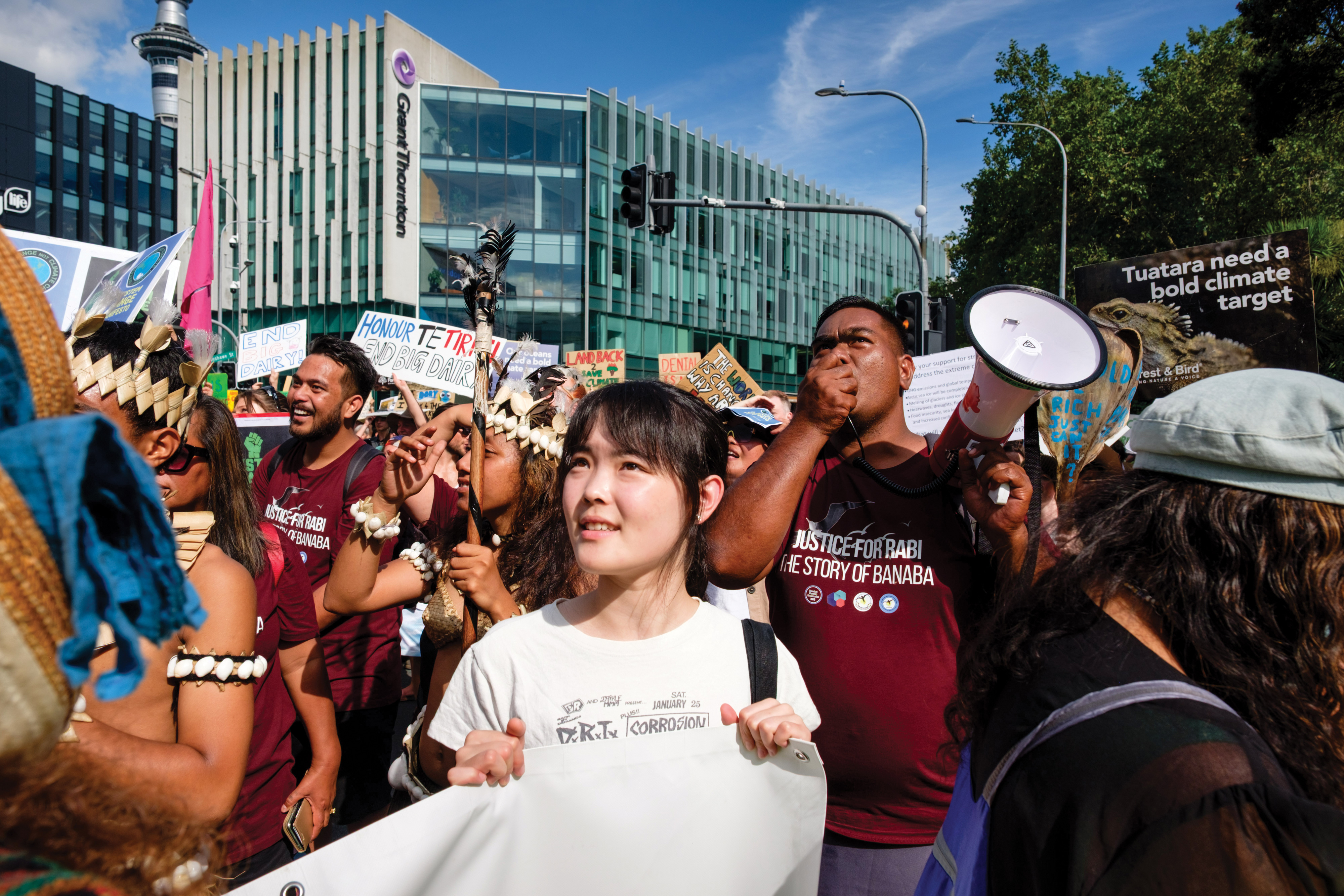
In 2023, a team of University of Auckland researchers organised workshops across Northland and Auckland—19 of them, involving a demographically diverse group of 176 people, aged from 16 to 25. The researchers specialised in youth mental health, and they had a few key questions. What were these rangatahi up against—and how were they coping? What did they think about the escalating levels of anxiety and depression among people their age?
The resulting paper, published in the open-access journal BMC Public Health, gives compelling voice to issues that are usually reduced to statistics. The researchers, careful to note that there is no single youth perspective, noticed a theme: a feeling of being overwhelmed and exhausted by the state of the world. “So many once-in-a-lifetime occasions,” said one participant. “Financial crisis, global pandemic… Housing crisis, youth mental health crisis.”
The participants talked about existential threats—the climate crisis, wars—as well as their economic prospects. This young person was already battling to cover their own living expenses each week: “I feel hopeless. Yeah. And I feel exhausted. I feel so tired… I only slept, like, four hours.” Even though some of the young people were privileged, and knew it, the researchers noticed “a pervasive sense that… no one was immune from [an] uncertain economic future”.
“I’m the only person who’s working so I financially support my whole whānau and myself. Which means I’m working sometimes more than 40 hours a week… I’m surprised that I’m, like, still in school, to be honest” — a young research participant.
Family could be a crucial support or an unrelenting pressure on top of everything else, the young people said. Social media, likewise, could go either way, amplifying problems or helping teens through them.
Talking honestly with friends online was a lifeline, some young people said, but they had also clocked the isolating effect of social media—sitting on a bus next to someone, both on phones, not even looking at one another—as well as the pressure to curate a “brand image”.
“It’s like this productivity culture on social media,” said one participant. “Like, you know, get up at 5am and go to the gym, do all my errands… The more you watch it, the more it gets put on your feed and the more you’re just, like, ‘Oh my gosh, I’m a shit person because I don’t do this’.”
Perhaps unsurprisingly, there was a sense of frustration with older generations. “They think because we’re younger, we’re not wise enough,” said one participant. “It’s like, ‘Oh, you’re just young, you don’t know anything.’ I think that’s pretty dumb.”
More by Catherine Woulfe