



Using UV photography and Photoshop, a scientist recreated the colours of a 4.9-million-year-old cone snail.
More by Skye Wishart

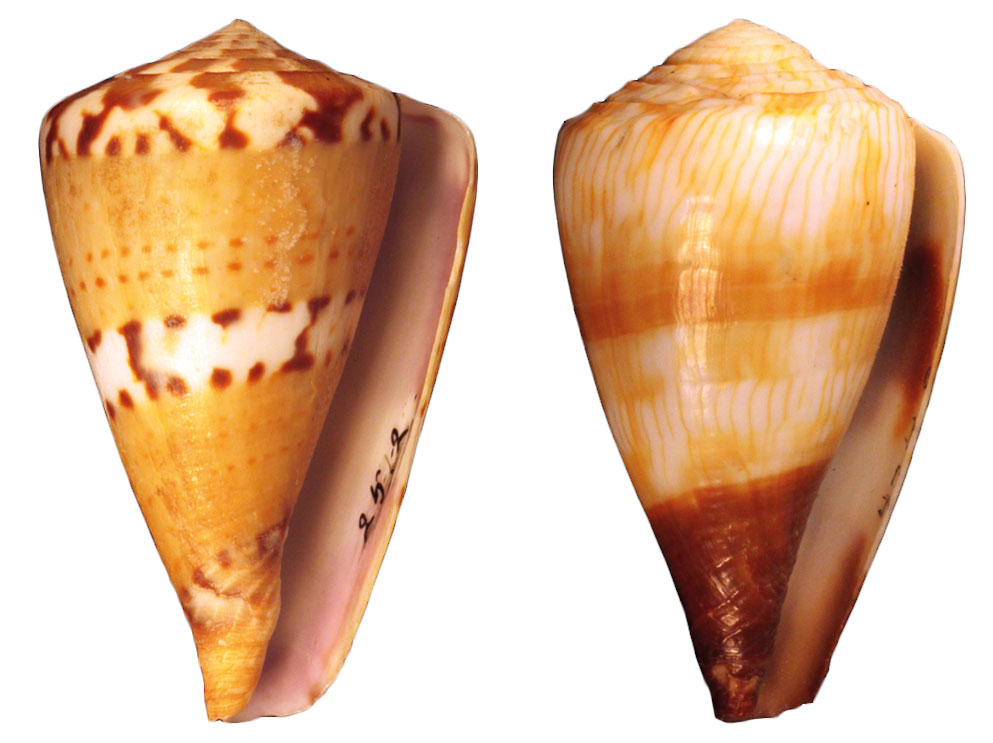
In a technique used since the 1960s, Jonathan Hendricks of San Jose State University in California looked at fossils of cone snails from the Dominican Republic, some as old as 6.6 million years. Soaking them in bleach to enhance any fluorescence, he then photographed them with a digital camera in a darkroom under ultraviolet lamps.
Hendricks then used Photoshop to create digital negatives from these images, converting the bright fluorescing areas to darkness, which would correspond to the original pigments.
The fluorescing compound is unknown but is thought to form from the pigments if the shell lies in the sun or is exposed to bleach. “Some groups of snails that had more pigments in their shells would fluoresce more, so fluorescence depends on the taxonomic group,” says Hendricks.
The beautiful patterns are valuable for identification. Of the 28 species analysed, 13 were new, and one of the species, Conus spurius, is still around today.
More by Skye Wishart
Subscribe to our free newsletter for news and prizes
3
$1 trial for two weeks, thereafter $8.50 every two months, cancel any time
Signed in as . Sign out