






Jono Ridler is swimming the length of the North Island unassisted… but he has a lot of help.
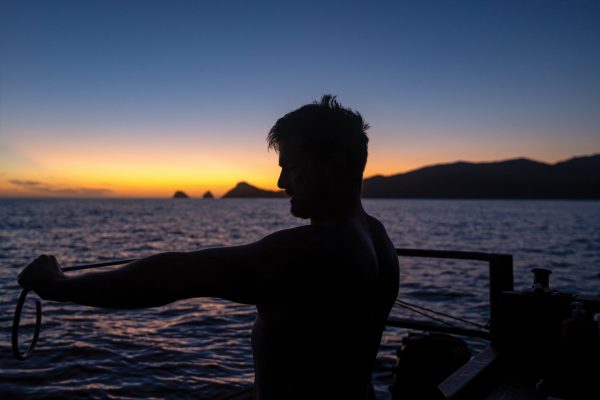
On an amphibious boat off Pākiri Beach just north of Auckland, Jono Ridler looks out to sea. He picks up a physio bungee and silently embarks on a series of stretches. Arms wide, Titanic style. Then up and down.
Skipper-slash-hype man Andy Tuke: “How long for your prep time there, Jono?”
“A few minutes.”
Ridler assumes a speed-skater stance, arms pulled back straight behind him. Then he hangs from the cabin frame. He gives a couple of huffy exhalations. Strips down to togs. Finn Priddy, a university student who landed a very odd summer job, helps with lids and passes him whatever he needs: baby shampoo to wipe his goggles; a tub of petroleum jelly to smear on the chafe-prone bits; ear plugs.
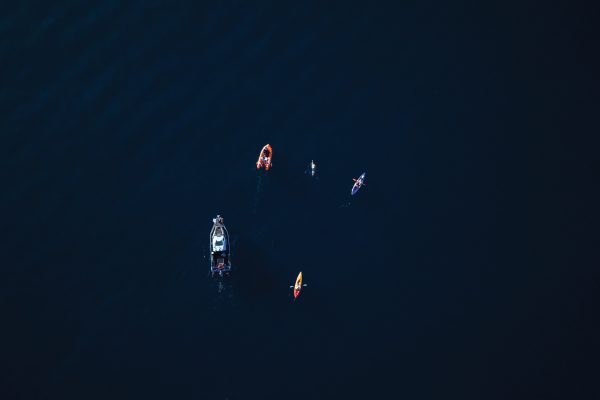
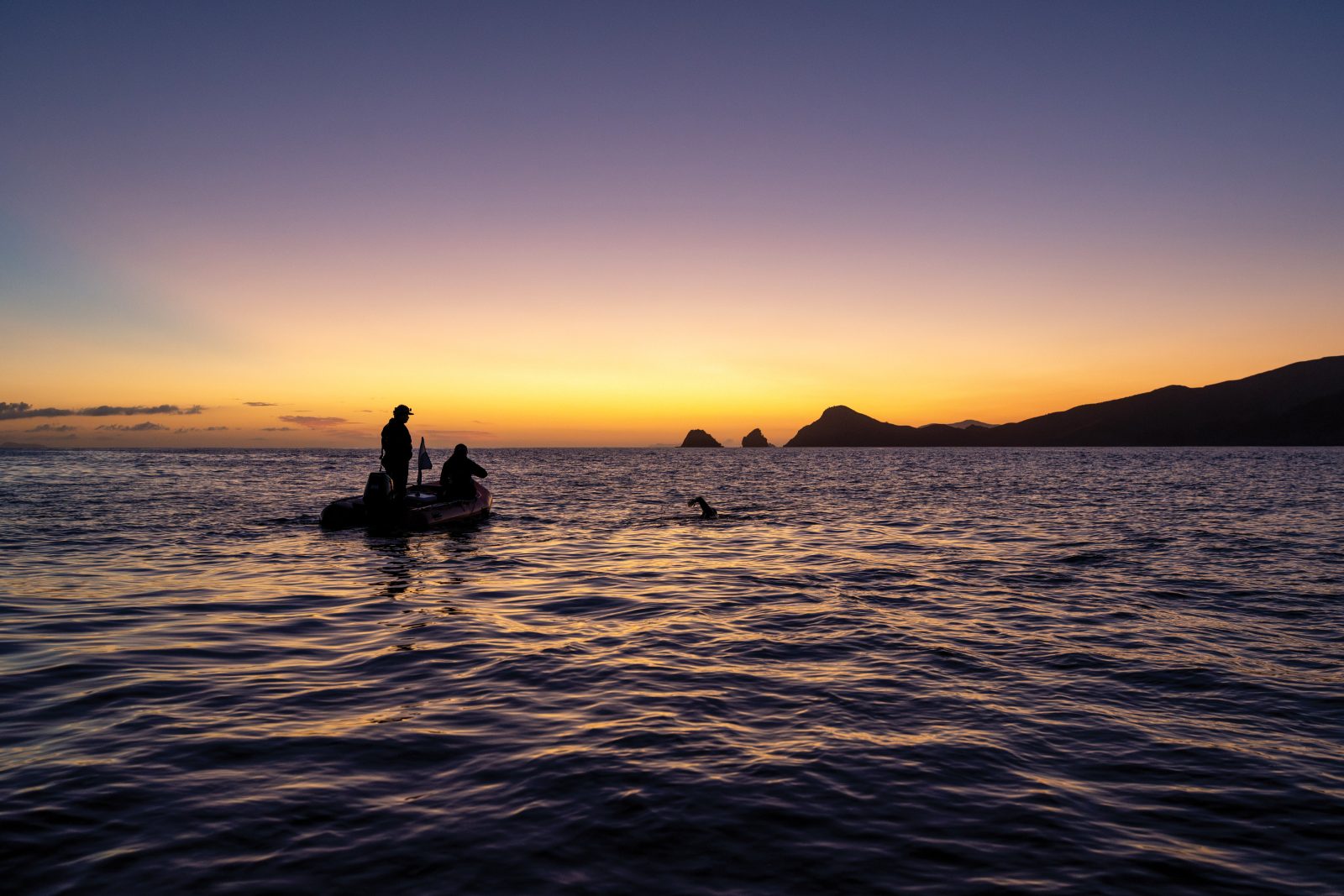
“We’ll be there in about two minutes,” says Tuke. “There” is the precise point at which Ridler stopped swimming at 6.30 last night. It is just after dawn on day 20 of an odyssey projected to take three months: Ridler, the country’s top endurance swimmer, is planning to swim the entire east coast of the North Island. One thousand, three hundred and fifty kilometres. It would be a world record. It will certainly be a slog.
*
Tuke checks in with Nadine Lees on the RIB, the rigid inflatable boat crewed by surf lifesavers who watch him every second he’s in the water. “Jono’s ready to go.”
Ridler gives a huge yawn. I suspect it, like most of his movements, is deliberate.
Tuke: “Have a good one, Jono!”
“Thank you,” he says, and jumps into the dark water. Swim start time, reports Lees: 6.04am. Stroke rate: 54 per minute.
First task: get him swimming in the right direction. Picking a line is Tuke’s job, and it never ends and always changes—according to the tide, the wind, the current, the time.
Nobody is allowed to physically touch Ridler when he’s actually in the water, but in truth there is a great machine hauling him along: the Live Ocean Foundation and assorted sponsors. The swim is designed to raise awareness about bottom trawling, a destructive and controversial fishing method. They are throwing everything at it.
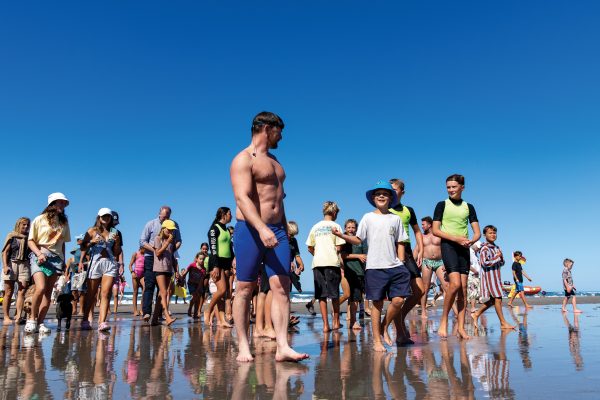
There is the amphibious boat, the rescue RIB, Ridler’s motorhome, a food trailer, and a bunch of swag tents and gear. There are six people supporting Ridler out on the water, and back on land there is a PR person and Ridler’s moral support, a fellow endurance swimmer.
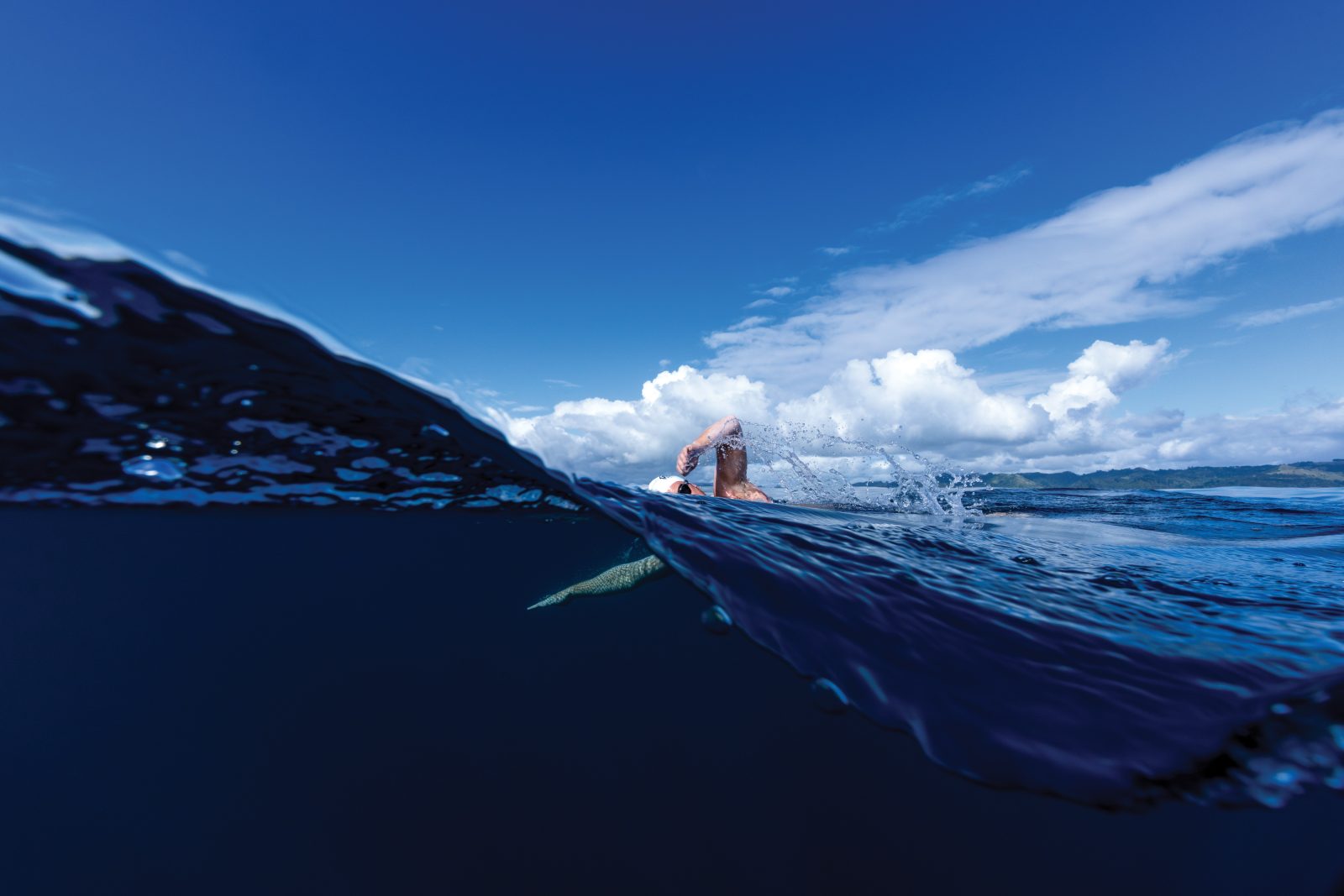
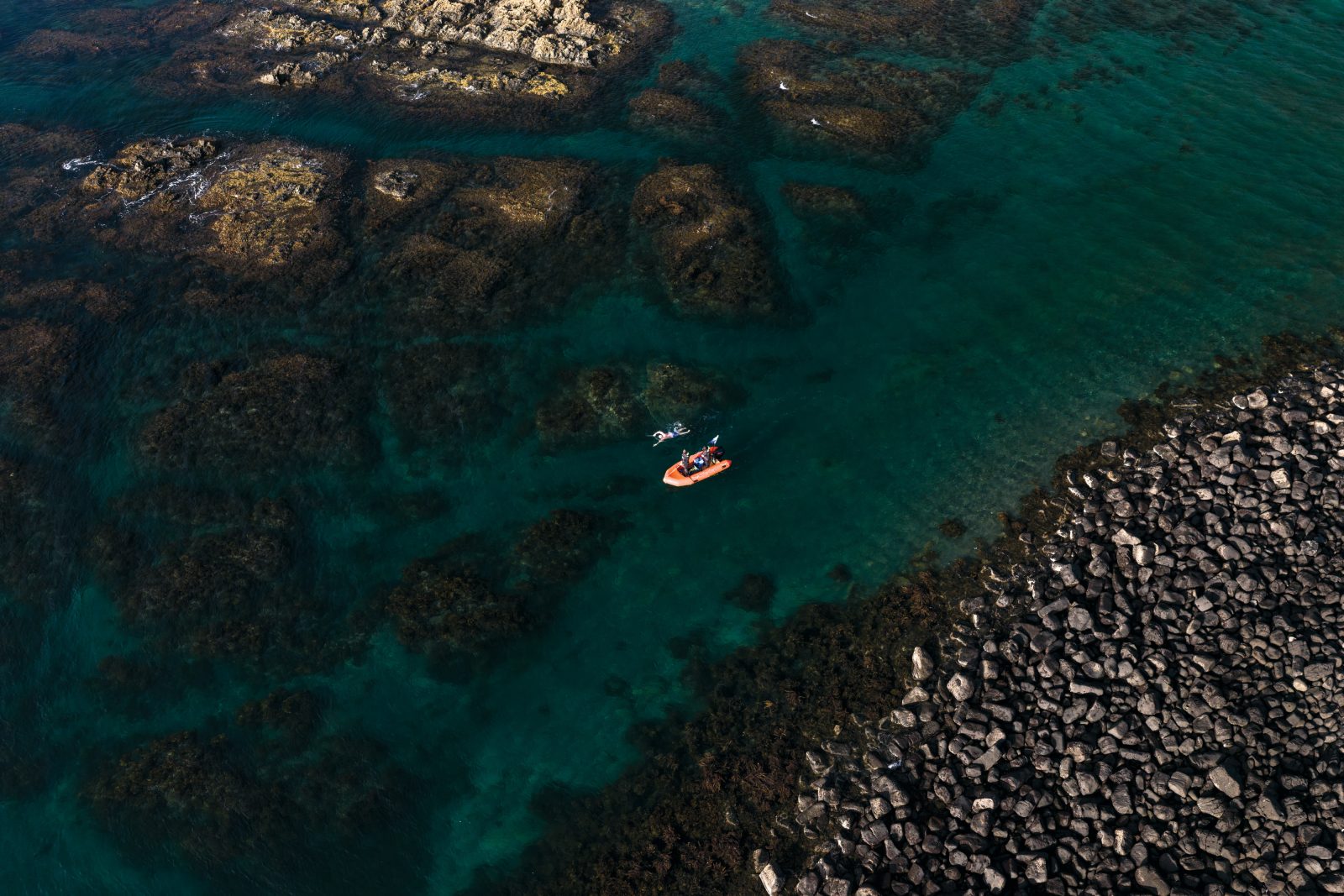
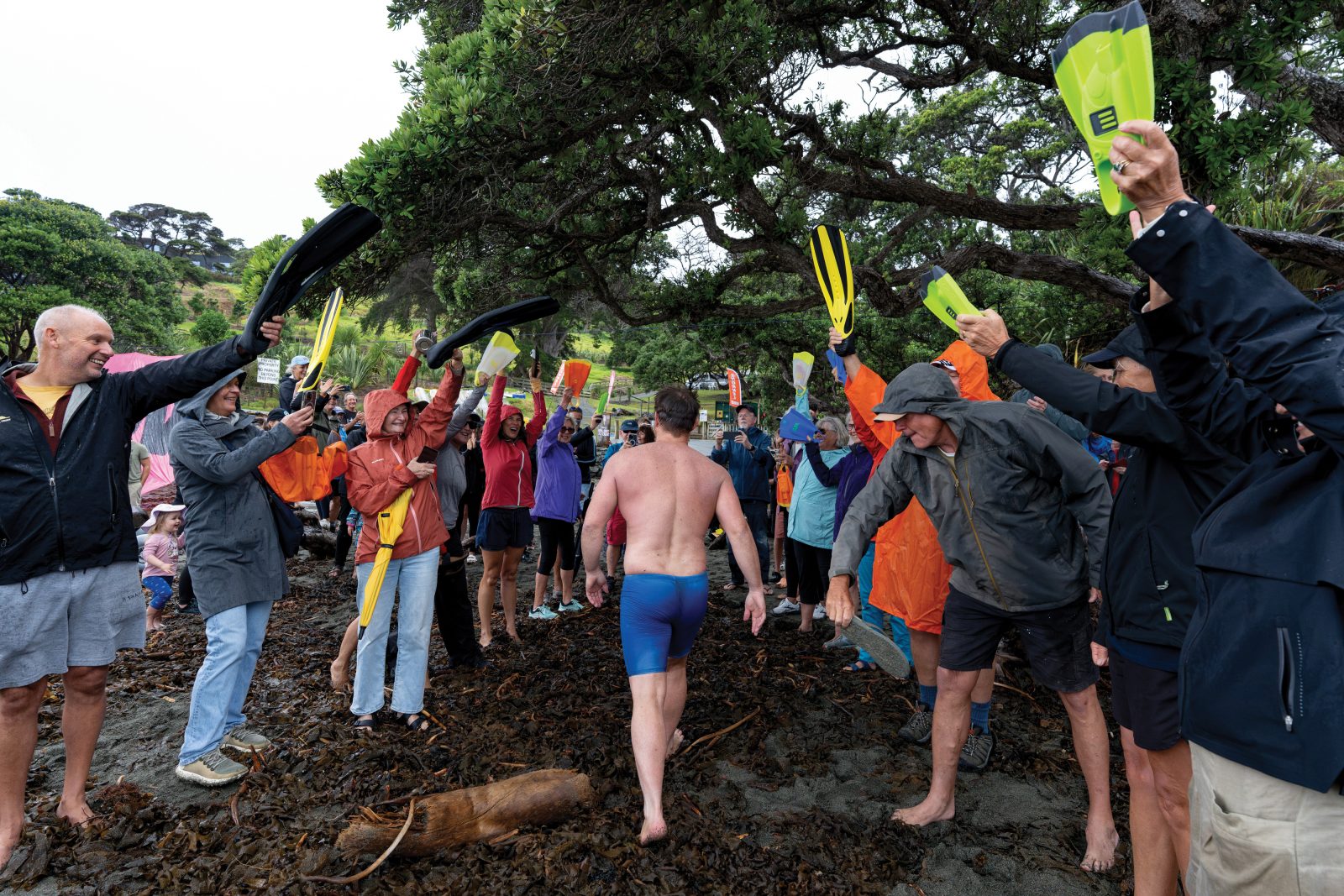
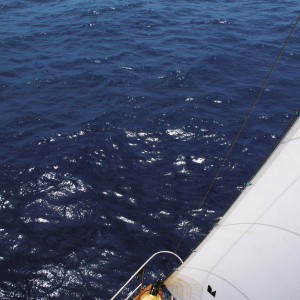
After a few weeks, lines blurred and “everyone is doing everything”, says Josh McCormack, who is ostensibly the team videographer and photographer. An ocean photography specialist, he filed the images for this story, as well as daily updates for media, while also monitoring wind, tide and wave patterns. Challenges: Weeks of broken sleep. Weather. A drone with a busted handle that means you have to reach gingerly between whirring props to grab it out of the sky. At sea, of course, McCormack can’t get himself to the best angle fast, but has to anticipate where the light will be, and ask Tuke to put the boat there. Still, he says, it’s amazing what a good day can do for morale—and this morning “is the nicest we’ve ever had, almost”.
Food alone is costing about $40,000—250 meals a week are prepared in the Emirates Team New Zealand kitchen in Auckland city. Ridler’s dad drives it to wherever the group has washed up.
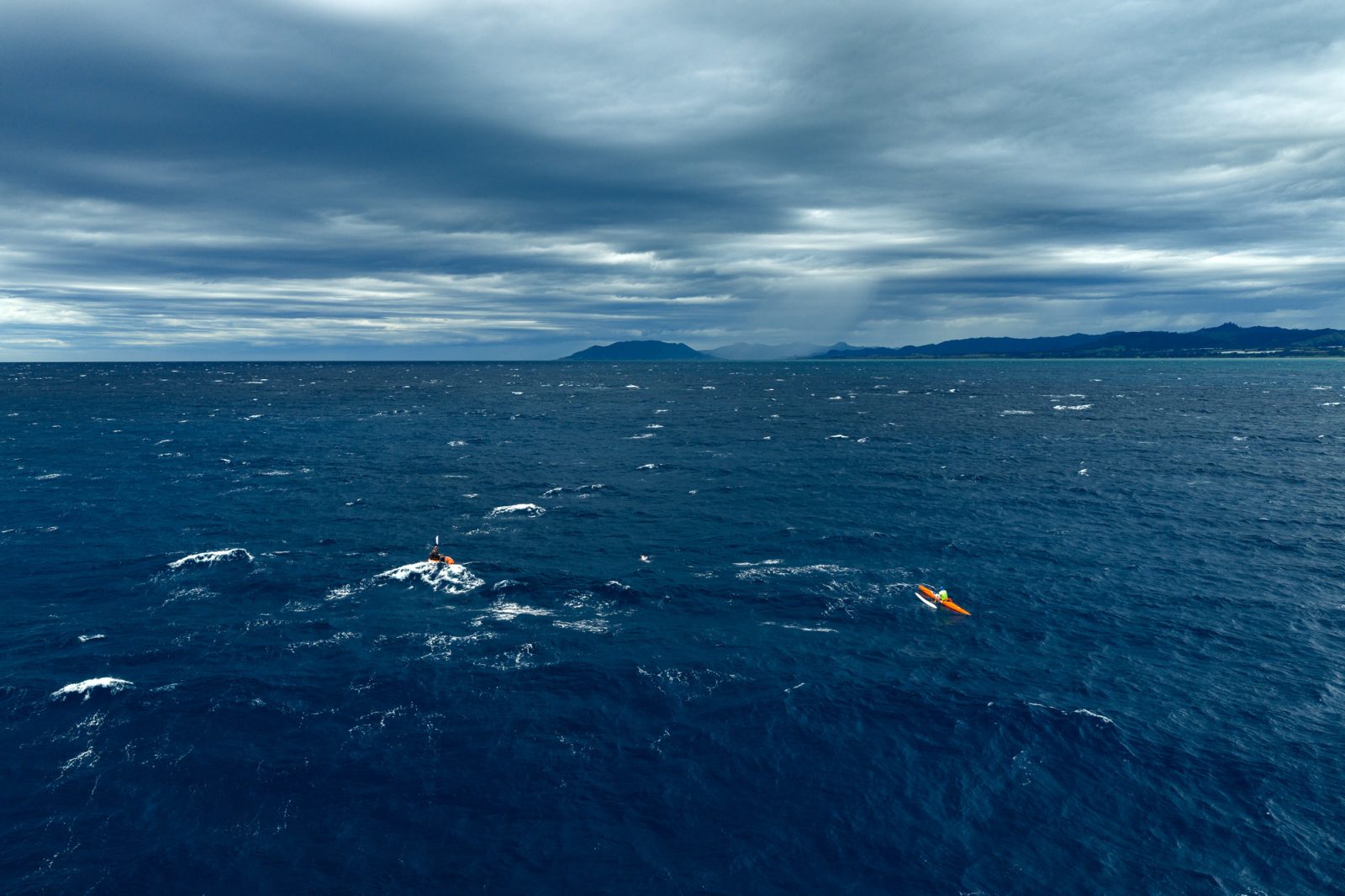
Before the trip, the team made a series of helicopter recces, checking out the coast, the grade of the beaches. Now the trick is “land logistics”: sometimes they sleep in a campground, other nights someone offers them a lawn and a shower. It’s a lot of comms. A storm or a too-short swim can throw everything out of whack.
Each moment is finely calibrated, with Ridler—his nutrition and hydration, his sleep, his state of mind—the centre around which everything else pivots.
How’s the body? It’s the most-asked question from members of the public. It also dictates all of their days. Swimming two shifts per day is easier on the body, for example, so they hit the water at dawn and then again in the afternoon.
In the water, Ridler is counting. One, two, three. One, two, three. One, two, three, for hours a day, for months. He’s not thinking about much. Everything is taken care of, except the smooth rotation of the arms, the efficient flutter of the feet. Every half-hour he flips over for a bit of backstroke to stretch the shoulders, slugs down a drink or a chew. “Love your work, Jono,” call Priddy and McCormack. “Going fast, brother.” Once, he duck-dives to get a closer look at a single shrimp.
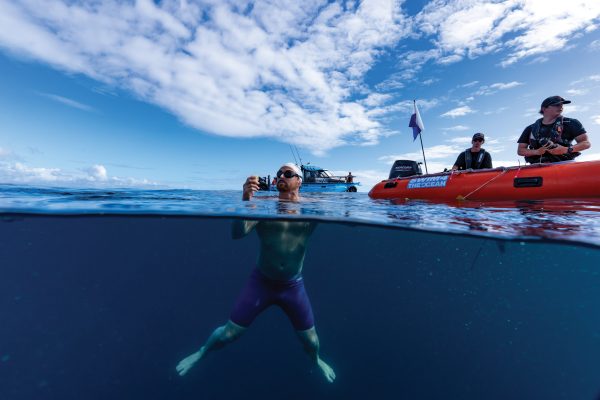
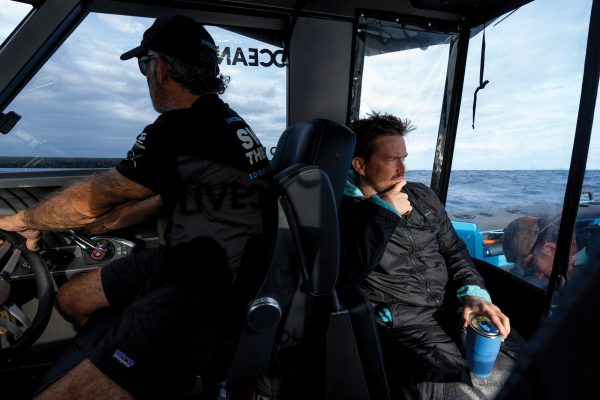
Being the object of so much attention must be a bit strange, I say to him, when he’s knocked off 9.8 kilometres in three hours, done a piece to camera for McCormack, and started on a protein shake. “It is a bit strange,” he says. “It’s not really in my nature, either.”
We talk, briefly, as the boat heads for the ramp. His voice is hoarse from salt. He shows me his ulcerated lip, the way his shoulders keep pulling forward. He talks about fighting currents and constantly swallowing seawater the other day in awful conditions, about the pink maomao at the Hole in the Rock, and about trying to detach to the extent that he can take three deep breaths before giving the “get me out” signal if he sees a shark. “Exposure to anything helps to smooth off the edges,” he says, as if he almost believes it. (Despite a shark deterrent device on the RIB, “they were coming pretty thick and fast in the first week”.)
We pull into the driveway of the place they’re crashing at tonight. “That was beautiful out there,” Ridler says, and the body is hustled off to bed. His second swim of the day starts in three and a half hours.
More by Catherine Woulfe
More by Josh McCormack