



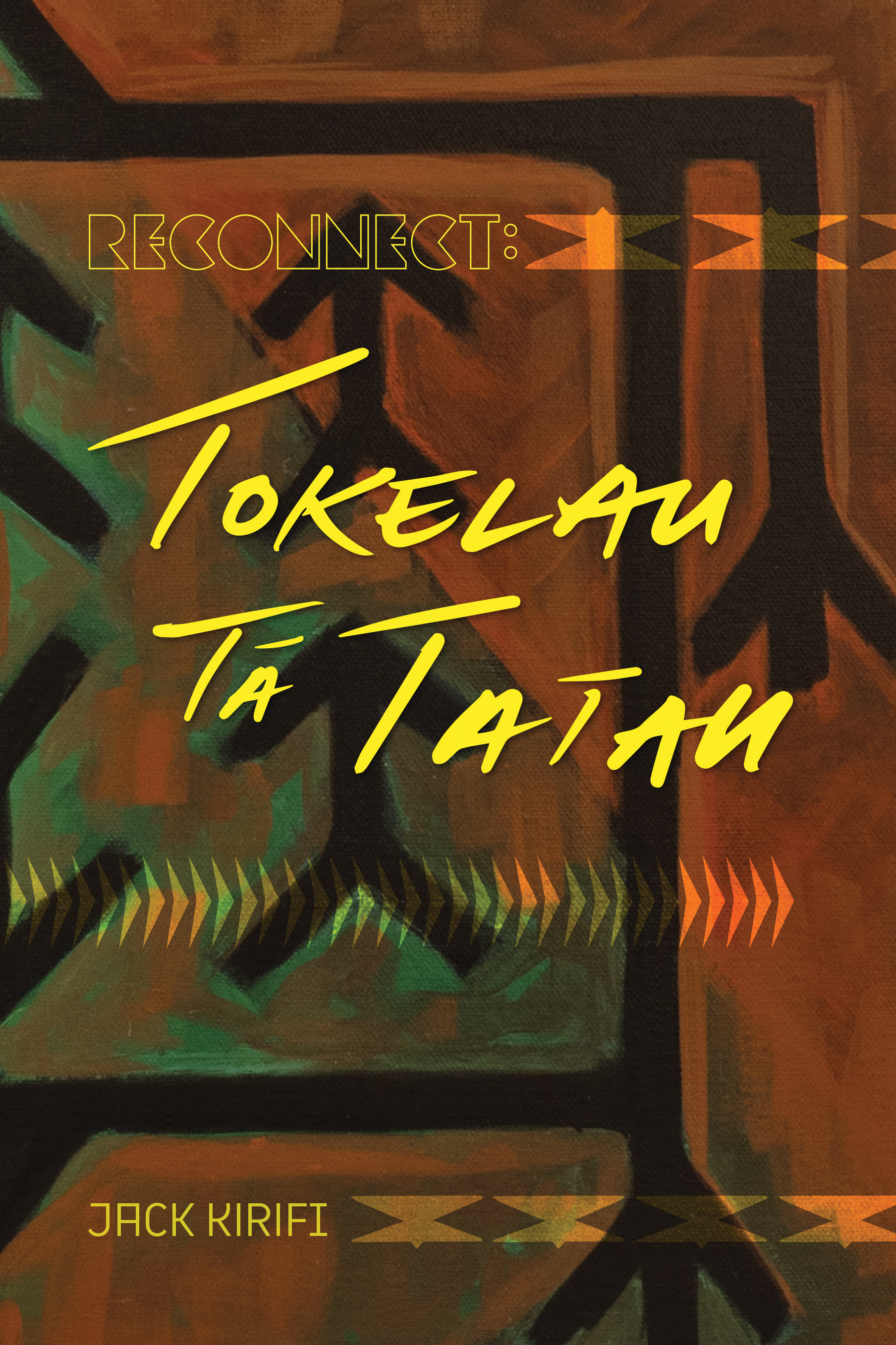
Jack Kirifi, Mila’s Books, $30
Soot. Charred coconut. Water. Turtle bone, sharpened into teeth and tied to a stick. These, as far as we can tell, were the Tokelauan tools of tā tatau, the sacred art of tattooing. Women were marked with nifo ika, or fish teeth, around their lips and lupe, a patterned line, arcing above the hips. There were fish, of course, depicted as diamonds, some with small fins or tails. Turtles, tapped into the chest to honour lost loved ones. There were shapes that were possibly fish, or possibly paddles, and these were worn on the arms and shoulders of men. Meanings vary from family to family. “One thing is certain,” writes artist Jack Kirifi, “This motif reflects the close connection to the sea.”
Kirifi was born in Porirua, into the area’s flourishing Tokelauan diaspora and the Presbyterian Church. His gafa, or genealogy, ties back to all of Tokelau’s atolls, as well as Tuvalu and the Cook Islands. “Tokelau is not just a place on the map, it’s the heart of who I am,” he writes.
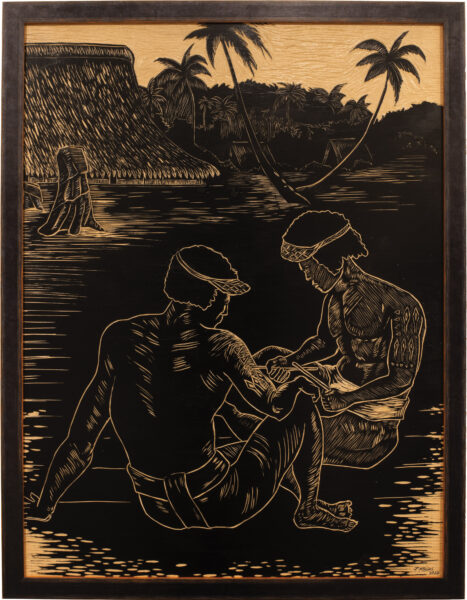
For decades, Kirifi has devoted himself to revitalising tā tatau and Tokelauan culture through his art; this book is the story of what he and others have managed so far, and a celebration of tātau’s resurgence among new generations. But first, he tells the story of how it was lost.
In 1863, Peruvian slave traders arrived in Tokelau. Half the islands’ population were soon gone: abducted, or dead from the diseases carried by the slavers. During this “dark chapter”, writes Kirifi, cultural practices and knowledge were lost, along with the people. On top of that, Christian missionaries were moving in. Tā tatau was abolished.
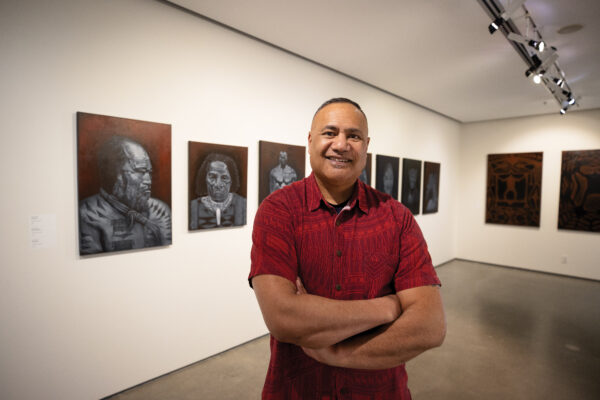
Some of its secrets faded with the old people. Others survived, held safe in oral histories or preserved, ironically, in the writings and sketches of explorers who reached Tokelau before the slavers did.
And so, more than 30 years ago, at Whitireia Polytechnic, a young arts student stumbled upon a book that included a section on tā tatau. “A revelation”, writes Kirifi, that has dictated the course of his art, his life. He hopes that his book, too, will prove a wayfinder.
More by Catherine Woulfe