



We have secured the future of New Zealand Geographic. Again.
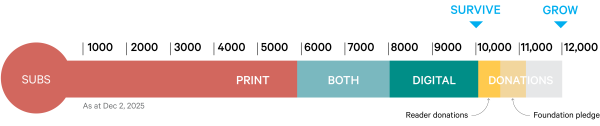
I had been eyeing the end of 2025 with trepidation—thousands of subscriptions were set to expire. In the last magazine I asked for help. The message: we still need subscription income to power our journalism—so (please) renew.
You did. We have survived the November Subspocalypse and are confidently striding into Christmas and the new year with your support. Thank you.
*
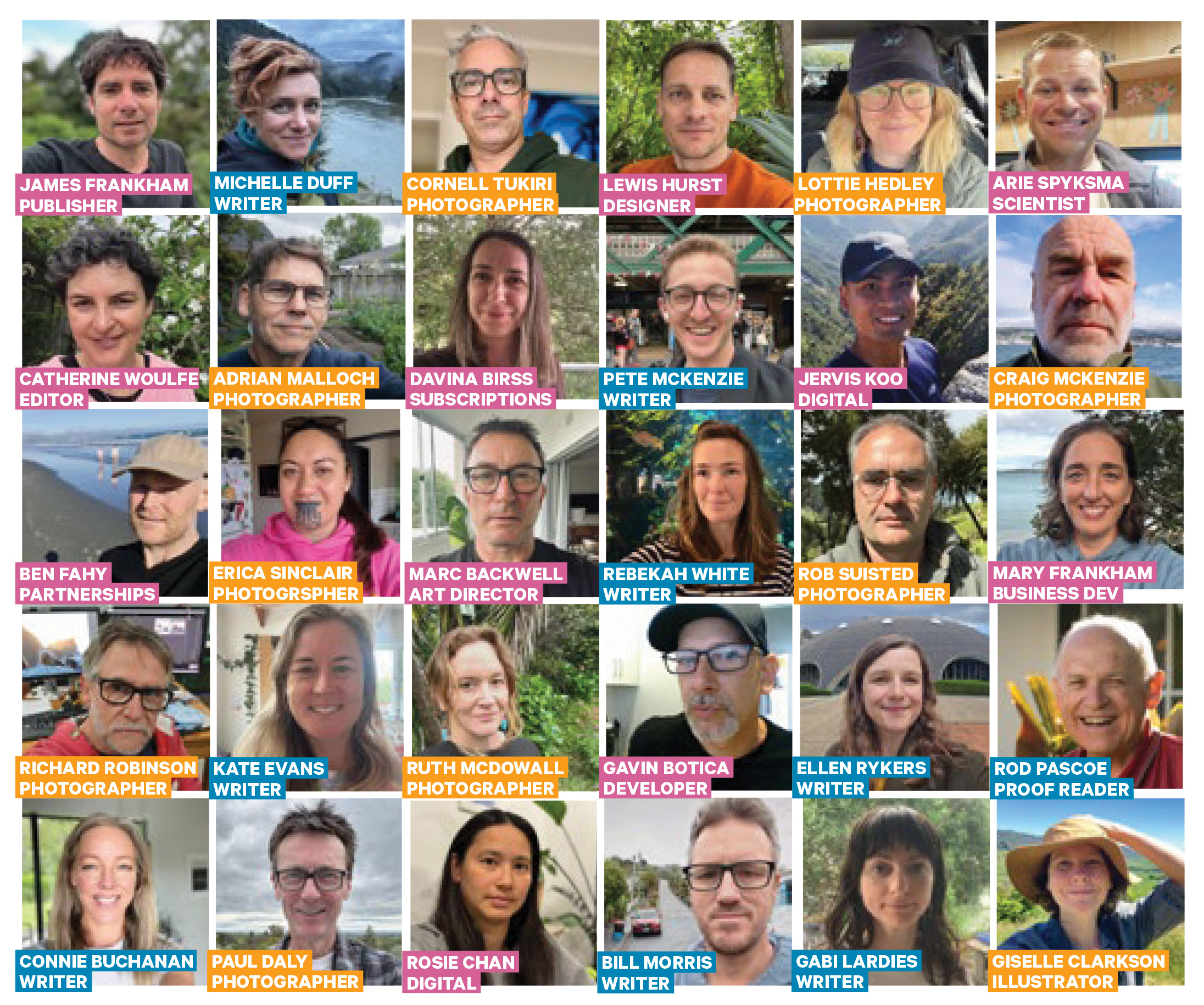
As I write this, Richard Robinson has just returned from photographing the Godzilla urchin Centrostephanus which is eating up the Poor Knights. Next week he’s off to photograph black-backed gulls at Wellington’s Southern Landfill. Meanwhile, Kate Evans is high in the backcountry of Hawke’s Bay, hunting the exquisitely rare native forget-me-not. Bill Morris is moving house, but triangulating summer trips to report on the rimu and beech masts, high-tech predator control, and the hornet menacing Auckland. Gabi Lardies and Mike Scott are about to head to Gisborne where the country’s inaugural waka ama club is celebrating a revamp, while Anna Yeoman is writing about her first 24-hour rogaining race. Lottie Hedley is figuring out how to photograph the native bees quietly burrowing in Central Otago, while Cornell Tukiri and Simon Day are set to head north to document dangerous packs of feral dogs. Adrian Malloch, meanwhile, is nurturing a handful of dung beetles in a tank in his garage—photographing what might be a very weird and innovative solution to on-farm emissions.
We are grateful that we get to tell these stories, and we can’t wait to publish them next year. But there are a clutch of stories on the slate that we could do bigger or better with more support, and a number that we just can’t contemplate without help. These are stories that are fiendishly complex, or require weeks of field time to do properly, or a month at a desk drilling into data.
A story on scallops would allow us to tell the story of fisheries mismanagement that led to the total collapse of a commercially and culturally valuable stock. Likewise we are approaching the biggest rimu mast since the 1970s—this could mean a boom for kākāpō, or disaster, but getting to their island strongholds is a Herculean trial, let alone staying there a week. We want to run a series on how New Zealand can plot a course to a net-zero carbon future, and there are at least two terrific stories in Sāmoa that we just can’t get to. One in Fiji, too.
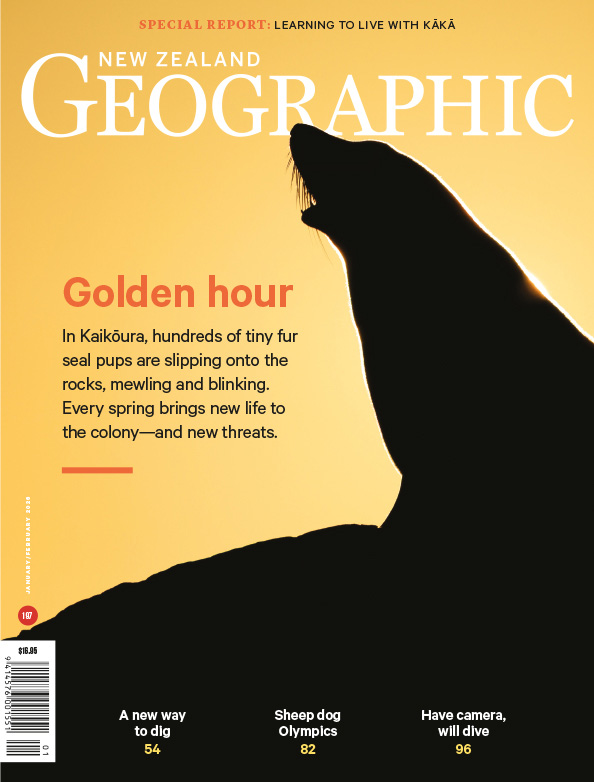
Indeed, we could only cover the fate of fur seals in this issue because a group of readers contributed donations large and small that amounted to $6500—enough to cover multiple visits to the Kaikōura coast across the breeding season, shadowing scientists doing the field work.
To Barry Scott, the Blampied Family, Bruce Copeland, Charles & Marlene Anderson, Cheryl Broneck, Colleen Linnell, Dave Evans, David Ramm, Diane Newton, G Conroy, Grant Clayton, Harold Short, James Cordes, John & Kay Stewart, Kara Stones, Leigh Hyde, Loris Mills, Merv Robertson, Nigel Ironside, P Sherrell, PD, Roger Hall, Simon Chiaroni and four other donors who elected to remain anonymous—a huge thank you.
Being there is an important part of how New Zealand Geographic reports. On the spot, you can describe a scene accurately, and hear the unvarnished truth from experts. It’s a journalism convention that is becoming increasingly expensive, and therefore, increasingly rare..
When I wrote about their donations in our email newsletter, it spurred other subscribers. This year we have received some $15,000 in donations to power for-purpose journalism. Then, this week, a call with a foundation supporting environmental causes. They see how reporting creates attention, and how public attention drives policy, science, and change. They’re now considering a proposal to get us closer to our stretch goal—the extra income that would let us employ a staff journalist and amplify our voice.
We didn’t expect donations to play a role in this campaign, and we’re deeply moved that so many of you are supporting us. If you run a foundation or have the means to contribute to our growing family of donors, send an email to donations@nzgeographic.co.nz. We can do more together.
More by James Frankham